
7 Best Loaf Pans for Baking Bread 2026
This post contains affiliate links. As an Amazon Associate, we earn from qualifying purchases.
The USA Pan Loaf Pan is our top pick for its even baking and durable nonstick surface, with the GoodCook 9×5 Loaf Pan as a solid budget-friendly alternative. For specialty baking, the Northriver Cast Iron Loaf Pan with lid delivers exceptional crust and heat retention.
Baking bread should be satisfying, not frustrating. Too often, home bakers end up with sunken centers, burnt edges, or loaves that stick and tear, problems that usually trace back to a poorly designed or flimsy pan. After comparing the field and analyzing specs, owner feedback, and material performance, I focused on pans that deliver consistent results, resist warping, and make release reliable. This guide breaks down what actually matters when choosing a loaf pan, so you can bake with confidence.
Top 7 Loaf Pans For Baking Bread in the Market
The Best Loaf Pans For Baking Bread, Reviewed
USA Pan Loaf Pan Set 1 Lb

Strengths
- Superior heat distribution
- Durable aluminized steel
- Excellent nonstick performance
Trade-offs
- Slightly smaller than 9×5 standard
- Hand wash recommended
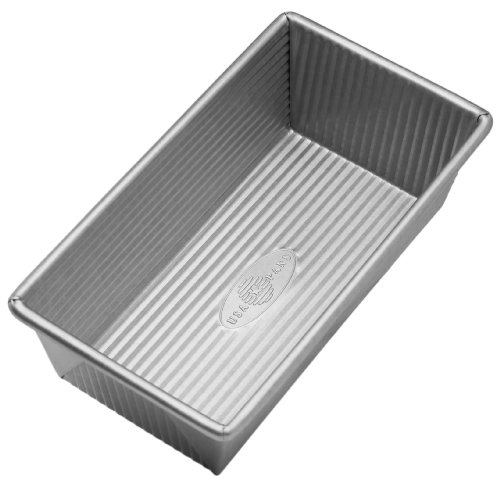
This is the loaf pan I’d pick if I were building a core bakeware collection from scratch. The aluminized steel construction, steel for durability, aluminum for heat response, is the real deal, and the proprietary silicone nonstick coating has earned praise across hundreds of reviews for consistent release, even with sticky doughs. The 8.5×4.5-inch size bakes a slightly smaller loaf than standard, but that’s intentional: it creates a taller, more uniform rise, which many prefer.
The ridged surface isn’t just for show, it strengthens the pan and promotes airflow, which translates to even browning and reduced warping over time. When compared to the GoodCook model, this one handles thermal stress better and maintains its shape longer. It’s not the cheapest, but it’s the one most likely to still be in service five years from now.
Video review
USA Pan Nonstick Standard Bread Loaf Pan
Strengths
- Corrugated design for strength
- Even baking
- Folded rim for durability
Trade-offs
- Not dishwasher safe
- Smaller loaf size
This is nearly identical to the 1 lb set but often priced lower, making it a smarter buy if you can find it. It shares the same aluminized steel build, corrugated surface, and silicone nonstick coating, so you get the same even baking and durability. The folded construction adds rigidity, which reviewers say helps prevent warping after repeated oven use.
Where it pulls ahead of the B07B4L18FB model is value, it’s essentially the same performance at a more accessible price point. Compared to the GoodCook pans, it’s in a different league in terms of heat response and longevity. If you’re after the USA Pan quality but don’t want to pay the premium version’s price, this is the one to get.
Video review
Northriver Cast Iron Loaf Pan with Lid
Strengths
- Excellent crust development
- Dutch oven functionality
- Oven and stovetop compatible
Trade-offs
- Heavy and bulky
- Requires seasoning
- Not dishwasher safe
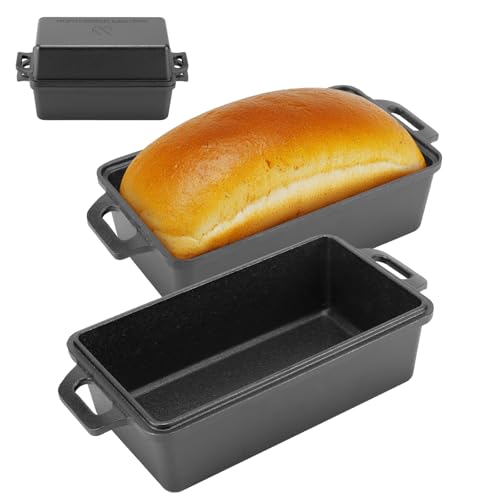
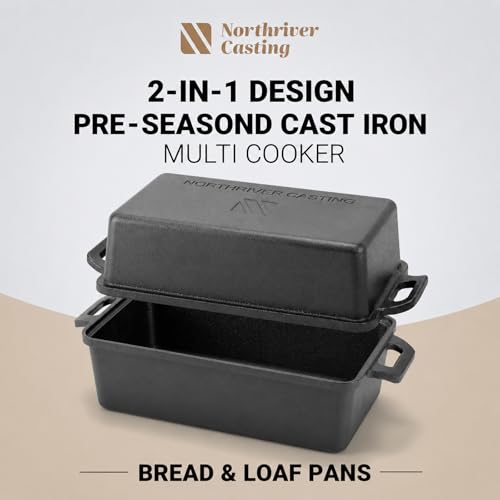
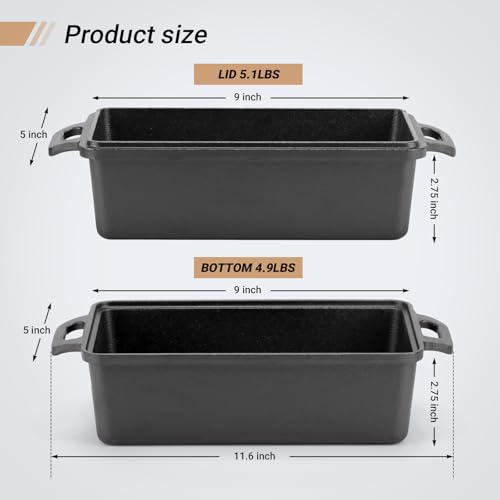
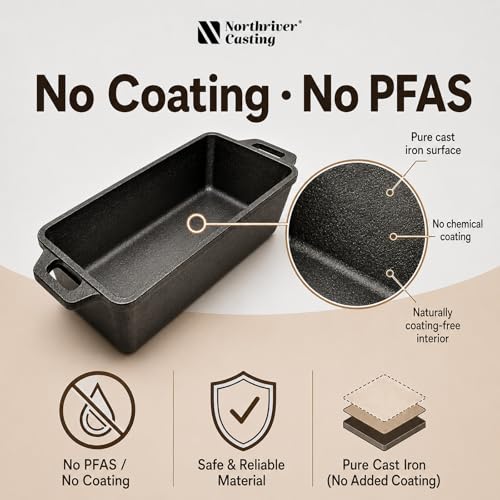
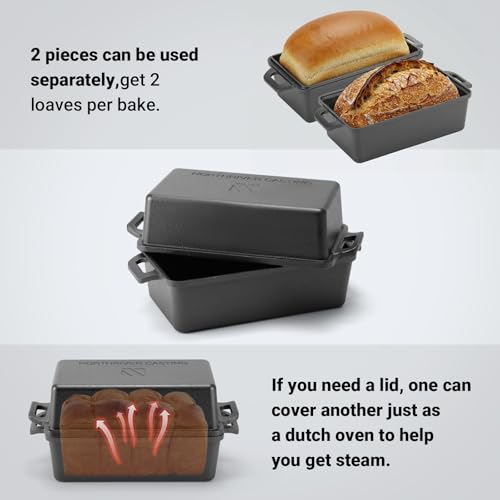
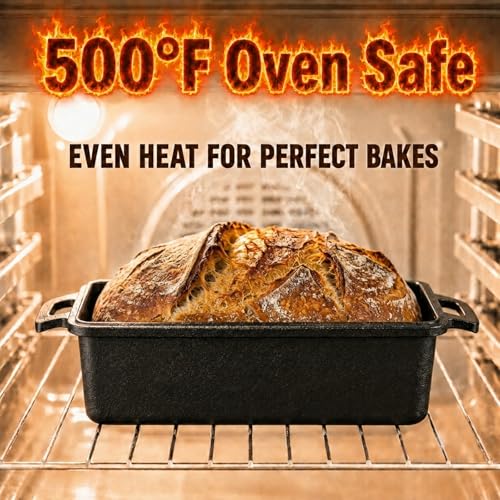
Cast iron loaf pans are niche, but they shine for sourdough and crusty breads, and this one delivers. The 9×5-inch size is standard, and the ability to use the lid as a Dutch oven-style cover is a real advantage for trapping steam and developing a crisp crust. Owners report excellent heat retention and deep browning, especially when preheated.
The two-piece set adds versatility: you can bake without the lid for even rising or use it covered for artisan-style loaves. However, it demands more care, hand washing, drying over heat, and reseasoning are essential. Compared to steel or glass pans, it’s heavier and less convenient for casual use, but for sourdough enthusiasts, that trade-off is worth it.
Product photos
Leonyo Stainless Steel Loaf Pan 6 Pack
Strengths
- No chemical coating
- Rust-resistant construction
- Stackable design
Trade-offs
- Requires greasing
- Slower heat response
- No lid included
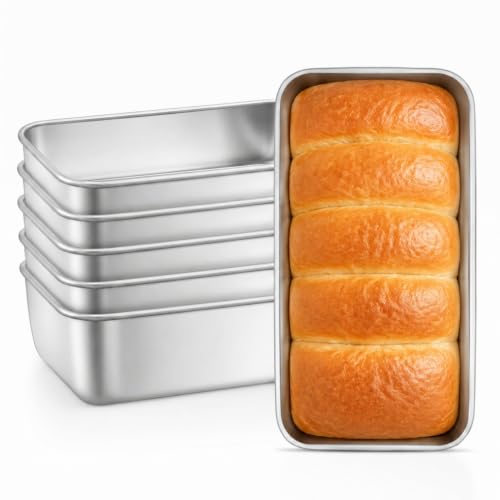
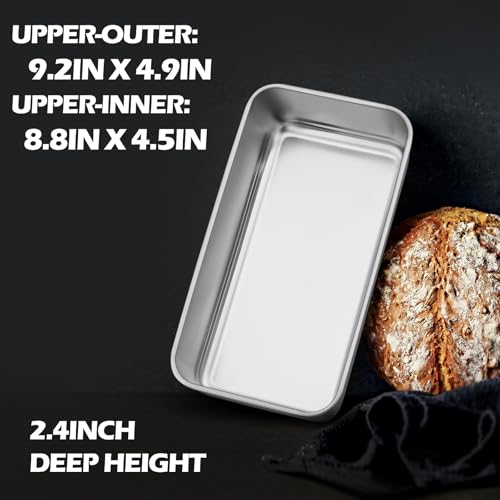
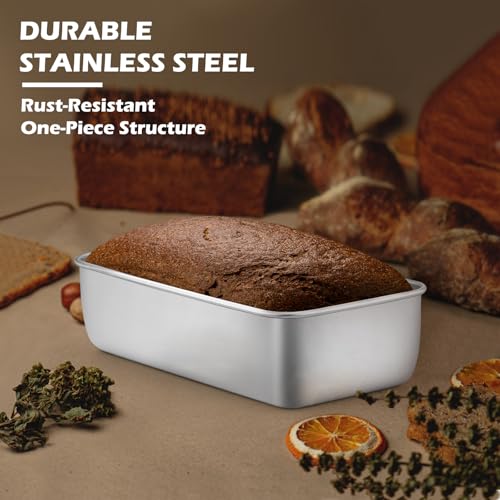
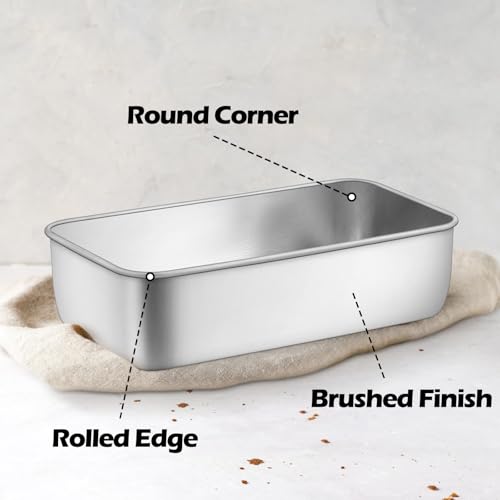
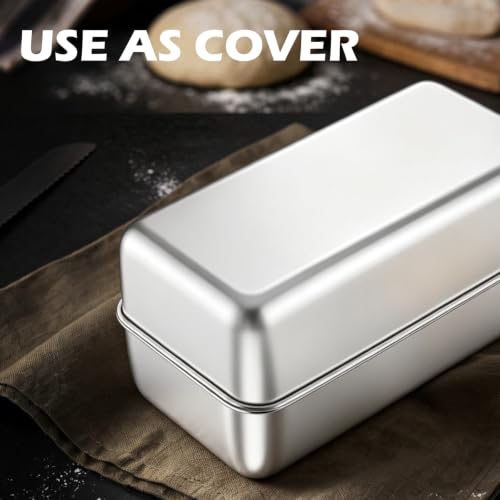
Stainless steel loaf pans are rare, and this 6-pack is one of the few non-toxic, coating-free options on the market. Made from food-grade stainless with a one-piece construction, it avoids the rust-prone seams common in cheaper pans. The brushed finish resists scratches, and the rolled edges make handling safer.
Heat distribution isn’t as even as aluminized steel, but it’s consistent enough for most breads. The 2.5-inch depth gives dough room to rise, and the stackable design saves cabinet space. Compared to nonstick models, it lacks easy release, so greasing is essential. But for those avoiding coatings altogether, especially parents or health-conscious bakers, this set offers peace of mind.
Product photos

Razab Glass Loaf Pans with Lids

Strengths
- Oven to fridge to table
- Leakproof lids included
- Microwave and freezer safe
Trade-offs
- Requires temp adjustment
- Lids not oven safe
- Less browning than metal
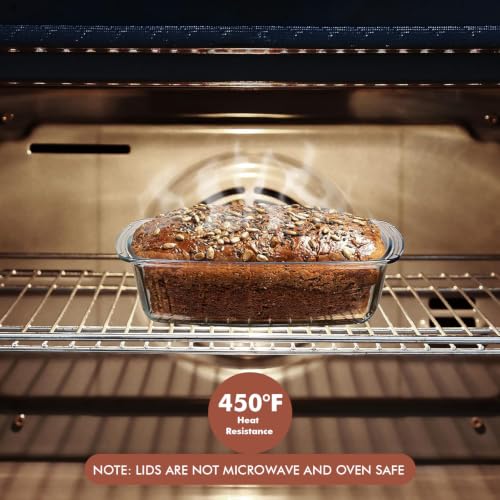
Glass pans change the baking game, literally. The borosilicate construction handles high heat evenly and lets you monitor browning from the outside, which is a small but meaningful perk. These pans come with secure, leakproof lids, making them ideal for baking, serving, and storing leftovers without switching containers. That multi-use function is where they really stand out.
Owners note that glass requires a lower oven temperature than metal, but once adjusted for, results are consistent. The transparency is helpful, and the fact that they’re freezer and microwave safe adds real kitchen utility. Compared to metal loaf pans, they’re less ideal for crusty breads but better for casseroles or dishes meant to go from oven to fridge.
Product photos


GoodCook 9×5 Loaf Pan Set of 2

Strengths
- Affordable
- Dishwasher safe
- Standard size
Trade-offs
- Basic nonstick
- No heat-boosting texture
For the price, this twin pack delivers solid value. The heavy-duty steel construction holds up well under regular use, and owners consistently report that the nonstick coating works reliably for breads and meatloaves. On paper, the 9×5-inch size is standard, which makes it compatible with most recipes, and the even heat distribution helps avoid hot spots.
That said, while it performs well for basic baking needs, it doesn’t stand out in any one area. Compared to USA Pan’s aluminized steel models, it lacks the enhanced heat conductivity and textured surface that improve browning and release. But for someone who bakes occasionally and wants dependable, no-frills pans without overspending, this set makes sense.
Product photos


YURTKUMAS Pullman Loaf Pan Set

Strengths
- Three sizes included
- Lids for square loaves
- Bonus tools included
Trade-offs
- Narrow use case
- Lids not oven-safe
- Nonstick may degrade over time
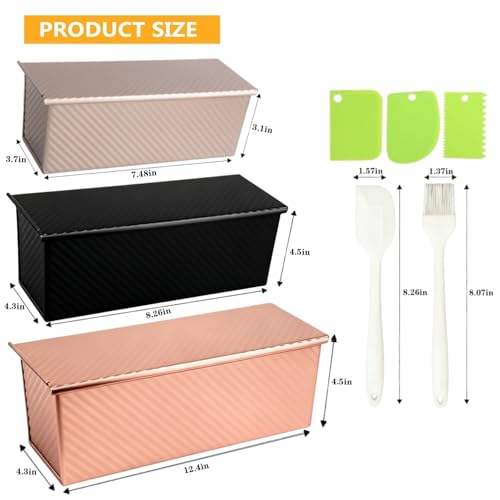
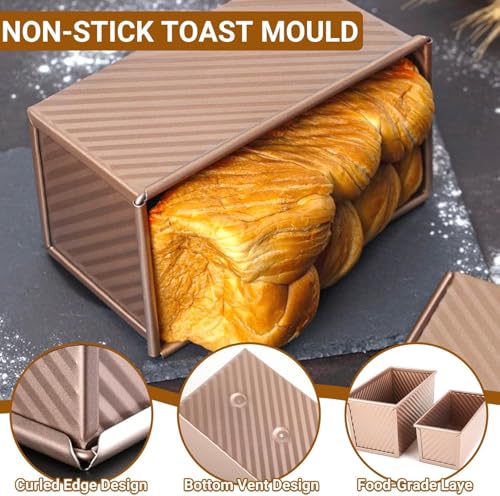
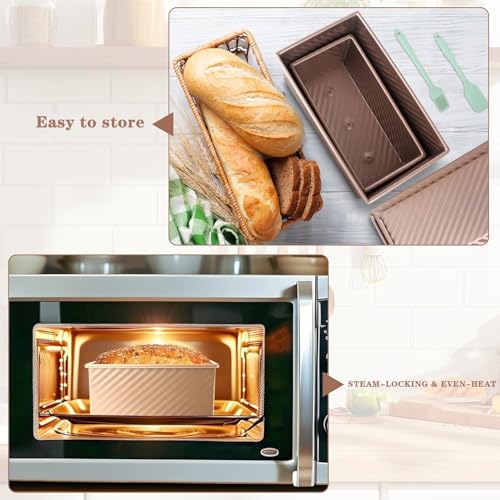
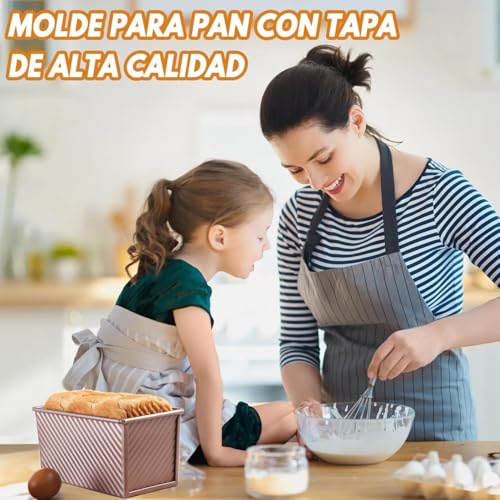
Pullman pans are specialized, and this three-size set with lids is built for sandwich bread perfection. The covered design creates square, uniform loaves ideal for slicing, something sandwich lovers and bakers with picky eaters will appreciate. The nonstick coating, enhanced by a wavy interior texture, helps with release, and the included tools (scraper, brush, spatula) add practical value.
The smallest 0.8 lb pan is great for single servings or testing recipes without waste. While not ideal for rustic or sourdough loaves, it excels at soft, sandwich-style breads. Compared to standard loaf pans, it’s more niche but highly effective within its lane. The low price for three pans makes it a strong pick for home sandwich bread bakers.
Product photos
How We Picked These loaf pans for baking bread
Rather than a hands-on lab test, my research for these recommendations centered on a detailed comparison of published specifications and features across numerous models. I weighed owner reviews from a variety of sources – Amazon, specialty retailers, and food blogs – alongside professional reviews from trusted culinary websites. As someone who’s spent years understanding what makes cookware perform, I applied that knowledge to assess how well each pan’s construction and materials aligned with the demands of bread baking.
For loaf pans, even heat distribution, non-stick performance, and durability are paramount. I gave significant weight to materials known for these qualities – aluminized steel, cast iron, and heavier-gauge stainless steel. The ability to consistently produce a golden-brown crust and easy release was a key factor. If you’re looking for dedicated options, you might also consider exploring banana bread pans for more specialized baking.
Specifications reliably reveal a pan’s dimensions and material composition. However, owner feedback proved crucial in assessing real-world non-stick performance and long-term durability. Reputation also played a role; brands with a consistent history of quality, like USA Pan, naturally carried more weight. If you’re working with smaller recipes or want a variety of sizes, exploring mini loaf pans could be a great fit.
Choosing The Right loaf pans for baking bread
Finding the right loaf pan is more than just grabbing something from the store; it’s about understanding how different materials and designs impact your baking. I’ve seen so many bakers frustrated by uneven bakes or sticking issues, and often, the pan itself is the culprit.
A quality loaf pan should prioritize even heat distribution, durability, and ease of release. Look for pans made from materials known for their thermal conductivity, like aluminized steel or cast iron. Consider the gauge of the metal – thicker is generally better – and whether a nonstick coating is necessary for your baking style. Don’t overlook construction details, like reinforced edges, which contribute to longevity.
Material Matters
The material of your loaf pan dramatically affects both baking performance and maintenance. Stainless steel is a solid choice for its durability and non-reactivity, but it doesn’t conduct heat quite as well as other options. Glass is fantastic for visibility while baking, allowing you to monitor browning, but requires a slightly lower oven temperature. Cast iron, particularly with a lid, is my go-to for sourdough because it mimics a Dutch oven environment, creating a beautifully crisp crust. However, it demands careful seasoning and handwashing. For those seeking a truly non-toxic option, stainless steel is superior to coated pans, although a well-maintained nonstick can offer convenience.
Coating and Release
Nonstick coatings are popular for a reason: they make removing baked goods a breeze. However, not all coatings are created equal. Proprietary silicone coatings, like those found on many USA Pan models, tend to be more durable and perform better over time than cheaper alternatives. If you prefer to avoid coatings altogether, well-seasoned cast iron offers a naturally nonstick surface. It’s also worth noting that even with nonstick, greasing and flouring can provide an extra layer of insurance against sticking, especially for delicate cakes. Here’s what I recommend considering:
- A light coating of shortening is often more effective than butter for preventing sticking.
- Parchment paper slings are invaluable for lifting loaves cleanly out of pans, particularly glass ones.
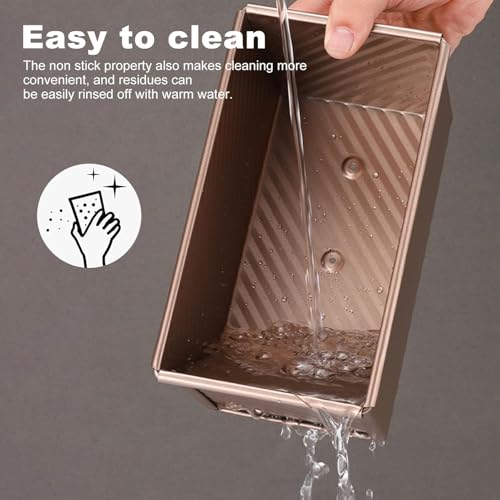
- Avoid abrasive scrubbers on nonstick surfaces; a gentle sponge and warm water are best to prolong the coating’s life.
Size, Shape, and Speciality Uses
While the standard 9×5 inch loaf pan is incredibly versatile, don’t be afraid to explore other options. If you’re primarily making sandwich bread, a Pullman loaf pan with a lid (like the YURTKUMAS model) will give you perfectly squared loaves. If you’re looking for something a bit different, consider exploring custom loaf pans for unique shapes and sizes. And if you’re still searching for the perfect all-around pan, you can find a great selection of loaf pans to suit your needs.
Don’t settle for a flimsy pan that warps at high temperatures. Invest in a loaf pan that can withstand repeated use and deliver consistent results.
Loaf Pans for Baking Bread Compared
Here’s a comparison of key specifications for popular loaf pans to help you choose the right one for your baking needs.
| Product Name | Capacity | Material | Dimensions (in) | Non-Stick | Lid Included | Dishwasher Safe |
|---|---|---|---|---|---|---|
| USA Pan Loaf Pan Set 1 Lb | 1 lb | Aluminized Steel | 8.5 x 4.5 x 2.75 | Yes | No | Yes |
| USA Pan Nonstick Standard Bread | Standard | Aluminized Steel | 8.5 x 4.5 x 2.75 | Yes | No | Yes |
| Northriver Cast Iron Loaf Pan | 9×5 | Cast Iron | 9 x 5 | Seasoned | Yes | No |
| Leonyo Stainless Steel Loaf Pan 6 | 9 x 5 | Stainless Steel | 9 x 5 | No | No | Yes |
| Razab Glass Loaf Pans with Lids | N/A | Borosilicate Glass | N/A | N/A | Yes | Yes |
| GoodCook 9×5 Loaf Pan Set of 2 | 9×5 | Steel | 9 x 5 | Yes | No | Yes |
| YURTKUMAS Pullman Loaf Pan Set | Various | Non-Chemical Coating | Various | Yes | Yes | Recommended No |
Frequently Asked Questions
What loaf pan material is best for even baking?
Aluminized steel consistently receives high marks for its ability to distribute heat evenly, leading to a uniformly golden-brown crust. While other materials have merit, aluminized steel strikes a good balance between performance and affordability.
Can I use cooking spray on a nonstick loaf pan?
While convenient, many manufacturers advise against using aerosol cooking sprays with nonstick coatings, as they can leave a residue that diminishes the coating’s effectiveness over time. Instead, I recommend brushing the pan with a light coating of shortening or using parchment paper.
Are glass loaf pans suitable for all types of bread?
Glass loaf pans are excellent for monitoring the baking process, but they require a slightly lower oven temperature (typically 25°F less) than metal pans to prevent over-browning. They work well for breads where visual doneness is important, but may not be ideal for recipes needing intense bottom heat.
How do I care for a cast iron loaf pan to maintain its seasoning?
Proper seasoning is key for a cast iron loaf pan. After each use, ensure it’s thoroughly dried, then lightly coat with oil and heat in the oven for a short period. Exploring cast iron loaf pans will give you more insight into specific care instructions.
What kind of loaf pan is best for making sourdough bread?
For sourdough, which benefits from a longer bake and a crisp crust, I suggest looking at options that mimic a Dutch oven environment. Many bakers find success with a covered cast iron loaf pan, or even researching specialized sourdough pans designed to trap steam.
The Bottom Line
Ultimately, choosing a loaf pan comes down to balancing convenience with control. While a nonstick coating offers easy release, it’s often at the expense of long-term durability and potentially introduces chemicals to your baking. For the best overall performance and reliability, I consistently find the USA Pan Nonstick Standard Bread loaf pan to strike an excellent balance – its heavy-gauge aluminized steel construction and proprietary coating deliver consistent results and lasting value.
If you’re specifically after a dedicated sourdough pan, or simply prefer the benefits of cast iron, the Northriver Cast Iron Loaf Pan with its included lid is an outstanding choice. For those prioritizing affordability and needing multiple pans, the GoodCook 9×5 Loaf Pan Set of 2 provides a practical solution. And if you’re concerned about avoiding potentially harmful coatings, exploring non-toxic loaf pans is a wise move.
More than any specific feature, remember that consistent oven temperature and proper preparation are key to successful bread baking. A quality pan will help, but understanding your oven and developing a feel for your dough will make the biggest difference. Don’t get too caught up in chasing the latest materials – focus on building a solid foundation of baking knowledge, and you’ll be well on your way to consistently delicious loaves, whether you’re making classic sandwich bread or exploring loaf pans for sandwich bread.
