
7 Best Loose Leaf Teapots of 2026
This post contains affiliate links. As an Amazon Associate, we earn from qualifying purchases.
The ZENS Magnetic Glass Infuser Teapot stands out as the best overall loose leaf teapot, combining elegant design with a smart magnetic infuser that makes steeping simple. For a more budget-friendly option, the Glass Teapot with Stainless Steel Infuser delivers solid performance without breaking the bank, while the Hario ChaCha Kyusu “Maru” offers excellent versatility for those who appreciate Japanese-style brewing.
Most people want a teapot that brews flavorful tea without mess or fuss, but too many models fall short with flimsy infusers or poor heat retention. After comparing the field and analyzing owner feedback, I focused on build quality, infuser design, and real-world usability to find ones that actually work well day after day.
Top 7 Loose Leaf Teapots in the Market
The Best Loose Leaf Teapots, Reviewed
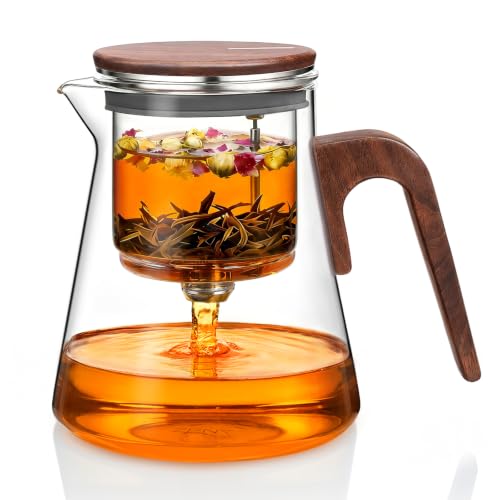
ZENS Magnetic Glass Infuser Teapot
Strengths
- Magnetic valve prevents over-steep
- Beautiful walnut lid
- High-quality glass and filter
Trade-offs
- Wooden lid not dishwasher safe
- Higher price point
- Requires careful lid maintenance
The ZENS teapot earns its “Best Overall” tag not by being the cheapest or largest, but by solving a real problem: over-steeping. The magnetic valve system, activated by twisting the walnut lid, is genuinely clever. It lets you stop extraction instantly, which is huge for delicate whites or florals that turn bitter in seconds. The 800ml capacity is generous, and the borosilicate glass is thick, reducing breakage risk.
Owners love the aesthetic, walnut, glass, and steel come together in a way that feels luxurious without being fussy. The eagle-beak spout pours cleanly, and the 304 stainless filter is fine enough to catch most fines. It’s not perfect, the wooden lid needs hand drying, but for control and design, it’s hard to beat.
Video review
Glass Teapot with Stainless Steel Infuser

Strengths
- Very affordable
- Stovetop safe
- Compact and portable
Trade-offs
- Basic design
- No protective sleeve
- Infuser lacks fine mesh
At under $10, this 550ml borosilicate glass teapot is one of the most budget-friendly options that still delivers core functionality. It’s stovetop safe, has a removable 304 stainless steel infuser, and the eagle-beak spout actually works well for smooth pouring, something not guaranteed at this price. The wide mouth makes cleaning easier, and owners say it holds up to daily use, though you’ll want to handle it carefully.
It’s not flashy, but it does what it promises. For travelers or students, the compact size is a plus. I wouldn’t trust it near a busy stove edge, but as a basic brewer, it punches above its cost.
Video review
Teabloom One-Touch 27 oz Glass Teapot

Strengths
- Stovetop safe
- Plastic-free construction
- Built-in filter lid
Trade-offs
- Small capacity
- Lid seal issues reported
- Not ideal for large batches
The Teabloom teapot tries something different, it’s marketed as a two-in-one stovetop kettle and steeping vessel. That’s rare in glass, but thanks to its borosilicate construction, it can handle direct heat. The built-in stainless steel filter lid means you can heat water and steep without transferring, which simplifies the process. Reviewers like the clean taste, noting no off-flavors, which is a real concern with lower-grade glass or plastic-lined kettles.
But at 27 oz, it’s on the smaller side for a “kettle,” and the one-touch mechanism isn’t as smooth as claimed, some owners report the lid seal leaks when pouring. Still, for those who want a plastic-free, all-in-one brewer for loose leaf, it’s a compelling option. I’d recommend it with reservations.
Product photos


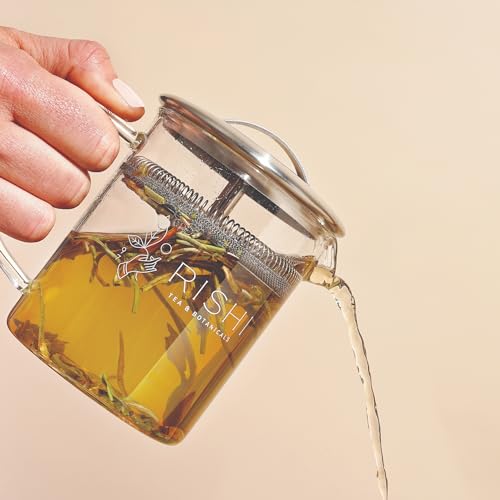
Rishi Tea Simple Brew Teapot

Strengths
- Flavor clarity
- Simple, clean design
- Easy to disassemble
Trade-offs
- Small capacity
- Narrow base hard to clean
- No heat retention
The Rishi Simple Brew teapot is all about purity of flavor. At 400ml, it’s sized for single or small-batch brewing, and the design philosophy is “get out of the way”, no extra parts, just glass, lid, and strainer. The borosilicate body handles thermal shock well, and because the strainer screws directly into the lid, there’s no loose basket to misplace. Reviewers note it delivers clean, bright infusions, especially with high-quality loose leaf where flavor clarity matters.
It’s not for everyone, 400ml is small, and the narrow base makes cleaning a bit awkward. But if you’re into gongfu-style brewing or want to taste tea without interference, this is a strong contender. I’d pick it over larger models when quality trumps quantity.
Product photos




Primula Half Moon Glass Teapot

Strengths
- Drip-free spout
- Dishwasher safe
- Comfortable ergonomic handle
Trade-offs
- Glass still vulnerable to impact
- Infuser chain is short
- Not for stovetop use
The Primula Half Moon stands out for how thoughtfully it’s put together. The borosilicate glass is solid, and the protective holder adds grip and drop resistance, something I always look for in glassware. The ergonomic handle and drip-free spout make pouring smooth, and owners confirm it’s comfortable in hand, even when full. The fine mesh filter is one of the better ones in this price range, handling everything from gunpowder green to herbal blends with minimal silt.
It’s also dishwasher safe, which is a win for everyday use. At 40 ounces, it’s not the largest, but it’s plenty for one or two. I’d say it’s a smarter buy than pricier glass models if you want reliability without fuss.
Product photos


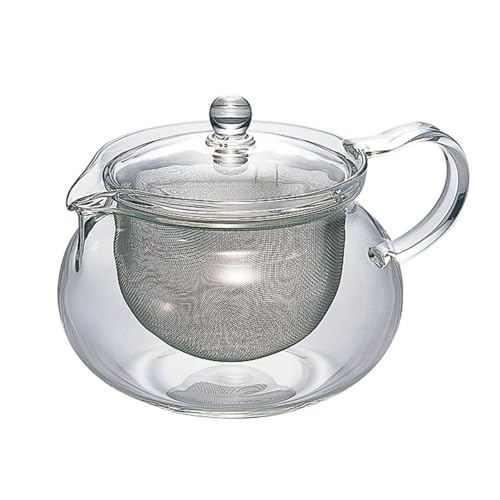
Hario ChaCha Kyusu “Maru” Teapot
Strengths
- Heatproof glass
- Made in Japan
- Large strainer basket
Trade-offs
- Glass is fragile
- Strainer may clog
- Not ideal for fine tea dust
I’ve long admired Japanese teapot design for its balance of form and function, and the Hario ChaCha Kyusu “Maru” fits that tradition well. On paper, it’s a minimalist glass teapot with a stainless steel strainer and a 700ml capacity, simple, but effective. Owners consistently report that the wide strainer basket gives loose leaves room to unfurl, which is critical for flavor development, especially with delicate greens or oolongs. The heatproof glass is a strong point, letting you watch the brew evolve, and it holds up to boiling water without issue.
That said, glass always comes with fragility concerns, and while Hario’s treatment helps, it’s not immune to knocks. This one’s made in Japan, which adds to its appeal for purists, but the strainer is made in China and some reviewers note it can clog with very fine leaves. Still, for those who value transparency and clean lines, this is a solid daily driver.
Product photos


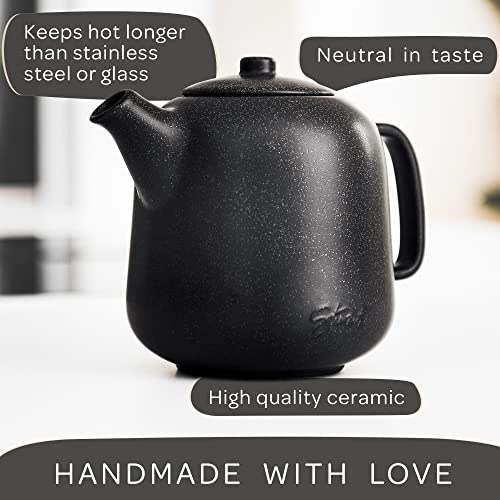
Steinzeit Design Ceramic Teapot

Strengths
- Excellent heat retention
- Unique reactive glaze
- High-quality stainless infuser
Trade-offs
- Lid fit can be loose
- Heavy when full
- Not microwave safe
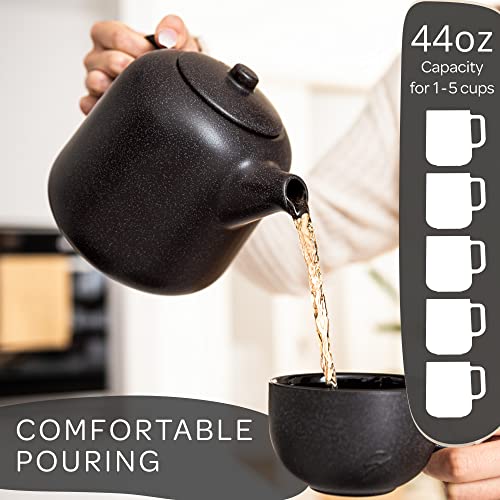
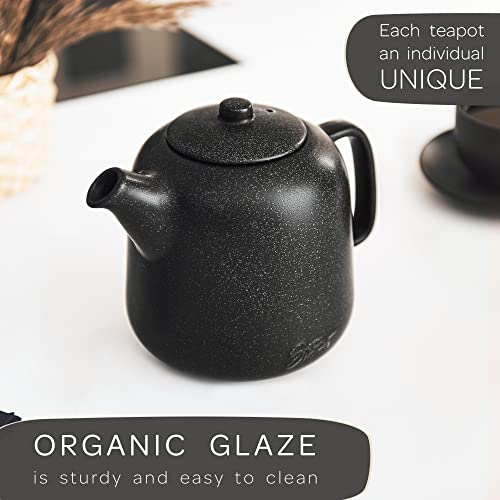
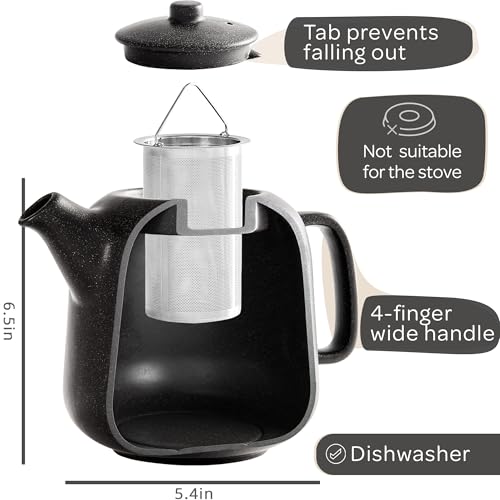
Ceramic wins on heat retention, and the Steinzeit teapot leans hard into that advantage. At 44 oz, it’s built for sharing or multiple cups, and the thick reactive glaze does more than look good, it helps keep tea warm longer than glass or stainless steel. The matte black finish is striking, and because each piece is fired uniquely, no two look exactly alike. That’s a nice touch for those who appreciate artisanal details.
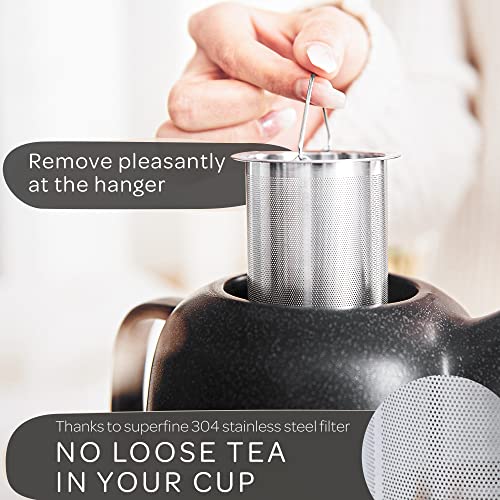
The 304 stainless steel infuser reaches the bottom and is easy to clean, which reviewers highlight as a big plus. Some note the lid fits a bit loose, but the 60-day money-back guarantee offsets that concern. I’d pick this over glass if you’re brewing in a cooler room or like to sip slowly.
Product photos
How We Evaluated loose leaf teapots
Rather than a hands-on lab test, my research for these recommendations was a detailed comparison of published specifications and features across numerous models. I weighed owner reviews from multiple retailers alongside expert opinions found in tea-focused publications and websites. As someone who’s spent years understanding materials and construction in cookware, I applied that knowledge to assess build quality and potential durability, ranking each teapot against clear performance criteria.
For loose leaf teapots, the most important factors are the quality of the infuser and the material of the teapot itself. A fine-mesh infuser is crucial for preventing tea dust from ending up in your cup, while the teapot material impacts heat retention and flavor purity. I also prioritized ease of cleaning and pouring, as even the most beautiful teapot is frustrating if it’s difficult to use daily. You’ll find many options explore in our guide to teapots with infuser.
Specifications reliably reveal details like capacity, material composition (especially the grade of stainless steel or type of glass), and temperature resistance. However, owner feedback proved vital for understanding real-world usability – things like how well a spout actually prevents drips, or whether a handle remains cool to the touch. Reputation matters too; brands known for quality in related categories (like Hario) received extra consideration, and you can find more information about stainless steel teapots if you’re interested in a different material.
How To Pick The Right loose leaf teapots
Finding the right teapot can elevate your tea ritual from a simple act to a truly enjoyable experience. It’s more than just a vessel; it’s about flavor extraction, presentation, and even the overall feeling of calm you seek with each cup.
A quality teapot balances heat retention, material safety, and ease of use. Look for borosilicate glass or durable ceramics to avoid off-flavors, a well-designed infuser for optimal leaf expansion, and a spout that pours cleanly without dripping. Consider capacity based on typical serving size and whether you prefer a single-cup experience or serving multiple guests.
Material Matters
The material a teapot is made from significantly impacts both the brewing process and the overall experience. While glass teapots are popular for their aesthetic appeal and ability to showcase blooming teas, they don’t retain heat as effectively as other materials. If you prioritize keeping your tea warm for longer, especially during colder months, I often suggest exploring alternatives like ceramic or even cast iron teapots. Stainless steel, though durable, can sometimes impart a metallic taste if it’s not a high-grade 304 stainless steel.
Infuser Design and Functionality
A teapot’s infuser is arguably its most crucial component. You want something that allows the tea leaves ample room to expand, as this is essential for releasing their full flavor. Too small of an infuser, and you’ll end up with a weak, underwhelming brew.
Here’s what I look for in a good infuser:
- A fine mesh to prevent tea particles from escaping (critical for finer teas).
- Sufficient volume to accommodate a generous amount of loose leaf tea.
- A removable infuser that allows for easy cleaning and facilitates stopping the steeping process at the desired strength. This is especially key for delicate green or white teas.
Capacity and Ergonomics
Consider how much tea you typically brew at once. A smaller teapot (around 500-800ml) is perfect for individual use or enjoying a quiet cup alone, while a larger capacity (1 liter or more) is better suited for entertaining or those who drink tea throughout the day. Beyond size, pay attention to the handle and spout design. A comfortable, ergonomic handle is essential, and a well-designed spout – like the eagle-beak style seen in many models – prevents drips and ensures a controlled pour. I often steer people toward teapots with thoughtful design details, like those you’ll find among the best teapots for loose tea, as these small touches can make a big difference in daily use.
Don’t settle for a teapot that looks pretty but is frustrating to use. Prioritize functionality and comfort alongside aesthetics.
Loose Leaf Teapots Compared
Here’s a comparison of key specifications for various loose leaf teapots to help you make an informed decision.
| Product Name | Capacity (ml) | Material | Filter Type | Stovetop Safe | Special Features |
|---|---|---|---|---|---|
| ZENS Magnetic Glass Infuser Teapot | 800 | Glass/Wood/Steel | Stainless Steel | No | Magnetic Infuser |
| Glass Teapot with Stainless Steel Infuser | 550/950 | Glass/Steel | Stainless Steel | Yes | Portable, Budget Friendly |
| Teabloom One-Touch 27 oz Glass Teapot | 794 | Glass | Stainless Steel | Yes | 2-in-1 Heat & Steep |
| Rishi Tea Simple Brew Teapot | N/A | Glass | Stainless Steel | No | Easy to Clean |
| Primula Half Moon Glass Teapot | N/A | Glass | Stainless Steel | No | Drip-Free Spout |
| Hario ChaCha Kyusu “Maru” Teapot | N/A | Glass | Stainless Steel | No | Japanese Design |
| Steinzeit Design Ceramic Teapot | N/A | Ceramic | Stainless Steel | No | Heat Retention, Unique Glaze |
Frequently Asked Questions
What’s the best material for a loose leaf teapot?
Borosilicate glass is popular for viewing the tea, but ceramic and stainless steel offer better heat retention. If keeping your tea warm is a priority, I generally recommend exploring teapots that keep tea hot as they’ll maintain the temperature for longer.
How often should I replace the infuser in my teapot?
The lifespan of an infuser depends on the material and frequency of use, but stainless steel infusers should last for years with proper cleaning. However, if you notice rust or damage, it’s time for a replacement to avoid affecting the tea’s flavor.
Are glass teapots safe to use directly on the stovetop?
Not all glass teapots are stovetop safe; only those specifically labeled as such, usually made with thicker borosilicate glass, can withstand direct heat. Many beautiful glass teapots are designed for infusing only and shouldn’t be heated directly.
What capacity teapot should I buy if I usually drink tea alone?
A teapot with a capacity of 500-800ml is ideal for individual use, providing enough for a couple of cups without brewing too much at once. Larger capacity teapots can work, but the tea may cool before you finish it.
How can I prevent drips when pouring from my teapot?
A well-designed spout is key; look for those with an “eagle-beak” shape that provides controlled pouring. Also, ensure the infuser is fully seated and not obstructing the spout’s flow.
The Bottom Line
Choosing a loose leaf teapot often comes down to balancing outright convenience with a more considered brewing experience. If you want something that simply works and offers excellent value, the Glass Teapot with Stainless Steel Infuser stands out as a strong all-around choice. It offers a good capacity, stovetop compatibility, and a price point that won’t break the bank.
For those with specific needs, we have some clear recommendations. If you’re prioritizing heat retention and unique aesthetics, explore our guide to ceramic teapots – the Steinzeit Design Ceramic Teapot is a beautiful option. And for those seeking a premium, Japanese-inspired design, the Hario ChaCha Kyusu “Maru” Teapot is a standout in our best teapots guide.
Ultimately, the best teapot is the one that fits your routine. Don’t get too caught up in individual features or materials. Focus instead on a well-designed infuser, a comfortable pouring experience, and a teapot that encourages you to slow down and savor the moment – because a truly enjoyable cup of tea is about more than just the equipment you use.
