
7 Best Roasting Pans with Lid 2026
This post contains affiliate links. As an Amazon Associate, we earn from qualifying purchases.
The All-Clad Stainless Steel Oval Roaster is the best overall roasting pan with a lid for even heating and durability, the JY COOKMENT 13″ Enameled Roaster is a solid budget pick, and the 18″ Enamel Roasting Pan with Rack offers the most versatility for large roasts.
Most home cooks end up frustrated with roasting pans that warp, heat unevenly, or don’t fit in their oven, especially when trying to impress during holiday meals. After comparing the field and analyzing owner feedback, I focused on models that deliver consistent performance, real durability, and practical design.
This guide cuts through the noise by highlighting roasting pans that stand out in material quality, fit, and function, based on specs, user experiences, and what actually matters when you’re roasting a Sunday chicken or a holiday turkey.
Top 7 Roasting Pans With Lid in the Market
The Best Roasting Pans With Lid, Reviewed
JY COOKMENT 13″ Enameled Roaster

Strengths
- Nonstick enamel
- Dishwasher safe
- Compact size
- Chemical-free
- Even heating
Trade-offs
- Limited capacity
- Not for large roasts
- Enamel can chip if mishandled
This compact 13-inch enameled roaster is a smart choice for smaller households or cooks who want a dedicated pan for chickens and weeknight roasts. The natural enamel coating is free of PFOA and PTFE, which aligns with clean cooking priorities, and owners find it performs well for juicy, hands-off roasting. The domed lid helps trap moisture, and the porcelain surface heats evenly, better than bare steel, though not quite as responsive as cast iron.
It’s also one of the more affordable enameled options here, and the fact that it’s dishwasher safe adds real convenience. But its small size means it won’t handle a standard Thanksgiving turkey, more suited to a 4-5 lb chicken or small ham. Compared to the larger Granite Ware 13″ model with similar features, it lacks the high-heat tolerance and versatility for sourdough.
Video review
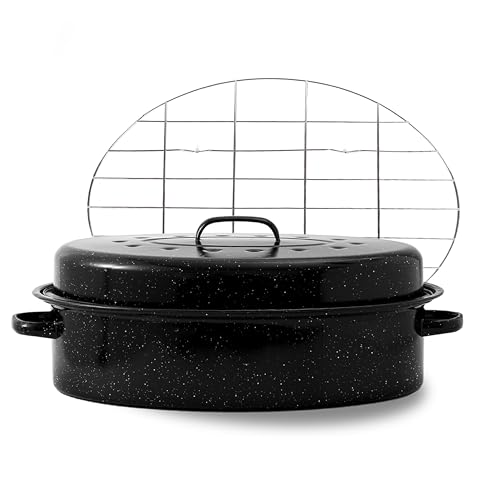
18″ Enamel Roasting Pan with Rack
Strengths
- Includes roasting rack
- Dishwasher safe
- Even browning
- PFOA-free
- Oven-safe
Trade-offs
- Enamel may stain over time
- Rack not as sturdy as metal-only models
- Lid fit can be loose
This 18-inch enameled roaster hits a sweet spot between size and value, offering enough space for a 15 lb turkey or large ham, and it includes a stainless steel rack, something many budget models skip. The enamel coating is thick and chip-resistant, and owners praise how evenly it browns meat and vegetables. It’s also oven-safe to high temperatures and free of PFOA and PTFE, which matters for health-conscious cooks.
The wide handles make it easier to move when full, though some users note the weight becomes unwieldy when loaded. Compared to the TOPZEA model, it’s slightly less deep but just as capable for most holiday roasts. It doesn’t match the All-Clad in build quality, but for the price, it’s a dependable workhorse.
Video review
JY COOKMENT 22″ Large Roasting Pan

Strengths
- Oven-safe
- Dishwasher safe
- Active vent lid
- Heavy-duty steel
- Generous capacity
Trade-offs
- No nonstick coating
- Heavier than enameled pans
- Not ideal for acidic foods
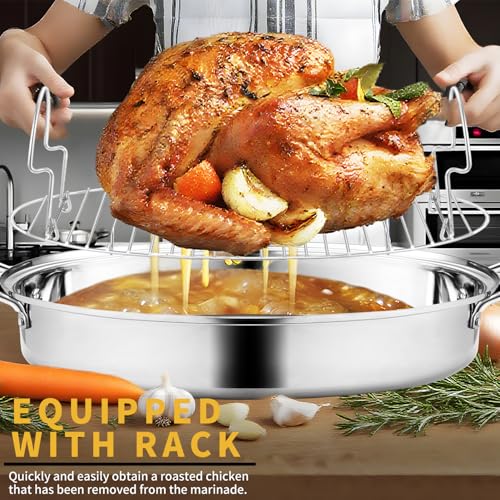
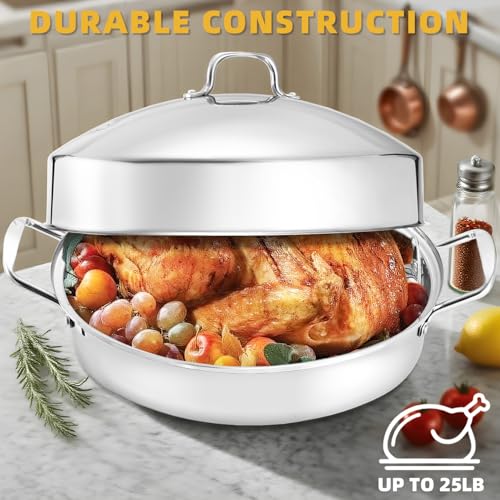
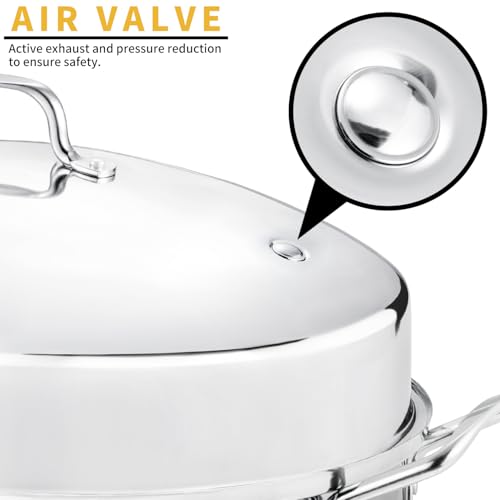
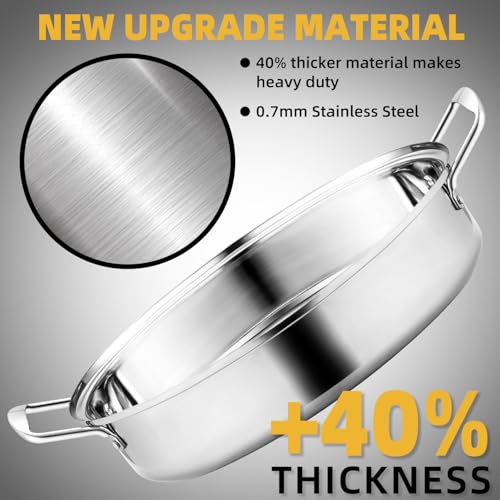
This is a heavy-duty stainless steel roaster built for big gatherings, and on paper, it delivers what most home cooks need when feeding a crowd. At 22 inches and made with 0.7mm thick steel, it’s sturdier than many similarly priced roasters, which helps prevent warping under high heat. The included roasting rack is a solid design, lifting meat clear of drippings for better browning and healthier results.
Owners consistently report that it handles turkeys up to 26 lbs without issue, and the active vent lid is a smart touch, releasing steam automatically while keeping food moist. It’s not enameled, so you won’t get nonstick performance out of the box, but the smooth interior does make cleanup easier than cheaper alternatives. Compared to enameled models like the TOPZEA or Granite Ware options, it lacks the same heat retention, but it makes up for it in durability and resistance to chipping.
Product photos

TOPZEA 18″ Enameled Turkey Roaster
Strengths
- Large capacity
- Domed lid included
- Nonstick surface
- Dishwasher safe
- Oven and broiler safe
Trade-offs
- Thinner enamel layer
- Less durable than stainless
- Handle welds may weaken over time
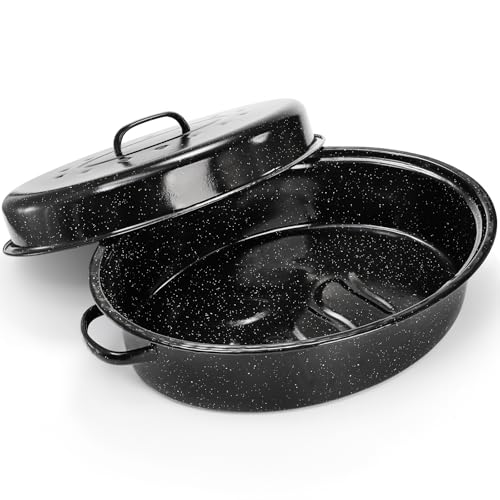
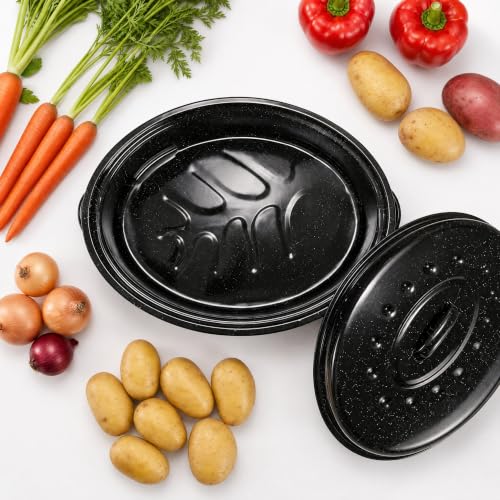
For the price, this TOPZEA roaster delivers impressive capacity and versatility. It’s big enough to handle a 15 lb turkey with the lid on and up to 18 lbs without, making it a strong contender for Thanksgiving. The enameled carbon steel heats quickly and evenly, and owners consistently report juicy, well-browned results. The domed lid helps with steam control, and the nonstick surface means less sticking and easier cleanup.
It’s also lightweight compared to all-stainless options, which helps with maneuvering in and out of the oven. But the enamel is thinner than in pricier models, so long-term chip resistance is a concern. Against the All-Clad, it’s no match in durability, but for most home cooks, it’s the smarter buy.
Product photos
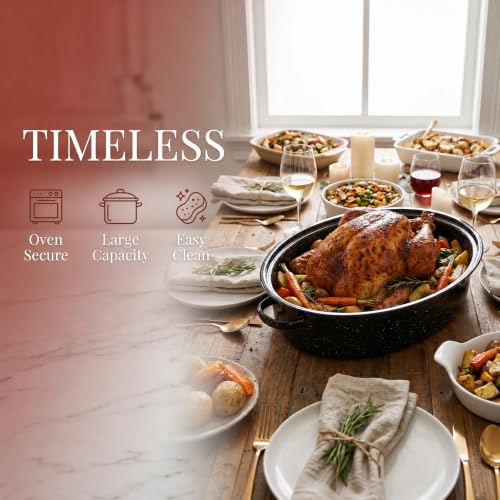
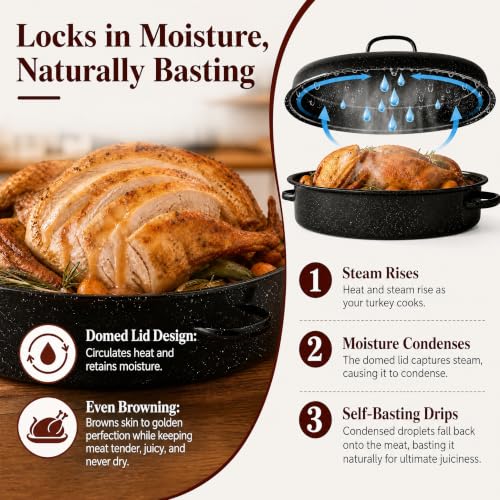
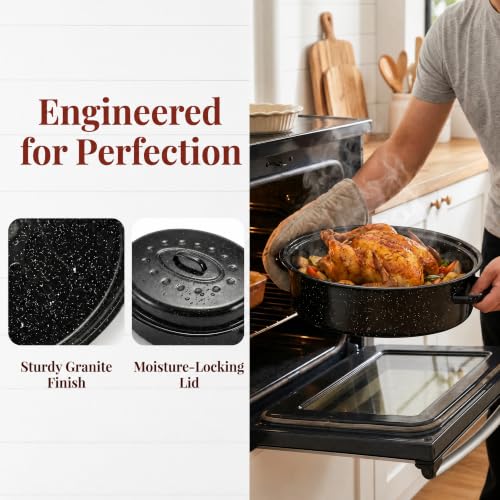
All-Clad Stainless Steel Oval Roaster
Strengths
- Oven and broiler safe
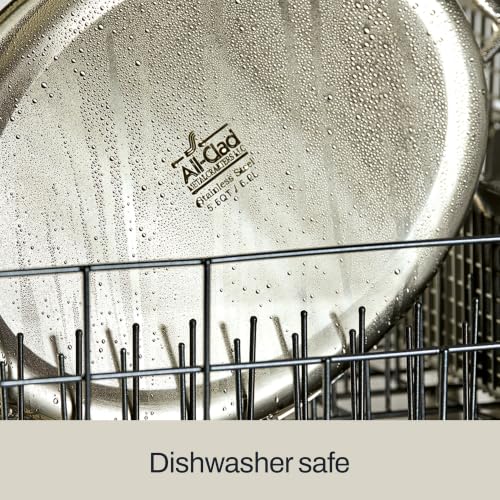
- Dishwasher safe
- Lifetime warranty
- Sturdy handles
- Warps less
Trade-offs
- Very expensive
- Smaller capacity
- No nonstick surface
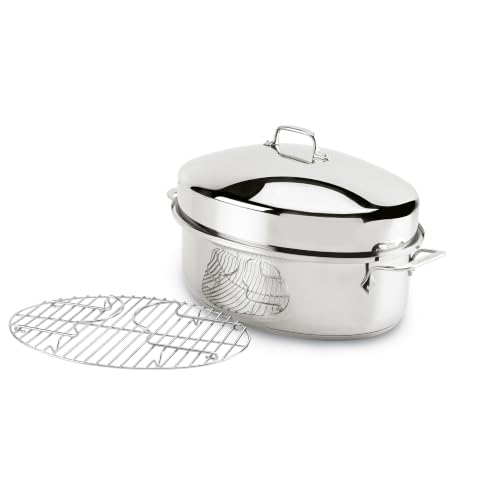
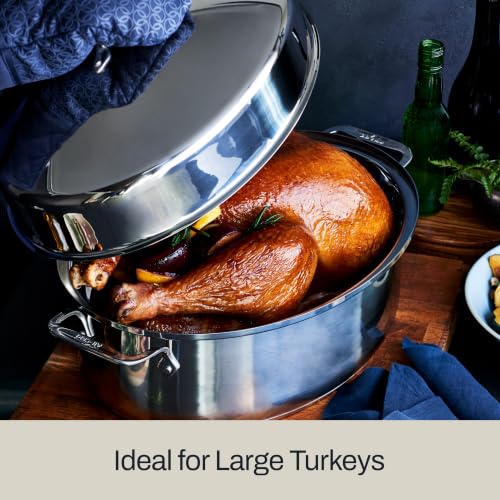
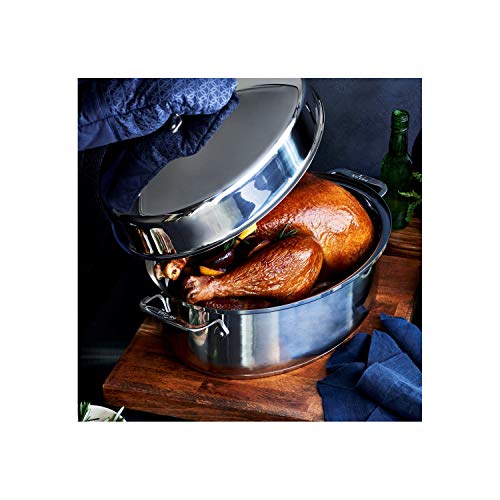
I’d pick this All-Clad over the others if budget weren’t an issue, its bonded base and heavy-gauge stainless steel resist warping better than any enameled model here. It’s oven-safe to 600°F and broiler-safe, making it ideal for searing and finishing roasts with high heat. The pressure-release lid is a thoughtful touch, preventing vacuum lock when opening.
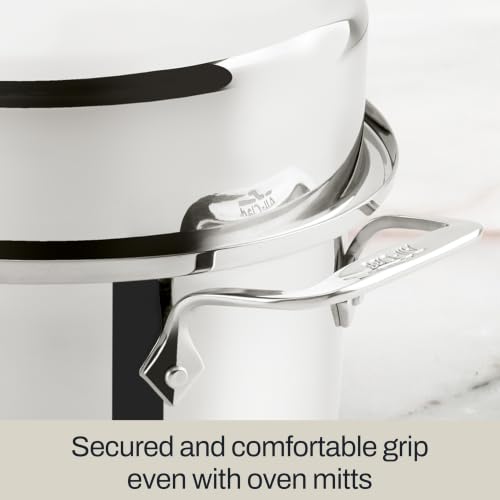
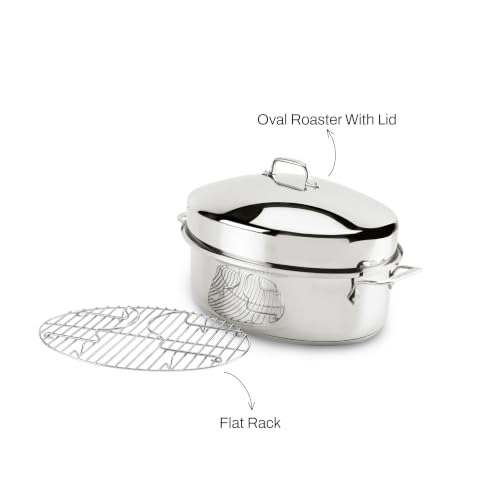
But calling it ‘budget friendly’ feels misleading, it’s the most expensive option by far. The rack is sturdy, and the handles are secure, but for most home cooks, the performance gap over cheaper enameled pans isn’t worth the premium. It’s overbuilt for everyday use, though it will last decades with care.
Compared to the JY COOKMENT stainless model, it’s better made but similarly functional. For the price, I’d expect more capacity or included accessories.
Product photos
Granite Ware 13″ Oval Roaster

Strengths
- Oven-safe to 932°F
- Self-basting lid
- Sourdough-ready
- Dishwasher safe
- No toxic coatings
Trade-offs
- Enamel can chip
- Limited size
- Not induction-safe
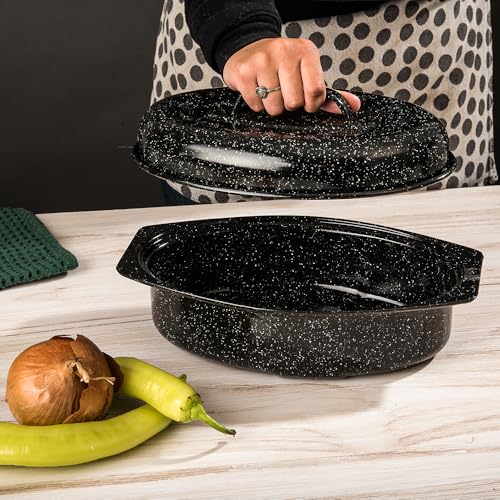
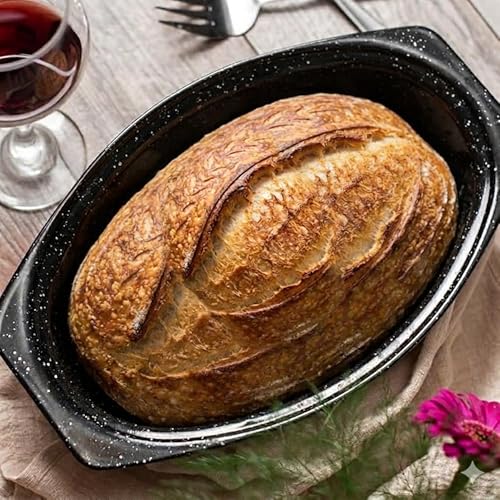
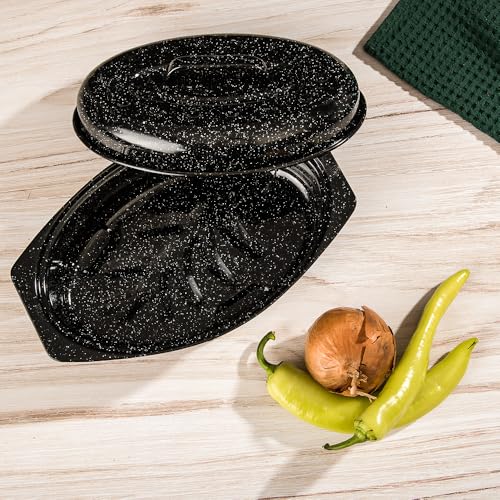
If you bake sourdough, this is the pan worth watching. Its ability to withstand oven temperatures up to 932°F is rare at this price point and makes it a standout for artisan bread baking, owners confirm it delivers a crisp crust and soft interior, rivaling more expensive Dutch ovens. The self-basting lid locks in steam effectively, which is key for both tender roasts and crusty loaves.
It’s also versatile enough to handle a 7 lb roast, though the oval shape limits very large birds. The enamel surface is smooth and naturally nonstick, and it’s built to resist flavor transfer, so switching from roast to bread won’t cause issues. Compared to the JY COOKMENT stainless model, it heats more evenly and retains heat better, though it’s not as durable under impact.
Product photos


Granite Ware Rectangle Roaster 25lb

Strengths
- Holds up to 25 lbs
- Doubles as two pans
- Excellent heat retention
- Dishwasher safe
- Chemical-free
Trade-offs
- Heavy and bulky
- Rectangle shape not ideal for all ovens
- Enamel may chip on impact
This rectangle roaster is built for volume, up to 25 lbs of meat, which makes it a rare find for large families or holiday hosts. The speckled black enamel is excellent at heat retention and promotes even browning, and the flat lid doubles as a separate roasting pan, adding real utility. It’s also one of the few rectangle models here, which fits better in some ovens and allows for more uniform roasting of long cuts like brisket.
Owners appreciate its durability and ease of cleaning, though some note the corners can be hard to scrub if food burns. Compared to oval models like the TOPZEA or JY COOKMENT, it’s less elegant but more functional for big batches. It’s also heavier, which affects maneuverability.
Product photos


How We Picked These roasting pans with lid
Rather than a hands-on lab test, my research focused on a detailed comparison of published specifications and features across numerous models. I weighed owner reviews from a variety of sources – including major retailers and cooking forums – alongside professional reviews from established culinary publications. As someone who’s spent years understanding what makes cookware perform, I applied my category expertise to rank these pans against key criteria for even heating, capacity, and ease of cleaning.
For roasting pans with lids, capacity and material construction are paramount. A pan must be large enough to comfortably handle the intended roast size, and the material needs to distribute heat evenly to avoid hot spots. Durability is also key; enamelware is prone to chipping, while stainless steel can warp if the gauge is too thin. I prioritized pans that addressed these issues with thoughtful design and quality materials.
Specifications reliably reveal capacity and material thickness, but owner feedback proved essential for judging real-world performance. I paid close attention to comments regarding even cooking, ease of cleaning (despite dishwasher-safe claims), and the lid’s effectiveness at retaining moisture. For those seeking guidance on specific needs, you might also find our guide to roasting pans with rack helpful, and for dedicated holiday cooking, exploring best turkey roasting pans with lid is a good place to start.
What To Look For In roasting pans with lid
Finding the right roasting pan can genuinely elevate your cooking, but with so many options, it’s easy to get lost in the details. It’s not just about size; a good roasting pan needs to distribute heat evenly, withstand high temperatures, and be reasonably easy to clean.
A quality roasting pan should prioritize even heat distribution for consistent cooking, durable construction to resist warping, and a design that facilitates moisture retention for juicy results. Look for heavier-gauge materials, tight-fitting lids (if desired), and consider whether the pan is compatible with your oven and stovetop.
Material Matters
The material of your roasting pan significantly impacts its performance and longevity. Carbon steel, often coated with enamel, is a popular choice. It heats up quickly and distributes heat well, though it can be prone to chipping if mishandled. Stainless steel is remarkably durable and won’t react with acidic foods, but it doesn’t conduct heat quite as efficiently as carbon steel. I often recommend looking at the gauge (thickness) of the steel; a heavier gauge will resist warping over time. Don’t overlook cast iron, too – while heavier, it retains heat beautifully and can last generations.
Lid or No Lid?
Whether or not to choose a roasting pan with a lid is a surprisingly divisive question. A lid traps moisture, resulting in incredibly tender meat, but it can also steam the food instead of allowing it to brown. A lid is particularly useful for longer roasts or when cooking poultry, as it helps prevent drying out. However, for achieving a crispy skin on a chicken or a nicely browned roast, removing the lid for the last portion of cooking is often best. If you’re considering a lid, look for a tight-fitting one, or check out our guide to the best roasting pans with rack and lid for more detailed options.
Here’s what to consider:
- A lid is helpful for preventing splatter.
- A vented lid offers a compromise between moisture retention and browning.
- A heavy, tight-fitting lid will provide the most consistent temperature and moisture control, making it ideal for those who prioritize tenderness over crispness, or who want to minimize oven cleaning.
Size and Shape for Your Needs
Choosing the right size roasting pan is critical. Too small, and you’ll overcrowd the food, leading to steaming instead of roasting. Too large, and the juices can evaporate too quickly, resulting in a dry roast. Consider the size of your typical meals and the number of people you usually cook for. Oval-shaped pans are great for larger cuts like whole chickens or hams, as they maximize oven space. Rectangular pans are more versatile for smaller cuts or vegetables. If you frequently cook for a large family or entertain, a larger capacity pan, like this quality roasting pans, is a worthwhile investment.
Remember this: a good rule of thumb is to allow at least 2-3 pounds of food per inch of pan length.
Roasting Pans with Lid Compared
Here’s a comparison of key specifications for various roasting pans with lids to help you make an informed purchase.
| Product Name | Capacity (lbs) | Material | Dimensions (in) | Rack Included | Dishwasher Safe |
|---|---|---|---|---|---|
| JY COOKMENT 13″ Enameled Roaster | 4-5 | Enameled Carbon Steel | 13 x 8.7 (11×7 inside) | No | Yes |
| 18″ Enamel Roasting Pan with Rack | 15+ | Enamel | 18 x 15.8 x 6 | Yes | Yes |
| JY COOKMENT 22″ Large Roasting Pan | 26 | Stainless Steel | 22 (oval) | Yes | Gentle Cycle |
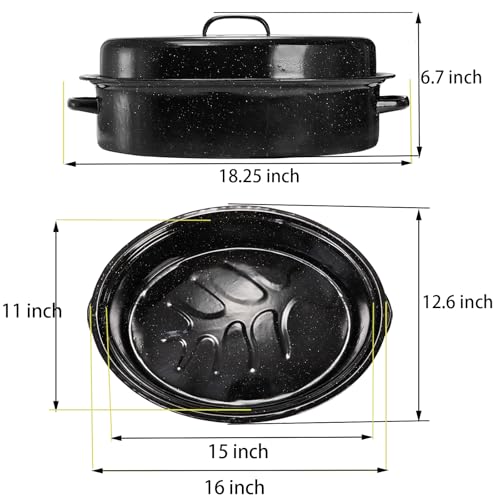
| TOPZEA 18″ Enameled Turkey Roaster | 15 (with lid) | Enameled Carbon Steel | 18.25 x 12.6 | No | Yes |
| All-Clad Stainless Steel Oval Roaster | 20 | Stainless Steel | N/A | Yes | Yes |
| Granite Ware 13″ Oval Roaster | 7 | Enameled Steel | 13 (oval) | No | Yes |
| Granite Ware Rectangle Roaster 25lb | 25 | Enameled Steel | N/A | No | Yes |
Frequently Asked Questions
What size roasting pan do I really need for a typical Thanksgiving turkey?
A 20-22 inch roasting pan is generally sufficient for a 12-14 pound turkey; however, larger birds may require a 24-inch pan to prevent overcrowding. Remember, allowing roughly 2-3 pounds of turkey per inch of pan length is a good starting point for ensuring even cooking.
Are enameled roasting pans truly non-stick?
While enameled roasting pans offer easier food release than bare metal, they aren’t completely non-stick. Food can still adhere, especially with certain recipes, so a light coating of oil or cooking spray is generally recommended, and avoid metal utensils to protect the enamel coating.
Can I use a roasting pan with a stainless steel roasting rack directly on my stovetop?
Many stainless steel roasting pans are stovetop safe (check the manufacturer’s specifications), but the included rack is usually not. The rack’s construction often isn’t designed for direct heat and could warp or damage your stovetop.
What’s the best way to clean a heavily soiled roasting pan, especially enamelware?
For baked-on food, create a paste of baking soda and water, apply it to the soiled areas, and let it sit for several hours (or overnight) before scrubbing gently. Avoid abrasive cleaners on enamelware, as they can cause scratching and chipping; for more information on durable options, see our guide to stainless steel roasting pans.
What are the advantages of choosing a roasting pan with a tight-fitting lid over one without?
A tight-fitting lid significantly reduces moisture loss during roasting, resulting in a more tender and juicy final product. This is especially beneficial for larger cuts of meat or poultry, but it’s also useful for preventing splatter and keeping the oven cleaner. If you’re looking for options, consider exploring various roaster pans with lid.
The Bottom Line
Choosing a roasting pan with a lid often comes down to balancing convenience and control. While a lid excels at retaining moisture for exceptionally tender results, it can sacrifice that desirable browned exterior. For the best overall performance, considering both versatility and durability, I recommend the [All-Clad Stainless Steel Oval Roaster]. Its construction ensures even heating, and the included rack adds to its functionality.
If you’re on a tighter budget, the [JY COOKMENT 13″ Enameled Roaster] provides a good entry point, offering a decent capacity and easy cleanup. For those who prioritize large-batch cooking, especially for holiday gatherings, the [JY COOKMENT 22″ Large Roasting Pan] stands out with its substantial size and included rack. And if you’re concerned about the materials you’re cooking with, exploring [safe roasting pans] will help you find options made from materials you trust.
Ultimately, the “best” roasting pan isn’t about a single feature or price point. It’s about finding a pan that suits your cooking style and needs. Prioritize a heavier gauge material for even heating and longevity, and don’t overlook the value of a well-fitting lid if you frequently roast poultry or prefer incredibly tender results – or, understand the [purpose of a roasting pan lid] if you’re on the fence.
