
8 Best Simmer Pots of 2026
This post contains affiliate links. As an Amazon Associate, we earn from qualifying purchases.
The Crystalbru 2L Clear Glass Simmer Pot is the best overall, combining solid capacity and useful extras like a strainer and recipe e-book. For a more budget-friendly option, the 1.5L Borosilicate Stovetop Saucepan delivers reliable performance without frills.
Most people buying a simmer pot want something that won’t crack under heat and actually lasts beyond a few uses. Too many options look good but fail when hit with sudden temperature changes or uneven burners.
This guide cuts through the noise, focusing on what matters: glass quality, heat resistance, and real-world durability. I compared specs and owner feedback across top models to find ones that perform consistently, whether you’re simmering sauces or filling your home with natural fragrance.
Top 8 Simmer Pots in the Market
The Best Simmer Pots, Reviewed
Crystalbru 2L Clear Glass Simmer Pot

Strengths
- Includes strainer
- Thick borosilicate glass
- Anti-scald handles
Trade-offs
- Pricier than basics
- No induction testing confirmed
- Strainer not dishwasher safe
This is the most complete package in the lineup, and it earns the ‘Best Overall’ label not just for its size but for the thoughtful extras. The 2L capacity gives real flexibility, enough for family-sized soups or batched baby food, and the 3.5mm thick borosilicate glass feels sturdier than most. Owners praise the anti-scald handles, which stay cooler and offer better grip than standard models.
What really sets it apart is the included clip-on strainer and recipe e-book. The strainer alone makes draining pasta or rinsing grains far easier than using a colander with a hot glass pot. Combined with its full temperature range and multi-appliance use, this is the one I’d recommend to someone wanting a single, versatile simmer pot. It’s not the cheapest, but the value is clear.
Video review
Clear Glass Simmer Pot 1.5L
Strengths
- Anti-scald handles
- Great for aromatherapy
- Compact and clear
Trade-offs
- Lower heat limit
- No strainer
- Limited cooking use
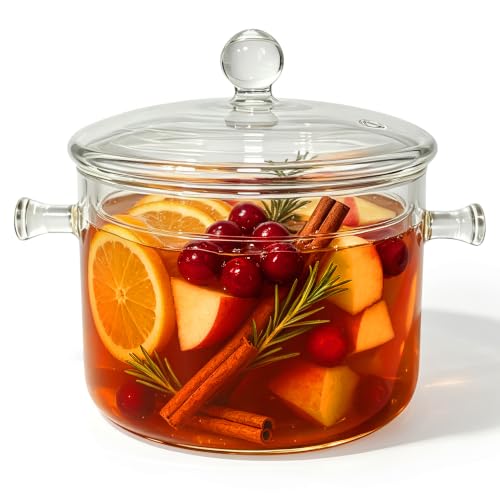
This pot is clearly optimized for potpourri use, and that’s where it shines. The 1.5L size is perfect for simmering citrus peels, cinnamon, and cloves to fragrance a room, and owners love being able to watch the aromatics bubble without lifting the lid. The anti-scald handles are a real safety upgrade, especially when kids are around.
It works fine for cooking small meals, but its lower max temperature (302°F) and lack of strainer make it less practical than others for daily kitchen tasks. If you’re primarily using it to warm milk or make tea, it’s sufficient. But for serious cooking, other models offer better value. I’d recommend this only if potpourri is your main goal.
Video review
Clear Glass Pot Set 1.9L

Strengths
- Includes cleaning brush
- Silicone hot pad
- Dishwasher safe
Trade-offs
- No anti-scald handles
- Not for high heat
- No strainer
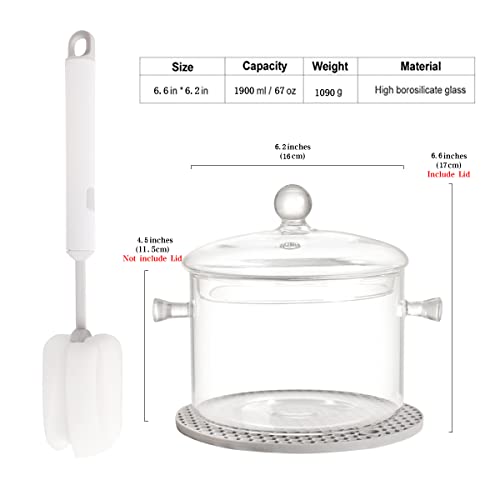
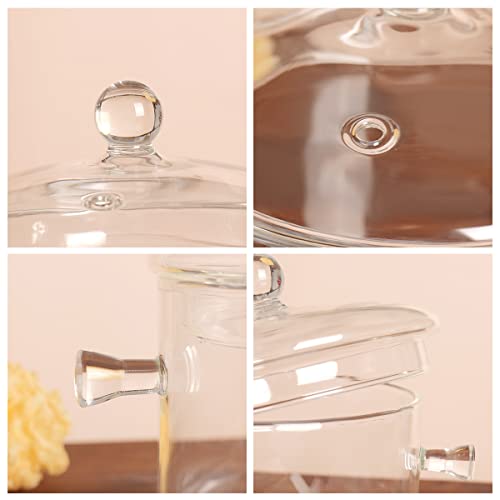
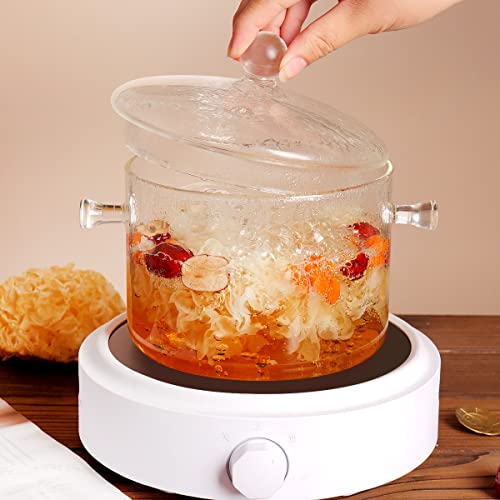
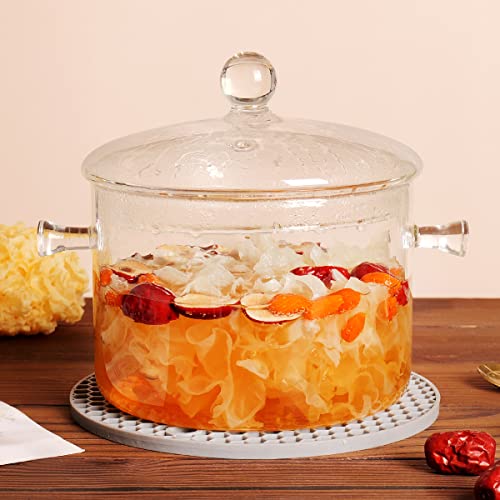
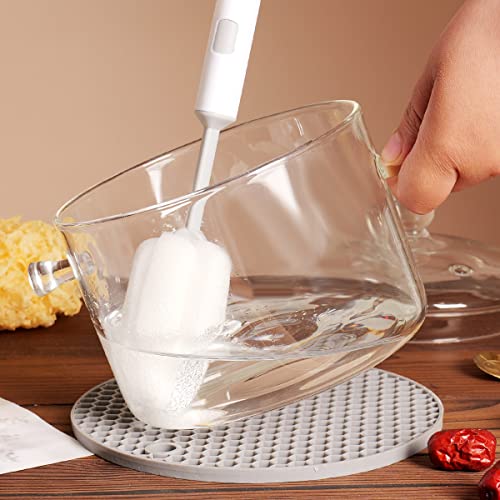
This set stands out not for the pot itself, which is similar to others in size and material, but for the included extras: a silicone hot pad and a sponge bottle brush. These small touches make handling and cleaning easier, especially with a fragile glass pot. The 1.9L capacity is practical for 2–3 people, and the borosilicate glass is as safe and non-toxic as advertised.
However, the instructions warn against high heat and induction use, which limits its flexibility. Owners note it works well on electric and gas stoves when heated slowly. The lack of anti-scald handles is a missed opportunity, but the included tools help compensate. It’s not the most durable option, but for the price, it’s a well-rounded package.
Product photos
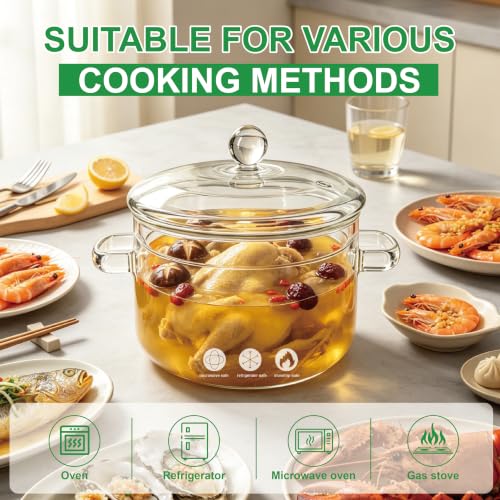
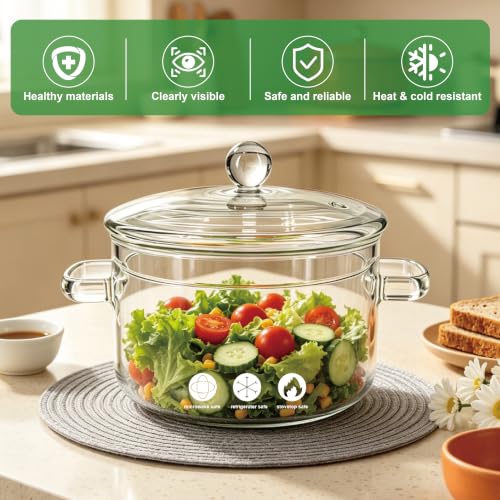
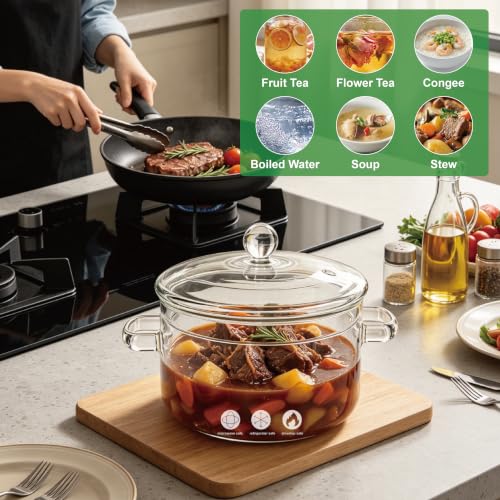
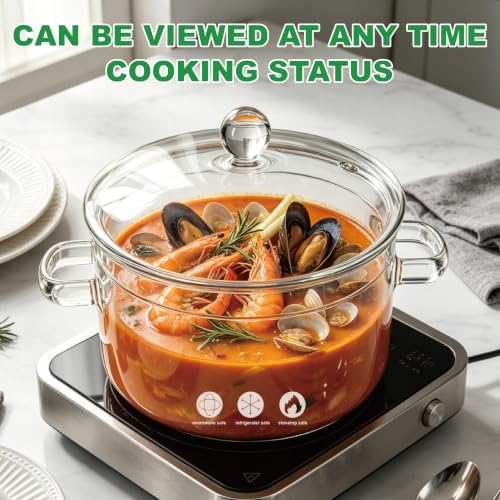
1.5L Borosilicate Stovetop Saucepan
Strengths
- Excellent price
- Lead-free glass
- Compact size
Trade-offs
- No strainer
- Basic handle
- Not induction compatible
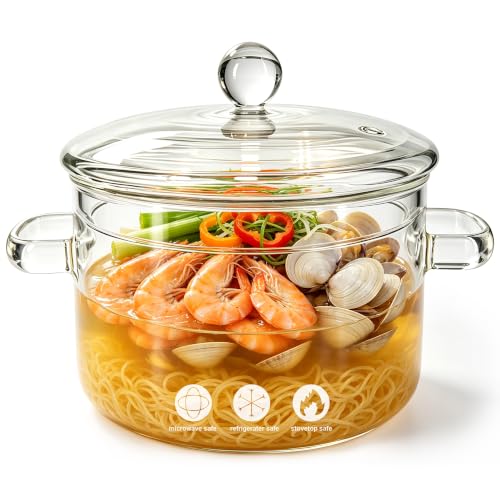
This pot hits a sweet spot between price and performance, making it the true value pick. At just over $16, it’s built with the same borosilicate glass as models twice its cost, and owners confirm it handles daily use well when treated gently. The 1.5L size is ideal for one to three people, perfect for reheating milk, making ramen, or simmering sauces without cluttering the stove.
It lacks extras like a strainer or fancy handles, but it doesn’t need them. The transparency works as advertised, and the lid seals well enough to prevent splatters. It’s not for induction, but for gas or electric users, it’s a no-nonsense workhorse. If you want a dependable, low-cost simmer pot that won’t leach chemicals, this is the smarter buy over pricier but similar models.
Product photos
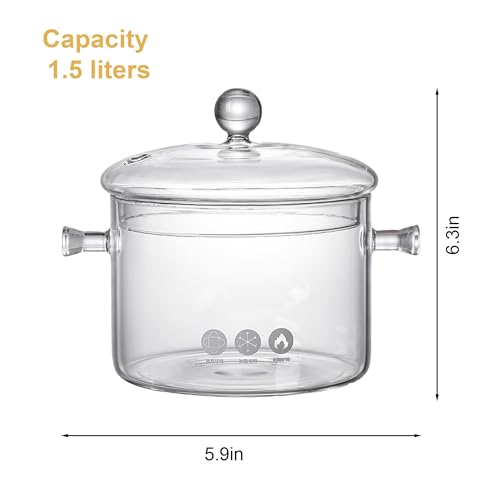
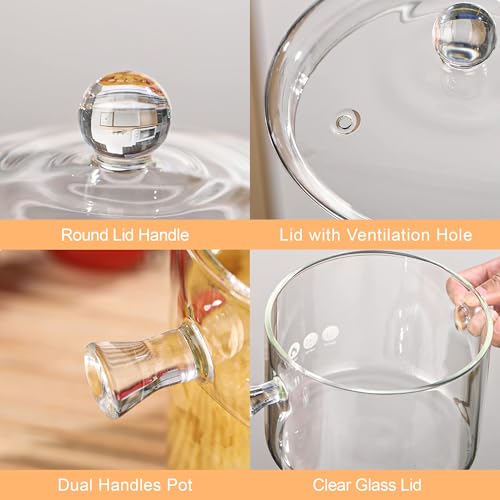
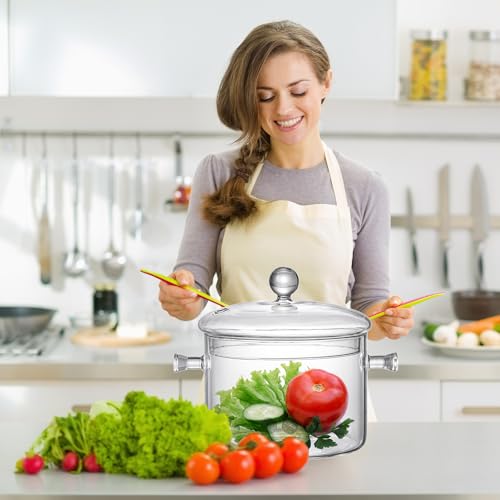
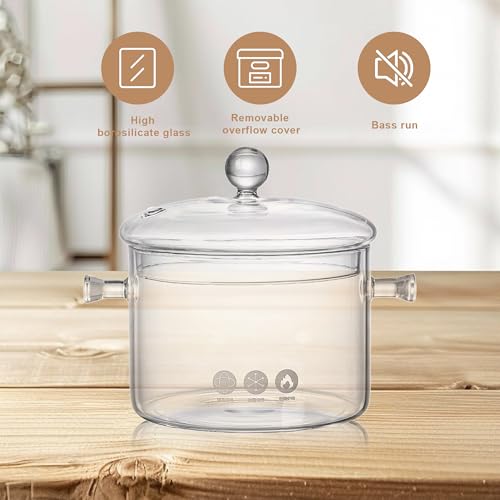
50 FL OZ Glass Saucepan Simmer Pot

Strengths
- Borosilicate glass
- Affordable
- Dishwasher safe
Trade-offs
- Basic handle design
- Fragile if misused
- No strainer or extras
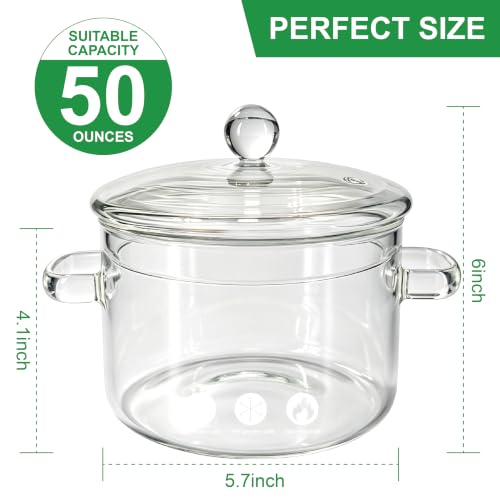
At this price, this glass simmer pot delivers more than you’d expect for basic kitchen tasks. The borosilicate glass is genuinely clear and non-reactive, which means no metallic taste or chemical leaching, owners consistently report using it for baby food and milk without concern. It’s simple, functional, and transparent, letting you watch pasta or soup without lifting the lid, which helps maintain even heat.
Still, it lacks standout features beyond its core build. The handle is basic and while it resists heat, it doesn’t offer the comfort or anti-scald protection seen on pricier models. It works across stovetops and ovens, but the need to preheat gently and avoid high heat limits its versatility. For occasional use and tight budgets, it’s a solid pick, but not one I’d trust for daily simmering or heavy-duty cooking.
Product photos

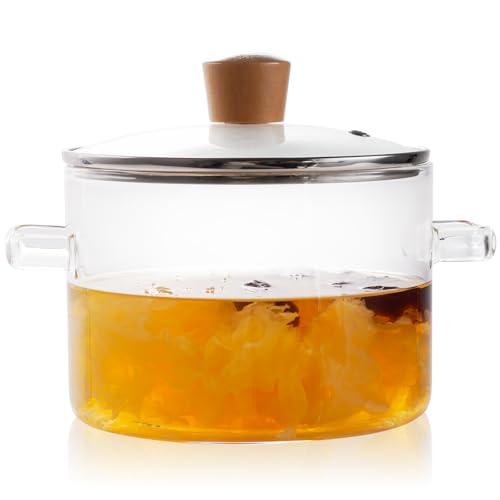
Recceng 1.8L Clear Simmer Pot
Strengths
- Good capacity
- Thick glass
- Multi-use
Trade-offs
- No included strainer
- Handles heat up
- No induction support
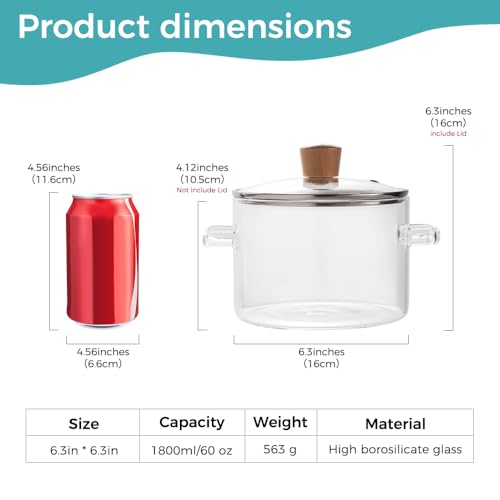
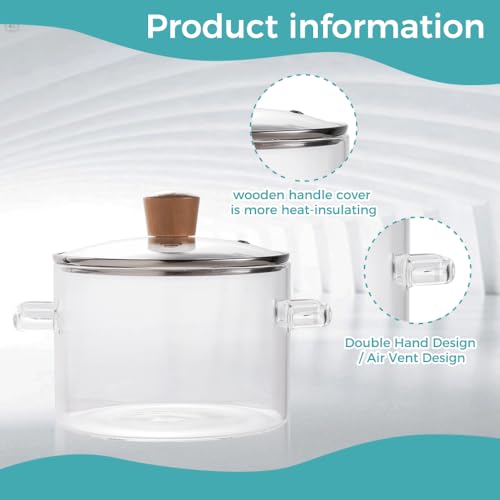
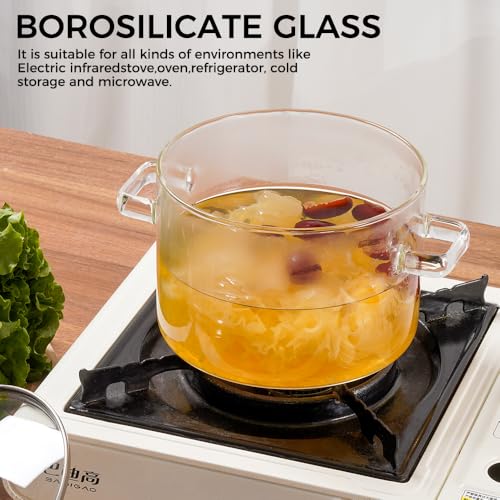
With a 1.8L capacity, this pot bridges the gap between individual and family use, making it a natural fit for small households. The lab-grade glass feels thick and stable, and owners consistently report using it for everything from pasta to potpourri without issues. The transparency is a real advantage, being able to monitor cooking without lifting the lid helps maintain consistent heat, which matters when simmering delicate sauces or baby food.
It doesn’t come with extras, and the handles, while functional, aren’t insulated like the Crystalbru’s. But for its size and price, it delivers solid performance across stovetops, ovens, and microwaves. I’d choose this over the 1.5L models if you regularly cook for more than two but don’t need a full 2L.
Product photos

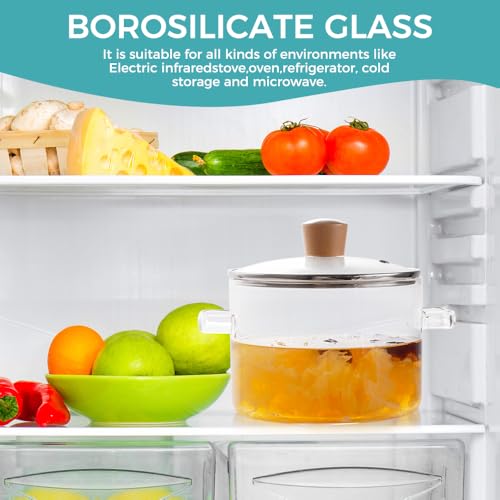
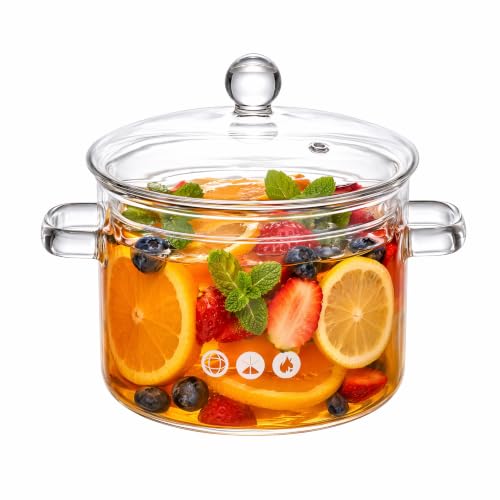
Sykexonm 1.9L Borosilicate Glass Simmer Pot
Strengths
- Double handles
- Thermal shock resistant
- Large capacity
Trade-offs
- No strainer included
- Handle comfort average
- Not induction tested
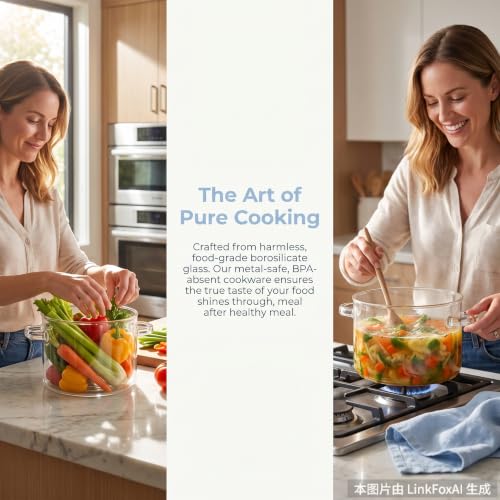
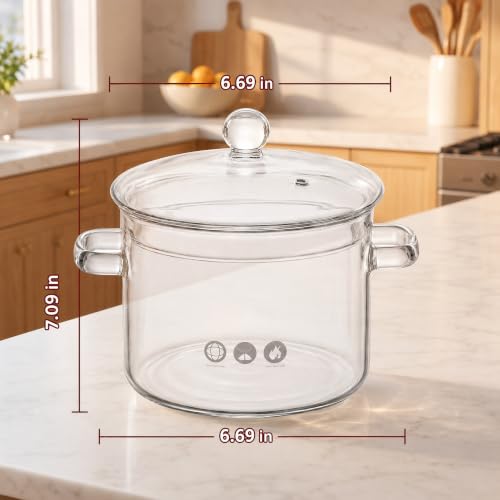
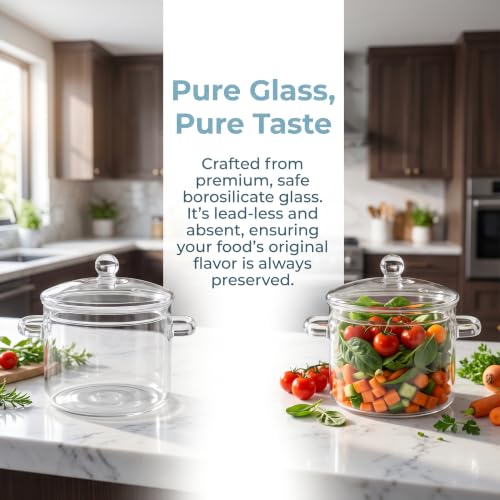
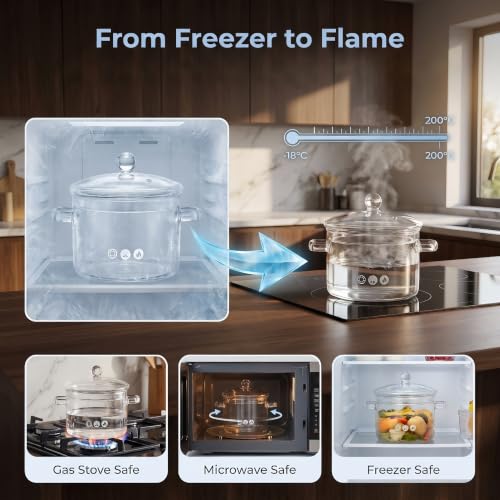
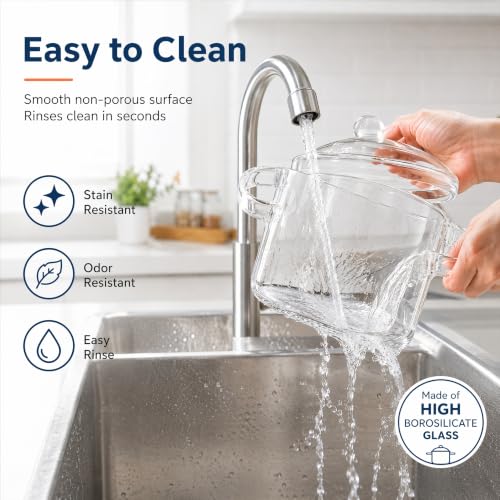
This mid-range option delivers where it counts: size, clarity, and thermal resilience. The 1.9L capacity is practical for most households, and the double handles make serving safer and easier, especially when the pot is full. Owners appreciate the crystal-clear glass, which holds up well to daily observation without clouding. It’s oven, microwave, and fridge safe, and the thermal shock resistance is on par with higher-end brands.
It doesn’t include a strainer, which feels like a drawback at this price, but the build quality justifies the label ‘Best Mid Range’. The handles stay relatively cool, though not as insulated as anti-scald designs. If you want a no-frills, reliable pot that handles transitions from fridge to stove safely, this is a strong contender.
Product photos
SENSARTE Nonstick Saucepan with Lid

Strengths
- Induction compatible
- Stay-cool handle
- Even heating
Trade-offs
- Small capacity
- Oven-safe only to 302°F
- Not for high-heat searing
This little nonstick pot stands out in a sea of glass options by offering something different: reliable induction performance and a stay-cool handle. The Swiss ILAG coating is a real upgrade, owners say it holds up well over time with minimal scratching, and the absence of PFOA makes it a healthier daily option. It heats quickly thanks to its aluminum core and magnetic base, which is rare at this size and price.
I’d pick this over glass if you’re cooking small meals regularly and want something that won’t stick or scorch. It’s not ideal for boiling large batches of pasta, but for oatmeal, sauces, or reheating, it’s efficient. The glass lid is a nice touch, though the oven limit of 302°F means you can’t use it for browning. Still, for induction users, this is the smarter buy.
Product photos


How We Chose These simmer pots
My approach to recommending simmer pots, as with all cookware at CookwareCanvas, began with a thorough comparison of published specifications and features. I weighed those objective details against extensive owner and expert reviews, looking for patterns in performance and durability. Rather than a hands-on lab test, this is a research-led comparison, applying my decade of experience in evaluating cookware to arrive at a ranked selection.
For simmer pots, two factors stood out as most crucial: material quality – specifically borosilicate glass thickness and temperature resistance – and practical design elements. A pot’s ability to withstand thermal shock is paramount, as is a well-fitting lid to retain aromatics for those seeking simmer pots for home fragrance. Capacity also played a role, influencing suitability for single servings versus family meals.
Specifications reliably indicate a pot’s stated temperature limits and capacity. However, owner feedback proved invaluable in assessing real-world durability and ease of cleaning. I paid close attention to comments regarding chipping, cracking, and handle comfort. Reputation, especially for brands known for quality glass cookware, also factored in. While many options exist, I also considered alternatives like ceramic crock pots for those wanting a longer, slower simmer.
How To Pick The Right simmer pots
Finding the right simmer pot can elevate your kitchen game, but there’s more to it than just clear glass. It’s about understanding how materials, heat distribution, and overall construction impact your cooking experience.
A quality simmer pot balances thermal shock resistance with even heating. Look for borosilicate glass construction, a capacity suited to your typical cooking volumes, and features that enhance usability – like a well-fitting lid and comfortable handles. Prioritize safety certifications (lead and BPA-free) and consider stove compatibility before making a decision.
Glass Type and Durability
The most important factor in a glass simmer pot is, unsurprisingly, the glass itself. Borosilicate glass is the standard for a reason; it’s far more resistant to thermal shock than standard glass, meaning it’s less likely to shatter when going from cold to hot. However, even borosilicate isn’t indestructible. Thicker glass (3mm or higher) generally offers better durability, but also increases the price. Don’t assume thicker always means better; look for reputable brands known for quality control. Pay attention to owner reviews regarding cracking or breakage, particularly if you plan to use the pot frequently or on a gas stove.
Heat Distribution and Stove Compatibility
Clear glass lets you see your food, but it doesn’t inherently conduct heat well. That’s where the base material comes into play. While many pots rely on direct heat from the burner, some incorporate a disc of aluminum or stainless steel within the glass base to improve heat distribution. This can prevent hot spots and ensure more even cooking. Critically, verify stove compatibility. Not all glass simmer pots work on induction cooktops; those that do will specifically state it. If you’re looking for a versatile option for various cooking methods, checking compatibility across gas, electric, and even oven use is essential. For larger cooking tasks, you might also consider looking at our guide to the best 6 quart cooking pots.
Size, Features, and Value
Capacity is key. A 1.5-2L simmer pot is ideal for single servings or small side dishes, while a larger 1.9L or 2L pot is better for soups or cooking for a small family. Beyond capacity, consider included accessories. Some models, like the Crystalbru, include a strainer or recipe book, adding value. Here’s what to consider when weighing cost versus features:
- Basic Functionality: A simple, well-made glass pot with a lid is often the best starting point.
- Included Accessories: Strainers, infusers, or recipe books can be useful, but don’t overpay for items you won’t use.
- Handle Design: Secure, heat-resistant handles are crucial for safety and ease of use; look for ergonomic designs.
Ultimately, the best simmer pot for you depends on your cooking style and needs. Don’t fall for marketing hype; focus on quality materials and practical features. If you want to explore a wider range of options, reading reviews of various glass simmer pots can provide valuable insights.
Don’t shock the glass. Always start with low heat and gradually increase it, avoiding sudden temperature changes to prevent cracking.
Simmer Pots Compared
Here’s a comparison of key specifications for various simmer pots to help you make an informed decision.
| Product Title | Capacity (L) | Material | Temp Resistance (°F) | Stove Compatibility | Accessories Included |
|---|---|---|---|---|---|
| Crystalbru 2L Clear Glass Simmer Pot | 2 | Borosilicate Glass | N/A | Gas, Electric, IR | Strainer, E-book |
| Clear Glass Simmer Pot 1.5L | 1.5 | Borosilicate Glass | 0-302 | Gas, Oven, Microwave | N/A |
| Clear Glass Pot Set 1.9L | 1.9 | Borosilicate Glass | 0-400 | Gas, Electric, Oven | Pad, Brush |
| 1.5L Borosilicate Stovetop Saucepan | 1.5 | Borosilicate Glass | 0-400 | Gas, Electric, Oven | N/A |
| 50 FL OZ Glass Saucepan Simmer Pot | 1.5 | Borosilicate Glass | 0-400 | Gas, Electric, Oven | N/A |
| Recceng 1.8L Clear Simmer Pot | 1.8 | Borosilicate Glass | 0-400 | Gas, Electric, Oven | N/A |
| Sykexonm 1.9L Borosilicate Glass Simmer Pot | 1.9 | Borosilicate Glass | 0-400 | Gas, Electric | N/A |
| SENSARTE Nonstick Saucepan with Lid | 1.5 | Stainless Steel | 302 | All (Incl. Induction) | Glass Lid |
Frequently Asked Questions
What temperature can most simmer pots safely withstand?
Most borosilicate glass simmer pots can safely handle temperatures up to 400°F (204°C), though some are limited to 302°F (150°C). Always check the manufacturer’s specifications to avoid exceeding the safe heat limit and potentially cracking the glass.
Are simmer pots suitable for induction cooktops?
Not all simmer pots work on induction cooktops. You’ll need to specifically look for models that state induction compatibility, as they require a magnetic base which standard glass does not have.
How does the thickness of the glass affect a simmer pot’s durability?
Generally, a thicker borosilicate glass (3mm or higher) offers better resistance to thermal shock and breakage, but it isn’t the only factor. Quality control from the manufacturer plays a significant role, and owner reviews can provide valuable insight into real-world durability.
Can I use a simmer pot directly from the stove to the refrigerator?
I advise against it. While borosilicate glass is thermal shock resistant, a sudden and drastic temperature change can still cause cracking. Allow the pot to cool to room temperature before refrigerating its contents.
Are there alternatives to glass simmer pots if I prefer a different material?
If you’re seeking a longer, slower simmer, or prefer a different material, you might consider cast iron pots which excel at heat retention and even cooking, though they require different care and aren’t transparent.
The Bottom Line
Choosing a simmer pot often comes down to balancing control over your cooking with convenience. While numerous options exist, the Crystalbru 2L Clear Glass Simmer Pot consistently stands out as a well-rounded choice, offering a good capacity, helpful accessories like a strainer, and broad stovetop compatibility. It strikes a smart balance between features and price, making it a solid pick for most home cooks.
For those prioritizing affordability, the Clear Glass Simmer Pot 1.5L delivers essential functionality without unnecessary extras. And if you’re looking for versatility and don’t mind a different material, exploring ceramic pots can offer a wider range of cooking options. However, remember that glass capacity increases with price, so adjust your expectations accordingly.
Ultimately, the best simmer pot isn’t about chasing the highest temperature rating or the latest accessory. It’s about selecting a pot crafted from durable borosilicate glass, suited to your typical cooking volumes, and – most importantly – one that feels safe and comfortable to use. Prioritize those fundamentals, and you’ll find yourself enjoying countless flavorful meals for years to come.
