
8 Best Single Burner Propane Stoves of 2026
This post contains affiliate links. As an Amazon Associate, we earn from qualifying purchases.
The Vivicreate 30,000 BTU Heavy Duty Stove is the best overall single burner propane stove for serious outdoor cooking, delivering powerful, reliable heat. For budget-conscious buyers, the WENMAX 15,000 BTU Portable Propane Stove offers solid performance with useful safety features. If you need versatility, the GasOne 15,000 BTU Dual Fuel Stove runs on both propane and butane, making it ideal for travel or backup use.
Most people buying a single burner propane stove want something dependable that won’t quit when the wind picks up or fail after a few uses. Too many models cut corners on materials or regulators, leading to uneven flames or safety concerns.
This guide cuts through the noise by focusing on real-world performance, durability, and safety, based on specs, owner feedback, and my years evaluating cooking equipment. I’ll show you which stoves actually deliver consistent heat and which ones are just hype.
Top 8 Single Burner Propane Stoves in the Market
The Best Single Burner Propane Stoves, Reviewed
Vivicreate 30,000 BTU Heavy Duty Stove

Strengths
- 30,000 BTU strong output
- Adjustable height legs
- Includes regulator and hose
Trade-offs
- No wind protection
- Heavier than compact stoves
This is the balanced all-rounder, the one I’d recommend to most buyers who want serious power without going overboard. At 30,000 BTU, it’s strong enough for boiling large pots of water, searing meats, or running a wok, yet still manageable and stable. The adjustable two-level stand is a thoughtful touch, letting you lower the height for stability or raise it for comfort. The cast iron burner and steel frame feel rugged, and owners report it handles repeated use without issue.
It includes a 20 PSI regulator and hose, which gives better flame control than many budget models, and the build quality edges out the 18,000 BTU stainless steel stove in durability. Compared to the Hike Crew, it’s less extreme but more practical for regular family camping. If you want power, stability, and smart design without the bulk, this is the sweet spot.
Video review
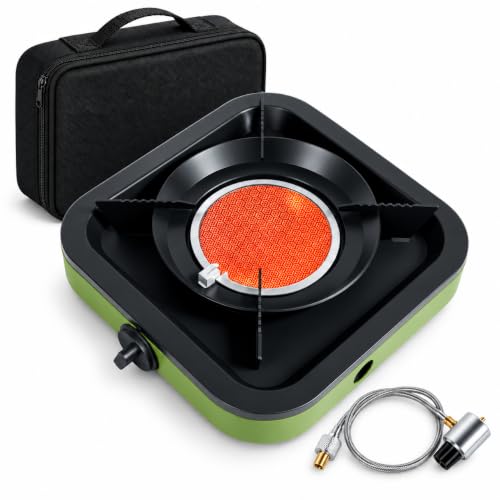
Cothb X Infrared No Open Flame Stove
Strengths
- Infrared, wind-resistant
- Ultra-compact design
- Includes carrying case
Trade-offs
- Lower heat output
- No simmer control precision
The infrared design sets this stove apart, no open flame means it’s far less vulnerable to wind, and that’s a big deal when you’re cooking on a breezy lakeside or exposed ridge. At 2600W (roughly 8,800 BTU), it’s not the most powerful, but the heat is consistent and evenly distributed, which owners say works well for simmering and frying without hot spots. The lack of flame also makes it feel safer, especially around kids or in tight outdoor setups.
It’s incredibly compact and comes with a well-fitting carrying case, making it a top pick for car campers or tailgaters who value convenience and wind resistance over raw power. Compared to the Coleman Bottletop, it’s more stable in wind but doesn’t match its BTU output. Still, for low-and-slow cooking or boiling water in gusty conditions, this is a smart, underrated option.
Video review
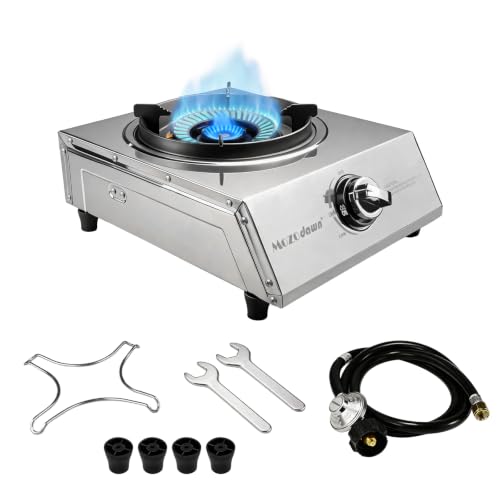
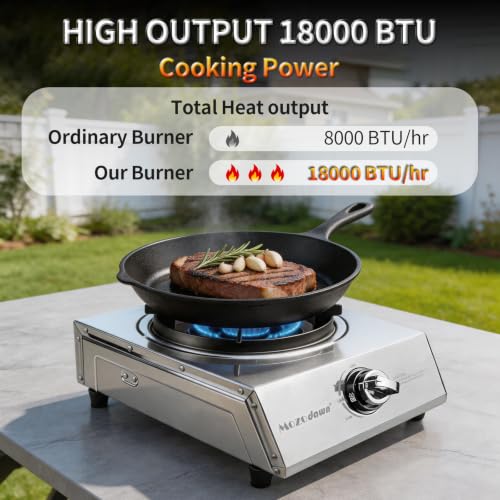
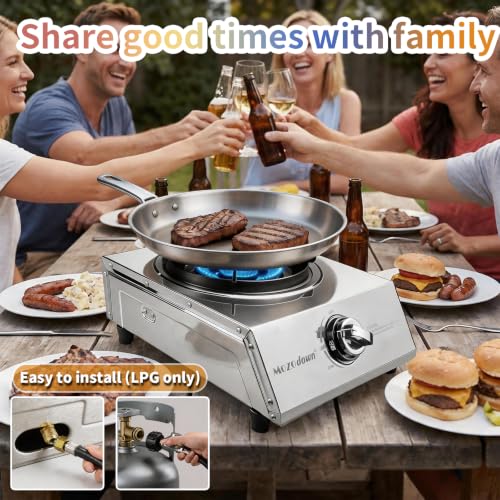
18,000 BTU Stainless Steel Propane Stove
Strengths
- 18,000 BTU output
- Stainless steel construction
- Includes 5-foot hose
Trade-offs
- No wind baffles
- Heavier than compact models
This stove punches well above its price point with a solid 18,000 BTU output, making it a strong contender for anyone who needs reliable, fast heat without breaking the bank. The thickened stainless steel build stands out in this class, offering better durability than many competitors at a similar price, and owners consistently report it holds up well under frequent outdoor use. The automatic piezo ignition works reliably, and the included 5-foot hose adds real convenience, few stoves at this price include one that long.
Where it really shines is in performance per dollar. Compared to the Coleman Bottletop or SHINESTAR models, this delivers significantly more heat, making it better suited for tasks like deep frying or boiling large pots of water. It’s not as powerful as the Hike Crew or Vivicreate beasts, but for most camp cooks, that extra firepower isn’t necessary, and this one hits the sweet spot between output and value.
Product photos

WENMAX 15,000 BTU Portable Propane Stove

Strengths
- Child safety lock
- 15,000 BTU output
- Auto ignition
Trade-offs
- No wind protection
- No fuel flexibility
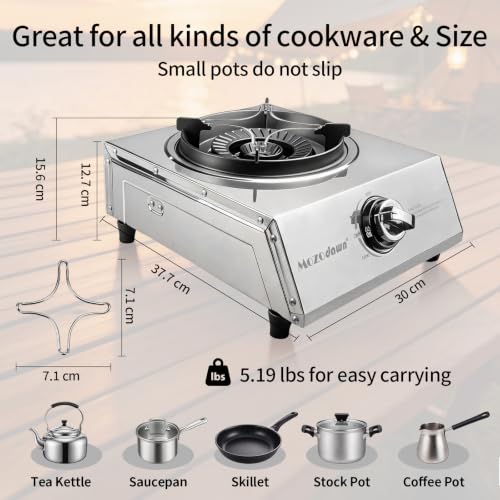
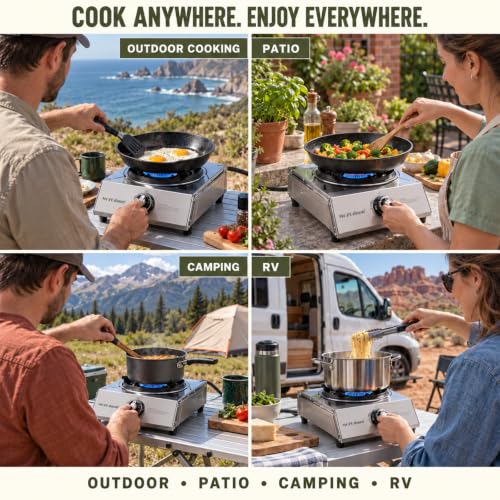
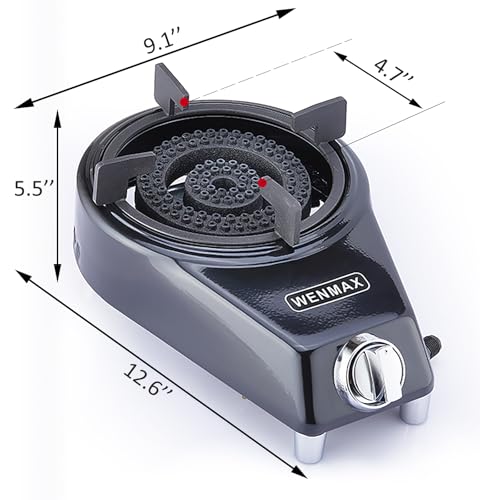
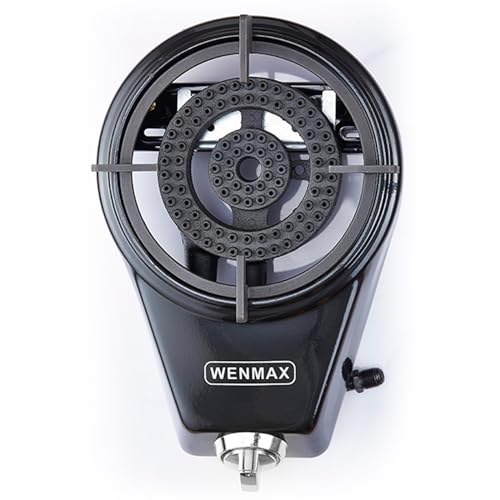
The standout here is the child safety lock, a rare and welcome feature in portable stoves. You have to press and turn the knob to ignite, which prevents accidental starts, a real concern with curious kids around camp. At 15,000 BTU, it matches the GasOne in power and heats quickly, and the automatic ignition is responsive. The stainless steel body feels durable, and the compact size makes it easy to store.
Owners note it’s stable and performs well for stir-fries and boiling, though it lacks wind protection features found on the GasOne or Cothb X. It doesn’t offer dual fuel or infrared benefits, but for families or anyone prioritizing safety, this is a smart pick. Compared to the 18,000 BTU stainless model, it’s slightly less powerful but safer and more user-friendly.
Product photos
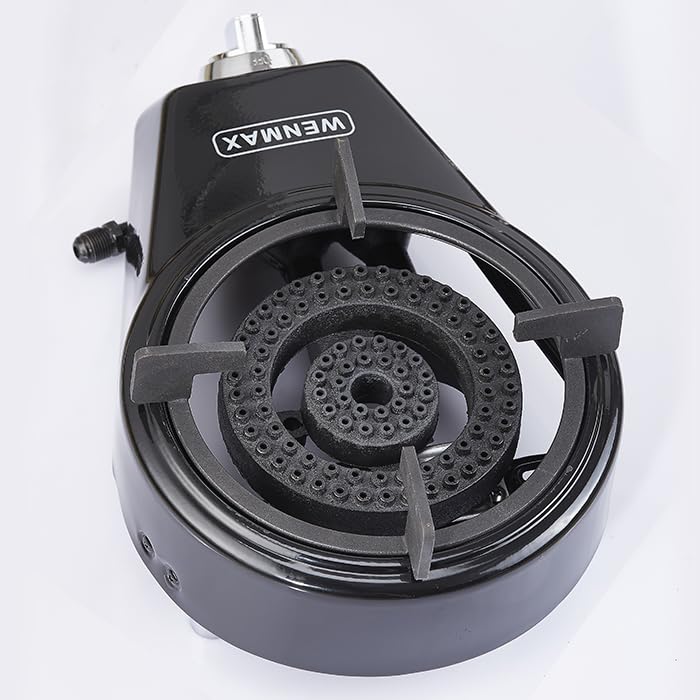

GasOne 15,000 BTU Dual Fuel Stove

Strengths
- Dual fuel compatible
- Built-in windblockers
- Cartridge ejection safety
Trade-offs
- No hose included for propane
- Slightly bulky design
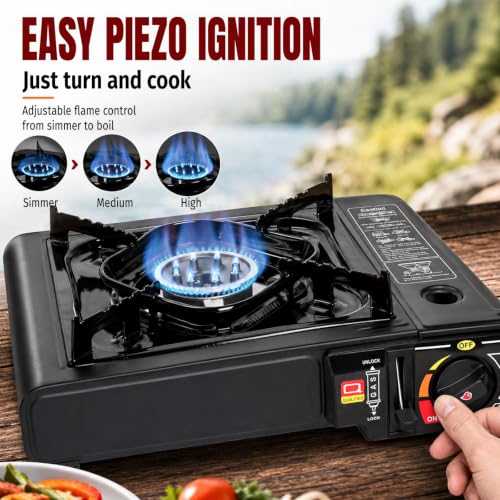
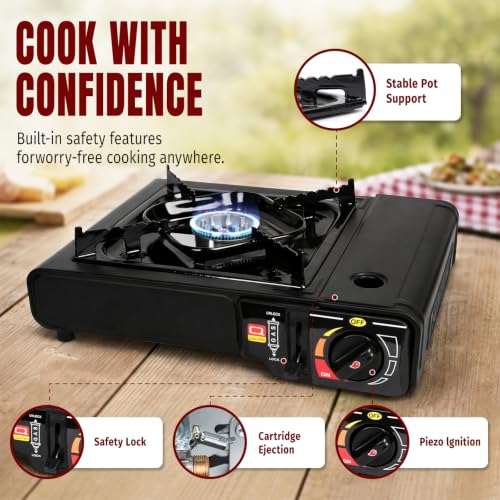
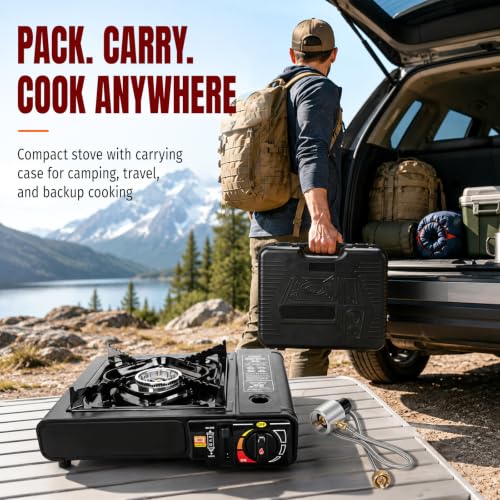
The dual-fuel capability here is a standout for travelers and preppers who can’t afford to be tied to one fuel type. Being able to switch between 8oz butane canisters and 1lb propane bottles means you’re never stranded without options, and the included adapter makes the swap effortless. At 15,000 BTU, it’s no slouch either, owners report it boils water quickly and holds steady in moderate wind, thanks to the full-corner windblockers that many competitors skimp on.
The build quality feels robust, and the pressure-sensor cartridge ejection system adds a rare layer of safety for a portable stove. It’s pricier than some, but you’re paying for versatility and thoughtful engineering. Compared to the SHINESTAR, it offers more power and better wind resistance, though it’s not quite as compact. If fuel flexibility is a priority, this is the one to beat.
Product photos


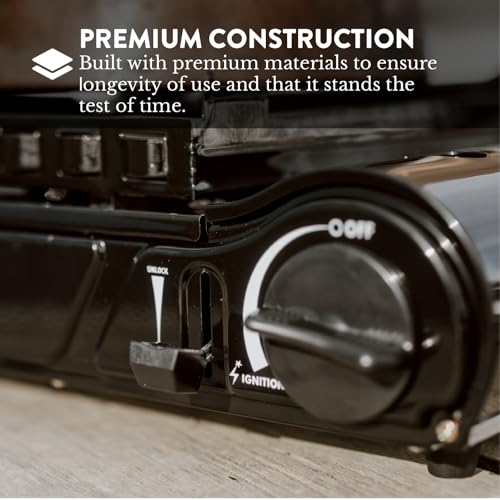
Coleman Bottletop 7,650 BTU Camping Stove

Strengths
- Ultra-compact design
- Screws directly to bottle
- Trusted Coleman reliability
Trade-offs
- Lowest BTU output
- Short run time
Coleman’s reputation for reliability isn’t just hype, this stove delivers exactly what it promises: simple, compact, and consistent performance. At 7,650 BTU, it’s the weakest in this lineup, but that’s by design. It screws directly onto a 16.4oz propane bottle, making it the most space-efficient option here. The PerfectHeat design helps stretch fuel, and owners consistently praise its reliability over years of occasional use.
It’s not for serious outdoor chefs who need high heat, but for quick meals, morning coffee, or emergency use, it’s hard to beat. Compared to the SHINESTAR or WENMAX, it’s less powerful but far more compact. The wind baffles help, but it still struggles in strong gusts. If portability and no-fuss setup are your top concerns, this remains a classic for good reason.
Product photos


SHINESTAR 7800 BTU Dual Fuel Stove

Strengths
- Dual fuel compatible
- Budget-friendly price
- Lightweight and portable
Trade-offs
- Lowest BTU in mid-tier range
- Flimsier build than metal stoves
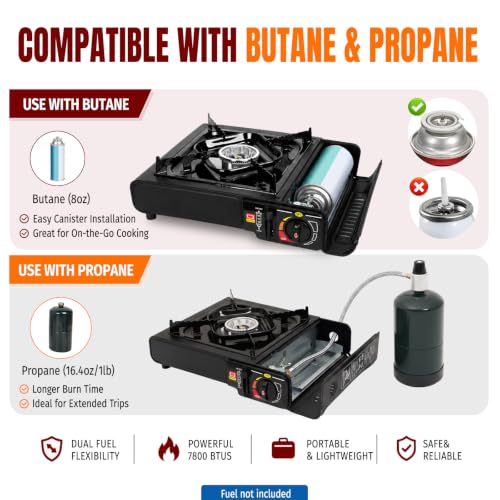
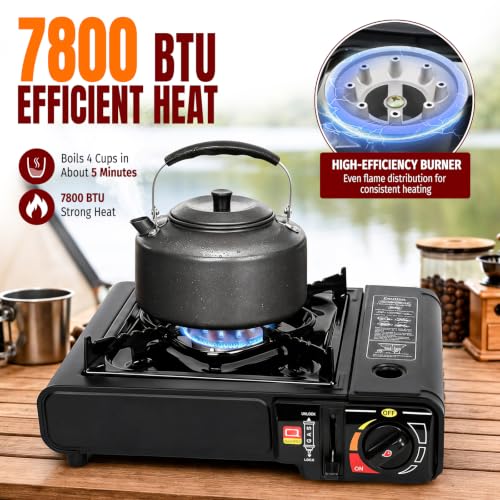
At under $40, this is the most budget-friendly option that still delivers real utility. The 7800 BTU output is modest, but enough to boil water in 5 minutes, and the dual-fuel design gives flexibility between butane canisters and propane tanks, a rare find at this price. The piezo ignition is rated for 10,000 clicks, and owners say it’s reliable over time.
It’s lightweight and comes with a carrying case, making it a solid pick for entry-level campers or as a backup stove. Compared to the Coleman Bottletop, it offers dual fuel and slightly more power, though not quite the same brand trust. It won’t replace a high-BTU burner, but as a starter stove or emergency spare, it’s hard to beat.
Product photos
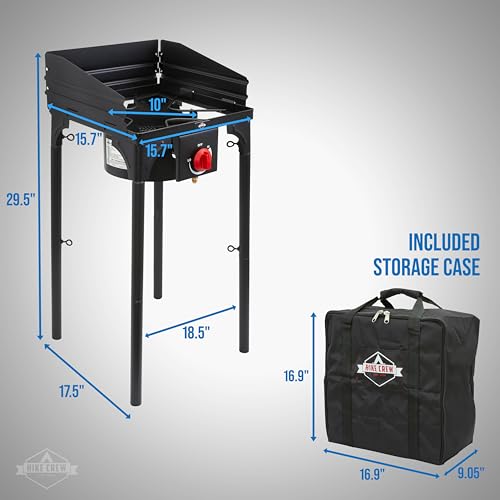
Hike Crew 75,000 BTU Cast Iron Stove
Strengths
- 75,000 BTU extreme power
- Cast iron durability
- Includes regulator and hose
Trade-offs
- Very heavy and bulky
- Overpowered for most
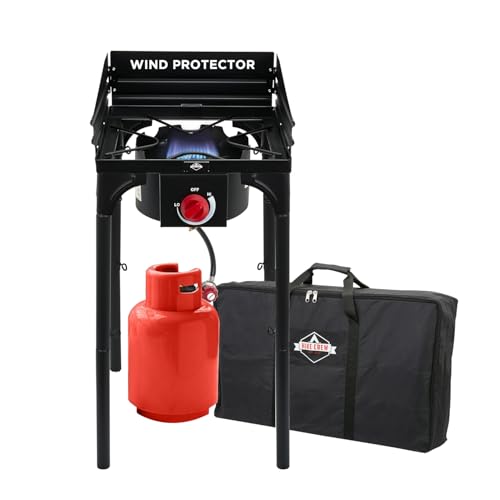
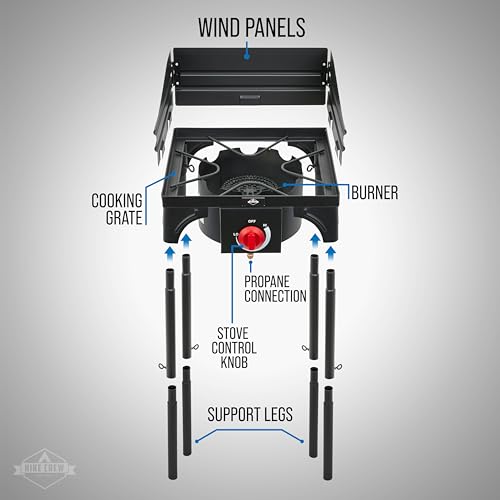
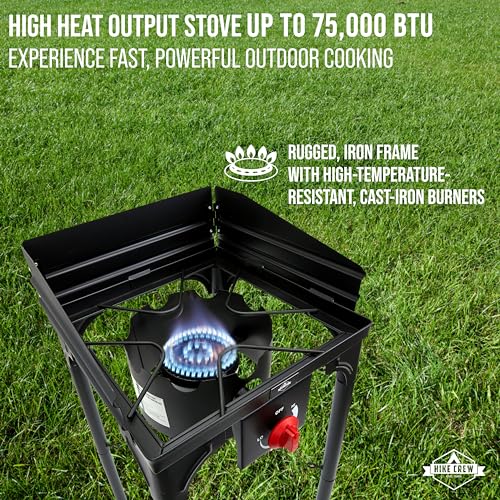
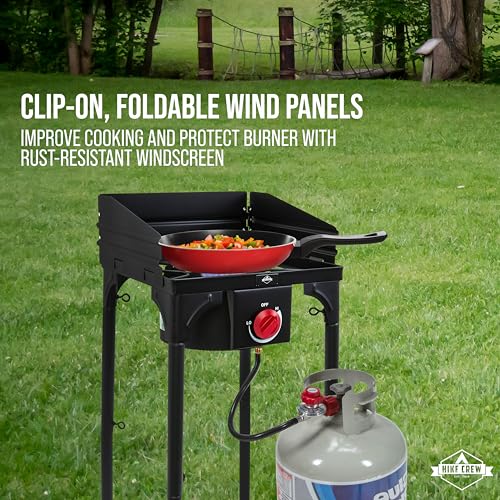
Let’s be clear, 75,000 BTU is overkill for most campers, but if you’re boiling seafood for a crowd or need commercial-grade heat in the wild, this delivers. The cast iron burner and heavy-duty frame are built to last, and owners who use it for catering or large gatherings consistently praise its durability and insane heat output. It’s not a backpacking stove; it’s a workhorse.
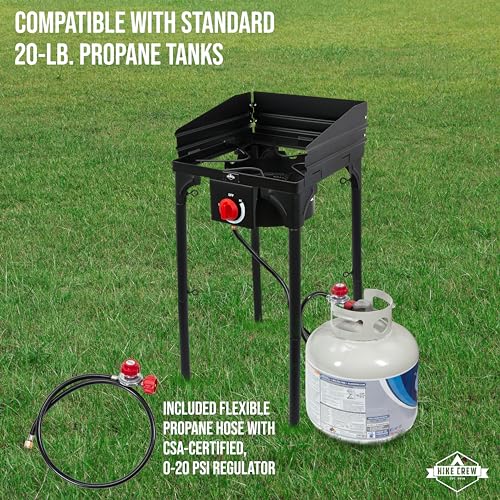
The included regulator, hose, and storage bag add real value, and the wind panels help maintain flame in gusty conditions. Compared to the Vivicreate, it’s more powerful but also bulkier and pricier. For most home users, it’s excessive, but for tailgating crews, hunters, or outdoor caterers, this is the closest thing to a restaurant burner in a portable package.
Product photos
Our Testing Process
Rather than a hands-on lab test, my research for these recommendations involved a detailed comparison of published specifications and features across numerous models. I weighed owner reviews from multiple retailers alongside expert opinions found in established outdoor and cooking publications. As someone who’s spent years understanding what makes cookware perform, I then ranked these stoves based on how well they met the needs of a typical home cook looking for reliable outdoor cooking solutions.
For single burner propane stoves, consistent heat output and build quality were the biggest deciding factors. A powerful BTU rating is essential for quickly boiling water or searing food, but it needs to be paired with a sturdy construction to withstand outdoor use. Safety features, like automatic ignition and regulator quality, were also heavily considered, as these directly impact usability and peace of mind. Understanding what makes for the best stoves for camping is crucial when evaluating this type of equipment.
Specifications reliably indicate BTU output, regulator PSI, and overall dimensions. However, I placed greater emphasis on owner feedback regarding real-world performance – specifically, how well the stove maintained consistent heat in windy conditions and the longevity of the ignition system. Reputation and brand trust also played a role; established brands with a history of quality outdoor equipment often offer better reliability and customer support, and are often paired with quality propane griddles for a complete cooking setup.
How To Choose The single burner propane stoves
Choosing the right single burner propane stove depends heavily on how and where you plan to use it. There’s a surprisingly wide range of performance and features available, and selecting the best option requires a bit more thought than simply picking the cheapest model.
A quality single burner propane stove prioritizes consistent heat output, a robust burner construction (cast iron is often preferable), and safety features like a reliable regulator and leak protection. Look for models with adjustable flame control, a stable base, and materials suited to outdoor conditions. Consider BTU output based on your cooking needs – boiling water requires less power than searing a steak.
BTU Output and Cooking Needs
The BTU (British Thermal Unit) rating is often the first number people look at, and for good reason. It indicates how much heat the stove can generate. However, don’t fall into the trap of assuming “more BTU” automatically equals “better.” A 15,000 BTU stove is perfectly adequate for most camping meals, like boiling water for coffee or simmering sauces. A 30,000 BTU stove, like the Vivicreate, is better suited for larger gatherings, seafood boils, or quickly heating larger volumes of liquid. Consider what you realistically plan to cook; overbuying BTU’s just means carrying around a heavier stove. If you’re looking for more options, check out our guide to the best portable propane stove.
Burner Material and Construction
The burner itself is the heart of the stove, and material plays a big role in durability and performance. Cast iron burners, as seen in many higher-end models, retain heat well and are incredibly durable. Stainless steel is also common, offering good corrosion resistance and ease of cleaning. Beyond the material, pay attention to the frame construction. A sturdy steel frame, like the one found on the Vivicreate, provides stability, especially on uneven surfaces. Avoid models with flimsy legs or a lightweight frame that feels unstable.
Here’s what I look for in construction: * A simple design. Fewer parts mean fewer things to break. * Solid, welded connections. Rivets can loosen over time. * A burner that’s easy to clean. Accumulated grease and debris can affect performance.
Safety Features and Portability
Safety is paramount when dealing with propane. A reliable regulator is essential; it controls the flow of gas and prevents over-pressurization. Many stoves, like the WENMAX, now include safety features such as a protection switch to prevent accidental ignition. Beyond safety, portability matters. Consider the weight and packed size, especially if you’re backpacking or have limited storage space. The Coleman Bottletop is a great example of a compact design, prioritizing portability above all else. Don’t forget to check out our broader reviews of propane burners for a wider range of options.
Remember this: always check for gas leaks with soapy water before each use, regardless of the stove’s brand or price.
Single Burner Propane Stoves Compared
Here’s a comparison of key specifications for several single burner propane stoves.
| Product Title | BTU Output | Fuel Type(s) | Ignition Type | Dimensions (in) | Special Features |
|---|---|---|---|---|---|
| Vivicreate 30,000 BTU Heavy Duty Stove | 30,000 | Propane | N/A | N/A | Adjustable Height |
| Cothb X Infrared No Open Flame Stove | 2600W (equiv. ~9,000 BTU) | Propane | N/A | 9.4 x 9.4 x 2.4 | Infrared, Wind-Resistant |
| 18,000 BTU Stainless Steel Propane Stove | 18,000 | Propane | Piezo | 16 x 13 x 6 | Stainless Steel |
| WENMAX 15,000 BTU Portable Propane Stove | 15,000 | Propane | Automatic | N/A | Safety Switch |
| GasOne 15,000 BTU Dual Fuel Stove | 15,000 | Propane, Butane | Piezo-Electric | N/A | Dual Fuel, Windblocker |
| Coleman Bottletop 7,650 BTU Camping Stove | 7,650 | Propane | N/A | N/A | Pressure Regulator |
| SHINESTAR 7800 BTU Dual Fuel Stove | 7800 | Propane, Butane | Piezo | N/A | Dual Fuel, Auto-Ignition |
| Hike Crew 75,000 BTU Cast Iron Stove | 75,000 | Propane | N/A | N/A | Cast Iron, Dual Burner |
Frequently Asked Questions
What size propane tank should I use with a single burner stove?
A standard 16.4-ounce propane cylinder is the most common and convenient size for single burner stoves. However, larger, refillable tanks (like the 20-pound grill tanks) can be used with an adapter hose, offering significantly longer run times for extended cooking sessions – especially if you’re exploring outdoor propane burners.
How can I tell if a stove is wind-resistant?
True wind resistance comes from a burner design that shields the flame or uses infrared technology, like the Cothb X. Owner reviews are the best indicator; look for comments about consistent performance in breezy conditions, as this is a critical factor when choosing among propane stoves for home.
Are dual-fuel stoves (propane and butane) really better?
Dual-fuel capability provides flexibility, as butane performs better in cold weather. However, propane generally offers higher BTU output and is more readily available, making it the preferred fuel for most. If you frequently cook in very cold environments, a dual-fuel option like the GasOne may be beneficial.
What’s the best way to clean a single burner propane stove?
Most parts can be cleaned with warm, soapy water and a non-abrasive sponge. Avoid submerging the burner or regulator. Regularly removing grease and food debris prevents performance issues and extends the stove’s life; a clean stove is a safe stove.
What should I look for in a regulator to guarantee safety?
A regulator with a CSA certification indicates it meets specific safety standards. More importantly, a quality regulator maintains a consistent PSI (pounds per square inch) output, preventing dangerous gas flow fluctuations. Investing in a stove with a reliable regulator is crucial, as it’s a key component for safe powerful outdoor burners.
The Bottom Line
Choosing a single burner propane stove often comes down to balancing power and portability. If you need serious heat for large-scale outdoor cooking, the Vivicreate 30,000 BTU Heavy Duty Stove stands out as the strongest overall performer, offering a high BTU output and sturdy construction. However, for most home cooks, that level of power isn’t essential, and the trade-off in size and weight may not be worth it.
For those prioritizing a budget-friendly option, the Coleman Bottletop 7,650 BTU Camping Stove delivers reliable performance in a remarkably compact package. If versatility is key, the GasOne 15,000 BTU Dual Fuel Stove is an excellent choice, offering the flexibility of both propane and butane fuels. And, if you’re planning on taking your stove on the trail, be sure to explore our recommendations for portable camping stoves.
Ultimately, the best single burner propane stove isn’t about chasing the highest BTU rating or the latest features. It’s about finding a model that suits your specific needs and cooking style, and pairing it with the right cookware for gas stoves to make the most of your outdoor cooking experience. Consistent heat, a stable base, and a commitment to safety are the fundamentals that truly matter.
