
Can Copper Cookware Go in the Oven? Safe Temperature Guide
This post contains affiliate links. As an Amazon Associate, we earn from qualifying purchases.
Most copper cookware is oven-safe, but the exact temperature limit is not universal. The safe maximum depends entirely on the interior lining. Tin-lined copper should never exceed 430°F (220°C), as tin melts at around 450°F. Stainless steel-lined copper can handle any normal oven temperature, including broiling. Always verify the manufacturer’s specific limit for your pan.
That 430°F ceiling for tin is the line most guides mention in passing but few explain. Tin isn’t just a soft metal; it’s a functional barrier that fails at a predictable, documented temperature. The difference between a 20-year lining and a ruined one is often a single broil session.
What follows is a breakdown of the two main lining types, the specific numbers from manufacturers like Ruffoni, the surprising oven rating of pans like Copper Chef™, and the physical signs that tell you a pan has crossed its limit. By the end, you’ll know exactly how to read your own cookware’s spec sheet.
Key Takeaways
- Tin melts at approximately 450°F. Manufacturer Ruffoni sets its limit at 430°F for tin-lined copper, creating a 20-degree safety buffer.
- Stainless steel-lined copper has no practical oven temperature limit for home cooking; it’s broiler-safe.
- Pans like Copper Chef™ are not solid copper but aluminum with a ceramic coating, rated for 850°F on the stovetop surface.
- Overheating tin causes a lumpy, grainy texture, a cosmetic failure that doesn’t immediately make the pan unsafe.
- Exposed copper, visible as pinkish metal through a worn lining, can react with acidic foods and is the true signal to stop using the pan.
The Two Linings That Change the Temperature Limit
Real copper cookware is always lined. The lining is a thin, non-reactive barrier between the reactive copper metal and your food. Which metal that lining is made from dictates everything about oven safety.
Tin-lined copper is safe in the oven up to 430°F / 220°C. Tin melts at around 450°F, so this limit provides a buffer. Stainless steel-lined copper is oven-safe at any normal cooking temperature, including under the broiler.
Tin-lined copper is the classic, often found on vintage and high-end heritage pieces. Tin is soft, offers a naturally non-stick surface, and is food-safe. Its critical weakness is its low melting point. The Ruffoni FAQ, a primary manufacturer source, explicitly states not to exceed 430°F (220°C) for their tin-lined pieces. That’s a specific, sourced number, not a guess. It’s set 20 degrees below tin’s melt point for a reason.
Stainless steel-lined copper is the modern workhorse. The lining is a sheet of stainless steel bonded to the copper body. Stainless steel doesn’t melt until over 2500°F, far beyond any home oven’s capability. This means pans like the All-Clad Copper Core or Mauviel M’Heritage can go into a 500°F oven or under the broiler without a second thought. The limit here isn’t the lining; it’s whether the handle attachments can take the heat.
Common mistake: Assuming “copper” means one universal oven rating. A tin-lined saucepan and a stainless-lined skillet have entirely different thermal ceilings.
Why the Lining Material is Non-Negotiable
The why-layer matters. Tin is used because it bonds well to copper and is malleable, expanding and contracting with the copper base without cracking. But that malleability turns to a liquid phase just above 450°F. Exceed that, and the lining can pool, leaving thin spots or exposing the copper beneath. That exposure is the real hazard.
Stainless steel, while less conductive, is inert and mechanically robust. It won’t react with food, and it won’t change state under heat. When you choose copper core cookware, you’re buying that permanent lining and the resulting oven freedom.
What Are the Actual Manufacturer Temperature Limits?
Don’t rely on hearsay. The safe limit is printed in the manual or on the manufacturer’s website. Here are specific, sourced numbers for common types.
| Brand / Cookware Type | Lining Material | Oven-Safe Limit | Note |
|---|---|---|---|
| Ruffoni (Tin-lined) | Tin | 430°F (220°C) | Explicit buffer below tin’s ~450°F melt point. |
| Ruffoni (Other) | Stainless Steel | 450°F (230°C) | General limit for non-tin pieces. |
| Mauviel M’Heritage | Stainless Steel | 500°F (260°C) | Common rating for professional-grade stainless-lined copper. |
| All-Clad Copper Core | Stainless Steel | 600°F (315°C) | High limit, often broiler-safe. |
| Copper Chef™ | Cerami-Tech Ceramic | Handle Oven-Safe | Coating rated to 850°F on stovetop; handle design is the limit. |
The takeaway is precision. Look for your pan’s specific limit. If you’ve lost the manual, search the brand’s official FAQ page. Using a tin-lined pan at 450°F because “that’s what most ovens go to” is how you end up needing a retinning service years ahead of schedule.
Speaking of retinning, Ruffoni notes that with proper care, a tin lining can last 10 to 20 years. A single broil session at 500°F can drastically shorten that lifespan. The timeline is long, but the cause and effect are direct.
What About Copper Chef™ and Other “Copper” Non-Stick Pans?
This is where the conversation splits. Brands like Copper Chef™, Gotham Steel, and Red Copper are aluminum pans with a copper-colored exterior and a ceramic non-stick coating. Their oven safety is a different question.
Where this goes sideways: Treating a Copper Chef™ pan like solid tin-lined copper. Their thermal limits and failure modes are not the same.
According to the Copper Chef™ Use and Care Manual, their Cerami-Tech coating is temperature resistant up to 850°F on the stovetop surface. The hollow, double-riveted stainless steel handles are oven-safe. This means the pan can transition from stove to oven. However, the manual carries a critical warning: the glass lid could shatter due to sudden temperature changes or impact. Always remove it before the pan goes in the oven.
These oven-safe Copper Chef pans are far more heat-tolerant than real tin-lined copper, but they come with their own rules. Use non-metal utensils to preserve the coating, and never use aerosol cooking sprays, which can build up and damage the non-stick surface. For day-to-day cleaning Copper Chef pans, handwashing is recommended to extend the coating’s life, though they are technically dishwasher safe.
Handles, Lids, and Other Physical Limits
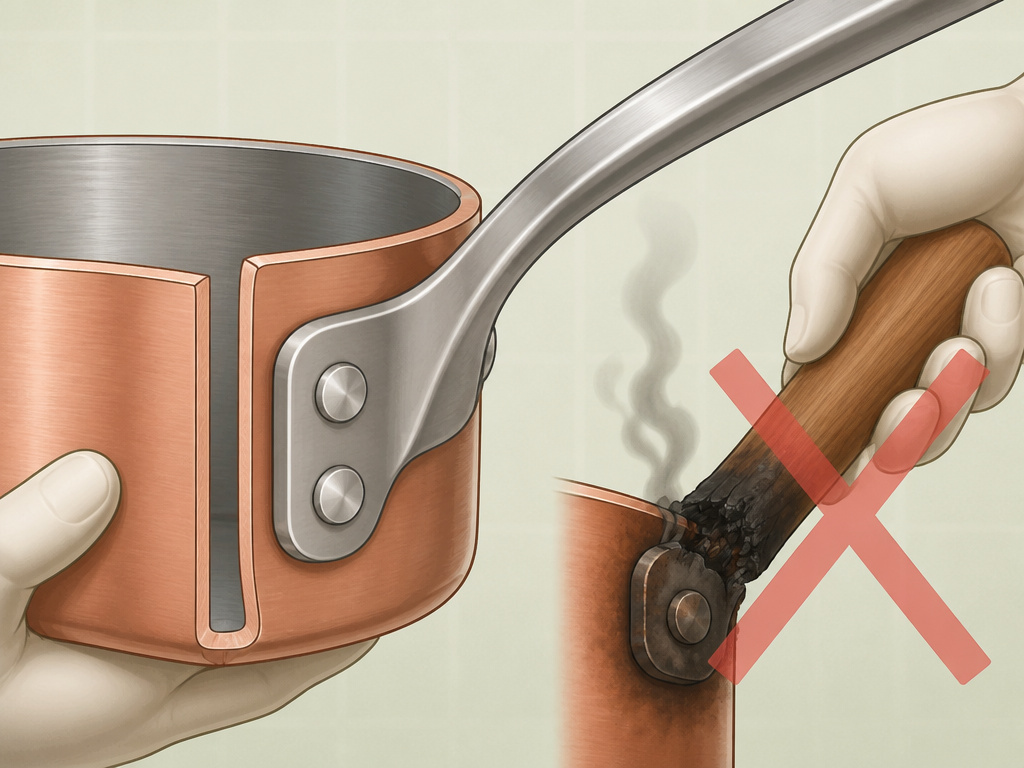 The lining’s melt point is the first limit. The hardware is the second. Before you put any pan in the oven, conduct a three-point check.
- Handles: Solid metal handles (brass, bronze, stainless steel) are generally oven-safe. Hollow stainless steel handles, like those on Copper Chef™ pans, are also designed for the oven. Wooden, plastic, or silicone-wrapped handles are not. They will melt, burn, or release fumes. Always use oven mitts, metal handles get as hot as the pan.
- Lids: Glass lids, common with many sets, can shatter from thermal shock. Check if the lid is rated for oven use. If the manual doesn’t say yes, assume no. Cast iron or metal lids are typically fine.
- Rivets & Joints: Well-made pans like stainless steel cookware use robust rivets. Cheaper pans may use adhesives that degrade in high, dry heat. If your pan has loose handles or feels flimsy, keep it out of the oven.
This hardware check is why even oven-safe stainless steel has a recommended limit, it’s about the entire assembly’s integrity, not just the metal.
The Real Safety Risk: When Copper Meets Food
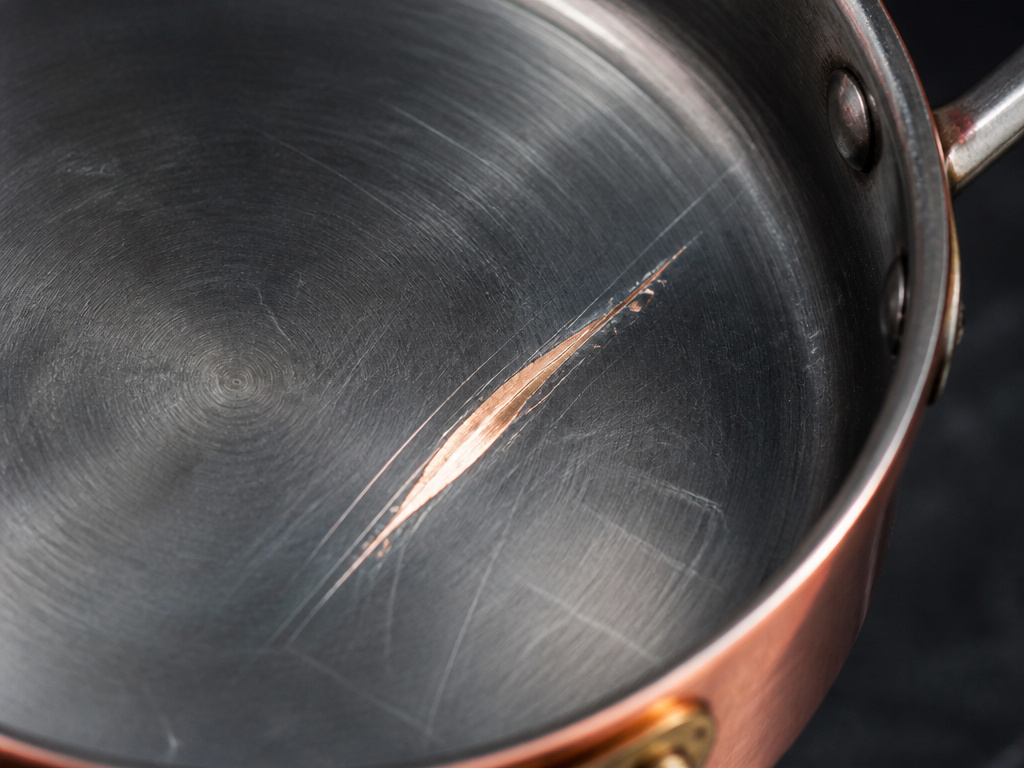 Oven heat can damage your pan. A damaged pan can then pose a health risk. The core principle of copper cookware safety is preventing copper metal from contacting food, especially acidic food.
A PMC copper release kinetics study found that unlined copperware released 25 to 45 times more copper into a citric acid solution than lined copperware did. Temperature accelerated the leaching: more copper transferred at 60°C than at 4°C. This is measured lab data.
Worth knowing before you start: The Canadian government advises against using scratched or uncoated copper cookware. The protective layer lost to scouring can allow copper to react with food.
So, how do you know your lining is compromised? * For Tin: You’ll see the pinkish-copper color showing through in spots on the cooking surface. Ruffoni’s guideline is to discontinue use when “copper becomes clearly visible through the bottom.” Before that, tin may darken or become spotty, that’s normal patina, not failure. * For Stainless Steel or Ceramic Coatings: Look for deep scratches that expose the lighter metal beneath. A network of fine scratches is typical wear; a deep gouge is a problem.
If you see exposed copper, stop cooking with it, particularly for acidic dishes like tomato sauce. The pan needs retinning (for tin) or should be retired (for coated pans). This is the ultimate check that overrides any oven temperature rating.
Step-by-Step: Safely Using Copper in the Oven
Follow this sequence to avoid the most common pitfalls. It applies to both real copper and copper-colored non-stick.
- Identify Your Pan. Check for a model number or brand name. Is it tin-lined, stainless-lined, or a non-stick composite? If you’re unsure, assume it’s tin-lined and use the 430°F limit.
- Consult the Official Source. Find the manufacturer’s care guide online. Note the exact oven-safe temperature and any handle/lid warnings.
- Remove Non-Oven-Safe Parts. Take off any glass lid, plastic handle sleeve, or silicone grip. These items have lower heat tolerances.
- Preheat With Care. Place the pan in a cold or warm oven, then set your temperature. Avoid placing a cold pan directly into a preheated oven above 400°F, as this can cause warping, especially in thinner pans.
- Always Use Protection. Use dry oven mitts or potholders to handle the pan. Remember, all metal handles get hot.
- Cool Gradually. Let the pan cool down in the oven with the door ajar or on a room-temperature trivet. Dunking a hot pan in water causes thermal shock and permanent warping.
Step 4 is where warping happens. Copper and aluminum are excellent conductors but can expand rapidly. A gentle preheat is cheaper than a new pan.
Frequently Asked Questions
Can I put my copper pan under the broiler?
If it has a stainless steel lining and all-metal handles, yes. Tin-lined copper cannot go under the broiler. The intense, direct heat can easily exceed 450°F and melt the tin. Always check your manual first.
My tin lining has little bumps. Is it still safe?
Probably. Ruffoni states that small lumps or grains on the tin lining are a result of overheating. The pot remains usable and safe. It’s a cosmetic sign you’ve pushed it too hot, but not an immediate failure. Continue to observe the 430°F limit.
Is it safe to cook with copper if the lining is scratched?
It depends on the depth. For a stainless steel lining, a light scratch is fine. If a scratch on a tin or ceramic lining exposes the base metal (you see a different color underneath), you should stop using it for cooking, especially with acidic foods. This is a core part of cooking with copper safely.
Can copper cookware go in the dishwasher?
It’s not recommended for real copper. Harsh detergents and the abrasive environment can tarnish the exterior and may degrade tin over time. For cleaning copper cookware, handwashing is best. Always check your specific pan’s care instructions.
Does real copper cookware work on induction stoves?
Generally, no. Pure copper is non-magnetic. Some modern copper core pans have a magnetic stainless steel base layered under the copper for induction compatibility. If your pan doesn’t specify “induction ready,” it likely won’t work.
Before You Go
Copper cookware’s oven safety is a specification check. Find your lining type, respect its specific temperature limit, 430°F for tin, essentially unlimited for stainless steel, and never ignore damaged hardware or a compromised lining.The benefits of copper like even heating are worth the extra attention.
For most home cooks looking for versatile, oven-to-stove cookware, stainless steel-lined copper or a high-quality stainless steel set is the default pick. You get the performance without the melt-point anxiety. If you own heritage tin-lined pieces, use them with pride and precision. That 430°F line is there for a reason.
