
Can I Store Soup in the Pot? How Long It’s Safe & What to Know
This post contains affiliate links. As an Amazon Associate, we earn from qualifying purchases.
You can store soup in the cooking pot, but only for a maximum of six hours and only if you keep it above 140°F (60°C) or cool it below 40°F (4°C) within two hours. Leaving soup at room temperature in the pot overnight is a food safety violation. The pot itself doesn’t spoil the soup—time and temperature do.
The six-hour limit comes straight from a manufacturer’s manual. It’s not a guess. That timer starts the moment the soup stops boiling. Your goal is to get the soup out of the temperature danger zone before bacteria double into a problem.
What follows: the exact time and temperature rules pulled from appliance manuals, why your home pot is different from a commercial soup kettle, and the three-step check to know if your pot of soup is still safe to eat.
Key Takeaways
- The THERMOS Vacuum Insulated Soup Jar manual states a hard six-hour maximum for storing prepared soup, even in a sealed, insulated container.
- Food safety agencies define the 40°F to 140°F (4°C to 60°C) range as the “danger zone” where bacteria multiply fastest; soup must pass through this zone in under two hours.
- Commercial soup kettles (like the Avantco S600 or Dualit 10L) are designed only for holding hot food, not for storage; they can fail if the water in their wet-heat system evaporates.
- Always cool soup in a shallow, wide container—a deep pot in the fridge can take over 24 hours to cool the center to a safe temperature, guaranteeing spoilage.
- If the pot’s exterior is hot to the touch with cold soup inside, the vacuum seal has failed (per THERMOS manual); discard the contents immediately.
The 6-Hour Window and the 40–140°F Danger Zone
Forget “a day or two.” The real limit is tighter. The THERMOS JED Vacuum Insulated Soup Jar manual is blunt: “Consume the contents as soon as possible (within 6 hours) and finish them in one sitting.” This is for a sealed, high-tech container. Your regular pot on the stovetop offers far less protection.
The science behind that limit is the temperature danger zone. Pathogenic bacteria like Staphylococcus aureus and Clostridium perfringens thrive between 40°F and 140°F (4°C and 60°C). Soup cooling on your counter is a perfect breeding ground.
A large pot of soup can take 4-6 hours to cool from 140°F to 70°F in a 70°F kitchen. In that time, bacterial counts can increase from harmless to illness-causing levels. The USDA’s “two-hour rule” means you have just 120 minutes to get soup through the danger zone and down to 40°F.
Your pot’s material matters here. A thick cast iron Dutch oven holds heat for hours, keeping soup in the danger zone longer. A thin stainless steel stock pot cools faster. Neither is a safe storage vessel once the heat is off.
| Soup Temperature | Safe Action | Risk If Ignored |
|---|---|---|
| Above 140°F (60°C) | Can hold for serving (max 6 hrs in a proper warmer). | Scalding risk; quality degrades. |
| 40°F – 140°F (4°C – 60°C) | Cool rapidly to below 40°F within 2 hours. | Bacterial doubling every 20 minutes; high risk of foodborne illness. |
| Below 40°F (4°C) | Safe for storage (3-4 days in fridge). | Quality loss over time; freezer burn if frozen. |
Commercial Soup Kettles vs. Your Home Pot
You see them in buffets: shiny stainless steel pots sitting in warmers. These are not storage pots. They are wet-heat soup kettles like the Avantco S600 or Dualit 10L model, and their manuals are very specific.
The Dualit 10L Soup Kettle manual states: “The kettle is designed to keep food warm, not for cooking. The food item must be heated prior to using the soup kettle.”
These appliances work by surrounding an inner pot with a water bath (a bain marie). They maintain a safe holding temperature, usually between 155°F and 185°F. But they have critical failure modes your home pot doesn’t. The manual warns: “do not let it evaporate and heat empty.” If the water boils off, the heating element can overheat, damaging the unit and creating a fire hazard. They also require checking the water level every 15 minutes.
Your home soup pot lacks these safeguards. It loses heat steadily into the room. It cannot actively keep soup above 140°F. Assuming it acts like a commercial warmer is how people get sick.
The Wet-Heat System: How It Works (And How It Fails)
A commercial kettle’s wet-heat only system is its core. You add a specific amount of water (0.7 liters in the Avantco, ~3.5L in the Catering-Appliance HT759) between an outer shell and an inner stainless steel liner. This water gently transfers heat, preventing scorching. It’s brilliant for holding. It’s useless for storage once the power is off.
- Why you can’t store soup in one: When the power is cut, the water bath cools. The large mass of water and soup then sits in the danger zone for even longer than a solo pot. It’s a heavier, slower-cooling system.
- The specific warning: The Maxima soup kettle manual explicitly says, “This appliance may only be used for warm storage of food.” “Warm storage” means holding at safe temps during service, not overnight refrigeration.
The 3-Step Check: Is the Soup in Your Pot Still Safe?
Don’t guess. Follow this sequence. If you fail any step, the soup needs to be reheated to a rolling boil or discarded.
Step 1: Check the clock.
How long has it been since the soup finished cooking? If it’s been more than two hours at room temperature (one hour if your kitchen is above 90°F), you are already in the danger zone. The six-hour total clock from the THERMOS manual is your absolute outer limit, even if the pot is still warm.
Step 2: Check the temperature.
Use a food thermometer. Insert it into the center of the pot, not near the edge. – Above 140°F? It’s safe to hold, but plan to eat or cool it soon. – Between 40°F and 140°F? You are in the critical window. If it entered this range less than two hours ago, cool it immediately. If it’s been longer, reboil or discard. – Below 40°F? It’s safely refrigerated. This is the goal.
Where this goes sideways: Assuming a warm pot lid means the soup is still hot enough. The center of a deep pot of soup can be lukewarm (in the danger zone) while the lid and top layer feel hot. The thermometer tells the truth; your hand does not.
Step 3: Check the container itself.
Is this the right vessel? A deep, narrow pot is the worst for cooling. Transfer the soup to a shallow, wide container like a stainless steel baking pan. This increases surface area and can cut cooling time from 12 hours to under 90 minutes. This step is non-negotiable for large batches.
How to Actually Store Leftover Soup Safely

Storing soup is about speed. You are racing bacteria.
- Portion and Transfer. Ladle the soup into several smaller, clean containers. Glass or stainless steel containers cool faster than plastic. Avoid using the original cooking pot unless it’s very small.
- Create an Ice Bath. For the quickest cool, place the sealed containers in a sink or large pot filled with ice water. Stir the soup in the container every 15 minutes to bring the warm center to the edges.
- Refrigerate Uncovered. Place the containers in the fridge without their lids for the first 30-60 minutes. This lets heat escape rapidly. Then cover them tightly.
- Label and Date. Use masking tape and a marker. Most soup lasts 3 to 4 days in the fridge. Freeze for longer storage.
Common mistake: Putting a giant, hot stock pot directly into the refrigerator. The fridge’s temperature will rise, putting other foods at risk, and the soup’s core may not reach 40°F for a day or more.
What about leaving it on the stove with the lid on? Don’t. Overnight is a guaranteed gamble. The pot provides zero active heating, so the soup will spend 6-8 hours in the prime bacterial growth range. The lid also traps condensation, which can drip back in and introduce contaminants.
When Your Pot (or Container) Tells You It’s Failed
Sometimes the equipment gives the warning. The THERMOS manual lists a specific diagnostic: “If the exterior of the main body becomes hot (or cold) when hot (or cold) food or drink is placed inside, this indicates a problem with heat (or cold) retention. Because this may cause spoilage, discontinue using the product.”
Translated: If your insulated container feels warm on the outside when it holds cold soup, the vacuum seal is broken. It’s not keeping the soup cold, and bacteria are growing. Discard the soup.
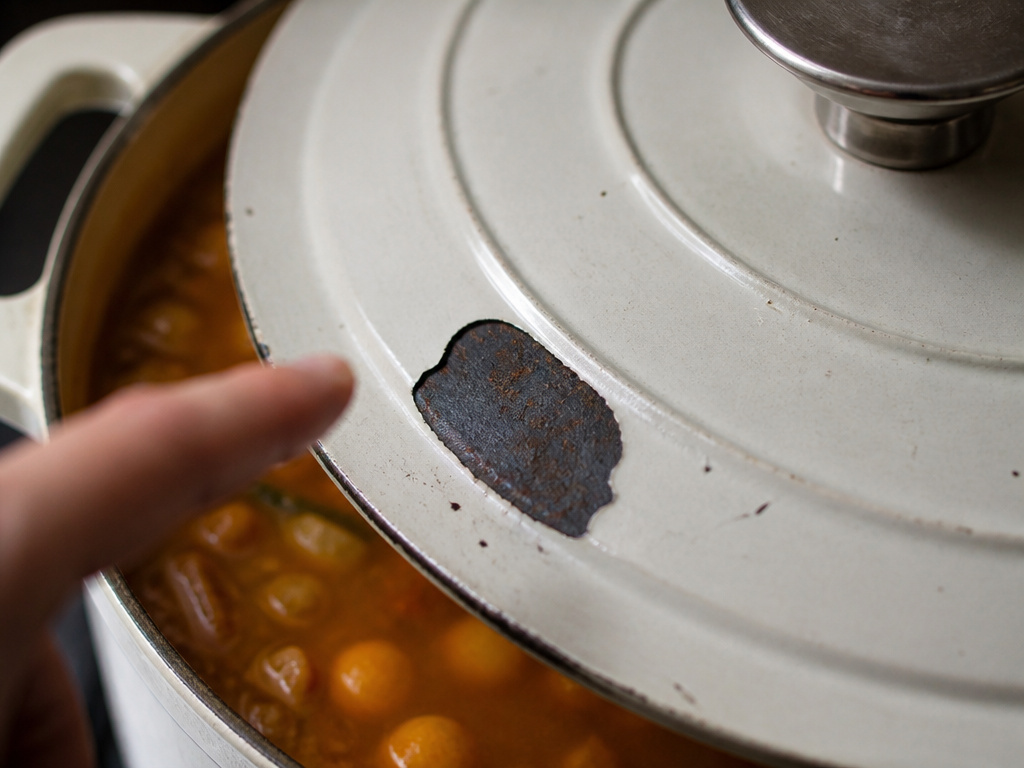
For pots, look for: – A warped lid that doesn’t seal. This lets in airborne contaminants. – A persistent, off smell from the pot material itself (especially some plastics or old ceramic glazes) that won’t wash out. The soup can absorb it. – Chipped enamel on a Dutch oven. The exposed cast iron can rust and leach into the acidic soup during storage.
Frequently Asked Questions
Can I store soup in the pot overnight in the refrigerator?
You can, but it’s not ideal. A deep pot of soup takes far too long to cool in the fridge, keeping the center in the danger zone for many hours. Always transfer soup to a shallow container for refrigeration. A pot is for cooking, not storing.
How long can soup sit out in the pot before it goes bad?
Soup can sit out safely for up to two hours after cooking stops. If the room is hotter than 90°F, that drops to one hour. After that, you must either reheat it to a rolling boil or discard it. The “six-hour” rule from insulated containers does not apply to an open pot on the stove.
Is it safe to leave soup in a Crock-Pot on “warm” overnight?
Most modern Crock-Pots maintain a “warm” setting above 140°F, which is technically safe. However, manufacturer instructions often advise against extended holding times (over 4 hours) as quality deteriorates. It is safer to cool and refrigerate the soup, then reheat it.
Can I freeze soup in the cooking pot?
No. Most cooking pots are not designed for freezer temperatures. Glass may crack, metal can cause freezer burn, and removing frozen soup from a pot is nearly impossible. Always freeze soup in airtight, freezer-safe containers or heavy-duty bags.
Does the pot material affect how long I can store soup?
The material affects cooling speed, not the ultimate shelf life. A cast iron pot holds heat longer, keeping soup in the danger zone for an extended period. A thin aluminum pot cools faster, getting through the danger zone more quickly. Once refrigerated, all safe materials (stainless steel, glass, enameled cast iron) provide similar 3-4 day shelf life.
The Bottom Line
You can store soup in the pot for the brief window between cooking and cooling. That window is a maximum of six hours in a perfect, insulated world, and often just two hours on your home stovetop. The pot isn’t the enemy—time and lukewarm temperatures are.
Treat your soup pot as a temporary vessel. For true storage, speed is everything. Portion, shallow-chill, and refrigerate quickly. When you’re choosing a pot for making big batches, pick one that facilitates this process—a wide stock pot over a narrow one. Your goal is to get from boiling to below 40°F faster than the bacteria can multiply. That’s the only rule that matters.
