
How Do I Clean a Burnt Saucepan Bottom | Inside & Outside
This post contains affiliate links. As an Amazon Associate, we earn from qualifying purchases.
To clean the bottom of a burnt saucepan, treat it as two separate problems: the interior cooking surface and the exterior bottom. For the inside, soak in hot, soapy water, then attack stubborn residue with a baking soda paste or a manufacturer-approved simmer with dishwasher detergent. For stubborn external burner stains on stainless steel, Cuisinart’s own manual explicitly approves using oven cleaner on the outside bottom only.
That external instruction is a break from the generic “don’t use harsh chemicals” advice you’ll see everywhere else. It means the official playbook for stainless steel differs from what works for enamel, cast iron, or non-stick surfaces. The method you choose isn’t just about scrubbing power; it’s about matching the chemical and mechanical action to your pan’s specific construction without voiding its warranty or ruining its finish.
What follows is a zone-by-zone breakdown. You’ll learn the soak-and-paste approach for the interior, the exact Cuisinart-approved boil-out for cooked-on carbon, and the controversial but manufacturer-backed move for external stains. We’ll also cover what to absolutely avoid on cast iron, enamel, and ceramic surfaces, because a one-size-fits-all solution here just damages cookware.
Key Takeaways
- Diagnose first: Is the mess inside the pan (burnt food) or on the outside bottom (burner stains)? They require completely different treatments.
- For interior burnt-on food, always start with a long, hot soak with dish soap. Escalate to a baking soda paste or, for stainless steel, Cuisinart’s recommended simmer with non-lemon dishwasher detergent.
- Cuisinart’s official manual states oven cleaner is acceptable for stainless steel pans to remove external burner stains, but only on the outside bottom, never on the sides or cooking surface.
- Never soak a raw cast iron pan. Never plunge a hot enameled pan into cold water. Never use steel wool or abrasive powders on non-stick or ceramic surfaces.
- The best long-term fix for external stains is a $10 flame-tamer for gas burners; it stops flames from licking the pan sides and carbonizing drips.
The Two-Zone Diagnosis (Internal vs. External)
Before you grab a scrubber, look closely. The “bottom” of a burnt saucepan isn’t one surface, it’s two distinct zones that get dirty for different reasons and need different cleaning tactics. Confusing them is how people ruin pans.
The interior cooking surface gets coated with polymerized food fats and sugars that have burned onto the metal. This residue is sticky, often black or brown, and sits inside the pan where you cook. It’s a problem of carbonized food.
The exterior bottom collects a different kind of grit. On gas stoves, flames that curl up the sides carbonize any oil or food splatters, baking them into a hard, sooty patina. On electric coils, heat transfers directly to any spills, baking them onto the steel. These are burner stains, and they’re mostly on the outside.
The Cuisinart MCP-12NC instruction booklet is explicit: “Stains on the outside bottom (not sides) of pans can be removed with an oven cleaner.” This is a sourced, manufacturer-approved method that contradicts the generic “never use oven cleaner” advice found on most lifestyle blogs. It applies specifically to stainless steel.
Mixing these up leads to damage. Scrubbing external carbon stains off a non-stick pan with abrasive powder will destroy the coating. Soaking a raw cast iron pan’s interior to loosen burnt food will strip its seasoning. Your first cleaning step is always identification.
Where this goes sideways: Assuming the black stuff is all the same. You’ll attack exterior burner stains with an interior food-loosening paste, see no progress, scrub harder, and scratch the pan. Or you’ll pour oven cleaner into a pan with an enamel interior, etching the glassy surface. Know your target.
How to Clean the Interior Cooking Surface
This is where the burnt food lives. The goal is to break down the carbonized layer without damaging the pan’s finish. Your options form a clear escalation path: soak, paste, boil.
Step 1: The Initial Soak (Non-Negotiable)
Fill the pan with the hottest tap water you have and add a generous squirt of dish soap. Let it sit. Not for ten minutes. Give it at least an hour, or better yet, overnight.
The hot water hydrates the burnt layer, and the soap begins to emulsify the fats. For mild burns, this is often enough, you can wipe the mess away with a sponge after the soak. Skipping this step means you’re scrubbing against a fully bonded, dry carbon layer. You’ll exhaust yourself and likely scratch the pan.
Step 2: The Abrasive Paste Lift
If soaking leaves behind a stubborn patch, you need a mild abrasive. Mix baking soda with just enough water to form a thick, spreadable paste. Smear it over the burnt area, completely covering it. Let it sit for 15-20 minutes.
The baking soda paste acts as a gentle scrubber and a mild alkali that helps break down the burnt proteins. After it sits, use a non-scratch sponge (the blue Scotch-Brite type is ideal) and scrub in small circles. The residue should slurry up and rinse clean.
Easy to miss: Rinse the pan thoroughly after using a baking soda paste. Any leftover baking soda in the seams or around the rivets can leave a white, gritty residue that is itself hard to remove later.
Step 3: The Cuisinart Boil-Out Method (For Stubborn Stainless Steel)
When a paste fails, you need chemical help. For stainless steel pans, Cuisinart’s own playbook is precise and effective. It’s also a strong why-layer example of targeted chemistry.
The Cuisinart-approved process: Add about one inch of water to the pan. Stir in one tablespoon (15ml) of a non-lemon dishwasher detergent. Bring the water to a boil, then reduce the heat and let it simmer for 15 minutes. Turn off the heat and let the pan cool completely in the liquid. Drain and rinse. The burnt residue should lift away with a sponge or plastic spatula.
Why it works: Dishwasher detergent contains powerful enzymes and surfactants designed to break down baked-on food proteins and fats at high temperatures. The simmering water distributes this chemistry evenly across the burnt surface. The “non-lemon” note is critical, lemon-scented detergents often contain citric acid, which can react with stainless steel and cause discoloration.
| Interior Cleaning Method | Best For | Risk If Skipped / Done Wrong |
|---|---|---|
| Hot soapy water soak | All pan types, mild burns | Scrubbing dry carbon scratches the surface; not soaking cast iron strips seasoning. |
| Baking soda paste | Stainless steel, aluminum, enamel | Leaving paste to dry in seams leaves a gritty residue; using on non-stick is pointless. |
| Dishwasher detergent simmer | Stubborn burns on stainless steel | Using lemon detergent can discolor steel; boiling an empty pan warps the base. |
| Bar Keepers Friend powder | Stainless steel, some ceramic (check manual) | Using on non-stick or delicate enamel scratches the finish permanently. |
How to Clean the Exterior Bottom (Burner Stains)
The outside bottom of your pan meets direct heat. On gas, it’s soot. On electric, it’s baked-on spills. The fixes here are more aggressive, and they must be applied only to pans built for it.
For Stainless Steel: The Oven Cleaner Option
As cited earlier, Cuisinart’s manual explicitly green-lights oven cleaner for stainless steel exterior bottoms. The instructions are specific: spray or brush the cleaner only on the outside bottom, never on the sides or the cooking surface. Follow the product’s directions, some require a warm surface, so you may need to heat the pan slightly first. Rinse thoroughly afterward.
The chemistry makes sense. Oven cleaner’s active ingredient, sodium hydroxide (lye), is fantastic at dissolving carbonized organic matter, exactly what burner stains are. It’s too harsh for thin aluminum, reactive with copper, and catastrophic for non-stick coatings and enamel. But for bare stainless steel, it’s within the manufacturer’s spec.
I prefer a less nuclear option for maintenance: a dedicated stainless steel polish like Bar Keepers Friend or Bon Ami. It takes more elbow grease than oven cleaner, but it’s less caustic and works on the sides of the pan too, where oven cleaner is banned.
For Enameled Cast Iron or Steel: Proceed With Caution
Enamel is a glass coating. Abrasives scratch it; thermal shock cracks it. The care guide for the Cuisinart CI755-30BKC enameled cast iron set is unambiguous: “Do not fill a hot pan with cold water or plunge into cold water because thermal shock damage to enamel may occur.”
For exterior stains on enamel, skip oven cleaner and abrasive powders. Instead, use a paste made from Bon Ami (a gentler, feldspar-based cleaner) and water. Apply, let sit, and gently scrub with a soft cloth or nylon brush. The goal is to polish, not scour.
For Non-Stick (Scanpan Stratanium+): The Brush-Off
Scanpan’s guidance for their premium non-stick line is refreshingly direct. “Do not be afraid to use a natural bristle or nylon brush to clean with Bar Keepers Friend or any other scouring cleanser for stickier or problematic situations.”
This is a notable exception. Most non-stick pans cannot handle any abrasive, but Scanpan’s Stratanium+ coating is exceptionally durable. Even so, use a brush, not a scrubby sponge. And never let residue sit, “Do not leave any visible or physical food/fat residue in your pan after cleaning; doing so can cause sticking to occur during next use.”
Material-Specific Warnings & Lifesavers
Not all saucepans are built from the same stuff. Applying a stainless steel fix to a different material is a one-way ticket to a ruined pan.
Cast Iron (Unyielding)
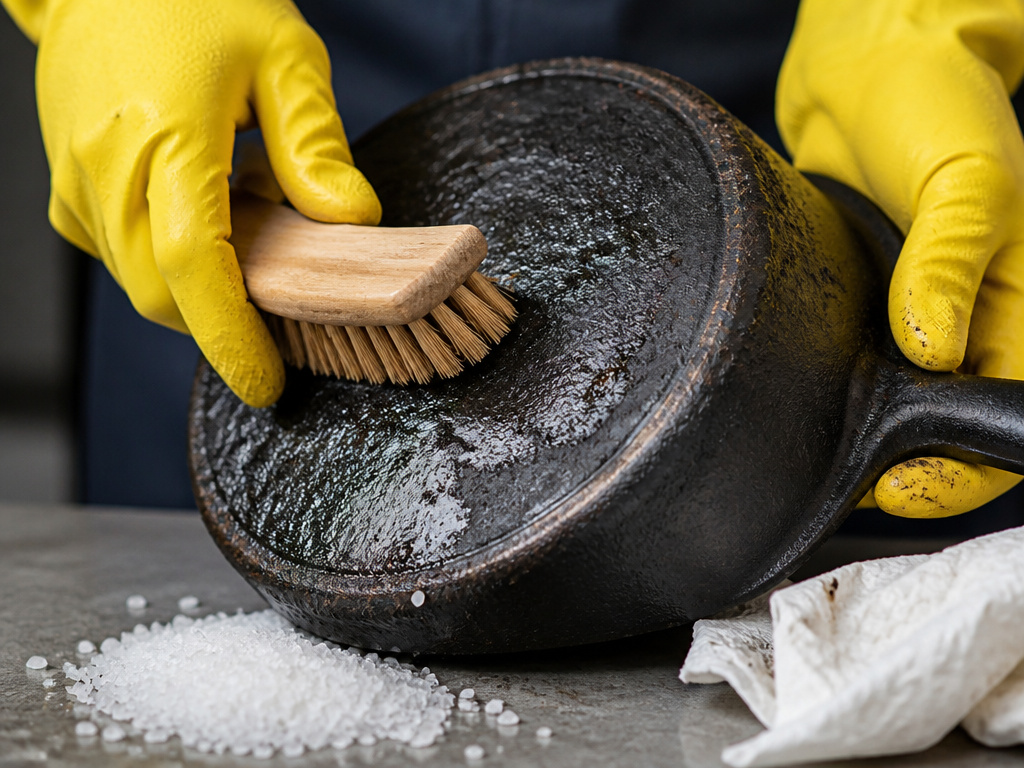
The rule is absolute: never soak a raw cast iron pan. Water penetrates the microscopic pores of the iron, rusting it from within and stripping the polymerized oil seasoning that makes it non-stick. To clean burnt food from the interior, use coarse salt and a dry paper towel to abrade the residue while the pan is still warm. For the exterior, a stiff brush and hot water are fine, just dry it immediately and completely on the stove burner.
Ceramic & Enamel (Delicate)
These glass-like coatings are resilient to acids and staining but vulnerable to sharp impacts and abrasive grit. Bialetti’s care instructions are typical: “Do not use sharp steel wool or nylon scrubbing pads.” For tougher burns, they recommend a melamine foam sponge (like a Magic Eraser), which is mildly abrasive but non-scratching. Oven cleaner is explicitly forbidden.
Aluminum (Reactive)
Aluminum reacts with both strong alkali (like oven cleaner) and acids (like vinegar or tomato sauce). This can cause pitting and discoloration. For a burnt aluminum cookware interior, stick to the baking soda paste method. For the exterior, use a dedicated aluminum polish. Avoid letting any cleaner sit for extended periods.
Tools & Products That Actually Work
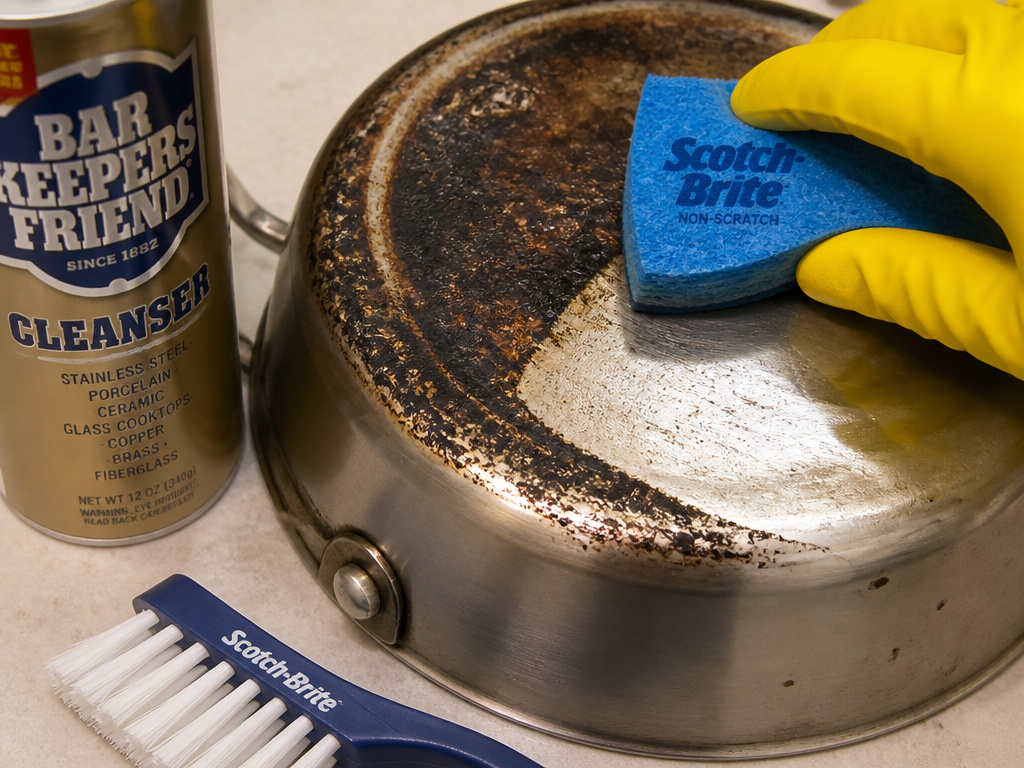
Your kitchen sponge isn’t enough. These are the items that make the job possible without collateral damage.
- Non-scratch sponges (blue Scotch-Brite): The default for pastes and general cleaning. They provide friction without gouging.
- Nylon bristle brush: For getting into corners and around rivets on stainless steel or enamel cookware. A game-changer for textured residues.
- Bar Keepers Friend Cleanser: The gold standard for stainless steel and some ceramics. Its oxalic acid tackles stains and polishes without leaving scratches like baking soda sometimes can.
- Bon Ami Cleaning Powder: A gentler, feldspar-based alternative to BKF. Ideal for enamel and ceramic surfaces where you need a mild abrasive.
- Dishwasher detergent (non-lemon): Your nuclear option for stainless steel interiors, per Cuisinart’s manual. Cascade Platinum is a reliable, lemon-free choice.
- Flame-tamer / Heat diffuser: The ultimate preventive tool for gas stoves. This $10 accessory sits between the burner and your pan, spreading the heat evenly and stopping flames from curling up the sides. It prevents most external carbon stains before they start.
Preventing Future Burnt Bottoms
Cleaning is a reaction. Prevention is a system.
On gas stoves, the flame should kiss only the pan’s flat bottom. If it licks the sides, you’re wasting energy and baking on stains. Turn the flame down or use a flame-tamer. For electric coils, keep the burner size matched to the pan’s base. A small pan on a large coil superheets the outer ring of the base, warping it over time and making cleanup harder.
After cooking, let the pan cool slightly, not cold, then add warm water and soap. A quick soak while you eat makes post-meal cleanup trivial. This is Scanpan’s cardinal rule: never let food residue cool and bond into a permanent layer.
The bottom line: A clean pan isn’t about heroics after a disaster. It’s about consistent, correct care that never lets the disaster happen.
Frequently Asked Questions
Can I use oven cleaner on any pan?
No. Oven cleaner is explicitly approved by Cuisinart for the external bottom of stainless steel pans only. It will damage aluminum, copper, non-stick coatings, and enamel. Always check your manufacturer’s care guide first.
Why did my baking soda paste leave a white film?
Baking soda can redeposit as a white, alkaline residue if not rinsed away completely, especially in hard water. To remove it, wipe the pan with a cloth dampened with white vinegar, then rinse thoroughly with water. The acid neutralizes the leftover alkali.
Is it safe to put a hot pan in cold water?
For most stainless steel, yes. For enameled cookware, absolutely not. The Cuisinart CI755-30BKC manual warns that thermal shock from a hot-to-cold plunge can crack or craze the glass-like enamel coating. Let enameled pans cool to warm before adding water.
What’s the best way to clean a burnt non-stick saucepan?
For a burnt non-stick interior, avoid abrasives. Fill the pan with water, add a tablespoon of baking soda, and bring to a simmer for 10-15 minutes. The alkaline solution will help loosen the burnt layer without scratching. For brands like Scanpan Stratanium+, a nylon brush with Bar Keepers Friend is approved, but only for their specific, durable coating.
Before You Go
Cleaning a burnt saucepan bottom breaks into two distinct battles: the interior food carbon and the exterior burner patina. For the inside, always start with a soak, escalate to a paste, and for stainless steel, have the Cuisinart dishwasher-detergent simmer in your back pocket. For the outside, know your pan’s material, oven cleaner is a valid, manufacturer-approved tactic for stainless steel, but it’s a death sentence for anything else.
The real fix is prevention. Match your burner size, control your flame, and soak the pan while it’s still warm. A $10 flame-tamer saves hours of scrubbing. And when you do scrub, use the right tool: a nylon brush for crevices, BKF for stainless steel polish, and a soft cloth for everything delicate. Your pans are built for decades of service, not a single heroic cleaning session. Treat them that way.
