
Is Hard Anodized Cookware Safe | The Lead Leach Data
This post contains affiliate links. As an Amazon Associate, we earn from qualifying purchases.
Is hard anodized cookware safe? Yes, reputable hard anodized aluminum cookware from established brands is considered safe for home cooking. The electrochemically hardened surface locks aluminum in place, drastically reducing metal transfer, especially with acidic foods. The real risk is unregulated imported cookware made from alloys like Hindalium, which a 2025 FDA warning linked to significant lead leaching.
That distinction between a certified process and an unknown alloy is where most safety guides stop short. A brand-name pan and a discount import might look identical on a store shelf, but their chemical behavior under heat and acid could not be more different.
What follows is the breakdown of the anodizing science, the specific regulatory warnings you need to know, and the maintenance rules that keep a safe pan safe for its full lifetime. By the end, you’ll be able to read a product listing in ten seconds and spot the red flags that matter.
Key Takeaways
- Brand reputation is your primary safety filter. Established manufacturers like Cuisinart or Tramontina use controlled alloys and processes; anonymous imported “hard anodized” cookware, particularly from India labeled as Hindalium/Indalium, is under active FDA scrutiny for lead contamination.
- The 4% acetic acid leach test is the regulatory benchmark. This test, simulating cooking with acidic foods like tomatoes, is what health agencies use to detect metal leaching. Any detectable lead in this test means the cookware is prohibited for sale in the U.S.
- Oven-safe temperatures vary wildly. A Cuisinart hard anodized set is rated for 500°F; many generic sets cap at 350°F. Exceeding the manufacturer’s specified limit can damage the nonstick coating and the anodized layer.
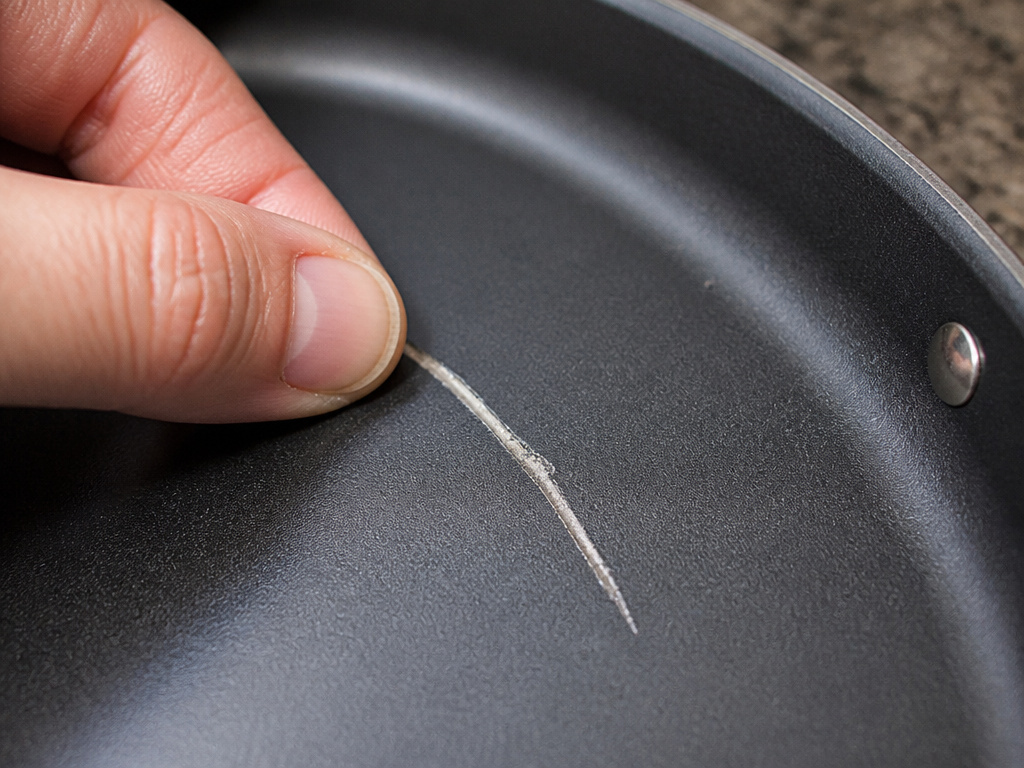
- Scratches on the cooking surface change the safety equation. A deeply scratched anodized layer can expose the base aluminum, increasing potential metal transfer. At that point, the pan’s primary safety feature is compromised.
- Never use high heat. Hard anodized aluminum conducts heat extremely efficiently. Using high heat doesn’t cook food faster, it burns food onto the surface, degrades the nonstick coating, and can warp the pan.
The #1 Safety Question: Does It Leach Metals?
Metal leaching is the core safety concern for any cookware. For hard anodized aluminum, the answer is two-part: the process itself is designed to prevent it, but flawed manufacturing can reintroduce the risk.
The anodizing process submerges aluminum in an acid bath and runs an electrical current through it. This grows a thick, integrated layer of aluminum oxide on the surface. This oxide layer is inert, extremely hard, and non-reactive. It acts as a physical barrier, sealing the raw aluminum underneath. From a materials science standpoint, this is a legitimate engineering solution to aluminum’s natural reactivity.
A 4% acetic acid solution is the international standard simulant for testing metal migration from cookware. Health agencies like the FDA use it to mimic cooking with acidic foods like tomato sauce or wine. The presence of lead in this solution after a simulated cooking cycle means the cookware fails.
The real-world data, however, introduces a critical caveat. A 2025 FDA lead leaching warning specifically called out imported cookware made from aluminum alloys known as Hindalium or Indalium. These products, sometimes marketed as “hard anodized,” were found to leach significant levels of lead into food. The FDA’s position is clear: there is no safe level of lead exposure, and any cookware that leaches lead is adulterated and illegal to sell.
This means the safety of your [hard anodized cookware](https://CookwareCanvaas.The label does not guarantee safety; that guarantee comes from the manufacturer’s control over their raw materials and production. The alloy matters.
| Factor | Safe Scenario | Risk Scenario |
|---|---|---|
| Base Material | High-purity, food-grade aluminum alloy. | Unknown alloy, especially Hindalium/Indalium. |
| Leach Test Result | No detectable lead in 4% acetic acid test. | Any quantifiable lead present (FDA LOQ ≤100 ppb). |
| Surface Integrity | Smooth, unscratched anodized layer. | Deep scratches or chips exposing base metal. |
| Acidic Food Cooking | Minimal to no additional metal transfer. | Potential for increased aluminum migration if scratched. |
The takeaway? The process works, but only if it’s done right on the right metal. A Clemson University cookware safety factsheet would affirm that properly manufactured hard anodized aluminum is a low-risk material. The problem is you can’t see the alloy with your eyes. You have to rely on the brand’s reputation.
The Critical Distinction: Brand vs. Bargain
This is where abstract safety becomes a concrete buying decision. A “hard anodized” skillet from a reputable company and one from an unknown online seller are not the same product. They share a name, not a standard.
Reputable brands invest in quality control and their own credibility. A company like Cuisinart or Tramontina sources specific, traceable aluminum alloys. Their anodizing baths are monitored, and their final products are often tested. Their lifetime warranties aren’t just marketing; they’re a signal that the company expects the product to last and is willing to stand behind its material safety. When you buy a Cuisinart hard anodized set, you’re buying that chain of custody.
The bargain import is a black box. The “hard anodized” label might be accurate, but the underlying metal is a mystery. The 2025 FDA warning and supporting documents like this King County lead release report show that mystery alloys can contain lead or other metals that leach out during cooking. The anodizing layer might be thin or uneven. There is no warranty, no customer service line, and no accountability.
Where this goes sideways: Assuming “hard anodized” is a regulated term like “organic.” It isn’t. Any manufacturer can use it. The regulation only catches the product after it’s shown to leach toxins, often once it’s already in homes.
So how do you tell? Look for these signals:
- Brand Presence: Does the company have a history, a website with support pages, and clear contact information?
- Warranty: A legitimate lifetime or extended warranty indicates confidence in materials.
- Price: If the price seems too good to be true for a full set, it often is. Quality anodizing and quality metal cost money.
- Country of Origin: While not a perfect rule, the FDA warning specifically concerns certain imported goods. Be extra cautious with unbranded cookware from online international marketplaces.
Your safest path is to choose from well-reviewed best hard anodized cookware lists that focus on established brands. This isn’t brand snobbery; it’s risk management. The brand is your proxy for material quality and manufacturing controls that you, as a consumer, cannot verify yourself.
Decoding the Science: What “Non-Reactive” Really Means
“Non-reactive” is a relative term in cookware. No common metal is completely inert. The goal is to reduce reactivity to a level considered safe for daily use. For hard anodized aluminum, the oxide layer achieves this by being electrochemically stable.
Think of raw aluminum as a soft, reactive metal. When you cook tomato sauce in it, the acid can pull tiny amounts of aluminum ions into your food. The anodized layer transforms the surface into a ceramic-like armor. This armor doesn’t dissolve or react with food acids in the same way. Peer-reviewed studies on metal leaching, like those referenced by environmental health groups, confirm that a intact anodized surface reduces aluminum migration by orders of magnitude compared to raw or even plain aluminum.
However, “reduces” is not “eliminates.” Under extreme conditions, prolonged cooking of a highly acidic food in a scratched pan, some increased transfer is possible. This is why the care instructions matter. They aren’t just about longevity; they’re about maintaining the safety barrier.
The science also explains why you must avoid metal utensils. A steel spatula can microscopically fracture the oxide layer. Over time, these micro-fractures can connect, creating a path to the base metal. Using silicone, nylon, or wood preserves the surface’s integrity. It’s a simple habit with a direct impact on the pan’s long-term safety profile.
Your Care & Use Manual: The Rules That Keep It Safe
Safety is a condition you maintain through how you use and care for the cookware, not just a one-time check at purchase. The manufacturer’s instructions are your operating manual for safety.
Heat Control is Non-Negotiable
Hard anodized aluminum is an exceptional heat conductor. This means it heats quickly and evenly on low to medium settings. Cranking the burner to high doesn’t get food done faster; it creates intense localized heat that can: 1. Burn food onto the surface, damaging the nonstick coating. 2. Degrade the anodized layer over time. 3. Warp the pan’s flat bottom. The Cuisinart manual is explicit: “Never use on high heat.” For boiling water, medium-high is sufficient. This rule is the first to break, and it’s the one that starts the clock on a pan’s decline.
Oven Limits Are Not Suggestions
Oven safety is a major selling point, but the temperature limit is a critical spec. Here’s the variance: * Cuisinart Hard Anodized: Oven-safe to 500°F. * Many Generic Sets: Oven-safe to 350°F. Exceeding the specified limit risks damaging the nonstick interior coating and can affect the anodized layer’s properties. Always verify the limit for your specific set, don’t assume.
The Dishwasher is the Enemy
Hand-wash only. This isn’t about coddling the cookware. Dishwasher detergents are highly alkaline and abrasive. They can cloud, etch, and slowly degrade the hard anodized exterior finish. This damage is cosmetic at first, but it weakens the surface. A soft sponge and mild soap preserve the finish and the layer beneath it.
When to Retire a Pan: The Scratch Test
A light surface scratch in the nonstick coating is a cosmetic issue. A deep gouge that you can feel with your fingernail and that shows a different-colored metal beneath is a safety and performance issue. 1. It exposes base aluminum, potentially increasing metal transfer. 2. It creates a spot where food will permanently stick. When a pan reaches this state, its primary safety feature is compromised. It’s time to replace it. This is why investing in a good set from the start pays off, it resists reaching this point for years longer.
Hard Anodized vs. Other “Safe” Cookware Materials
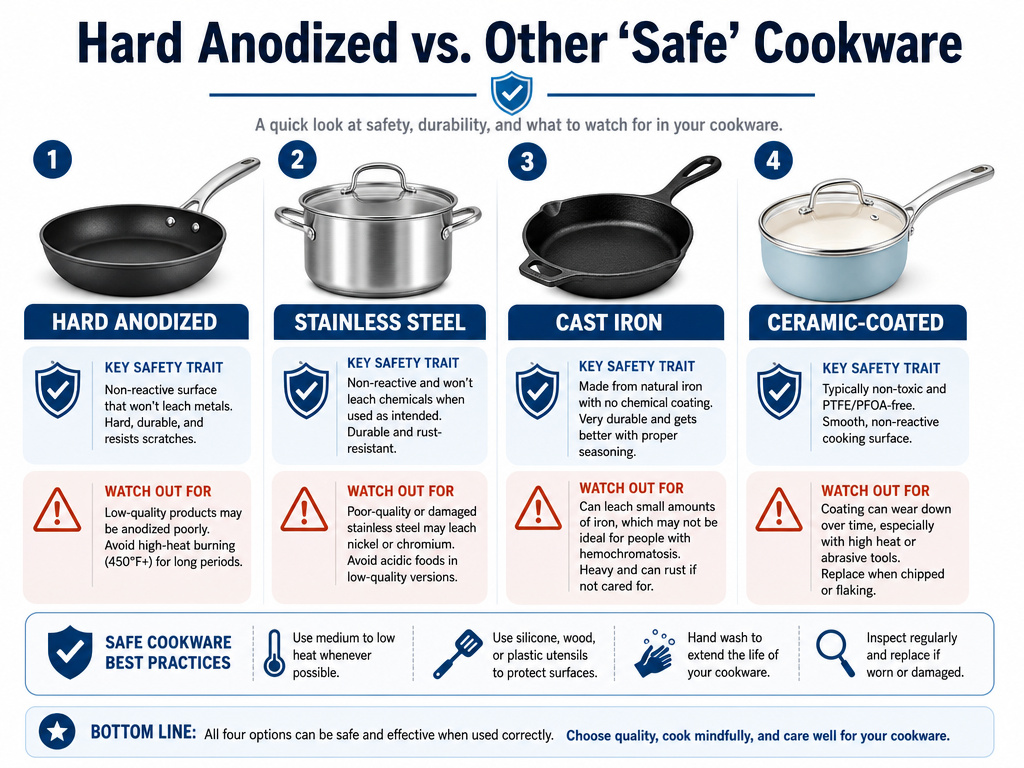
Is hard anodized the only safe choice? Far from it. It exists in a landscape of excellent options, each with its own safety profile and best-use case. Comparing it to other common materials clarifies where it shines.
| Material | Key Safety Trait | Best For | Watch Out For |
|---|---|---|---|
| Hard Anodized Aluminum | Non-reactive, anodized barrier. | Everyday sautéing, sauces, even heating. | Scratches, high heat, unknown imported alloys. |
| Stainless Steel | Inert, non-porous, no coating to degrade. | Searing, deglazing, dishwasher safety. | Can leach nickel/chromium if pitted (rare). |
| Cast Iron | Leaches beneficial dietary iron. | High-heat searing, oven-to-table use. | Reacts with acidic foods, can rust. |
| Ceramic Non-Stick | PTFE/PFOA-free mineral coating. | Low-fat cooking, eggs, delicate foods. | Coating durability; can chip if abused. |
For general, daily cooking, a high-quality hard anodized cookware set is a fantastic, safe workhorse. It heats evenly, cleans easily, and avoids the reactivity of raw aluminum. For searing steaks or making pan sauces, many cooks prefer the durability of stainless steel cookware safety. For an absolutely inert, chemical-free surface, seasoned cast iron cookware safety or carbon steel cookware safety is the gold standard, though it requires more maintenance.
The healthiest kitchen often has a mix. You might grab the hard anodized skillet for a quick veggie stir-fry, the stainless pot for boiling pasta, and the cast iron for a weekend roast. Understanding the safety and strength of each lets you use the right tool for the job.
Frequently Asked Questions
Is scratched hard anodized cookware dangerous?
Light surface scratch in the nonstick coating is not a health emergency, but it is the first sign of wear. A deep scratch that exposes the dull gray aluminum beneath the dark anodized layer is more concerning. This breach can potentially allow for increased metal transfer, especially when cooking acidic foods. It also becomes a food-sticking point. For peace of mind and best performance, deeply scratched pans should be replaced.
Can hard anodized cookware cause Alzheimer’s?
The link between aluminum exposure and Alzheimer’s disease has been extensively studied for decades. According to major health organizations like the Alzheimer’s Association and the World Health Organization, there is no conclusive evidence that normal daily exposure to aluminum from sources like cookware, antacids, or foil is a cause of Alzheimer’s. The anodizing process specifically reduces aluminum exposure from cookware to minimal levels.
Is it safe to cook acidic food in hard anodized cookware?
Yes, it is considered safe. The whole purpose of the hard anodized layer is to create a non-reactive barrier that prevents the aluminum from interacting with acidic ingredients like tomatoes, citrus, or wine. This is a key advantage over raw aluminum or un-anodized aluminum cookware. Just ensure your pan isn’t deeply scratched, as that can compromise the barrier.
How can I test my cookware for lead?
Consumers cannot reliably test for lead leaching at home with kitchen tools. The regulatory test involves simmering a 4% acetic acid solution (simulating vinegar) in the cookware for hours and analyzing the liquid with specialized equipment like ICP-MS. Your best defense is to buy from reputable brands that test their materials and to avoid unbranded, imported cookware, especially those identified as Hindalium/Indalium alloys in FDA warnings.
What is the safest cookware brand?
There isn’t a single “safest” brand, but there are many highly reputable brands known for rigorous material standards and quality control. Brands like All-Clad (stainless), Le Creuset (enameled cast iron), Staub, Made In, and Cuisinart (for hard anodized) have long-standing reputations. Safety comes from the brand’s commitment to using food-grade materials and transparent manufacturing, not from a logo alone. Look for brands that clearly state their materials and stand behind them with warranties.
Before You Go
Is hard anodized cookware safe? For the vast majority of home cooks buying from known, reputable sources, the answer is a confident yes. The science of anodizing is sound, and the track record of major brands is clean. The safety alert is specific and important: avoid the bargain-bin, no-name imports, particularly those with unspecified alloys.
Your safety strategy is straightforward. Invest in a well-reviewed set from a company that provides clear specifications and a warranty. Use it with care, low to medium heat, gentle utensils, and hand-washing. Inspect it occasionally for deep scratches. When you follow these guidelines, hard anodized aluminum cookware is a durable, high-performing, and safe foundation for your kitchen for a decade or more. For a curated starting point, our tested best hard anodized pots and pans list focuses on sets that meet this standard.
