
How to Clean a Cast Iron Dutch Oven | Step-By-Step Guide
This post contains affiliate links. As an Amazon Associate, we earn from qualifying purchases.
To clean a cast iron Dutch oven, first let it cool completely. For bare cast iron, scrape out food, wash with hot water and a small amount of mild soap, dry immediately, and apply a thin coat of oil. For enameled cast iron, use hot water, mild soap, and a non-abrasive sponge. Never put a hot Dutch oven in cold water or soak it for extended periods, as this causes thermal shock that can crack enamel or warp the iron.
That cooling step isn’t just about comfort. It’s the line between a routine clean and a warranty claim. Vollrath’s care manual states damage from filling hot cast iron with cold water is explicitly not covered. The sudden temperature change, thermal shock, stresses the material. On enameled models, that stress shows as a spiderweb of cracks. On bare iron, it can cause a hairline fracture you might not see until the pot fails during a sear.
What follows is the split path for bare and enameled cast iron, the boiling trick for burnt food that actually works, and the cleaning hacks from test kitchens that break the manufacturer mold.
Key Takeaways
- Let the Dutch oven cool to room temperature before washing to avoid thermal shock, a common cause of cracks and warranty denial.
- Bare cast iron needs immediate, thorough drying and a light oil coat after every wash to prevent rust.
- Enameled cast iron is more forgiving with soap but is easily scratched by steel wool or abrasive pads; stick to soft sponges.
- For burnt-on food, a simmering water and baking soda solution is safer and more effective than aggressive scrubbing.
- Cosmetic stains on enamel are normal and don’t affect performance; aggressive cleaning to remove them often causes more harm than good.
Bare Iron vs. Enameled Cast Iron: Two Different Worlds
Your cleaning method is decided before you even pick up a sponge. It’s dictated by the surface inside your pot.
A bare cast iron Dutch oven has a seasoned, polymerized oil finish that is its non-stick coating and rust protection. An enameled cast iron Dutch oven has a glass-like ceramic coating fused to the iron at extreme heat. That enamel is inert, doesn’t rust, and provides a non-reactive cooking surface. Treating one like the other is how you end up with a sticky, rust-spotted pan or a scratched, dull finish.
Bare cast iron requires seasoning, oil baked onto the iron, to perform. Unseasoned or improperly seasoned cast iron does not perform well and can rust. This is not a suggestion; it’s the baseline condition for the metal to work.
The care for enamel is simpler in daily use but has a hard ceiling on abrasion. You can use soap every time. You cannot use metal utensils or scrubbers. The goal with bare iron is to maintain and build up the seasoning. The goal with enamel is to preserve the smooth glaze without gouging it.
The Step-by-Step Clean (Bare Cast Iron)
This process is about preservation. You’re not just removing food; you’re setting the stage for the next layer of seasoning.
1. Cool Completely. This is non-negotiable. Placing a hot pan in water risks warping and thermal shock. Set it aside until it’s cool to the touch.
2. Scrape and Rinse. Use a wooden or plastic scraper to remove large food bits. Rinse under hot running water. The Vollrath manual suggests boiling water in the pot to loosen stubborn debris if needed, then letting it cool again before scrubbing.
3. Wash Gently. Use a small amount of mild dish soap and a non-abrasive scrub brush or cloth. The old myth about never using soap applies to lye-based soaps from a century ago; modern mild detergents won’t strip well-established seasoning. Do not use abrasive cleansers or steel wool.
4. Dry Immediately and Thoroughly. Water is the enemy. Dry every inch, inside and out, with a towel. Then, place the dry pot and lid in a warm oven (200°F) for 10 minutes or on a warm stovetop burner to evaporate any residual moisture. This step prevents flash rust.
5. Apply a Protective Oil Coat. While the pot is still warm, apply a tiny amount of neutral cooking oil (like canola or grapeseed) to the interior and exterior with a paper towel. Wipe it out thoroughly, it should look dry, not greasy. This micro-layer protects the iron until its next use.
What happens if you skip the dry-and-oil step? Ambient humidity will cause surface rust to form within hours, especially in humid climates. That rust must be scrubbed off with salt or a scouring pad, which sets your seasoning back to square one.
Cleaning an Enameled Dutch Oven (Le Creuset, Staub, etc.)
 The enamel coating changes the rules. Your primary risk shifts from rust to physical damage.
1. Cool Completely. The thermal shock rule applies even more strongly here. Enamel and cast iron expand at different rates when heated; quenching a hot enameled pot can cause the glass coating to crack or craze.
2. Soak if Needed. It is safe to soak an enameled Dutch oven briefly in warm, soapy water to loosen food. Do not leave it soaking for hours or overnight, as water can seep under the enamel at the rim over time.
3. Wash with Soft Tools. Use a soft sponge, dishcloth, or nylon brush with hot, soapy water. Every major manufacturer stresses non-abrasive. That means no steel wool, no scouring pads, no abrasive cleansers unless specifically designed for enamel (like Bar Keepers Friend soft cleanser).
4. Rinse and Dry. Rinse with hot water and dry with a towel. You do not need to oil an enameled surface.
Common mistake: Using a stainless steel scrubber on a stubborn spot. The enamel is harder than food but softer than steel. You’ll leave microscopic scratches that trap grease and food particles, making the pot stain faster and look dull.
Many enameled pots, like those from Le Creuset, are technically dishwasher safe. The manufacturer also notes that constant dishwashing may lead to dulling of the enamel finish. That’s a cosmetic trade-off. The functional risk is that high-pressure jets can chip the enamel against other dishes. Hand washing is the conservative, recommended path.
How to Handle Burnt-On Food and Stains
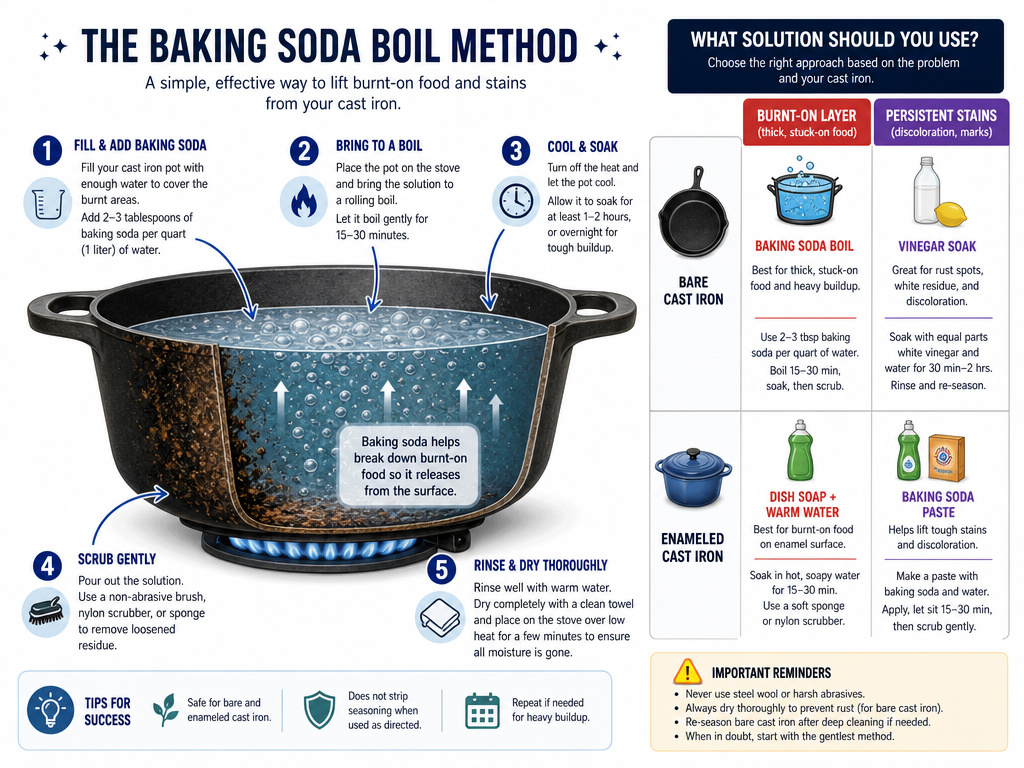 When a layer of food has carbonized onto the bottom, don’t attack it with force. Use chemistry.
For both bare and enameled iron, the most effective and safest method is a controlled boil. This is the professional chef’s trick.
- Fill the pot with enough water to cover the burnt area.
- Add 2-3 tablespoons of baking soda.
- Bring to a simmer over medium heat and let it bubble gently for 8-10 minutes.
- Remove from heat and let it cool until safe to handle.
- The burnt layer will have softened and can be lifted away with a wooden spoon or plastic scraper. Follow with a normal wash.
| Cleaning Challenge | Bare Cast Iron Solution | Enameled Cast Iron Solution |
|---|---|---|
| Light stuck-on food | Hot water, plastic brush, mild soap. | Hot water, soft sponge, mild soap. |
| Burnt-on layer | Baking soda boil method. | Baking soda boil method. |
| Persistent stains | Not a concern; part of seasoning. | Paste of baking soda & water, or Bar Keepers Friend soft cleanser. |
| Exterior grime | Scrub with stiff brush, wash, dry, and oil. | Baking soda paste or Bar Keepers Friend on a soft cloth. |
| Light surface rust | Scrub with salt or very fine steel wool, re-season. | Not applicable. If rust appears at a chip, the pot is compromised. |
For extreme stains on light-colored enamel, America’s Test Kitchen recommends a 1:3 bleach-to-water solution left to sit overnight. This is a stark contrast to most manufacturer guidance. Their reasoning is purely functional: a stained cream interior makes it harder to monitor browning. If you go this route, use extreme caution: ventilate the area well and keep it away from children and pets. Rinse the pot exceptionally well afterward.
Where this goes sideways: Using bleach or Bar Keepers Friend on bare cast iron. These will strip the seasoning completely, leaving the iron gray and vulnerable to immediate rust.
What Not to Do: The Quick Path to Damage
These errors have immediate and long-term consequences. They’re how a ruined Dutch oven story begins.
Thermal Shock. This is the cardinal sin. Do not run cold water into a hot pot. Do not place a hot pot on a cold, wet counter. Do not put a hot lid in a sink of water. The thermal stress can crack enamel instantly or create hairline fractures in bare iron that weaken over time.
Extended Soaking. Letting a bare cast iron pot sit in water leads to rust. For enameled pots, prolonged soaking can allow water to penetrate the rim where the enamel meets the raw iron, leading to rust that bubbles under the coating.
Abrasive Attack. Steel wool, metal scrapers, and harsh powdered cleansers will scratch enamel permanently and strip seasoning from bare iron. If your Dutch oven sticks, the solution is better heat control and fat, not a more aggressive scrub.
Dishwasher Reliance. While some enameled models allow it, the dishwasher’s harsh detergents and high heat can dull the enamel’s gloss over dozens of cycles. For bare iron, the dishwasher is a disaster, it will strip all seasoning and cause rapid, severe rust.
Storing While Damp. Always ensure your pot is bone-dry before putting it away. Trapped moisture is the cause of most surface rust issues.
Diagnosing Common Issues and Next Steps
Not every problem is a catastrophe. Here’s how to read the signs.
| Symptom | Likely Cause | Is It a Problem? | Fix |
|---|---|---|---|
| Orange/brown spots on bare iron | Surface rust from moisture. | Cosmetic and superficial if caught early. | Scrub off with salt or a scouring pad, then re-season. |
| Black flakes in food from bare iron | Seasoning is flaking. | Yes, you’re eating carbonized oil. | Strip and re-season the pot completely. |
| Cloudy white residue on enamel | Hard water mineral deposits. | Cosmetic only. | Clean with a vinegar-water solution. |
| Dull, scratched enamel surface | Abrasive cleaning over time. | Cosmetic; performance may be slightly affected as stains set in easier. | Switch to only soft sponges; stains may be permanent. |
| A chip in the enamel | Impact or extreme thermal shock. | Yes. Discontinue use. The exposed iron will rust and can leach into food. | Contact manufacturer for warranty assessment. |
| Food sticks persistently | Insufficient pre-heating, not enough fat, or damaged seasoning/enamel. | A cooking performance issue. | For bare iron, work on your seasoning process. For enamel, ensure you’re not overheating an empty pot. |
If you discover a chip, the pot’s cooking life is compromised. That exposed iron will rust, and that rust can migrate into your food. This is the point where you check the manufacturer’s lifetime warranty.
Frequently Asked Questions
Can you use soap on a cast iron Dutch oven?
Yes, you can use a small amount of modern, mild dish soap. The old rule forbade lye-based soaps, which would strip seasoning. Today’s gentle detergents are safe for well-seasoned cast iron. The key is to avoid abrasive soaps with grit or harsh chemicals.
How do you remove rust from a cast iron Dutch oven?
For light surface rust, scrub the area with coarse salt and a little water or a stiff nylon brush. For more significant rust, use fine steel wool (000 grade). Once the rust is gone, rinse, dry immediately, and apply a thin layer of oil. You will likely need to conduct a full seasoning cycle to restore the surface.
Why is my enameled Dutch oven staining?
Brown or grey stains on light enamel are typically polymerized oils and are cosmetic. They result from high-heat cooking and are a sign of use, not damage. A baking soda paste or a bleach solution (for white enamel only) can lighten them, but they often return. Most experts, including those at America’s Test Kitchen, advise learning to live with them as badges of honor.
Is it safe to use a Dutch oven with a small chip?
No. A chip in the enamel exposes the underlying cast iron to moisture and food acids, leading to rust. That rust can contaminate your food and weaken the surrounding enamel, causing more chips. If the chip is on the cooking surface, retire the pot from active duty.
How often should I re-season my bare cast iron Dutch oven?
There’s no set schedule. Re-season when food starts sticking noticeably, when you see patches of dull gray metal, or after you’ve removed rust. A well-maintained pot that’s dried and oiled after each use might only need a full oven seasoning once or twice a year. Many cooks simply do a stovetop seasoning with a thin oil coat after every few uses to maintain the surface.
The Bottom Line
Cleaning a cast iron Dutch oven is less about brute force and more about understanding the material. For bare iron, the mantra is dry and protect. For enamel, it’s gentle and preserve. The one universal rule is patience, let the pot cool, let a baking soda boil work its magic, and let stains be if they’re only skin deep.
Your pot is a tool, not a museum piece. A few stains and a well-earned patina mean you’re using it correctly. A crack or a chip means you hit a physical limit. Focus on the cooking, follow the cooling rule, and the clean will be straightforward every time.
