
Why Is My Wok Sticky | The 3 Culprits and How to Fix Them
This post contains affiliate links. As an Amazon Associate, we earn from qualifying purchases.
A sticky wok is almost always caused by one of three things: too much oil during seasoning, overheating the oil past its smoke point, or a damaged non-stick coating. The fix depends on your wok’s material, carbon steel and cast iron need a re-seasoning, while a sticky non-stick surface often signals it’s time for a replacement.
That stickiness is a physical layer, not a mystery. It’s oil that polymerized incorrectly, turning gummy instead of slick. The rest of this guide breaks down the specific failure for each wok type, pulls the exact temperature specs from manufacturer manuals, and gives you a clean fix.
What follows: a diagnostic table to pinpoint your problem, the exact re-seasoning steps for carbon steel, the one cleaning trick for stainless steel, and the hard truth about when a non-stick wok is beyond saving.
Key Takeaways
- A sticky carbon steel wok means the seasoning oil wasn’t thin enough or got too hot. Scrub it off and re-season with a high-smoke point oil like grapeseed at 400–475°F.
- Sticky stainless steel is usually from overheated oil. Use the “cold pot, cold oil, heat 90 seconds” method from Buffalo Cookware to prevent it.
- A sticky non-stick coating is damaged. Stop using it if the surface is scratched or peeling; it can’t be repaired.
- Never soak a carbon steel wok. Water is the enemy of the patina and leads directly to wok rust.
- The right cleaning a wok method preserves seasoning. Hand wash, dry immediately, and apply a whisper-thin coat of oil before storage.
The 3 Main Reasons Your Wok Is Sticky (and How to Diagnose Them)
The feeling tells you everything. A properly seasoned wok feels smooth and dry to the touch, almost like slick stone. A sticky one feels tacky, like a layer of syrup dried on the surface. That tack is failed polymerization.
For carbon steel and cast iron, a sticky surface means the oil applied during seasoning was too thick, the heat was too low, or the oil’s smoke point was exceeded. The oil gums up instead of baking into a hard, slick patina.
Use this table to match the symptom to the cause and point you to the right fix.
| Symptom | Most Likely Cause | Wok Material | Next Step |
|---|---|---|---|
| Tacky, gummy feel; food sticks fiercely | Thick, uneven oil layer during seasoning | Carbon Steel, Cast Iron | Strip and re-season |
| Sticky spots with discoloration (brown/yellow) | Oil overheated past its smoke point | Stainless Steel, Carbon Steel | Scrub and re-season with correct oil & temp |
| Sticky, scratched, or peeling surface | Damaged non-stick coating; abrasive cleaning or metal utensils | Non-Stick Coated | Assess damage; likely replace |
| Sticky after washing and air-drying | Water residue interacting with thin oil layer; promotes rust | Carbon Steel | Hand dry completely, apply thin storage oil |
The fix starts with identifying your wok’s core material. The rules change completely from one to the next.
Carbon Steel & Cast Iron: The Sticky Seasoning Problem
This is the most common scenario. You followed a guide to season a carbon steel wok, but now the surface is tacky. The Masterbuilt manual states a key detail: after seasoning, the “wok should not be sticky to the touch.” If it is, the process failed.
The why-layer matters here. Seasoning isn’t painting on oil; it’s thermally bonding fat molecules to the metal. Apply too much oil, and the top layer can’t fully polymerize, it stays in a semi-cured, gummy state. Heat it too slowly or with an oil that smokes too low, and you get the same sticky result.
Common mistake: Pouring oil directly into the wok and swishing it around. This always leaves pools that turn sticky. The correct method is to apply oil with a folded paper towel, then aggressively wipe it out as if you made a mistake.
The Masterbuilt Karbon Steel™ manual specifies oils with a smoke point of 400°F – 475°F (204C – 246C), canola, sunflower, vegetable, grapeseed. It explicitly warns against avocado, coconut, or olive oil. Olive oil smokes around 375°F, turning acrid and sticky well before it can form a proper layer.
How to Fix a Sticky Carbon Steel Wok:
- Scrub it clean. Use hot water, a small amount of dish soap, and a scrub brush or coarse salt. You need to remove the gummy layer. For stubborn spots, the manual advises simmering water in the wok for 3-5 minutes to loosen food, then scraping with a plastic tool.
- Dry it thoroughly. Place it over low heat until every hint of moisture is gone. This is non-negotiable.
- Apply a microscopically thin layer of oil. Use a paper towel with a few drops of high-smoke point oil. Wipe the entire interior, then take a clean paper towel and buff it out again. The surface should look matte, not glossy.
- Heat it properly. Place the wok upside down in a 400°F (204°C) oven for one hour. Let it cool completely in the oven. This bakes on the thin layer correctly.
- Repeat if needed. One round might do it. If it still feels tacky, repeat steps 3 and 4. The goal is that smooth, dry patina.
Once fixed, a light maintenance seasoning after each use keeps it perfect. Just heat, thin oil, wipe, and cool.
Stainless Steel Woks: Overheated Oil Is the Culprit
Stainless steel woks, like those from Buffalo Cookware, are a different beast. They’re “permanently and physically nonstick” through multilayer construction, not a coating. Stickiness here is almost always a cooking error, not a seasoning failure.
Buffalo’s official Q&A pins it on temperature. “When overheated, all cooking oil becomes sticky and stains.” Olive oil is a prime offender, browning and gumming up on the high-conductivity steel. The fix isn’t re-seasoning, it’s a correction in technique.
Their prescribed method is specific: cold pot + cold oil → heating time 90 seconds. The oil and metal heat together evenly, creating that physical non-stick barrier. Dump oil into a screaming-hot wok, and it instantly breaks down.
Where this goes sideways: Trying to rescue sticking food by cranking the heat. If food sticks while cooking, Buffalo’s advice is counterintuitive: turn off the heat and let the wok cool. The stuck food will release as the metal contracts, letting you flip it easily before resuming cooking.
For cleaning, wash while the wok is still warm with a little detergent. For stubborn yellow stains from overheated oil, boil a bowl of water in the wok, then scrub. This is a proper wok cleaning ritual that maintains the surface without harsh abrasives.
Non-Stick Coated Woks: When Stickiness Means Damage
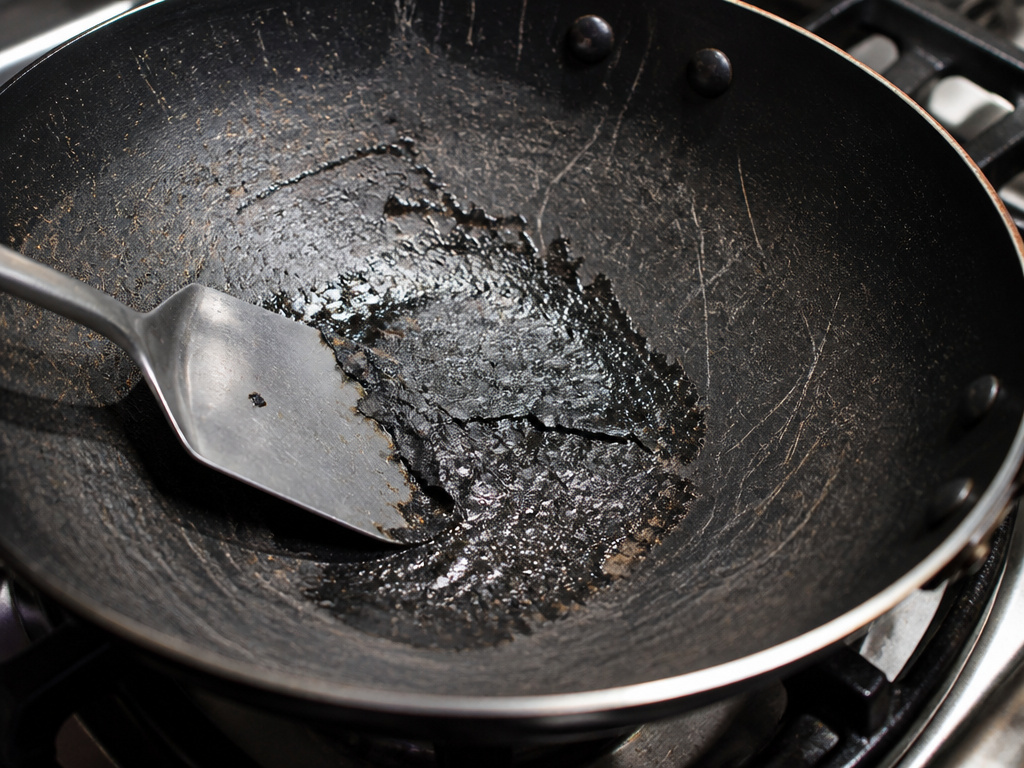
For woks with a factory-applied non-stick coating, stickiness is a red flag. The Thunder Group instructions are clear: these woks do not require seasoning. Stickiness means the coating itself is compromised.
The primary cause is heat abuse. The instructions state, “Avoid cooking on high heat because excessive heat will damage the non-stick surface.” Exceeding about 500°F can degrade the coating, causing it to become tacky and eventually peel.
| Sign | Probable Cause | Is It Salvageable? |
|---|---|---|
| Localized sticky spot | Food burned onto coating | Maybe. Soak & gentle scrub. |
| Overall tacky feel | Coating degraded by chronic high heat | Unlikely. Performance is gone. |
| Scratches with stickiness | Metal utensil use or abrasive scrubber | No. Replace the wok. |
| Bubbling or peeling | Severe overheating or old age | No. Discontinue use. |
The IKEA TOLERANT wok manual warns against steel wool and abrasive cleaners for this reason. Once scratched, the coating loses its integrity and food begins to stick to the exposed underlayer. If your coated wok is sticky and scratched, it’s time to retire it. Continuing to use it risks the coating flaking into your food.
Step-by-Step: How to Fix a Sticky Carbon Steel Wok (The Right Way)

This is the full repair sequence for the most common problem. Gather a scrub brush, dish soap, paper towels, and a high-smoke point oil like grapeseed or canola.
Before you start: The wok will get very hot. Use oven mitts. Work in a well-ventilated kitchen, as the seasoning process will produce some smoke.
- Remove the gunk. Scrub the sticky wok with hot, soapy water and a brush. Don’t be gentle, you need to remove the failed seasoning layer. For tough spots, use the simmering water trick.
- Dry it completely. Rinse and immediately place the wok over low heat on the stove. Move it around until all water evaporates and the metal is warm to the touch.
- Apply the thinnest possible oil coat. Pour a teaspoon of oil onto a folded paper towel. Wipe the entire interior surface. Now, take a clean, dry paper towel and buff aggressively. Your goal is to remove almost all the oil you just applied. The surface should look dry.
- Bake it upside down. Place the wok upside down on the middle rack of a cold oven. Put a sheet of foil on the rack below to catch drips. Heat the oven to 400°F (204°C). Bake for one hour.
- Cool slowly. Turn off the oven and let the wok cool completely inside. This can take a few hours. Rushing this step can cause thermal stress.
- Test and repeat. Once cool, touch the surface. It should feel smooth and dry, not tacky. If it’s still sticky, the oil layer was still too thick. Repeat steps 3–5.
This process builds a proper wok patina from the ground up. The first cook after this should be something fatty, like stir-fried pork or onions.
How to Prevent Your Wok From Ever Getting Sticky Again
Prevention is simpler than repair. It comes down to three disciplined habits after every use.
First, clean correctly. Never, ever soak a carbon steel wok. The Masterbuilt manual is explicit: “Never soak your Karbon Steel™ product.” Soaking strips seasoning and invites rust. Hand wash quickly with warm water and a soft sponge. For a seasoned wok, avoid soap if you can; just use hot water and a brush. Dry it immediately over heat.
Second, store it protected. After drying, apply a drop of oil to a paper towel and give the interior a barely-there wipe. This protects against ambient moisture. Store it in a dry place, not sealed in a damp cabinet.
Third, use the right heat and tools. For carbon steel, preheat it dry before adding oil. For stainless, use the cold oil start. For non-stick, never use high heat. And never use metal utensils on a non-stick surface or a well-seasoned wok, they scratch and gouge. A wooden or bamboo spatula is mandatory.
If you see dull red spots, you’re dealing with the early stages of corrosion. That’s a different fix, outlined in our guide on how to clean a rusty wok. Address it immediately.
Frequently Asked Questions
Can I fix a sticky wok without completely re-seasoning it?
Sometimes. If the stickiness is mild and localized, try this: heat the empty wok on the stove until it smokes lightly. Turn off the heat and let it cool completely. The heat can sometimes re-polymerize a thin, gummy layer. Wipe it out with a paper towel. If it’s still sticky, a full re-seasoning is required.
What is the best oil to prevent a sticky wok?
For seasoning a wok, use a neutral oil with a high smoke point, grapeseed, soybean, sunflower, or canola. These oils polymerize cleanly at the 400–475°F range specified by manufacturers. Avoid olive oil, butter, or flaxseed oil for the initial seasoning; they smoke too low or can create a brittle layer.
Why is my new carbon steel wok sticky out of the box?
Many come with a factory-applied protective coating of wax or oil to prevent rust during shipping. This coating is meant to be washed off with hot, soapy water before the first initial wok seasoning. If you seasoned over this coating, it will melt and turn gummy. Strip it with soap and a scrubber and start fresh.
Is a sticky wok dangerous to cook with?
For carbon steel, a sticky wok isn’t dangerous, just inefficient. Food will stick and burn. For a non-stick coated wok, stickiness indicates the coating is breaking down. If the coating is scratched or peeling, it could flake into food, which you should avoid. Discontinue use.
My cast iron skillet is also sticky. Is it the same problem?
Yes, absolutely. The chemistry is identical. A sticky cast iron skillet suffers from the same too-thick-oil syndrome. The fix is the same: scrub off the gunk and re-season with a thin, thin layer of oil at high heat.
Before You Go
A sticky wok breaks your cooking rhythm. It turns a quick stir-fry into a scrubbing session. The cause is almost always a correctable error, too much oil, the wrong oil, or too much heat.
For carbon steel, embrace the scrub and re-season. Use less oil than you think is possible. For stainless, master the cold start. For non-stick, respect its heat limits. And for all woks, commit to a gentle wok cleaning and seasoning routine that keeps the surface smooth.
That sticky layer isn’t permanent. It’s just the last mistake you made with that pan. Fix it once, and your next meal will slide right out.
