
The Correct Way to Clean a Cast Iron Skillet in 5 Minutes
This post contains affiliate links. As an Amazon Associate, we earn from qualifying purchases.
Clean a cast iron skillet by washing it with warm, soapy water, scrubbing gently, drying it completely, and applying a thin layer of oil. The Vollrath manual states filling a hot pan with cold water voids the warranty, and the MSU Extension advises storing pans with paper towels inside in humid weather to prevent rust. Skip the dishwasher, avoid soaking, and never shock it with cold water.
That warranty clause isn’t marketing. It’s a direct consequence of the metal’s physics. Cast iron is brittle. A temperature swing of a few hundred degrees in seconds creates stress fractures the eye can’t see until the pan warps on your next sear.
What follows is the daily five-minute clean that preserves the seasoning, the tools that replace elbow grease, and the storage trick that stops rust before it starts.
Key Takeaways
- Soap is safe. Modern dish soap won’t strip the polymerized oil seasoning; abrasive scouring pads and steel wool will.
- Heat is your drying tool. After rinsing, dry the pan on a low stovetop burner for two minutes to evaporate every trace of moisture.
- Oil thinly. A half-teaspoon of neutral oil rubbed over the warm, dry surface is a protective barrier, not a cooking layer.
- Never thermal shock. Pouring cold water into a hot pan risks immediate warping or cracking and voids manufacturer warranties.
- Store smart. In humid climates, place a paper towel inside the stored pan to absorb ambient moisture, as recommended by the MSU Extension.
The 5-Minute Daily Clean (Step-by-Step)
This routine works after eggs, seared chops, or a batch of cornbread. The goal is to remove food residue without damaging the polymerized oil coating that makes the pan non-stick.
Before you start: Let the pan cool from screaming hot to just warm. A pan that’s too hot to hold with a bare hand is still too hot to clean. Thermal shock cracks iron.
Step 1: Scrape and Rinse. While the pan is still warm, use a wooden or bamboo spatula to scrape off any obvious food bits. Rinse under warm running water.
- Skip this, and: Stuck bits harden into carbonized patches that require aggressive scrubbing later, which can wear down the seasoning in that spot.
Step 2: Wash with Soap. Add a drop of modern dish soap to a non-abrasive scrub brush or sponge. Palmolive Ultra Pure + Clear is a good pick, as it’s dye and fragrance-free. Scrub the interior and exterior gently.
- The why-layer: The seasoning is a hard, plastic-like layer of baked-on oil. Today’s mild soaps lack the lye that historically stripped seasoning. They clean food oil, not the bonded seasoning oil. This is why using soap is now standard advice.
Step 3: Dry Completely. This is the non-negotiable step. Rust forms where water lingers. Dry the pan thoroughly with a towel, then place it on a low stovetop burner for 2-3 minutes. The residual heat will evaporate any hidden moisture.
Step 4: Oil Lightly. Once the pan is dry and slightly warm, add about half a teaspoon of a neutral oil like canola or vegetable oil to the center. Use a paper towel to rub a microscopically thin layer over the entire cooking surface, inside and out. Buff until the pan looks almost dry, not glossy.
- Skip this, and: The bare iron is exposed to air and humidity, inviting surface rust, especially if you live in a coastal or rainy region. This step is your skillet maintenance cornerstone.
That’s it. The pan is ready for storage or its next use. This process protects the seasoned skillet and takes less time than loading a dishwasher.
When You Have Stuck-On or Burnt Food
The daily clean assumes cooperative food. For stubborn, cooked-on residue, you need a mild abrasive that won’t gouge the seasoning.
The Salt Scrub Method. Sprinkle a tablespoon of coarse kosher salt into the warm, damp pan. Using a folded paper towel or a non-abrasive sponge, scrub the salty paste across the stuck areas. The salt crystals act as thousands of tiny, dissolving scrubbers. Rinse, dry, and oil as usual.
For a Truly Burnt Pan. If the salt scrub doesn’t cut it, you’re dealing with carbonized food welded to the surface. Here, a dedicated tool like the Lodge Pan Scraper or a chainmail scrubber is appropriate. Use firm, focused pressure on the burnt spot only.
Where this goes sideways: Using a metal spatula or scraper with a sawing motion across the whole pan. You’ll scratch the seasoning unevenly, creating grooves where future food will stick. Target the problem spot, not the entire surface.
If the job is bigger than that, you may need to remove burnt-on food with a paste of Bar Keepers Friend and water. That oxalic acid cleaner will lift the crud but will also strip some seasoning, meaning a re-seasoning session will be necessary afterward.
| Problem | Tool to Use | Risk if You Use the Wrong Tool |
|---|---|---|
| Light stuck bits | Nylon brush, sponge | None. This is the ideal. |
| Moderate stuck-on food | Coarse kosher salt | Can be messy, but safe for seasoning. |
| Burnt-on patches | Plastic pan scraper, chainmail | Scratches seasoning if used too aggressively on non-problem areas. |
| Widespread carbon buildup | Bar Keepers Friend paste | Will strip seasoning, requiring a full re-season. |
The Tools That Actually Help (And the Ones That Hurt)
Your cleaning arsenal matters. The right tool makes the job trivial; the wrong one creates a weekend project.
A stiff-bristled nylon brush is the workhorse. It gets into the pan’s corners and along the curved sides. The Lodge Care Scrub Brush is designed for this. A wooden spatula is perfect for scraping food loose while cooking or during the initial rinse.
Chainmail scrubbers work for tough jobs, but they are a last resort. The metal rings can wear down the seasoning’s top layer over time, leading to a sticky surface as the underlying, less-polymerized oil is exposed.
The Banned List.
- Dishwasher. The combination of harsh detergent, prolonged soaking, and super-heated drying is a perfect storm for stripping seasoning and causing flash rust. This is why every guide says never use a dishwasher.
- Steel Wool & Abrasive Pads. These are for stripping pans bare during restoration, not for cleaning. They will scratch and remove the seasoning you’ve built.
- The Sink Full of Water. This is soaking a skillet. Even a 30-minute soak gives water time to penetrate microscopic pores in the iron and under the seasoning, starting the rust process.
How to Dry and Store Your Skillet to Stop Rust
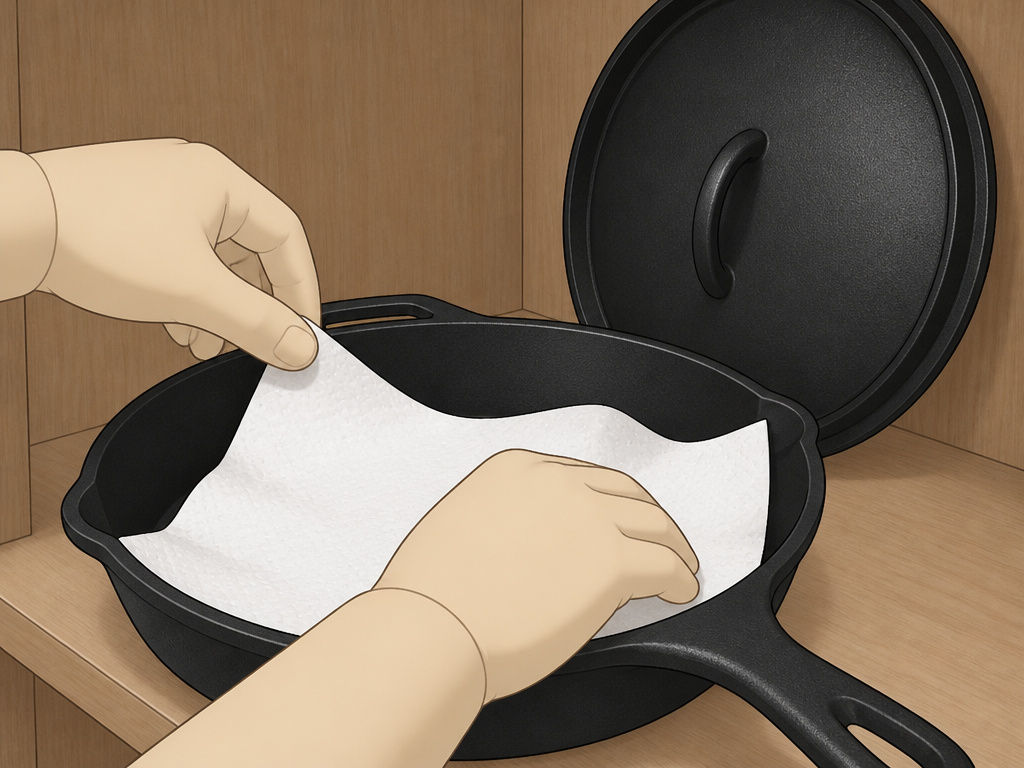 Cleaning is only half the battle. Storage is where most hidden rust begins, particularly in humid climates like the Southeast or coastal areas.
The MSU Extension guide offers a specific, non-commodity tip: in humid weather, store your cast iron with the lid off and place a paper towel inside the cookware to absorb ambient moisture. That single piece of advice prevents more off-season rust than any oiling trick.
After drying on the stove, let the pan cool to room temperature. If you’re stacking pans, place a paper towel or a clean cloth between them to prevent scratching and allow air circulation. Store them in a dry cupboard, not under the sink or in a damp basement.
Common mistake: Putting the lid on a slightly warm, just-oiled pan. The trapped heat and moisture create a sauna inside, which can lead to a sticky film or even mold on the oil layer. Always cool completely before lidding.
Never store leftovers in the pan. Acids and salts in food can break down the seasoning over hours of contact, and the moisture from the food invites rust. This is a direct cause of common sticking issues later on.
When to Re-Season (It’s Less Often Than You Think)
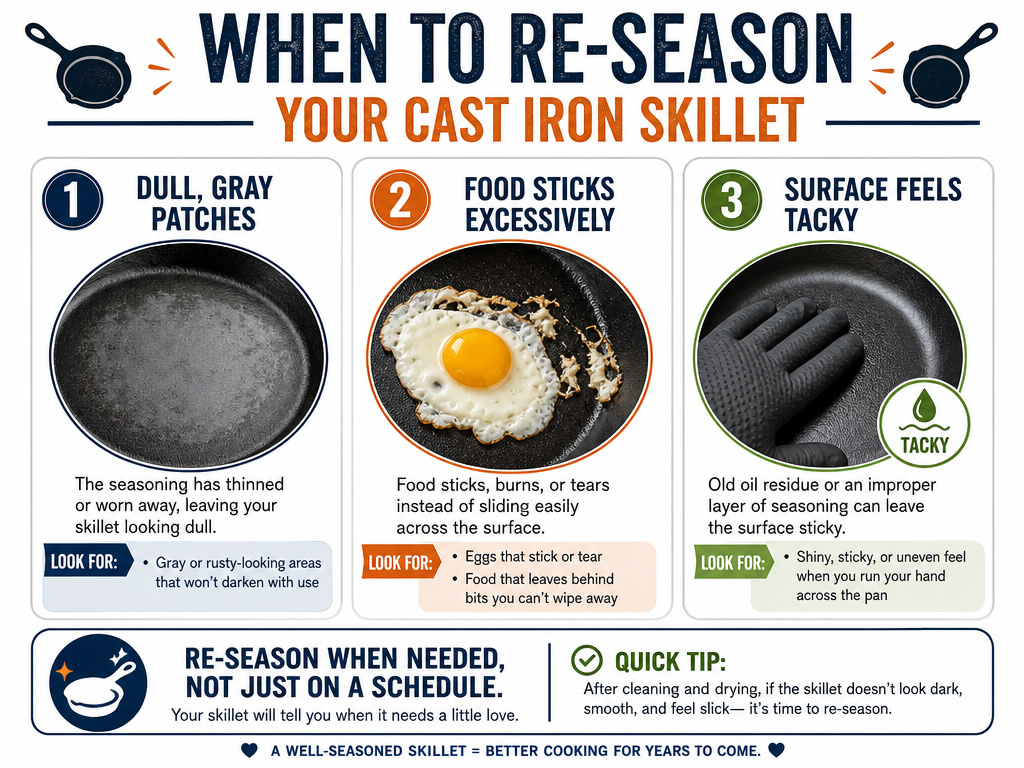 A well-maintained pan might need a full re-seasoning once a year, if that. Don’t confuse spot-treating with a full strip-and-reseason.
You need to re-season if: * The surface looks dull, gray, or metallic in spots (rust is present). * Food suddenly starts sticking food consistently across the entire surface. * The pan feels sticky or tacky to the touch, even after warming.
The curing cast iron process is simple: coat the entire pan in a thin layer of oil, wipe off all excess, and bake it upside-down in a 350°F oven for one hour. Let it cool in the oven. The Vollrath manual specifies this exact temperature and duration. One cycle is often enough for spot repair.
If the pan is rusty or has thick, flaky carbon buildup, you must strip it completely first. The safest method for home cooks is using a lye-based oven cleaner in a garbage bag outdoors—a process detailed in the Wirecutter guide. Wear gloves.
Frequently Asked Questions
Can you really use soap on cast iron?
Yes. The “no soap” rule is a holdover from when soaps contained lye, which would strip seasoning. Modern dish detergents are mild surfactants that cut through food grease without harming the hardened polymerized oil layer. A drop of Dawn is fine.
What’s the best oil for seasoning cast iron?
Use a neutral oil with a high smoke point. Canola, vegetable, grapeseed, and flaxseed oil are all common choices. Flaxseed gives a hard finish but can chip. Canola is reliable and inexpensive. The key is applying a layer so thin it looks like you made a mistake.
Why did my cast iron skillet rust after I washed it?
It wasn’t dried completely. Towel-drying leaves microscopic water in the pores of the iron and around the seasoning’s edge. The essential step is applying gentle heat—on a stovetop burner for a few minutes or in a warm 200°F oven—to drive off all residual moisture before the oiling step.
How do you clean a cast iron skillet without removing the seasoning?
Use the daily method: warm water, a drop of soap, a non-abrasive brush, and immediate, thorough drying. For stuck bits, use kosher salt or a plastic scraper. Avoid abrasive pads, steel wool, and acidic cleaners like vinegar for routine cleaning.
Can you cook tomatoes or other acidic foods in cast iron?
You can, but for short durations. Simmering a tomato sauce for hours will degrade the seasoning, giving the food a metallic taste and potentially exposing the iron. For long, acidic cooks, use enameled cast iron or a stainless steel pot.
Is it okay to cook with a little rust on my skillet?
No. Scrub the rust off completely before using. Ingesting rust is not toxic in tiny amounts, but it will give food an off flavor and indicates your seasoning barrier has failed. Remove it with a salt scrub or a dedicated rust eraser, then re-season the affected area.
Before You Go
A cast iron skillet isn’t fragile, but it does have two enemies: water and neglect. Beat them with a five-minute ritual of soap, heat, and a whisper of oil. Remember the manufacturer’s warning about thermal shock—it’s there because pans crack that way every day. For deeper questions, the Michigan State University cast iron care guide is an authoritative, academic resource that confirms these practices. Your pan will outlast you if you just keep it dry.
