
What is Cast Iron Cookware: Composition, Care, and Benefits
This post contains affiliate links. As an Amazon Associate, we earn from qualifying purchases.
Cast iron cookware is heavy-duty kitchenware made by pouring molten iron into molds. Its defining traits are exceptional heat retention, near-indestructible durability, and a natural, non-stick surface called seasoning, which is a layer of polymerized oil bonded to the iron. This cookware can leach dietary iron into food, a benefit for some, a risk for others.
That last point about iron leaching is where the science gets specific. An unseasoned skillet can transfer over 10 milligrams of iron into a batch of tomato sauce, but a well-maintained one adds almost none. The difference isn’t magic; it’s chemistry you can control.
What follows breaks down the metal itself, the real-world trade-offs of cooking with it, and the care rituals that separate a pan that lasts a decade from one that lasts a century. You’ll learn what “seasoning” actually is, when the health claims hold water, and why this old-school material has outlasted every non-stick fad.
Key Takeaways
- Cast iron is an alloy of iron, carbon, and silicon, giving it great heat retention but poor, uneven heat conductivity.
- The prized “seasoning” is a layer of polymerized oil that prevents rust and creates a natural non-stick surface, it’s not just leftover grease.
- Cooking in cast iron can significantly increase the iron content of food, which may help with iron deficiency but is dangerous for those with hemochromatosis.
- Never put a hot cast iron pan in cold water or in the dishwasher; thermal shock can crack it, and detergent strips seasoning.
- For most home cooks, a pre-seasoned Lodge skillet or an enameled Dutch oven from Le Creuset or Staub offers the best balance of performance and manageable upkeep.
What is Cast Iron Cookware Made Of?
Cast iron isn’t pure iron. It’s an alloy, typically composed of about 98% iron with 2–3% carbon and a small amount of silicon. The carbon is the key. It makes the material hard and gives it superb heat retention, but it also introduces brittleness. That’s why cast iron pans are so thick and heavy, the mass compensates for the lack of flexibility. Unlike ductile steel, a cast iron skillet won’t bend if you drop it; it can crack.
Cast iron’s composition, iron, carbon, silicon, is what grants its legendary heat retention and durability, while also making it susceptible to cracking from sharp impacts or thermal shock.
The “cast” in the name refers to the manufacturing process. Molten iron is poured into a sand mold to form the pan’s shape in a single piece, handle and all. This differs from wrought iron or steel pans, which are often pressed from sheets and have handles attached separately. This one-piece construction is a hallmark of traditional cast iron and contributes to its robust feel.
This manufacturing method has been used for centuries, which is why vintage pieces from brands like Griswold or Wagner are still highly sought after. Modern brands like Lodge use the same fundamental sand-casting technique, often with a machine-applied initial pre-seasoned coating to save you a step.
The Secret is in the Seasoning
A bare cast iron pan is a grey, porous piece of metal that will rust in minutes if left wet. The transformation into a kitchen workhorse happens through seasoning. This isn’t just wiping it with oil. Seasoning is the process of baking a thin layer of oil onto the iron at a high temperature, causing the oil to polymerize, a chemical reaction where the oil molecules cross-link into a hard, plastic-like coating bonded to the metal.
This polymerized layer is your pan’s armor. It seals the porous surface, creating a barrier against moisture and oxygen to prevent rust. It also smooths the microscopic peaks and valleys of the cast iron, creating the foundation for its natural non-stick properties. A well-seasoned cookware surface is black, slick, and slightly glossy.
Where this goes sideways: Using flaxseed oil because a blog said it’s best. It polymerizes beautifully but forms a brittle layer that flakes off in large sheets after a few months. Stick with neutral, high-smoke-point oils like vegetable, canola, or grapeseed.
The ritual is simple: clean the pan, heat it dry, rub on a microscopically thin layer of oil, and bake it upside down in a hot oven for an hour. The thinness is critical. Too much oil creates a sticky, gummy residue instead of a hard polymer. This layer builds over time with use, every time you cook with fats, you’re adding to it. That’s the truth behind the old advice to “just cook bacon in it.” It helps, but it’s not a substitute for a proper initial seasoning, especially since sugary bacon can leave a sticky mess.
Bare vs. Enameled Cast Iron: Two Different Animals
Not all cast iron is black and requires seasoning. This is the fundamental fork in the road.
| Type | What It Is | Best For | Critical Care Rule |
|---|---|---|---|
| Bare Cast Iron | The classic black skillet or Dutch oven. The iron is exposed and protected solely by its seasoned layer. | Searing, frying, baking, and developing non-stick properties over time. | Must be kept dry and lightly oiled after washing to maintain the seasoning and prevent rust. |
| Enameled Cast Iron | Cast iron coated in a durable glass-like enamel (e.g., Le Creuset, Staub). The iron never touches food. | Braising, simmering acidic foods, slow cooking, and where easy cleaning is a priority. | Avoid thermal shock and metal utensils that can chip the enamel. No seasoning required. |
Your choice dictates your entire care routine. A bare pan is a project. You are the maintainer of its protective coating. You’ll avoid prolonged cooking of acidic tomatoes or wine, especially in a new pan, because acid can break down the polymerized oil. You’ll hand-wash it gently and dry it immediately on the stovetop.
An enameled pot is a sealed system. The enamel is inert, so you can simmer tomato sauce for hours without a metallic taste or damage. You can use soap freely. Its weakness is impact, dropping it on a hard floor can chip the enamel, and once the iron underneath is exposed, it will rust. Both types share one non-negotiable rule: avoid thermal shock. Placing a scorching hot pot into a sink of cold water is a sure way to crack either the iron or the enamel.
How Does Cast Iron Affect Your Food?
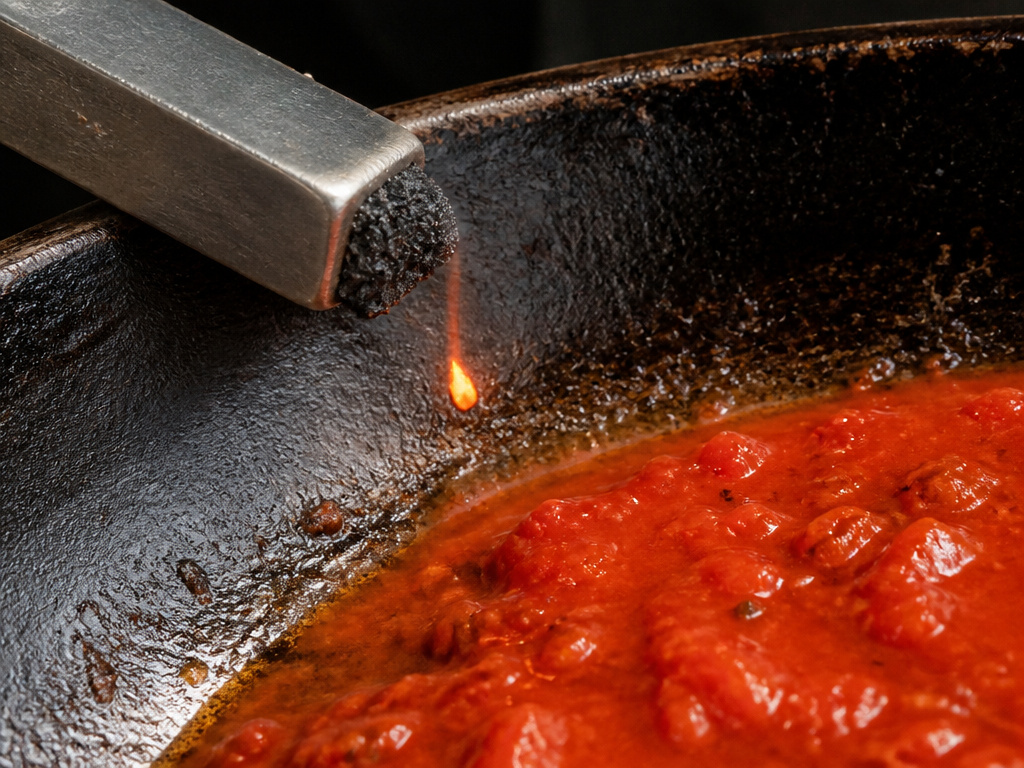
This is the most consequential section for your health. Cast iron is one of the few pieces of cookware that actively changes the nutritional profile of your meal by leaching elemental iron into it.
The Clemson University cookware safety guide states that cooking in unglazed cast iron may double the iron content of food. The amount leached depends on three factors: the food’s acidity, how long it cooks, and the state of the pan’s seasoning. America’s Test Kitchen quantified this. They found an unseasoned cast-iron skillet leached 10.8 mg of iron per 100 grams of tomato sauce. A properly seasoned skillet leached a negligible amount.
The part nobody mentions: The iron transferred is non-heme iron, the same type found in plants like spinach. Its bioavailability is lower than the heme iron in red meat, but cooking in cast iron can still meaningfully contribute to intake.
For individuals with iron deficiency or anemia, this can be a beneficial, passive way to boost iron levels. A 2021 NIH study on iron cookware effects reviewed multiple trials and found evidence that using iron pots can lead to increased hemoglobin levels, particularly in anemic populations.
The critical warning: Anyone with hemochromatosis (a condition causing iron overload) must avoid cooking with bare cast iron. The extra dietary iron can exacerbate their condition. For everyone else, it’s generally safe, but it underscores why you want a robust seasoning layer, it controls the interaction between your food and the iron.
The Real-World Advantages and Drawbacks
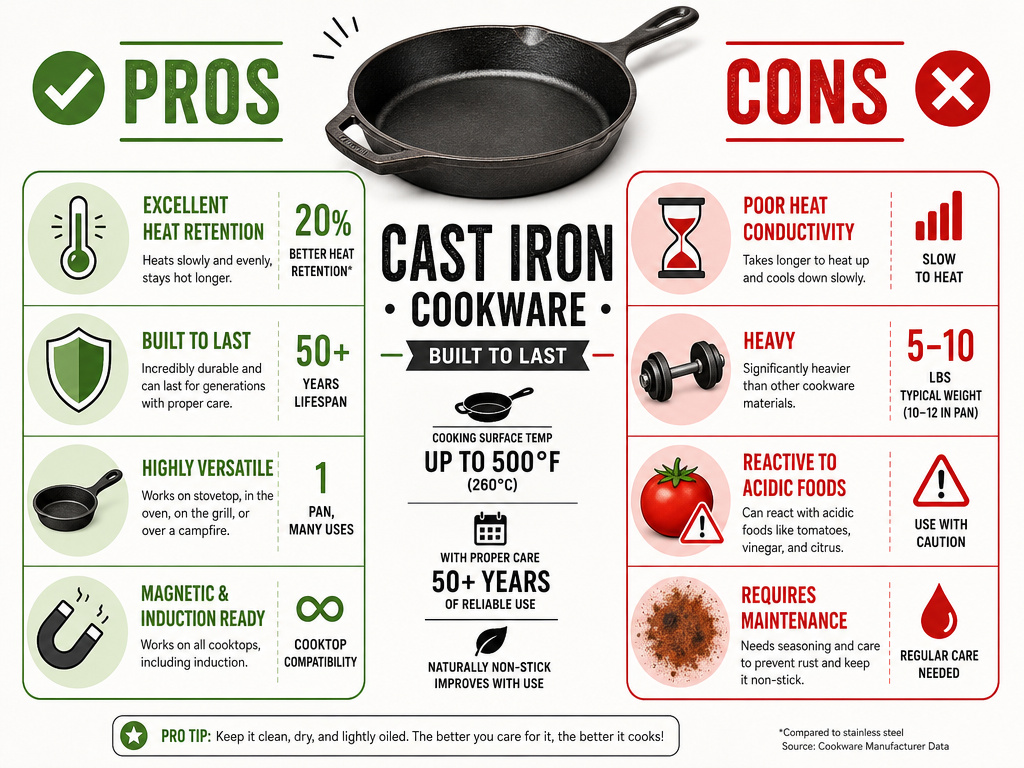
The advantages of cast iron cookware are tangible, but they come with real trade-offs. Understanding both sides tells you if it’s right for your kitchen.
What it excels at:
- Heat Retention: Once hot, it stays hot. This makes it phenomenal for searing a steak or keeping a batch of cornbread warm.
- Durability: With proper care, it literally lasts for generations. It won’t scratch, and it can go from stovetop to oven to broiler without issue.
- Versatility: It’s the ultimate multi-tasker. You can fry eggs, bake a frittata, sear chops, and deep-fry donuts in the same pan.
- Induction Ready: Cast iron is naturally magnetic, making it perfectly compatible with induction cooktops.
Where it frustrates:
- Poor Heat Conductivity: Iron is a terrible conductor. This means it heats slowly and unevenly. The spot directly over the burner gets much hotter than the edges. The fix is patience, preheat on low-to-medium for a full 5–7 minutes.
- Weight: A 12-inch skillet can weigh over 8 pounds empty. This makes it cumbersome to lift, especially for those with wrist or strength concerns.
- Reactive Cooking: As discussed, bare iron can react with acidic foods, and a weak seasoning layer can be compromised by a long-simmered tomato sauce.
- Maintenance: It demands a specific cleaning and drying routine. Forget it wet in the sink overnight, and you’ll be dealing with rust.
For daily drivers, many cooks find a pre-seasoned cast iron skillet from Lodge to be the most practical entry point. For dedicated soup and braise duty, an enameled Dutch oven is often the smarter play within a cookware set.
How to Care for Cast Iron (The Short List)
The care myths are louder than the facts. Let’s simplify.
- Clean It Warm, Not Hot. Wait for the pan to be warm to the touch. Sudden temperature change causes thermal shock.
- Use Hot Water and a Brush (Soap is Fine). Scrub with a stiff brush or non-metallic scrubber. Modern dish soap doesn’t contain lye and won’t harm a well-polymerized seasoning layer. This is a settled fact.
- Dry It Completely, Immediately. This is the non-negotiable step. Towel dry, then place it over a low burner for 2-3 minutes to evaporate all moisture.
- For Bare Iron: Apply a Micro-Thin Oil Coat. While still warm, add a few drops of oil, wipe it over the entire surface, then use a clean paper towel to buff off all excess. You should not see any oil; you’re just filling microscopic pores.
- Store It Dry. Leave the lid off or place a paper towel inside to allow air circulation and prevent mustiness.
Common mistake: Soaking the pan or putting it in the dishwasher. Soaking leads to rust. The dishwasher’s heat and detergents will strip the seasoning completely, leaving you with a rusty, sticky mess.
Rust isn’t a death sentence. For light surface rust, scrub with steel wool or a salt paste until the metal is bare, then wash, dry, and re-season the pan fully. It’s a fresh start. The safety of cast iron is high precisely because it’s so simple to restore.
Frequently Asked Questions
Is cast iron cookware naturally non-stick?
Well-seasoned cast iron skillet has excellent non-stick properties, but it’s not the same as a Teflon-coated pan. It requires preheating and adequate fat (oil or butter) to perform. The more you use it, the smoother and more non-stick the polymerized oil layer becomes.
Can I use cast iron on a glass-top stove?
Yes. Its magnetic properties make it work perfectly on induction, and it’s safe on ceramic glass tops. The caution is to avoid dragging or dropping the heavy pan, which can scratch or crack the glass surface. Lift it to move it.
How often do I need to re-season my cast iron?
For a daily-use pan that’s cleaned and dried properly, a full oven re-seasoning might only be needed once a year or less. You perform maintenance seasoning every time you apply that thin oil coat after drying. Re-season if the surface looks dry, patchy, or rusty, or if food starts sticking noticeably.
What’s the difference between cast iron and carbon steel cookware?
Both are seasoned similarly and offer great heat retention. Carbon steel has less carbon, making it slightly lighter and less brittle than cast iron. It often has sloped sides, like a French steel skillet. Cast iron is generally thicker and better for baking and steady, long heat, while carbon steel heats a bit faster and is prized by chefs for its maneuverability.
Is vintage cast iron better than new?
Often, yes. Vintage pans from foundries like Griswold were frequently cast thinner and machined smooth, resulting in a lighter pan with a silkier cooking surface from the start. Modern pans like Lodge are cast thicker and leave the pebbly “as-cast” texture, which holds seasoning well but can take longer to develop a glass-smooth finish. Both are excellent and will last forever.
The Bottom Line
Cast iron cookware is a tool, not a relic. Its value lies in its straightforward physics: it holds heat, it lasts, and it interacts with your food in a unique, measurable way. The learning curve is about managing its two personalities, the bare iron that needs your protection, and the enameled iron that needs you to avoid chipping it.
Don’t buy it because it’s trendy. Buy a Lodge skillet if you want a project that rewards consistency with superior sears and a custom non-stick surface. Buy a Staub or Le Creuset Dutch oven if you want the heat retention without the upkeep for soups and braises. In both cases, you’re investing in a piece that refuses to become obsolete. Handle the weight, master the preheat, respect the seasoning, and it will outlive the kitchen it’s in.
