
How Do You Clean a Seasoned Wok: Protect the Patina & Avoid Rust
This post contains affiliate links. As an Amazon Associate, we earn from qualifying purchases.
To clean a seasoned wok, use hot water and a stiff brush immediately after cooking while the pan is still warm. Dry it completely over a burner, then apply a microscopic film of oil. Avoid soap for daily cleaning, it gradually strips the polymerized oil that makes the surface non-stick. For stuck food, boil water in the wok or use a salt scrub. If rust appears, scour it off with an abrasive pad and re-season the spot.
That’s the baseline. The friction point is the soap. Manufacturers like Misen and Our Place say a few drops are fine. Community experts and brands like Valtcan argue soap strips oil from the surface over time, thinning the seasoning layer. Your choice hinges on whether you view patina as a permanent coating or a living surface that needs constant feeding.
What follows: the daily clean that takes two minutes, the battle-tested fixes for rust and stickage, and the one storage trick for humid climates that prevents both problems before they start.
Key Takeaways
- Clean a warm wok with hot water and a bamboo or stiff nylon brush; soap is for fishy residue or factory oil only.
- Dry the wok over a burner for 60 seconds until it’s hot to the touch, air drying guarantees flash rust on carbon steel.
- For stuck food, boil water in the wok or use a salt-and-oil scrub; never soak the pan or use metal utensils that can gouge the seasoning.
- Rust spots mean moisture was left behind. Scrub with steel wool until bare metal shows, then dry and re-season that specific area.
- Store your wok in a dry place; in humid climates, keep it in a paper bag to block dust and slow ambient moisture.
The Daily Clean: Hot Water, No Soap
This routine works after 95% of meals. It assumes your wok is carbon steel or cast iron and has a developed patina.
While the wok is still warm, not scorching hot, run it under the hottest tap water you have. Use a bamboo wok brush or a stiff nylon brush to scrub the interior. The heat loosens food particles, and the brush knocks them free without abrasion. If you wait until the wok is cold, fats solidify and glue everything to the surface.
Common mistake: Letting the wok soak in the sink. Water penetrates microscopic pores in the seasoning. On carbon steel, that causes flash rust within hours. On cast iron, it leads to spot rust under the patina, which then flakes.
Dry the wok immediately. Towel drying is not enough. Place it over a low to medium burner for 60 seconds. Swirl it so the entire interior heats evenly. It’s dry when the surface is hot to the touch and no steam wisps appear.
The final step is a whisper of oil. With the wok still warm, add three drops of a high-smoke-point oil like canola or grapeseed to the center. Use a paper towel to spread it over the entire interior, then use a clean part of the towel to buff off any excess. The goal is a dry-looking film, not a greasy layer.
When Soap Enters the Conversation
The debate concerns chemical interaction, not cleanliness. Dish soap contains surfactants designed to lift oils.
Brands like Misen state a few drops are safe. Valtcan’s guide argues surfactants gradually thin the polymerized oil layer. Both are correct. A strong, multi-layered patina can withstand occasional, diluted soap. A new or thin seasoning will degrade faster.
Rule of thumb: use soap only for stubborn, oily residues like fish or strong spices. When you do, follow with the dry-and-oil step without fail.
| Cleaning Scenario | Tool | Why It Works | Risk If Skipped |
|---|---|---|---|
| Daily stir-fry residue | Bamboo brush + hot water | Heat loosens, brush dislodges without abrasion | Cold water sets grease; scrubbing damages young seasoning |
| Fish or curry film | Drop of soap + soft sponge | Surfactants cut through oily residue | Lingering smell transfers to next dish |
| Burnt-on sauce | Boiling water simmer | Hydrates and lifts carbonized bits | Abrasive scrubbing creates bare spots that rust |
| Sticky, gummy layer | Salt + oil scrub | Abrasive salt scours without water penetration | Gumminess attracts more debris, becomes permanent |
When Rust Spots Appear (And How to Kill Them)
Rust indicates that water has contacted bare metal. It happens at the rim, where seasoning is thin, or under a handle rivet.
The Lakeland care leaflet gives the definitive fix: “scrub with an abrasive scourer in warm soapy water to remove the rust, then dry and oil lightly.” This is a primary-source instruction. You need an abrasive, steel wool or a Scotch-Brite pad, to get down to bare, bright metal. Wiping the orange away leaves microscopic rust that spreads.
- Scrub the spot aggressively with 000-grade steel wool until the metal is silver and smooth.
- Wash the area with warm water to remove any grit.
- Dry the entire wok over a burner.
- Apply a thin layer of oil to the bare spot.
- Heat the wok until the oil smokes, then let it cool. This re-seasons just that area.
Where this goes sideways: Only oiling over the rust. The rust continues to spread underneath the oil, causing the seasoning above to flake off in a week. You must remove all oxidation.
For a heavily rusted wok, the WebstaurantStore guide suggests a 5–10 minute warm water soak to loosen scale before scrubbing. This is the only time soaking is acceptable.
Dealing With Stuck Food and Gunk
Food bonds to the wok when the heat was too high or the pan wasn’t preheated. You have two proven paths, both from manufacturer guides.
The Boil-Off Method (Lakeland, Our Place)
Cover the stuck food with an inch of cold water. Bring it to a boil on the stovetop. Let it bubble for a minute. The steam and hydraulic action lift the debris. Use a wooden spatula to gently dislodge chunks. Pour out the water and proceed with your normal hot-water scrub.
The Salt Scrub Method (MASTERPAN)
Heat the dry wok to medium-high, then remove it from the heat. Add two tablespoons of coarse salt and one tablespoon of oil. Wad up paper towels and, using tongs, scrub the mixture across the stuck areas. The salt acts as a gentle abrasive, and the oil carries the debris. Dump the spent salt and wipe clean.
The salt scrub is superior for delicate seasoning because it uses no water. The boil-off method is faster for large, stuck-on masses.
The “New Wok” Exception and Factory Oil

A new wok is a special case. That gray surface is coated in a protective oil or lacquer applied at the factory to prevent rust in transit. It is not seasoning. It must be removed completely before you can build a true patina.
The Yosukata guide is explicit: wash the wok inside and out with hot, soapy water and a non-metallic scrubber. Scrub hard. If water still beads on the surface, the coating remains. Dry it immediately and completely, this is the one time you must be militant about flash rust, then begin the bluing and seasoning process.
This initial soap scrub is mandatory and does not harm the wok. You are removing a shipping contaminant, not a cultivated layer.
Storage: The Hidden Factor in Wok Longevity
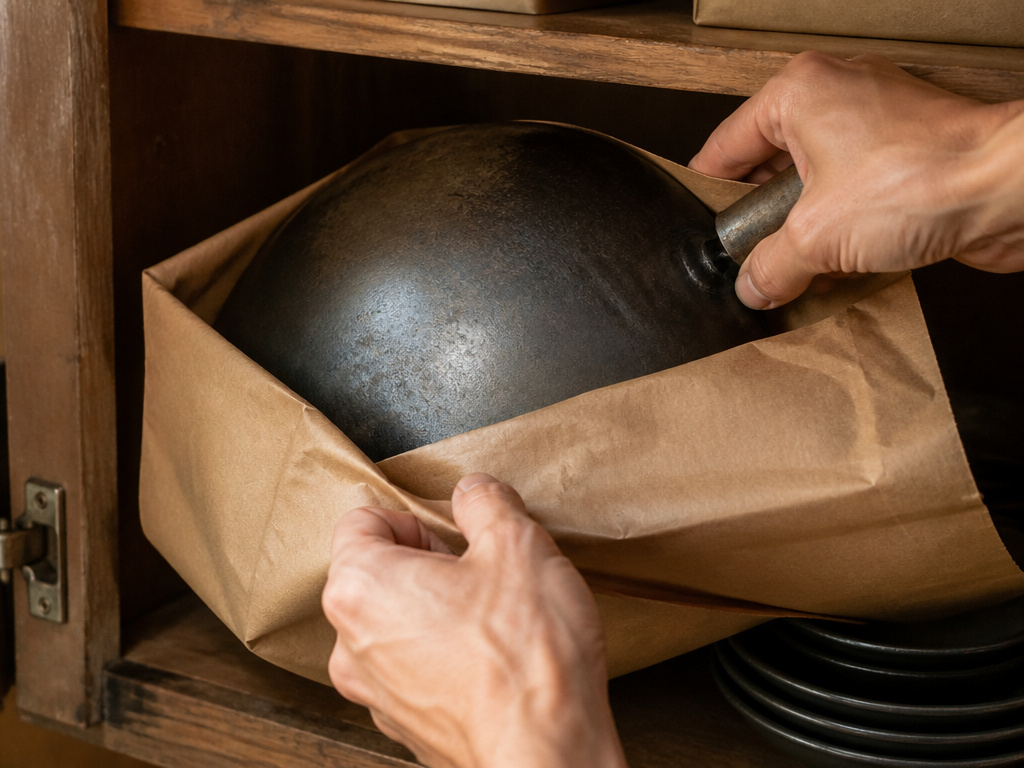
How you store the wok determines what you face at the next cook. A dry, seasoned wok in a dry cupboard is stable. A wok in a humid kitchen or a damp dishwasher rack is a rust incubator.
If you live somewhere humid or use the wok only occasionally, place it inside a paper bag to protect it from humidity and dust. . Grace Young, via Martha Stewart
The paper bag is a low-tech humidity buffer. It slows air exchange, preventing condensation on the metal surface. Avoid sealing it in plastic, which traps moisture.
For daily drivers, hanging the wok on a pot rack is fine if your kitchen isn’t steamy. Ensure the carbon steel wok is fully dry and oiled before hanging. The rim is the most vulnerable part.
Frequently Asked Questions
Can I use metal utensils or scrubbers on my seasoned wok?
You can, but you shouldn’t. Metal spatulas can gouge the seasoning, especially if it’s thin. Metal scrubbers like steel wool are reserved for rust removal. For daily cleaning, a bamboo brush or blue Scotch-Brite pad (the non-abrasive side) is safe. For cooking, wooden or bamboo utensils protect the surface.
Why does my wok look splotchy after cleaning and drying?
Color changes are normal. As the wok cools, heat tints can appear, blues, golds, purples. These are thin layers of oxidation and do not affect performance. A splotchy, matte black surface is the sign of a developing, healthy patina. Only worry if you see orange (rust) or a sticky, gummy texture.
How often should I re-oil my wok after cleaning?
Every time. The post-clean oiling is a protective step, not a re-seasoning. It replaces the microscopic layer of oil that cooking and washing remove. This keeps the metal hydrophobic and prevents rust between uses. It takes 10 seconds with a paper towel.
My wok handle is wooden. How do I protect it?
Never submerge the wooden handle in water. When washing, tilt the wok so water runs into the bowl but not over the handle joint. If the handle gets wet, dry it immediately with a towel. Lakeland’s care leaflet explicitly warns against immersing the handle. For oven seasoning, remove the handle if possible or wrap it in several layers of wet cloth and foil to protect it from scorching.
Is a preseasoned wok actually ready to cook on?
Most preseasoning is a thin, base-layer polymerization applied for shipping. Brands like Misen and Our Place use a more durable process, but the consensus is to treat it as a head start. Wash off any factory oil with soap, dry it, then do one round of stovetop seasoning with your own oil before the first cook. This ensures a strong bond and removes any industrial residues.
Before You Go
Cleaning a seasoned wok is less about scrubbing and more about moisture management. Heat and a brush handle the food. Immediate, thorough drying handles the rust. A vanishingly thin coat of oil handles the future.
When you hit a problem, rust, stickage, gumminess, the fix is always mechanical: scour, dry, re-season. The patina is a durable, plastic-like coating that can be spot-repaired. Your wok’s performance hinges on that last two-minute ritual after the stove is off.Dry it hot. Oil it thin. Store it dry. Do that, and the pan improves for decades.
