
Scorched Dutch Oven Cleaning: How to Restore Your Pot Safely
This post contains affiliate links. As an Amazon Associate, we earn from qualifying purchases.
To clean a scorched Dutch oven, you match the cleaning method to the pot’s material: enameled cast iron or bare cast iron. For enameled pots, a baking soda simmer or a manufacturer-approved bleach soak lifts burnt food. For bare cast iron, a salt and oil scrub preserves the seasoning. The single universal rule is to avoid thermal shock and abrasive pads, which crack enamel and strip seasoning.
That material distinction decides everything. An enameled Dutch oven is glass fused to iron, so you treat it like glassware. A bare cast iron pot is a living surface you maintain with oil. Using the wrong cleaner on the wrong material is how a $200 pot gets ruined in one afternoon.
What follows: the exact bleach ratio from a Lodge manual, the temperature warning from Le Creuset’s director of marketing, and the step-by-step recovery for both enamel and iron. By the end, you’ll know which scorch marks are cosmetic, which need a nuclear option, and when to stop because the pot is done.
Key Takeaways
- Check the material first. Enameled cast iron cleans with baking soda, vinegar, or a diluted bleach soak. Bare cast iron requires a salt-and-oil scrub to preserve its seasoning.
- Never shock a hot pot. Placing a scorching-hot Dutch oven under cold water can crack the enamel instantly, a warning directly from Le Creuset’s Nate Collier.
- Use the Lodge bleach ratio for stubborn stains. The manufacturer specifies a soak of 3 tablespoons of household bleach per quart of water for 2–3 hours.
- Abrasive tools are forbidden. Steel wool, metal scrapers, and harsh powdered cleansers will scratch enamel and strip cast iron seasoning. Use nylon scrapers, plastic brushes, or soft sponges only.
- Some stains are just cosmetic. A permanent brown tint or slight dulling on enamel does not affect performance. Chipped enamel, however, means the pot is unsafe and should be retired.
What Type of Dutch Oven Do You Have?
Your cleaning path forks immediately based on the cooking surface. An enameled Dutch oven has a smooth, colored, glass-like interior. A bare cast iron Dutch oven has a dark, matte, sometimes bumpy black surface. Hybrid models, like the All-Clad Electric Dutch Oven (Model SD922D51), have a removable cast iron pot that may be seasoned.
Enameled cast iron is actually glass bonded to iron at temperatures between 1200 and 1400°F. This glass coating is impervious to water and acids but can chip from impact or thermal shock.
If you see any chips, cracks, or peeling in the glossy interior, stop. That pot is compromised. Chipped enamel can flake into food and the exposed iron beneath will rust. For bare cast iron, rust is the enemy, but it’s often treatable with a full re-seasoning.
The Universal Rules: What Not to Do
Before you touch a cleaner, know the three actions that destroy Dutch ovens. These apply to every type.
First, avoid thermal shock. Never run cold water over a hot pot or place a hot Dutch oven on a cold, wet surface. The drastic temperature change stresses the material. For enamel, this can cause instant cracking. For cast iron, it can warp the metal.
Second, ban abrasives. Steel wool, metal scrapers, Brillo pads, and harsh powdered cleansers like Comet are too aggressive. They microscratch enamel, making it stain easier next time. On cast iron, they strip away the hard-earned seasoning that provides non-stick properties.
Third, don’t let it soak forever. Submerging a cast iron Dutch oven for hours invites rust, as moisture seeps into the porous metal. Even enameled pots shouldn’t sit in a sink for days; it’s unnecessary and risks handle damage.
| Mistake | Effect on Enameled | Effect on Bare Cast Iron | Timeline |
|---|---|---|---|
| Thermal Shock | Cracking, spiderwebbing | Potential warping | Immediate |
| Using Steel Wool | Permanent scratches, dulling | Stripped seasoning, exposes raw iron | Within one cleaning |
| Extended Soaking | Possible finish damage at rim | Surface rust begins | 24-48 hours |
How to Clean a Scorched Enameled Dutch Oven
For the glass-like surface of a Le Creuset, Staub, or Lodge enameled pot, your goal is to lift the burnt residue without scratching the glaze. Start gentle and escalate only as needed.
The Baking Soda Simmer for Burnt-On Food
This is the first line of defense for a pot with stuck-on, charred food. It’s a chemical-free lift.
- Cool the pot completely. Never start this process on a hot Dutch oven.
- Add 4 cups of water and 2 heaping tablespoons of baking soda to the pot.
- Bring to a boil, then reduce to a simmer for 5-10 minutes. The baking soda solution will loosen the burnt bonds.
- Turn off the heat, cover, and let it sit for 15-30 minutes.
- Carefully pour out the liquid. Use a nylon scraper or wooden spoon to gently dislodge the softened residue.
- Wash as normal with warm, soapy water and a non-abrasive sponge.
Where this goes sideways: Skipping the cool-down. Pouring boiling baking soda water into a sink can damage plumbing, and handling a scalding-hot, heavy pot is a burn risk. Let it cool in the pot for an hour before disposal.
If the baking soda simmer doesn’t clear it, the stain is likely baked into the porcelain itself. That’s when you move to a targeted paste or a bleach soak.
The Bar Keepers Friend Paste for Surface Stains
For stubborn discoloration, rust rings, or mineral deposits, a mild acidic cleaner like Bar Keepers Friend is the professional rec from brands like Staub.
Wet the stained area, sprinkle on the powder to form a paste, and scrub gently with a soft sponge or cloth in a circular motion. Rinse thoroughly. This works on exterior stains and interior discolorations that baking soda can’t touch.
The 3-Step Bleach Soak for Persistent Stains (Lodge Manual)
When all else fails, the manufacturer’s nuclear option is a diluted bleach soak. The Lodge 6 Quart Enameled Cast Iron Dutch Oven manual provides the exact formula.
For persistent stains, soak interior of the cookware for 2 to 3 hours with a mixture of 3 tablespoons of household bleach per quart of water.
This is a sourced-number citation magnet. Follow it precisely: 1. Mix 3 tablespoons of standard household bleach into 1 quart (4 cups) of cool water in your well-ventilated sink. 2. Pour enough of the solution into the Dutch oven to cover the stained interior. Do not submerge the entire pot. 3. Let it soak for 2–3 hours, no longer. 4. Empty the solution, then wash the pot twice with hot, soapy water to remove all bleach residue. 5. Dry completely.
This method is for interior stains only. Never use bleach on the exterior, as it can dull the colored enamel.
How to Clean a Scorched Bare Cast Iron Dutch Oven
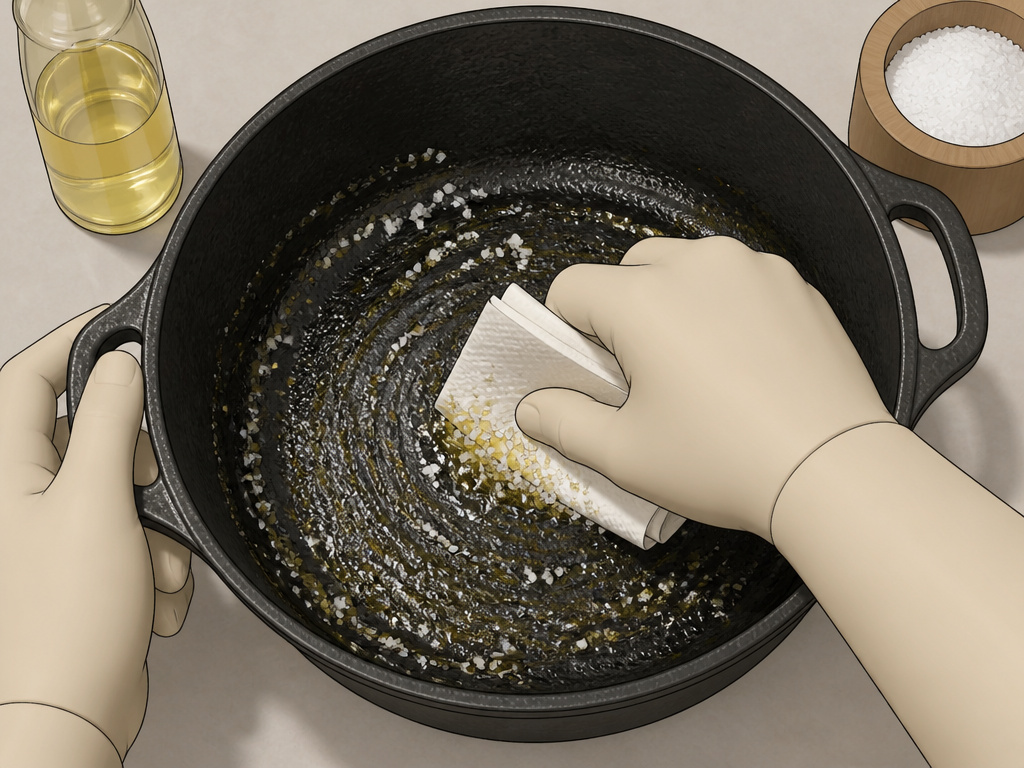
Cleaning bare cast iron isn’t about stripping it back to silver metal. It’s about removing burnt food while preserving the polymerized oil layer—the seasoning—that makes it non-stick.
The Salt and Oil Scrub Method
This is the fundamental daily driver for cleaning cast iron.
- Let the pot cool until it’s warm to the touch, not hot.
- Pour a handful of coarse kosher salt into the pot.
- Add a small splash of neutral cooking oil.
- Use a folded paper towel or a dedicated cloth to scrub the salt-oil mixture firmly across the surface. The salt acts as a gentle abrasive.
- Wipe out all the salt and debris with clean paper towels.
- If residue remains, repeat. There’s no need to rinse with water if the salt has picked up the grime.
- Place the clean, dry pot on a stove burner over low heat for 2-3 minutes to drive off any residual moisture.
- Apply a thin coat of fresh oil with a paper towel while the pot is still warm, then wipe it out again. This is the key to maintaining cast iron.
When You Need Water and Soap
If the salt scrub isn’t cutting through severe scorching, it’s okay to use warm water and a drop of mild dish soap. The “no soap” rule is a myth for modern, fully-seasoned cast iron. Use a soft brush, scrub, rinse quickly, and dry immediately over heat. The critical step is the immediate re-oiling to protect the surface.
For electric models with removable pots, like the All-Clad SD922D51, the manual has a specific warning and a seasoning process: “To avoid rusting, periodically coat the inside of the lid and pot with either cooking oil or bacon fat and place them in the oven at 350°F for 10 mins.”
Enameled vs. Bare Cast Iron: The Recovery Comparison
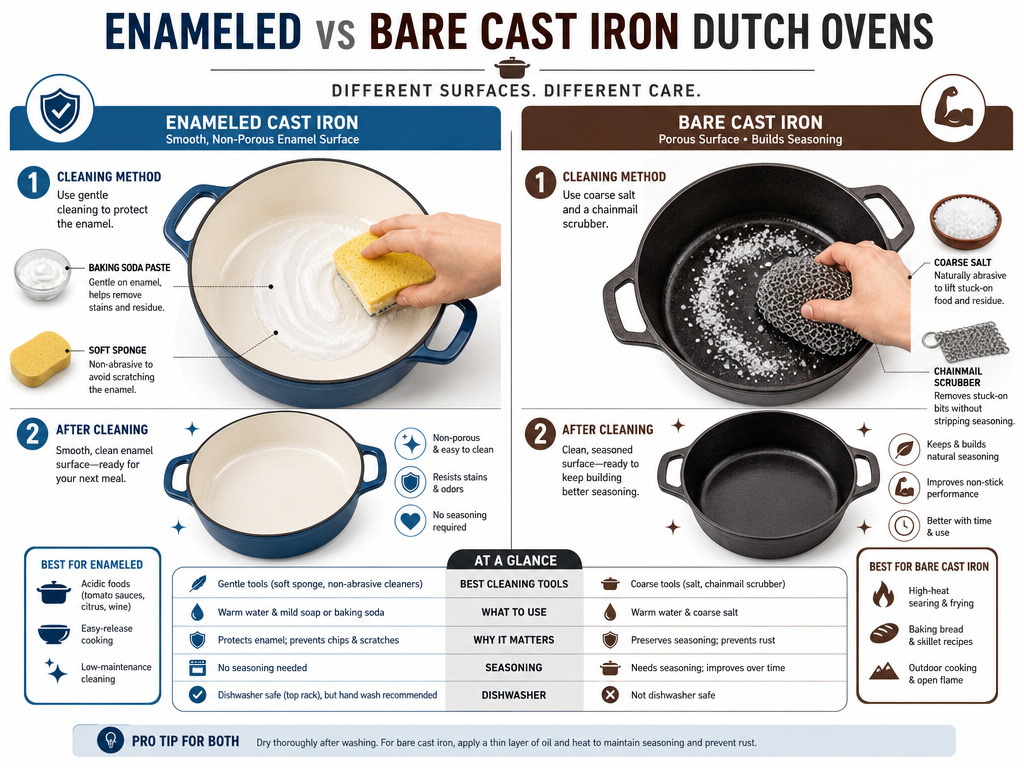
The end goals differ. For enamel, you want a sterile, glassy finish. For cast iron, you want a protected, oily surface.
| Aspect | Enameled Dutch Oven | Bare Cast Iron Dutch Oven |
|---|---|---|
| Primary Cleaner | Baking soda, diluted bleach, Bar Keepers Friend | Coarse salt, mild soap if needed |
| Tool | Nylon scraper, soft sponge | Paper towel, stiff brush, chainmail scrubber (gentle) |
| Post-Clean Ritual | Dry thoroughly with towel | Heat-dry on stove, apply thin oil coat |
| Sign of Success | Glossy, stain-free interior | Shiny, slick black surface |
| Irreparable Damage | Chipped or cracked enamel | Deep pitting or structural cracks |
The All-Clad electric Dutch oven sits in the middle. Its removable pot is bare cast iron, so you follow the cast iron rules for cleaning and seasoning, but the electric base must never be submerged.
Troubleshooting: Stains, Smells, and Damage
Not every mark is a crisis. Here’s how to diagnose what you’re seeing.
Brown or tan interior stains on enamel. This is usually polymerized oil that has bonded to the porcelain. It’s cosmetic. The Baking Soda Simmer or Bar Keepers Friend may lighten it, but a perfect white interior may not return. This does not affect cooking.
Metallic or chemical smells. This can happen after a bleach soak if not rinsed thoroughly, or from food sticking and burning onto a new pot. Run a baking soda and water simmer, then air the pot out completely. Persistent unpleasant odors can sometimes be solved by a vinegar-water boil.
A rainbow sheen or cloudiness on enamel. This is often a mineral deposit from hard water. A vinegar wipe or a paste of Bar Keepers Friend will remove it.
When to declare a pot ruined. If the enamel is chipped, cracked, or peeling on the cooking surface, the pot is a safety hazard and should be replaced. For cast iron, heavy, flaky rust that doesn’t scrub off or a warped bottom that no longer sits flat means it’s time to retire it. Our guide on diagnosing issues with a damaged Dutch oven walks through this decision.
Frequently Asked Questions
Can I use oven cleaner on my Dutch oven?
Do not use commercial oven cleaner (like Easy-Off) on an enameled Dutch oven. These products are too caustic and can permanently etch the glass surface. For bare cast iron, oven cleaner will strip all seasoning down to bare metal, forcing a complete and difficult re-seasoning. It is never the right tool.
Is it safe to use bleach on Le Creuset?
Le Creuset does not recommend bleach in its public care guides, advising instead for baking soda or its branded cleaner. However, the chemically similar Lodge enameled cast iron provides the specific bleach-soak instructions. If you use bleach on a Le Creuset, limit it to the interior, dilute it heavily (follow the Lodge ratio), rinse obsessively, and understand it may void any warranty. Proceed with extreme caution.
Why does my clean Dutch oven still look stained?
Permanent tan or brown tint on white or light-colored enamel is common and harmless. It’s caused by oils polymerizing onto the porcelain at high heat. Consider it a patina. You can minimize it by avoiding high-heat searing and by cleaning your Dutch oven immediately after use before residues bake on. For more on this, see our article on cleaning brown enamel stains.
How do I prevent scorching in the first place?
The main cause is improper heating. Start on low to medium heat and let the heavy cast iron come to temperature slowly. Use enough liquid or fat when cooking. For dishes that risk sticking, a proper seasoning layer on cast iron or using a light oil spray on enamel can help. Understanding the common sticking causes is the best prevention.
Before You Go
Cleaning a scorched Dutch oven is a test of patience, not power. Match the method to the material: gentle chemistry for enamel, preserving the patina for iron. Remember the Lodge bleach ratio for emergencies, and respect the thermal shock warning above all else.
Your default for enamel should be the baking soda simmer. Your default for cast iron is the salt-and-oil scrub, followed by a quick heat-dry and re-oil. If you see chips in the glass, stop using the pot. If your cast iron develops a little rust, scour it off and re-season. These pots are built for decades, but only if you clean them with the same care you use to cook in them.
