
Master How to Season a Wok and Avoid Common Lacquer Errors
This post contains affiliate links. As an Amazon Associate, we earn from qualifying purchases.
To season a wok, you must first scrub off the factory lacquer coating, then heat the bare metal until it turns blue (a process called bluing), and finally apply a thin layer of high-smoke-point oil and heat it until it smokes and polymerizes. This bonds a hard, non-stick layer to the metal. The most common failure point is skipping the lacquer removal, especially on the wok’s exterior, which can ruin the seasoning and leave burn marks on induction cooktops.
That lacquer layer is the whole game. It feels smooth and looks shiny, and it’s there to stop the raw steel from rusting in the box. But it’s also a barrier that prevents oil from bonding to the metal. If you don’t remove it completely, your seasoning will flake, food will stick, and on an induction hob, the lacquer can melt onto the glass surface.
What follows: the exact steps to strip a wok clean, the two proven seasoning methods (stovetop and oven), the oils that work and the ones that gum up, and how to fix the sticky mess everyone makes on their first try.
Key Takeaways
- The factory lacquer coating must be scrubbed off the entire wok, inside and out, before any seasoning begins. This is non-negotiable for induction hob users.
- The “bluing” step—heating the dry wok until it changes color—is not just for show. It oxidizes the surface, creating a better bond for the polymerized oil.
- Use only a micro-thin layer of oil. Excess oil creates a sticky, gummy coating instead of a hard patina.
- Oven seasoning is a valid alternative, especially for flat-bottomed woks or weak stovetops. The Masterbuilt manual specifies 400°F (204°C) for one hour with the wok upside down.
- Post-cooking care is simple: rinse, dry over heat, and apply a whisper of oil before storage. Soap is rarely needed and can strip a young seasoning.
The Lacquer Problem Everyone Skips
Open a new carbon steel wok and it feels slick. That’s not the metal. It’s a thin, clear lacquer or wax coating applied at the factory to prevent rust during shipping. Your first job is to erase it.
Where this goes sideways: Only cleaning the inside. The Lakeland care leaflet is explicit: you must remove the lacquer from the outside as well as the inside. If it’s not removed, the seasoning process fails and, on an induction hob, the lacquer can leave a permanent burn mark on the glass.
The contradiction starts immediately. Some manuals, like the one for the NuWave MOSAIC Precision Induction Wok, say the carbon steel wok is dishwasher safe. Every other source, including Lakeland and The Wok Book, says never to put a carbon steel wok in the dishwasher. The manual likely means the other components; the carbon steel part should be hand-washed. Trust the material, not the marketing copy. Dishwasher detergent will strip seasoning and promote rust.
Scrub the wok vigorously inside and out with very hot, soapy water and a green scouring pad or stiff brush. This is the only time you should use soap liberally. Rinse and dry it completely. Run your fingers over the surface. If it still feels perfectly smooth, the lacquer is still there. Keep scrubbing. The bare metal should have a slight, uniform roughness.
Your Seasoning Toolkit: Oil and Heat
You don’t need special gear. You need the right oil and a way to get it hot enough.
The chemical reaction is called oil polymerization. Heating a thin oil film past its smoke point causes the fatty acids to cross-link and bond to the metal, forming a hard, plastic-like layer. This layer is hydrophobic and non-stick. The goal for a wok isn’t a thick crust like cast iron; it’s a starter coat that you build up every time you cook.
| Oil Type | Smoke Point | Good for Seasoning? | Why It Matters |
|---|---|---|---|
| Grapeseed | 420°F (216°C) | Yes | High smoke point, neutral flavor. Recommended by Sub-Zero/Wolf. |
| Canola/Vegetable | 400-450°F | Yes | Readily available, reliable. Masterbuilt manual lists it as a top choice. |
| Sunflower | 440°F (227°C) | Yes | Another high-smoke-point option from manufacturer lists. |
| Flaxseed | 225°F (107°C) | No | Smoke point is too low. It can create a brittle, flaky layer. |
| Olive Oil | 375°F (191°C) | No | Smoke point is too low for the initial seasoning. It will burn and gum up. |
| Avocado | 520°F (271°C) | Maybe | Very high smoke point, but the Masterbuilt manual explicitly does not recommend it. |
The Masterbuilt wok manual is specific: use canola, sunflower, vegetable, flaxseed, grapeseed, or soybean oil. It also says to avoid avocado, coconut, or olive oil. That’s your cheat sheet. Grapeseed or canola is the default pick.
The 3-Step Stovetop Seasoning Process
This is the standard method for a reason. It’s fast, it lets you control the heat directly, and you can see the transformation happen.
Step 1: Bluing the Metal
Place your completely dry, lacquer-free wok on your largest burner over high heat. The metal will begin to change color. It goes from silver to straw-yellow, then to deep blues and purples, and finally to a dull, dark gray. This is called bluing.
Heating the dry metal drives off any lingering moisture and creates a layer of iron oxide (magnetite) on the surface. This oxidized layer is more porous and provides a better mechanical key for the polymerized oil to grip than the bare, smooth steel.
Tilt and rotate the wok to heat the sides evenly. This is especially critical for flat-bottomed woks on electric or induction burners, where the sides get little direct heat. You want the entire interior to reach that dark gray color. This takes 5-10 minutes.
Step 2: Applying the First Oil Layer
Turn off the heat and let the wok cool for about two minutes. It should still be very warm, but not smoking-hot. Pour about a tablespoon of your chosen oil onto a thick wad of paper towels. Using tongs to hold the towels, wipe the oil over the entire interior surface. You are aiming for a thin, even film.
This is the most common mistake. You should not see pools or shiny streaks of oil. If you do, use a clean paper towel to wipe it out. The surface should look almost dry.
Step 3: Polymerizing the Oil
Turn your burner to medium heat and place the oiled wok back on it. Turn on your hood fan. The oil will begin to smoke. Keep the wok over the heat until the smoking stops and the surface turns a darker, matte black. This usually takes 5-10 minutes. Remove it from the heat and let it cool completely.
You have one layer. For a new wok, repeat steps 2 and 3 two to four more times. Each cycle builds a more durable base.
When to Use the Oven Method
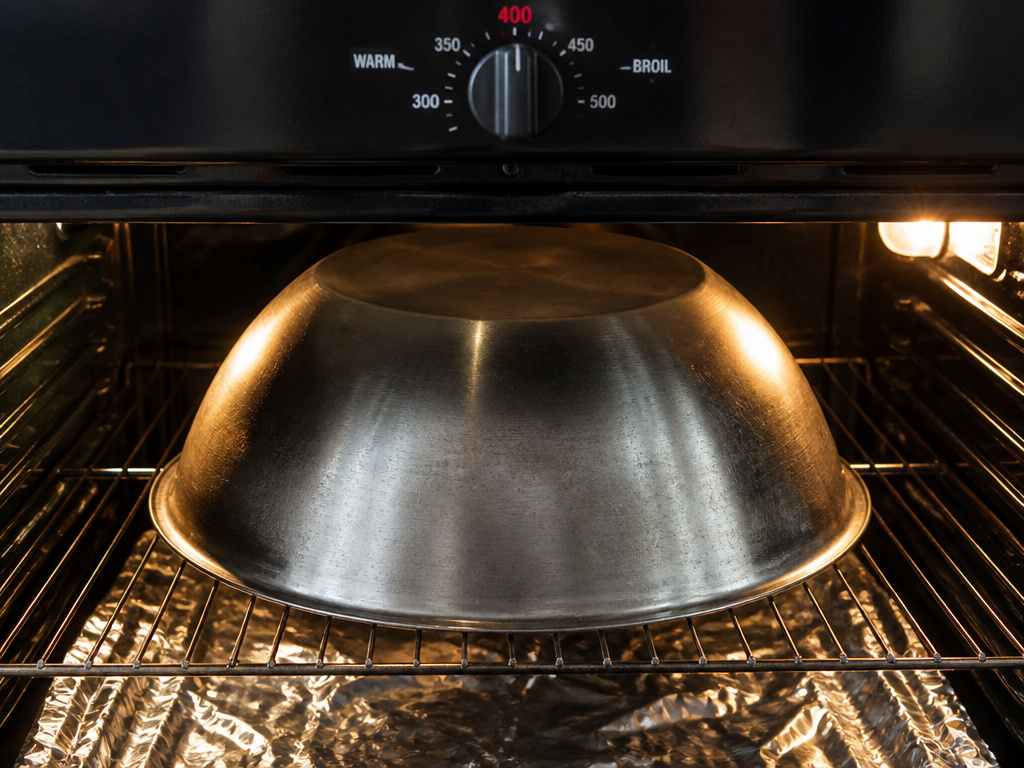
Your stovetop might not be up to the task. A small burner can’t heat a 14-inch wok evenly. If you have a flat-bottomed wok or an electric coil stove, the oven is a reliable alternative.
The process is straightforward, but the details from the Masterbuilt manual are precise: 1. After cleaning and drying, apply a micro-thin layer of high-smoke-point oil to the entire wok (inside and out). 2. Place the wok upside down on the middle rack of a cold oven. Put a sheet of foil on the rack below to catch any drips. 3. Set the oven to 400°F (204°C) and bake for 1 hour. 4. Turn off the oven and let the wok cool completely inside before removing it.
The upside-down position prevents oil from pooling in the bottom, which would create a sticky spot. The one-hour bake gives the oil time to fully polymerize. This method is excellent for achieving an even, all-over seasoning, including the exterior, which is perfect for oven seasoning a wok.
What Does “Done” Look Like?
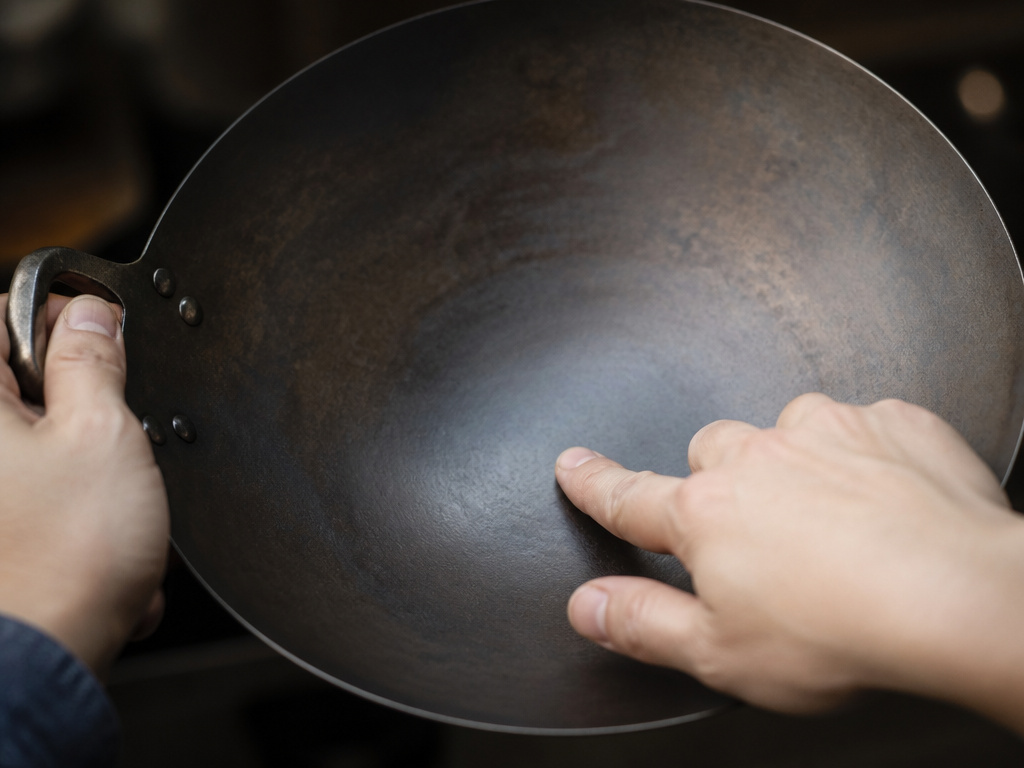
A newly seasoned wok won’t be jet black. It will be a patchy, dark gray or brown. That’s normal. The signature black patina develops over months of cooking.
A properly seasoned surface should feel smooth and dry to the touch, not sticky or greasy. If it’s sticky, you used too much oil. If it’s blotchy, your heat was uneven.
Your wok is ready for its first cook. Choose something fatty and not too acidic for the first few uses. Bacon, fried rice with plenty of oil, or searing a steak are all great choices. Each cook deposits another microscopic layer of polymerized fat, strengthening the wok patina.
The Maintenance Loop: Clean, Dry, Protect
Seasoning isn’t a one-time event. It’s a cycle you maintain every time you use the wok.
- Clean Immediately: After cooking, while the wok is still warm, add some hot water and use a wooden spatula or soft brush to dislodge food. Dump it out.
- Rinse & Dry: Rinse briefly with hot water. Do not use soap unless something is badly burnt. Immediately place the wok back on a burner over medium heat to evaporate every drop of water. This is the single most important step to prevent rust.
- Apply a Protectant: While the wok is still warm from drying, add a few drops of oil to a paper towel and wipe a vanishingly thin coat over the interior. Wipe out any excess until the surface looks dry again. Store it in a dry place.
This routine is the proper frequency for seasoning a wok. It’s not a full re-seasoning; it’s a touch-up that maintains and builds the layer you started.
Troubleshooting a Bad Seasoning Job
Things go wrong. Here’s how to fix the most common issues.
| Problem | Likely Cause | The Fix |
|---|---|---|
| Sticky, gummy surface | Too much oil applied in one layer | Scrub it off with soap and a scouring pad. Start over, using less oil. |
| Patchy, flaking seasoning | Lacquer not fully removed; uneven heating | Strip it completely with soap and steel wool. Re-scrub for lacquer, then re-season with even, high heat. |
| Orange rust spots | Stored while damp; seasoning scratched | Scrub rust off with steel wool or a scouring pad. Dry thoroughly and re-season the affected area. |
| Food still sticks | Wok not hot enough before adding food | Preheat the wok longer. A properly hot wok will cause water droplets to bead and skate across the surface. |
If you encounter a sticky wok surface, don’t panic. It’s a rite of passage. Strip it and try again. The metal is forgiving.
Frequently Asked Questions
Do I need to season a “pre-seasoned” wok?
Most factory “pre-seasoning” is just a rust-protective oil coat, not a true polymerized layer. You should wash it off with soap and season it yourself. A few high-end brands have a real kiln seasoning; if the manufacturer explicitly says it’s ready to cook on, you can skip to maintenance.
Can I use soap on my seasoned wok?
For the initial clean to remove lacquer, yes. After that, avoid it. Modern dish soaps are mild, but they can still degrade a young seasoning. For daily cleaning a seasoned wok, hot water and a brush are almost always enough. For stubborn bits, use a small drop.
What about non-stick woks?
True non-stick wok with a Teflon or ceramic coating should never be seasoned. Seasoning is for bare carbon steel or cast iron. For non-stick wok care, follow the manufacturer’s instructions to avoid damaging the coating.
My wok smells like smoke. Is that normal?
During the seasoning process, yes. The oil is smoking as it polymerizes. Ensure your kitchen is well-ventilated. The smell will fade after the first few cooks.
The Bottom Line
Seasoning a wok is simple chemistry, not magic. Remove every trace of the factory coating. Heat the metal until it turns color. Apply a whisper-thin layer of grapeseed or canola oil and heat it until it smokes and stops. Repeat a few times.
The durability comes from what you do next. Cook with it often. Clean it with water, dry it with heat, and give it a hint of oil before you put it away. That cycle, more than any intense initial ritual, is what builds the legendary black patina that makes a wok a lifetime kitchen companion.
