
How Do I Get Rust Off a Cast Iron Skillet and Re-Season It
This post contains affiliate links. As an Amazon Associate, we earn from qualifying purchases.
To get rust off a cast iron skillet, scour the rusted area with steel wool or a Lodge Rust Eraser, wash the pan, and dry it completely. For stubborn rust, soak the area in equal parts white vinegar and water for no more than 15 minutes at a time, scrubbing between soaks. You must then re-season the skillet by applying a whisper-thin layer of oil and baking it at 450-500°F for one hour to restore its protective coating.
That 15-minute limit on the vinegar soak isn’t a suggestion. It’s the line between removing rust and starting to etch the iron itself. The Mississippi State University Extension service draws it, and ignoring it is how you turn a simple cleanup into a pitted, rough surface that never holds seasoning right.
What follows: how to tell if your rust is a quick scrub or a full project, the exact steps to strip it without damage, and the non-negotiable re-seasoning that makes the fix permanent. By the end, you’ll know the two things that cause rust faster than anything else and the single most common mistake people make when trying to prevent it.
Key Takeaways
- Soak rusted areas in a vinegar solution for no longer than 15 minutes at a time to avoid pitting the iron.
- Dry your skillet completely after every wash, residual moisture is the primary cause of surface rust.
- For re-seasoning, apply a half-teaspoon of oil max for a 12-inch skillet and bake at 450-500°F for one hour.
- Humidity drives rust; store your skillet with a paper towel inside if you live in a damp climate.
- Minor surface rust often doesn’t require a full re-seasoning, a scrub and a light oiling may be enough.
The Two Rust Types That Change Your Approach
Not all rust is a crisis. Spotting the difference between minor surface rust and deep, flaky corrosion saves you an hour of oven time.
Surface rust looks like a faint, even orange blush. It happens when a damp skillet air-dries or sits in a humid cabinet. This rust hasn’t eaten into the metal; it’s sitting on top of your existing seasoning. Extensive rust is flaky, patchy, and often raised. It appears when a skillet is left soaking or put through a dishwasher, stripping the protective layer and letting moisture attack bare iron.
For small amounts of rust, you might not need to reseason the cast iron. If rust is more extensive and you’ve removed a lot of seasoning from your skillet, follow the steps below to reseason.
The fix for surface rust is straightforward. Scour it off with a dry Scotch-Brite pad or a sprinkle of kosher salt, rinse, dry, and give it a light oiling. You’re done. The underlying seasoning is still intact. Extensive rust means you’ve lost that layer. After scrubbing, the pan will look dull and grey, that’s bare iron. This demands a full re-seasoning cycle to rebuild protection from scratch. Skipping that step guarantees the rust will be back within days.
Your Rust Removal Toolkit
You need fewer supplies than you think. This isn’t a specialty project.
The Essentials:
- Abrasive Scrubber: #0000-grade steel wool is the default. It’s abrasive enough for rust but gentle on iron. A Lodge Rust Eraser is a dedicated tool that works the same way.
- White Vinegar: The acid breaks down iron oxide (rust). Use the cheap, plain kind.
- Neutral Cooking Oil: Canola, grapeseed, or vegetable oil. They polymerize evenly at high heat.
- Lint-Free Cloths or Paper Towels: For drying and oil application. Any loose fibers will burn onto the pan.
- Dish Soap: Modern, mild dish soap is fine. The old rule about soap stripping seasoning applied to lye-based soaps, which haven’t been sold for decades.
What to Skip:
Power tools like sanders or wire wheels. They remove metal along with rust, creating an uneven surface that seasons poorly. Harsh chemical rust removers can leave residues that are difficult to wash out and may interfere with the new seasoning layer. Stick with mechanical scrubbing and vinegar.
Step-by-Step Rust Removal
Follow this sequence. Rushing the dry or skipping the final oil touch invites the problem back.
1. Scour the Rust. Start with a dry skillet. Use steel wool or the Rust Eraser to scrub the rusted areas vigorously. Apply firm, circular pressure. You’re not sanding; you’re abrading the oxide layer off. If the rust is light, this may be all you need.
2. Wash and Inspect. Wash the skillet with warm, soapy water and a sponge. This removes any rust dust and loosened seasoning. Rinse thoroughly. Now, feel the surface with your fingers. It should be smooth. If you still feel gritty patches, the rust remains.
3. The Vinegar Soak (For Stubborn Rust). Mix equal parts white vinegar and warm water in a container large enough to submerge the rusty area. Place the skillet in the solution.
Soak the rusted area in vinegar for no longer than 15 minutes at a time. Remove the vinegar every 15 minutes to see if the rust will flake off.
Set a timer. After 15 minutes, remove the skillet, scrub again with steel wool, and rinse. If rust persists, you can repeat the soak, but always start with a fresh vinegar solution. Do not leave the pan soaking for hours. Extended exposure will etch the iron, creating a rough surface that looks and feels like sandpaper.
4. The Critical Dry. Dry the skillet immediately with a towel. Then, place it on a stovetop burner over low heat for 3-5 minutes. Move the pan around to evaporate any moisture from the handle and sides. The skillet should be hot to the touch. This is the most skipped step in routine cleaning, and it’s the direct cause of most surface rust.
5. A Light Oil Coat. While the skillet is still warm, apply a few drops of oil to the interior. Use a paper towel to spread it into a thin, even sheen. Wipe it out again until the surface looks nearly dry. This temporary coat protects the bare iron until you can perform a full re-seasoning, which is necessary if you performed a vinegar soak.
The Essential Re-Seasoning
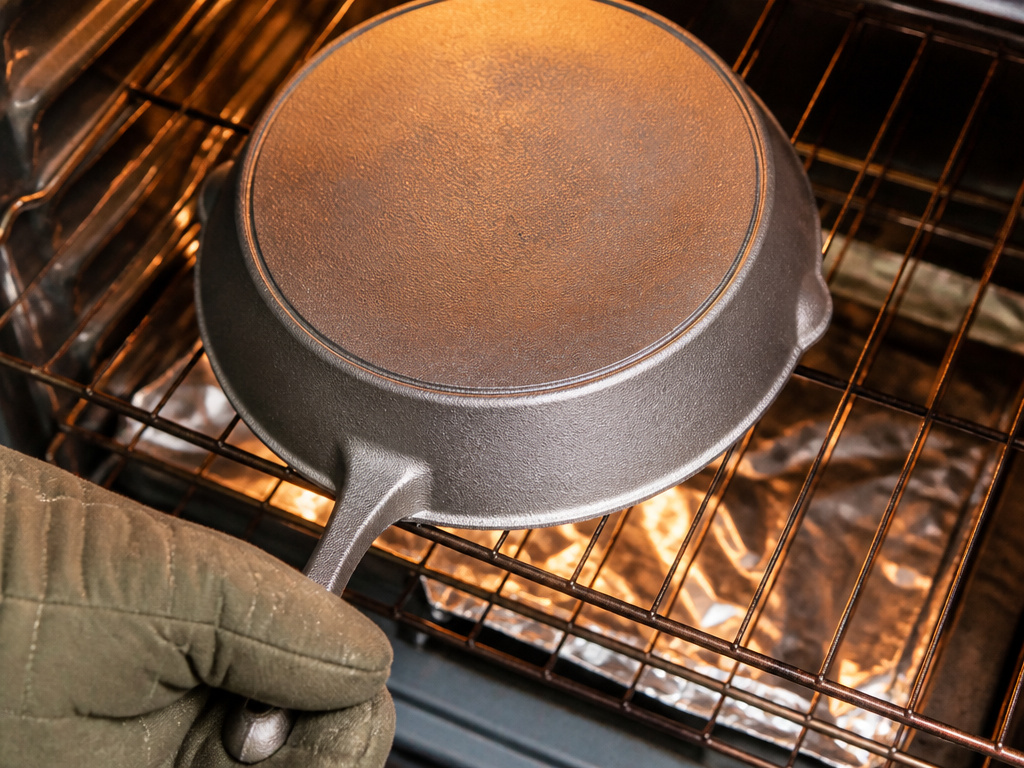 If your rust removal involved a vinegar soak or heavy scrubbing that left the metal grey, this step is mandatory. It’s not optional maintenance; it’s rebuilding the skillet’s primary defense system.
Why It Works: Seasoning is a layer of polymerized oil, oil that has been heated to the point where it cross-links into a hard, plastic-like coating bonded to the iron. This coating is non-stick, rust-resistant, and what makes a well-seasoned skillet perform.
The Process:
- Preheat your oven to 450-500°F (per Lodge’s specification). Place a sheet of aluminum foil on the bottom rack to catch drips.
- Apply a very thin layer of your neutral oil to the entire skillet, inside and out. Use a fresh paper towel.
- Take a second, clean paper towel and wipe the skillet again. You want to remove all excess oil. The surface should look satin, not glossy. Too much oil creates a sticky, blotchy coating.
- Place the skillet upside down on the top oven rack. Baking it upside down prevents oil from pooling in the cooking surface.
- Bake for one hour. Turn the oven off and let the skillet cool completely inside it. This slow cooling helps the seasoning cure and adhere.
Common mistake: Using a tablespoon of oil for seasoning. For a 12-inch skillet, a half-teaspoon is the maximum. If you can see oily traces after wiping, there’s too much.
One cycle creates a base layer. For a skillet that lost all its seasoning, two or three cycles will build a more durable foundation. The pan won’t be jet-black yet, that comes from cooking. But it will be protected. For details on selecting the right seasoning oil, our dedicated guide breaks down the science.
What Not to Do: Mistakes That Set You Back
 Good intentions can make the problem worse. These errors are avoidable.
- Soaking in Vinegar Overnight. This is the fastest way to damage your pan. The acid will aggressively pit the iron, creating a rough texture that food sticks to and that holds moisture against the metal.
- Using the Dishwasher. The combination of prolonged moisture, harsh detergent, and high heat will strip every bit of seasoning, guaranteeing a full rust bloom.
- Storing While Damp. Even a seemingly dry skillet can hold microscopic moisture in its pores. In a closed cabinet, that moisture has nowhere to go.
- Applying Butter or Olive Oil for Seasoning. Butter contains milk solids that burn. Olive oil has a low smoke point and can become sticky or rancid. Stick with neutral, high-smoke-point oils for the curing process.
- Using Abrasive Cleaners on a Seasoned Pan. While steel wool is right for rust removal, using it for everyday cleaning burnt food will prematurely wear down your hard-earned seasoning. Use chainmail or a nylon brush instead.
| Mistake | Immediate Consequence | Long-Term Result |
|---|---|---|
| Extended vinegar soak | Etched, rough surface | Poor seasoning adhesion, constant sticking |
| Dishwasher cycle | Uniform rust film within 24 hours | Requires complete strip and re-season |
| Storing with moisture | Spot rust in 2-3 days | Continuous cycle of scrubbing and re-oiling |
| Too much seasoning oil | Sticky, tacky coating after baking | Gummed-up surface that attracts carbon and dirt |
Keeping Rust Away for Good
Prevention is simpler than repair. It comes down to managing moisture and maintaining the seasoning barrier.
After each use, clean the skillet while it’s still warm with hot water and a stiff brush. For stuck-on bits, use coarse salt as a gentle abrasive or a dedicated scraping tool. Dry it thoroughly on the stove, as outlined in the removal steps. While it’s warm, add a micro-thin layer of oil, literally a few drops wiped until the pan looks dry. This is the core of all effective skillet maintenance.
Storage is critical. Cast iron rusts more easily in high humidity. If you live in a damp climate, place a folded paper towel inside the skillet before putting it in a cabinet. The towel absorbs ambient moisture. Never stack pans while they are still warm, as the trapped steam can cause condensation and rust on the bottom of the upper pan.
Finally, use it often. Frequent cooking, especially with fats, continuously reinforces the seasoning layer. A skillet that sits unused for months in a variable environment is a prime candidate for surface rust, even if you followed the proper cleaning routine when you put it away.
Frequently Asked Questions
Can I use baking soda to remove rust?
Yes, but it’s less effective than vinegar for anything beyond light surface rust. Make a paste with baking soda and water, apply it to the rust, let it sit for an hour, then scrub. It works through mild abrasion and a slight alkaline reaction, but for established rust, vinegar’s acidity is faster and more reliable.
Will soap ruin my cast iron skillet?
No. Modern dish soaps are mild detergents, not the lye-based soaps of the past. They will not strip well-bonded seasoning. It is safe and recommended to use a small amount of soap to clean off grease and food residue after cooking.
How do I know if my skillet is beyond repair?
It almost never is. Short of a crack or a hole, cast iron can be restored. Even severe, crusted rust can be removed with repeated, patient vinegar soaks and scrubbing. The only real limit is your willingness to put in the time to strip it back to bare metal and re-season it from scratch.
Why does my newly seasoned skillet still have rust spots?
This means you did not remove all the rust before seasoning. The seasoning layer sealed moisture and active rust underneath. You must strip the new seasoning off (using the same vinegar method or an oven cleaner), scour until all rust is gone, and then re-season correctly on completely bare, grey iron.
Is a little rust dangerous to cook with?
Technically, consuming small amounts of iron oxide (rust) is not toxic. However, it will impart a metallic taste to your food and is a sign your pan’s protective coating has failed. You should always remove rust before cooking to ensure food quality and to stop the corrosion from spreading.
The Bottom Line
Rust on a cast iron skillet is a fixable problem, not a death sentence. The method is straightforward: remove the oxide with abrasion or a controlled vinegar soak, dry the pan with absolute certainty, and then re-bond a thin layer of oil to the iron at high heat. The real secret isn’t in the removal, it’s in the prevention. Consistent drying and a minuscule post-clean oiling will keep your skillet rust-free for decades. A cast iron pan isn’t something you buy; it’s something you keep.
