
Is a Griddle Better Than a Grill? The BTU and Warranty Truth
This post contains affiliate links. As an Amazon Associate, we earn from qualifying purchases.
A griddle is better than a grill for cooking delicate, flat, or saucy foods that need full-surface contact and even heat, like smash burgers, pancakes, and stir-fry. A grill is better for thick cuts of meat where you want smoky flavor, char marks, and rendered fat to drip away. The choice is about matching the appliance’s physical design to the food you cook most.
That design difference is mechanical. A grill’s raised grates create gaps for fire contact and drainage. A griddle’s solid surface conducts heat directly across every square inch. One isn’t an upgrade of the other; they are different tools built for different chemical reactions in your food.
What follows: a breakdown of the sourced numbers that matter (BTUs, warranties, recovery times), the specific foods each tool ruins or perfects, and the real-world failures that happen when you pick the wrong one for your climate or cooking style.
Key Takeaways
- Griddles deliver the Maillard reaction, that golden-brown crust, more consistently on flat foods because of full-surface contact.
- Check the main burner BTU rating versus the griddle burner BTU rating on combo units; a Dyna-Glo model specs 48,000 BTU for the grill but only 18,000 BTU for its griddle.
- Warranties tell a durability story: a Cuisinart Griddler is covered for 3 years, while a Dyna-Glo grill’s paint warranty explicitly excludes rust from “repeated use.”
- In humid climates, a carbon steel griddle can rust within weeks if not meticulously maintained; stainless steel or ceramic non-stick surfaces avoid this.
- Know your appliance’s hot zones. On many flat-tops, the center is significantly hotter, which can burn your pancakes while the edges undercook your bacon if you don’t plan.
The BTU and Warranty Truth That Changes the Math
Forget vague claims about power. Look at the manufacturer spec sheet. The numbers there decide whether your griddle can sear a dozen burgers at once or if your grill will struggle to heat its side-attachment.
The Dyna-Glo 4-Burner Natural Gas Grill With Griddle (Model DGX440SGN) lists a main burner rating of 48,000 BTU/Hr for the grill section. Its dedicated griddle burner is rated at 18,000 BTU/Hr. This isn’t a minor detail, it’s the difference between high-heat searing and a medium-heat cooktop.
That disparity is common in combo units. The grill often gets the lion’s share of the gas line. If you buy a combo for the griddle, you might be buying a underpowered one.
Warranties are another set of hard numbers that predict longevity. They aren’t marketing.
| Model | Warranty Duration | Key Exclusion / Note |
|---|---|---|
| Cuisinart Griddler (GR-4N) | 3 years (home use) | Standard defect coverage. |
| Dyna-Glo DGX440SGN | 1 year (5 yrs on SS burners) | “Paint is warranted to be free of defects except for rust, which may appear after repeated use.” |
| GreenPan XL Grill & Griddle | Requires call to service (914-372-7777) | Warranty validation required before return. |
The Dyna-Glo line about rust is a frank admission: outdoor steel will rust. If you live near the ocean or in a humid region, this is a guarantee. Your decision starts here.
What Actually Breaks (And When)
Failure follows a timeline. Knowing it lets you intervene or choose a different material from the start.
Carbon steel griddles rust. It’s their nature. In a humid climate, a single forgotten seasoning session or a week of rain under a poor cover can speckle the surface with orange. The fix is sanding and re-seasoning, a half-day project. Stainless steel griddles or those with ceramic non-stick coatings, like the GreenPan models, sidestep this entirely but can scratch or lose their coating if scraped with metal tools.
Grill burners clog. Grease and debris fall through the grates, eventually clogging the burner ports. The symptom is an uneven flame or yellow tips. On a model like the Dyna-Glo, cleaning the burners is a mandatory yearly task unless you enjoy cold spots on your steaks.
Where this goes sideways: Neglecting to re-season a griddle after several weeks of non-use. The old oil coating breaks down, and your first batch of eggs will fuse to the metal. The Dyna-Glo manual states this clearly as a required step.
Electric indoor combos, like the Cuisinart Griddler, have different failure points. The non-stick coating on the removable plates can wear. The thermostat can drift. The warranty covers this for three years, but the clock starts at purchase.
Griddle vs. Grill: The Food Test That Never Lies
Ask not which appliance is better. Ask which one murders your dinner.
The Griddle’s Win Column:
- Smash Burgers: The full-surface, consistent pressure creates a crispy, caramelized crust a grill grate cannot match. The rendered fat stays on the surface, frying the patty in its own juice.
- Pancakes & Eggs: Delicate foods need even heat without gaps. A griddle provides a uniform cooking surface; a grill will give you messy, broken eggs and pancakes with grate marks.
- Stir-fry & Fried Rice: These dishes require constant motion and a large, flat hot zone. A griddle acts like a restaurant rangetop. On a grill, the rice and vegetables fall through.
- Breakfast Everything: Bacon, sausage, hash browns, you can cook them all simultaneously on a griddle’s vast surface. It’s efficiency defined.
The Grill’s Win Column:
- Thick Steaks & Chops: The high, radiant heat from below creates a sear while leaving the interior medium-rare. The raised grate allows fat to drip away, preventing flare-up bitterness.
- Whole Vegetables: Corn, asparagus, and bell peppers benefit from direct flame charring, which adds a smoky flavor a griddle can’t replicate.
- Anything You Want to Taste Like Smoke: This is the grill’s irreplaceable trick. Wood chips or charcoal smoke permeates the food. A griddle gives you sear, not smoke.
| Food Item | Winner | Why |
|---|---|---|
| Smash Burger | Griddle | Superior crust from full-surface contact and fat frying. |
| Ribeye Steak (1.5″ thick) | Grill | Needs radiant heat, fat drainage, and smoky flavor. |
| Vegetable Stir-fry | Griddle | Requires large flat surface and constant tossing. |
| Whole Corn on the Cob | Grill | Benefits from direct charring and smoky notes. |
| Pancakes | Griddle | Demands perfectly even heat to rise and brown uniformly. |
The Combo Unit Compromise: Does It Work?
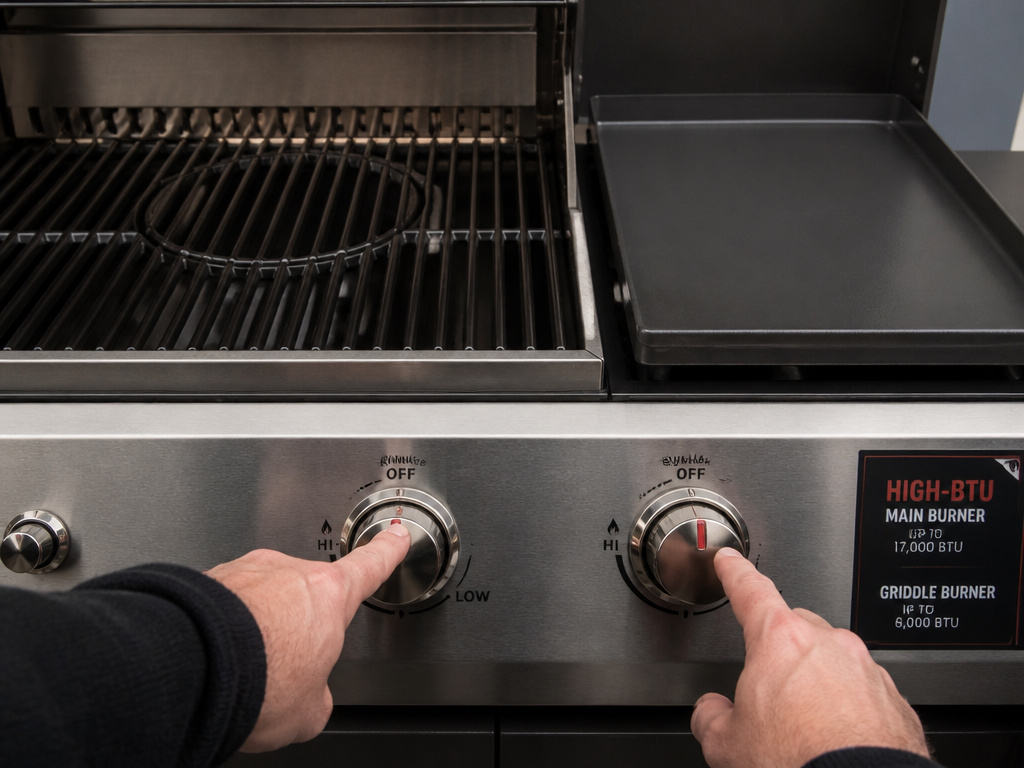
A grill and griddle combo tries to be both. The physics are tricky. Most are either a grill with a small, bolt-on griddle plate or a flat-top with a separate grill box. Your success depends on the execution.
Integrated Combos (like the Cuisinart Griddler): These countertop electric units have reversible plates. They’re fantastic for small kitchens and do a decent job as both a contact grill and a griddle. But they lack the raw power for a serious sear and cannot generate smoke. They are a jack of two trades, master of none.
Outdoor Gas Combos (like the Dyna-Glo): These have a dedicated grill side and a dedicated griddle side. The major pitfall, as the BTU specs show, is that the griddle side is often an afterthought with less power. Before buying a gas grill and griddle combo, find the spec sheet and compare the burner ratings.
Common mistake: Buying a combo for its griddle function without checking if that griddle has its own dedicated, powerful burner. If it’s just a plate sitting over a shared burner, you’ll have terrible heat control.
If you have the space and budget, two dedicated appliances usually outperform one combo. If you must choose one, prioritize the function you’ll use 80% of the time and accept the compromise on the other 20%.
Material Matters: Cast Iron, Steel, or Ceramic?
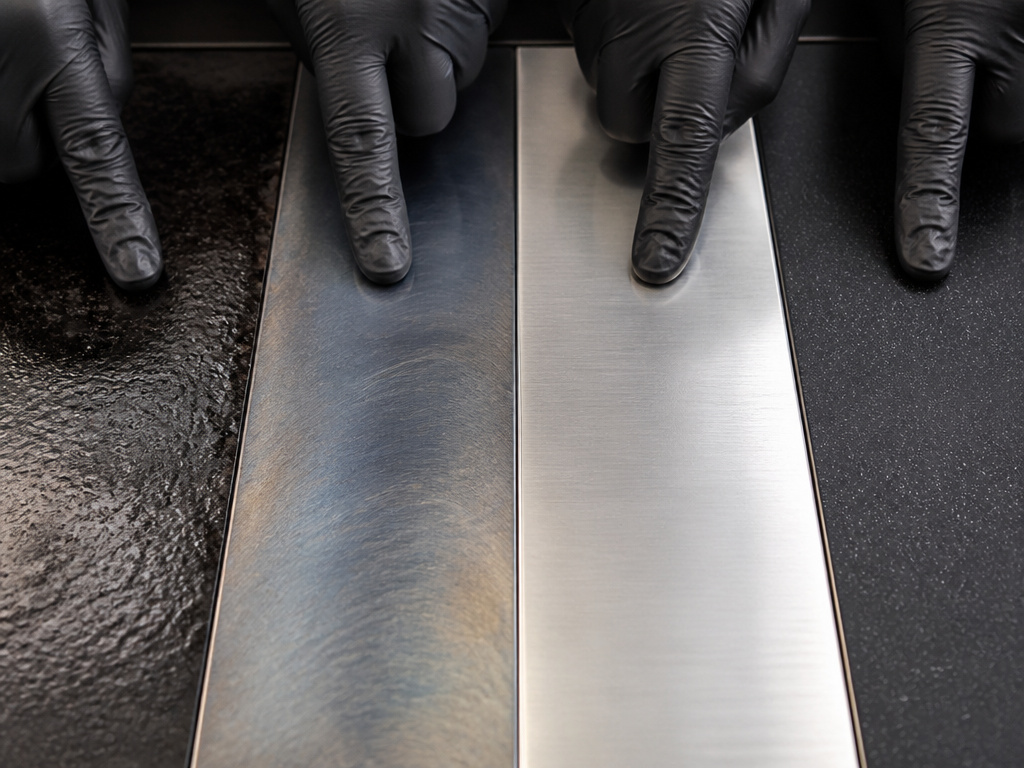
The cooking surface isn’t just a shape. Its material dictates your maintenance life.
- Cast Iron: The classic for griddles. Holds heat incredibly well, leading to excellent searing and even cooking. The trade-off is weight and mandatory seasoning to prevent rust. It’s a commitment.
- Carbon Steel: Lighter than cast iron but with similar performance and the same rust-prone nature. It’s the standard for many outdoor flat tops like Blackstone.
- Stainless Steel: Used in higher-end outdoor griddle units. It won’t rust, but it doesn’t hold heat as well as carbon steel and can have stickier hotspots. Easier to care for.
- Ceramic Non-Stick (like GreenPan): Found on indoor electric models. Provides a truly non-stick surface for eggs and pancakes without seasoning. It can’t handle ultra-high heat or metal tools, limiting its searing potential.
Your climate chooses for you. In dry areas, carbon steel is a workhorse. In humid or coastal regions, the rust battle makes stainless steel or ceramic a smarter long-term buy for a griddle grill.
The Owner’s Manual They Don’t Hand You
Proficiency comes from knowing your specific tool’s quirks. This is the unwritten guide.
For Griddles:
- Map the Hot Zones. Fire it up empty. Use an infrared thermometer or sprinkle water droplets to see where they sizzle fastest. The center is often 50-100°F hotter. Cook accordingly.
- **Season in Layers.One coat of oil is a start to seasoning. Build it up over several cooks.A well-seasoned flat-top griddle is black, slick, and non-stick.
- Clean While Hot. Scrape off food debris immediately after cooking. Deglaze with water, scrape again, wipe dry, and apply a thin oil coat. This five-minute ritual prevents a thirty-minute scrubbing battle later.
For Grills:
- Preheat, Always. Give it 15 minutes to get the grates screaming hot. This prevents sticking and ensures proper searing.
- Clean the Grates After Cooking. Once the grill cools slightly but is still warm, brush the grates. Burnt-on grease turns into cement when it cools.
- Manage the Drip. Empty the grease tray regularly. A full tray is a fire hazard and attracts pests.
So, Which One Should You Buy?
Stop looking for a universal answer. You need a decision framework.
Get a Griddle if:
- You cook breakfast foods, smash burgers, or stir-fry regularly.
- You feed a crowd and need a huge, continuous cooking surface.
- You live in an apartment or have a small patio (electric models).
- You hate the mess of grease dripping into a flare-up-prone fire.
A Blackstone is the default for a reason. For indoors, a Cuisinart Griddler GR-4N covers the basics well.
Get a Grill if:
- Your primary goal is smoky flavor on meats and vegetables.
- You cook thick steaks, ribs, or whole chickens often.
- You have the space for a dedicated outdoor appliance.
- The ritual of fire and charcoal is part of the meal’s appeal.
A standard propane grill or a charcoal kettle wins here.
Consider a Combo Grill and Griddle if:
- Your space is severely limited to one appliance.
- Your cooking is evenly split between the two styles.
- You are willing to meticulously check the BTU ratings for each side to ensure neither is underpowered.
The best combo grill and griddle appliances have independent, powerful burners for each section. Don’t settle for less.
Frequently Asked Questions
Can a griddle replace a grill?
For some foods, yes. For the experience and flavor of grilling, no. A griddle can sear a steak, but it cannot give it a smoky, charcoal-kissed flavor or the distinct crosshatch char marks. It replaces the function but not the essence.
Is a griddle healthier than a grill?
Not inherently. A grill allows fat to drip away from food, which can reduce overall fat consumption. A griddle cooks food in its own rendered fat. The health difference is marginal and depends more on what and how much you cook, not the appliance.
Do I need to season a stainless steel griddle?
No. Seasoning is a process for carbon steel and cast iron to build a polymerized oil layer that prevents rust and creates non-stick properties. Stainless steel doesn’t rust in the same way and is designed to be cleaned to a bare metal surface. Some owners condition stainless steel with oil to reduce sticking, but it’s not the same mandatory ritual.
Can you use a griddle insert on any grill?
No. You need a griddle insert specifically designed to fit your grill’s make and model, covering the burners safely and securely. A poorly fitted insert can block heat distribution, warp, or be a fire hazard. Always check manufacturer compatibility.
Which is easier to clean, a griddle or a grill?
Immediately after cooking, a griddle is often easier. You scrape and wipe one flat surface. A grill requires brushing grates and cleaning a drip pan. However, a neglected griddle requires a major re-seasoning project, while a neglected grill just needs a deeper burn-off and scrub. Consistent, quick cleaning makes either one manageable.
Before You Go
The question isn’t “which is better.” It’s “which is better for you.” Match the tool to your most-cooked meals, your local climate, and the space on your deck or counter. A griddle masters the Maillard reaction on a flat plane. A grill commands fire and smoke. Choose the one that fits the food you actually want to eat, then learn its hot zones and its warranty fine print. That’s how you buy an appliance for a decade, not just a season.
