
Is a Copper Frying Pan Good? Performance vs. Price Reality
This post contains affiliate links. As an Amazon Associate, we earn from qualifying purchases.
A copper frying pan is good for one specific thing: delivering precise, rapid, and even heat control for delicate tasks like sauces, fish, or sugar work. For high-heat searing or everyday family cooking, its high cost, weight, and maintenance make it a poor choice compared to a high-quality tri-ply stainless steel pan.
That performance claim hinges entirely on the pan’s construction. The copper must be thick enough (2.5–3mm) and, critically, lined with a material that doesn’t negate its thermal advantages. A stainless steel lining adds durability but also sluggishness, while a traditional tin lining preserves the legendary responsiveness but melts at 450°F. Most of the copper pans marketed to home cooks sacrifice the very performance you’re paying for.
This guide walks through the three specs that determine if a copper pan is good for you: the lining material, the actual copper thickness, and your stove type. We’ll ground the advice in a published side-by-side test that found only one type of copper pan beat a standard tri-ply stainless pan, and look at the OEM warnings that make some copper pans incompatible with induction cooktops outright.
Key Takeaways
- Copper’s superior thermal conductivity is only useful if the interior lining doesn’t block it. A tin lining preserves performance but requires careful temperature control; a stainless steel lining is durable but often makes the pan perform like a heavier, more expensive version of a standard clad pan.
- According to a Bon Appétit test, a stainless-steel pan with a copper core (like All-Clad Copper Core) heated only marginally faster than its aluminum-core counterpart but had worse temperature variation, creating a “more volatile and scorch-prone” experience.
- Induction compatibility is not guaranteed. The GGM Gastro Copper Frying Pan (Model 510-28) manual explicitly states it is “not suitable for induction cooktops,” while the Eva Trio Copper range works on induction but warns against heating it empty due to rapid temperature spikes.
- For the mythical copper performance, quick, even, responsive heat, you need an old-school tin-lined copper pan like the Ruffoni Historia. This is a specialized tool for confident cooks, not a daily driver.
- If you want one pan that does everything well, buy a tri-ply stainless steel pan like the All-Clad D3. It will sear, sauté, deglaze, and go in the oven without any of the fuss or fear associated with copper.
The Core Question: Does Copper Actually Cook Better?
The answer is a conditional yes, but only under a very specific set of construction rules that most modern pans break. Copper has the highest thermal conductivity of any common cookware metal. This means it moves heat from your burner across the entire cooking surface quickly and evenly, with minimal hot spots. It also cools down fast when you lower the flame, giving you precise control.
Copper’s thermal conductivity rating is nearly double that of aluminum and about ten times that of stainless steel. This physical property is why a proper copper pan feels instantly responsive when you adjust the burner.
That’s the theory. The practice is messier. The copper itself is reactive with acidic foods and can be toxic in large amounts, so every cooking surface must be lined with a non-reactive barrier. That lining is the bottleneck. If the lining is too thick or has poor conductivity itself, it negates copper’s primary advantage. You’re left with a beautiful, heavy, expensive pan that cooks no better than a mid-tier clad pan.
The most revealing data comes from a Bon Appétit test that pitted several copper pans against a control All-Clad D3 tri-ply stainless pan. They measured how evenly and quickly each pan heated. The results reframe the entire category.
| Pan Tested | Lining Material | Key Finding vs. All-Clad D3 |
|---|---|---|
| Ruffoni Historia | Tin | Heated more evenly and quickly; the only pan to outperform. |
| Mauviel M’150 | Stainless Steel | Heated slightly faster, but not a dramatic difference. |
| All-Clad Copper Core | Stainless Steel (Copper Core) | Heated marginally faster but with greater temperature variation (more scorch-prone). |
| Hestan CopperBond | Stainless Steel | Performed worse than the All-Clad D3. |
The test’s conclusion was blunt: paying a large premium for a stainless-steel pan with a copper core is “not worth it.” The copper core created a more uneven, unpredictable cooking surface than the standard aluminum core. The only pan that delivered the promised copper performance was the tin-lined one.
Where this goes sideways: Buying a pan for its copper core. You’re paying for a marketing term, not a measurable performance leap in the kitchen. The test data shows the aluminum core in a pan like the All-Clad D3 is a more than capable conductor.
The Lining Dictates Everything (And Your Stove Might Veto It)
Your choice isn’t really “copper or not.” It’s “tin-lined, stainless-lined, or a different material altogether.” This decision dictates how you cook, how you clean, and what you can cook on.
Tin-Lined Copper: The High-Performance, High-Maintenance Choice
This is the classic French kitchen lining. Tin is non-reactive, has decent conductivity, and is soft enough that it can bond thinly to the copper, preserving its thermal responsiveness.
- The Performance: Unmatched. As the Bon Appétit test showed, a tin-lined pan like the Ruffoni Historia is the only construction that genuinely outperforms high-end clad stainless.
- The Catch: Tin has a low melting point, between 450°F and 475°F. You cannot preheat the pan empty. You cannot use it for high-heat searing. You must use gentle to medium heat.
- The Reality: This makes it ideal for delicate, controlled tasks: butter sauces, custards, fish, and vegetables. America’s Test Kitchen notes that tin is fine for saucepans where liquid keeps the temperature down, but it’s “skillets where tin isn’t ideal” because a dry skillet easily hits the melting point.
Common mistake: Cranking the heat to sear a steak in a tin-lined skillet. You’ll see silvery streaks in the pan by the time the steak is done, that’s melted tin. The pan isn’t ruined, but it will need professional retinning.
If you accept those limits, a tin-lined copper skillet is a specialist’s tool. It’s not your only frying pan; it’s your best frying pan for a specific job.
Stainless Steel-Lined Copper: The Durable Compromise
Most modern copper cookware, like the Viking 3-Ply line or many Mauviel pieces, uses a stainless steel interior. It’s non-reactive, nearly indestructible, and dishwasher-safe (though hand washing is always recommended).
- The Trade-off: Stainless steel is a poor heat conductor. To make it functional, it’s usually bonded to an aluminum or copper core. In a copper pan, this often means the stainless layer is thick for durability, which acts as an insulator. The pan becomes heavier and less responsive.
- The Result: You get a beautiful, durable pan that heats more evenly than pure stainless, but often without the lightning-fast control of tin. As the test data indicates, many perform similarly to, or even worse than, a good tri-ply stainless pan.
Your Stove Has a Say: The Induction Problem
Copper is not magnetic. A solid copper pan will not work on an induction cooktop. Period. For a copper pan to be induction-compatible, the manufacturer must add a magnetic layer to the base.
This creates two distinct product categories, and you must read the manual. * Compatible with a Warning: The Eva Trio Copper range uses a multi-layer base (copper, aluminum core, stainless steel) that works on induction. Its manual explicitly warns: “On induction cookers, pots and pans must never be heated while empty. They will heat up extremely quickly, and risk being damaged.” * Not Compatible: The GGM Gastro Copper Frying Pan (Model 510-28) manual is clear: “avoid using on induction cooktops in its current form.” This is a pure copper pan with a stainless handle, designed only for gas or electric.
If you have an induction stove, your options are limited to multi-ply brands like Eva Trio or Hestan that embed a magnetic layer. The performance will be that of a stainless-lined pan, not a classic tin-lined one.
Copper vs. The Alternatives: When Is It Actually Worth It?
Let’s get concrete. When should you reach for your credit card, and when should you walk away?
Skip the copper core. The Bon Appétit test of the All-Clad Copper Core versus the All-Clad D3 is the evidence. The copper core pan was more expensive, heavier, and cooked worse. For a clad stainless pan, an aluminum core is the sweet spot.
For a solid copper pan, use this decision matrix:
| Your Primary Goal | Recommended Pan Type | Reason |
|---|---|---|
| Unmatched control for sauces, fish, eggs | Tin-Lined Copper Skillet | The thin tin lining preserves copper’s legendary responsiveness and even heating. |
| A beautiful, durable all-rounder | Stainless Steel-Lined Copper Skillet | You get even heating and a stunning look, but with the weight and slower response of stainless. |
| One pan for 95% of cooking tasks | Tri-Ply Stainless Skillet (e.g., All-Clad D3) | More affordable, oven-safe, dishwasher-safe, and excellent at searing, sautéing, and deglazing. |
| Non-stick convenience for eggs & pancakes | Ceramic or Quality Non-Stick Skillet | Copper is not a non-stick surface. For true slip-and-slide, use the right tool. |
The cleaning and maintenance routine also splits along lining lines. A stainless-lined pan can handle more abrasion; you can use a paste like Bar Keepers Friend for stains. A tin-lined pan requires a soft sponge, mild soap, and immediate drying to prevent water spots and slow corrosion. Never put any copper pan in the dishwasher, the detergent and heat will destroy the finish and can damage tin.
If you struggle with a copper pan sticking, the issue is usually temperature control or residue. Copper shouldn’t be seasoned like cast iron. Instead, ensure it’s perfectly clean, preheat gently with a thin layer of fat, and let the food release naturally. For persistent issues, our guide on copper pan sticking dives deeper into solutions.
The Verdict: Who Should (and Shouldn’t) Buy a Copper Frying Pan
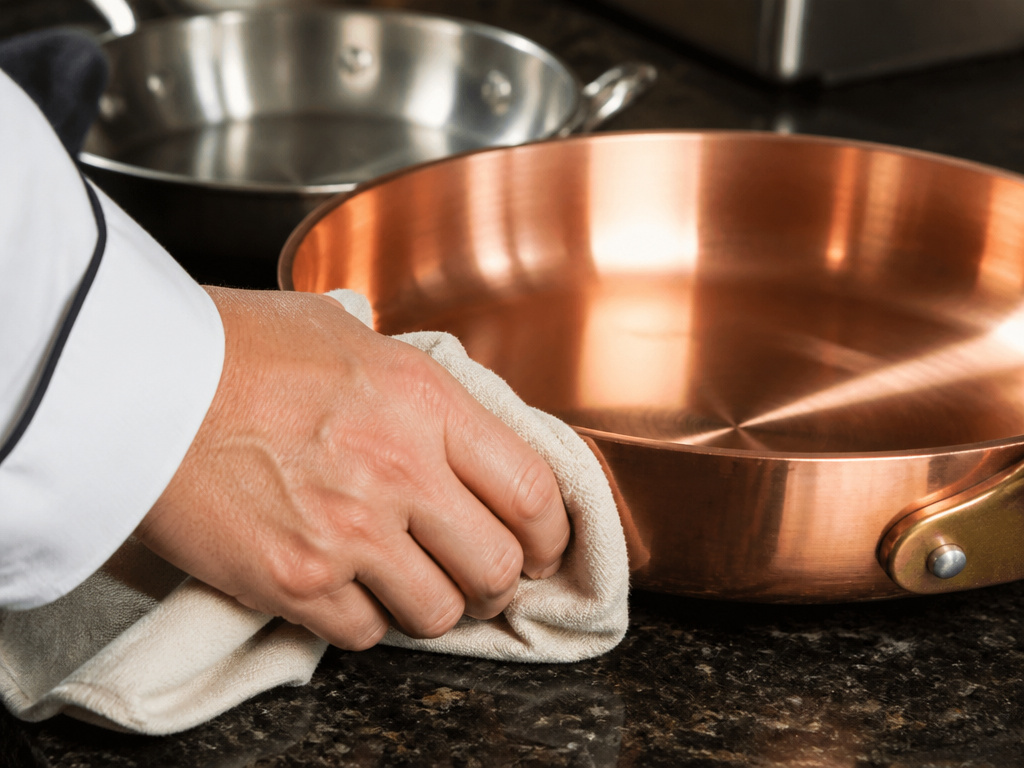
You should buy a copper frying pan if: * You are an experienced cook who values precise thermal control above all else for specific tasks. * You understand and will respect the temperature limits of a tin lining, or you accept the performance compromise of a stainless lining. * You view it as a specialist tool within a broader kitchen arsenal, not your primary skillet. * You enjoy the ritual of hand-washing and polishing.
You should not buy a copper frying pan if: * You need a single, versatile, no-fuss skillet for daily cooking. * You regularly cook on high heat or want a pan for searing steaks. * You have an induction cooktop and aren’t buying a specifically compatible model. * You want a non-stick surface. * You’re looking for the best performance per dollar.
For most home cooks building a functional kitchen, the investment is better directed toward a superb tri-ply stainless steel skillet and a dedicated non-stick pan. The performance gap for everyday cooking simply isn’t there to justify the cost and care. However, for the cook who has mastered the basics and wants to elevate specific techniques, a tin-lined copper skillet is a revelation. It’s not about having the best pan, but about having the right pan for the job.
Frequently Asked Questions
Is a copper frying pan safe to use?
Lined copper frying pan is safe. The lining (tin or stainless steel) acts as a barrier, preventing copper from leaching into your food. The U.S. ATSDR ToxGuide for Copper notes that while copper is an essential nutrient, excessive intake can cause gastrointestinal issues. Never cook with unlined or damaged copper.
What’s the difference between a Copper Chef pan and a real copper frying pan?
Copper Chef pan** is typically a non-stick aluminum pan with a copper-colored coating. It contains little to no actual copper and does not offer the heat conductivity of a solid copper pan. Our Copper Chef pan analysis details its performance. A real copper frying pan is made of solid copper or has a thick copper core, offering superior heat control.
Can I put my copper frying pan in the oven?
It depends on the specific pan’s construction. Stainless steel-lined copper pans with oven-safe handles, like the Viking 3-Ply line, are often safe to 500°F. Tin-lined pans should never go in the oven, as ambient temperatures can melt the lining. Always check the manufacturer’s instructions, a rule that applies to all oven-safe frying pan use.
How do I clean and maintain a copper frying pan?
Hand wash only with warm, soapy water and a soft sponge. Dry immediately to prevent water spots. For stainless-lined interiors, you can use a non-abrasive cleaner like Bar Keepers Friend for stuck-on food. For the exterior, use a dedicated copper polish to maintain shine. Avoid the dishwasher and abrasive scouring pads, similar to how you would clean a stainless steel pan.
Are copper frying pans non-stick?
No. Copper itself is not non-stick. A well-maintained tin lining can become somewhat slick over time, but it will never release food like a modern non-stick coating. Proper preheating and fat are required to prevent sticking. For a true non-stick surface, you need a different type of pan.
The Bottom Line
A copper frying pan is good, but only in a very specific context. It is not a universally superior piece of cookware. Its legendary performance is tied to a thin, fragile tin lining and a willingness to cook on medium heat. The more common stainless-lined versions often perform like premium clad pans, beautiful and durable, but not magically better.
Before you buy, know your goal. If you want the pinnacle of responsive heat control for delicate work and are ready for the upkeep, seek out a tin-lined pan like the Ruffoni Historia. If you want a gorgeous, heirloom-quality pan for general use, a stainless-lined set from Mauviel or Viking is a solid choice. But if you just want the best cooking tool for your money, invest in a tri-ply stainless steel skillet. It will do nearly everything well, without any of the caveats.
