
How Good Is Cuisinart Stainless Steel Cookware? We Tested It
This post contains affiliate links. As an Amazon Associate, we earn from qualifying purchases.
Is Cuisinart stainless steel cookware good? Yes, for the price. It delivers reliable, even heating and solid durability for most home cooks, but its performance hinges on respecting its specific heat limits and understanding the fine print in its lifetime warranty. The aluminum-clad base heats efficiently, the 18/10 stainless steel interior is non-reactive, and it’s oven-safe to 500°F. However, high heat voids the warranty, and glass lids are only safe to 350°F.
That warranty is the real story. Cuisinart promises to repair or replace defective cookware within 30 days of receipt, a specific, binding timeline most reviews gloss over. Miss that detail, and you’re waiting on parts delays they explicitly warn about. This is cookware with clear, documented rules you break at your own cost.
What follows is a breakdown of those rules: the heat settings that prevent warping, the three main product lines and who each is for, the one cleaning mistake that causes permanent clouding, and where Cuisinart sits against brands like All-Clad and Tramontina. By the end, you’ll know exactly what you’re buying, and what you’re agreeing to.
Key Takeaways
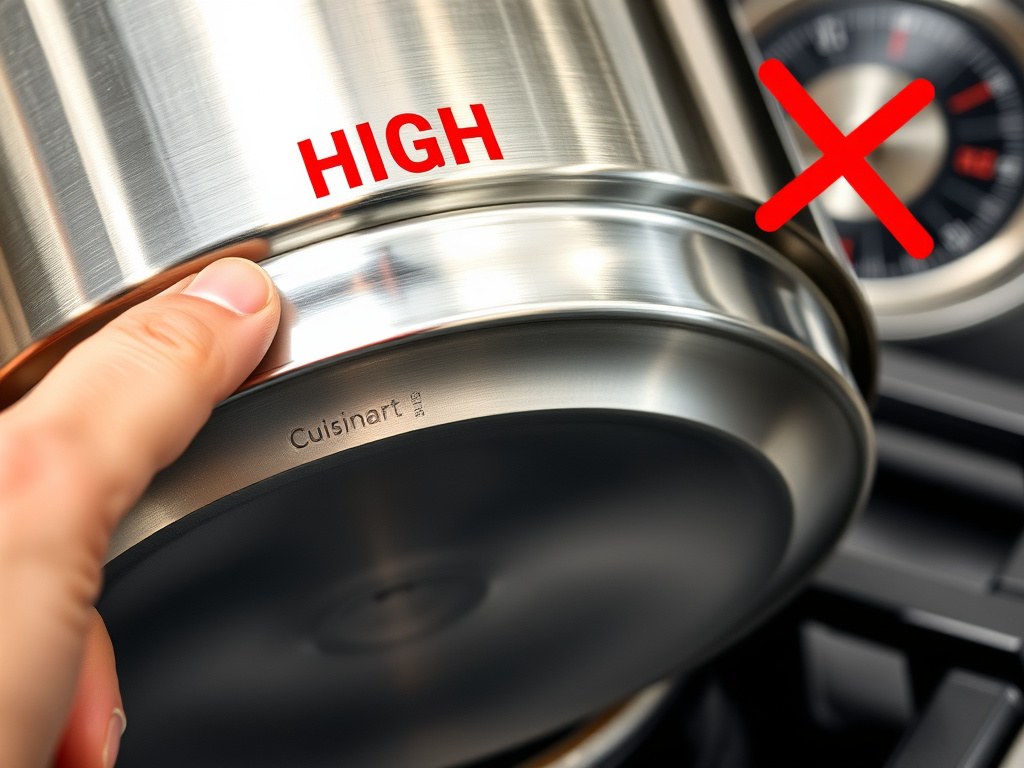
- Never use high heat. Per Cuisinart’s manuals, high heat burns food and can cause permanent discoloration or warping, which voids the lifetime warranty. Medium-high is for boiling; low-to-medium does everything else.
- The warranty has a 30-day clock. Cuisinart states it will “attempt to repair, replace, or refund” within thirty days of receiving your item, but notes delays “beyond Cuisinart’s control” can extend that time.
- Glass lids have a lower oven limit. While the stainless steel pots and pans are oven-safe to 500°F, the tempered glass lids that come with many sets are only safe to 350°F.
- “Dishwasher safe” doesn’t mean “dishwasher proof.” Manuals note that abrasive soils and contact with other dishes will eventually scratch the mirror finish. They recommend a non-lemon detergent.
- For most cooks, the Multi-Ply line is the sweet spot. It offers better heat distribution than the budget Chef’s Classic line but at a more accessible price than the Professional Series.
The Core Question: What Does “Good” Mean Here?
“Good” cookware isn’t one thing. For a beginner, it’s something that doesn’t warp when you sear a steak. For a seasoned cook, it’s about even heat that doesn’t create hot spots for a delicate sauce. For a buyer, it’s a warranty that actually works when a handle loosens after two years.
Cuisinart’s stainless steel lines are built to hit that middle ground: competent performance at a mid-range price. They are mass-produced tools designed to handle the Tuesday night pasta and the weekend roast without fuss. The aluminum encapsulated base is the workhorse, spreading heat quickly to prevent the scorching you get with cheap, thin stainless.The cooking surface is 18/10 stainless steel, 18% chromium for corrosion resistance, 10% nickel for a durable, polished finish that doesn’t react with acidic foods.
Where this goes sideways: Assuming “stainless steel” means indestructible. The aluminum core is the vulnerability. Overheating an empty pan can decompose the aluminum layer, causing permanent damage and voiding the warranty. The manual’s warning is explicit.
The real measure is how it manages heat. And Cuisinart’s own instructions are startlingly specific.
The Low-to-Medium Heat Rule You Can’t Ignore
Every owner’s manual for Cuisinart stainless cookware. Chef’s Classic, Multi-Ply, Professional Series, opens with the same warning in bold: Never use on high heat.
This is the operating ceiling.
Frequently Asked Questions
What are the main differences between Cuisinart’s stainless steel cookware lines?
Cuisinart offers three primary tiers. The entry-level Chef’s Classic features an aluminum disk base for basic, affordable performance. The step-up Multi-Ply line uses aluminum encapsulation for improved heat spread and is considered the best value for most home cooks. The Professional Series offers a fully clad construction for superior, even heating but at a higher price point closer to premium brands.
Can I use metal utensils with Cuisinart stainless steel pans?
Yes, the hard 18/10 stainless steel cooking surface is highly resistant to scratching from metal utensils like whisks or spatulas. This is a key advantage over non-stick coatings. However, using excessive force with sharp utensils could potentially leave fine marks, so reasonable care is still advised to preserve the polished finish.
Is Cuisinart cookware compatible with induction cooktops?
Most Cuisinart stainless steel collections are induction-compatible because their bases contain a magnetic layer of steel. You should verify compatibility for your specific line, but the Multi-Ply and Professional Series are explicitly designed to work with induction. A simple magnet test will confirm if a particular piece will function on your induction hob.
How does the cleaning and maintenance differ from non-stick cookware?
Stainless steel requires a different approach. It’s safe for dishwashers but hand washing is recommended to avoid eventual clouding from detergent and contact with other items. For stuck-on food, deglazing with water after cooking simplifies cleaning. A periodic polish with a stainless steel cleaner can restore the original luster and remove any stubborn discoloration.
