
Is the Copper Chef Pan Good? | The Real-World Breakdown
This post contains affiliate links. As an Amazon Associate, we earn from qualifying purchases.
The Copper Chef pan is a decent, budget-friendly non-stick option for light to medium home cooking, but its advertised “lifetime” durability and infomercial-level performance are marketing exaggerations. Its ceramic coating wears faster than high-end alternatives, the warranty has significant caveats, and long-term non-stick performance is inconsistent.
That’s the summary. The real question isn’t if it works, it does for a while, but whether its specific trade-offs fit your kitchen habits and expectations. The gap between the TV promise and the pan you actually get is where most disappointment lives.
What follows is a breakdown of three critical layers: the actual construction and specs, the fine print that governs its lifespan, and the real-world cooking performance that determines if it’s a good pan for you.
Key Takeaways
- The non-stick ceramic coating is warrantied for 5 years, not a true lifetime, and all other parts are only covered for 60 days. A warranty claim requires mailing the pan with a $9–$15 processing fee.
- The coating’s performance degrades with repeated dishwasher use and high-heat searing. For longevity, hand-wash only and keep stovetop heat at medium.
- Copper Chef pans are aluminum with a steel induction plate and a ceramic coating, they are not solid copper. This construction makes them lightweight and quick to heat, but also prone to warping if shocked with cold water.
- Compared to a traditional PTFE non-stick pan or a well-seasoned carbon steel pan, a Copper Chef offers a safer, PFOA-free option but with a shorter effective non-stick lifespan.
The Short Answer: A Performance Snapshot
Is the Copper Chef pan good for what? For frying eggs on a Sunday morning or making a single-serve quesadilla, it’s perfectly fine. The ceramic CeramiTech coating works as intended when new, provided you follow the initial seasoning step. Food releases easily, and cleanup is simple.
The Copper Chef pan’s core is aluminum with a bonded steel induction plate, topped with a PFOA-free ceramic coating rated for stovetop temperatures up to 850°F. This makes it compatible with all stovetop types, including induction.
The problems start when you push it beyond light duty. The coating is not as durable as the infomercials imply. Using metal utensils, stacking it without protection, or running it through the dishwasher repeatedly will accelerate wear. The non-stick property isn’t a permanent feature of the metal; it’s a layer on top that can be removed.
Think of it as a consumable item with a 1–3 year functional lifespan under typical use, not a forever pan. If you treat it gently, you might extend that. If you cook like you’re on a cooking show, you’ll shorten it considerably.
What You’re Actually Buying: Construction & Claims
This pan is not made of copper. The name and color are marketing. Understanding its real build explains both its strengths and its failure points.
The body is aluminum, chosen because it’s an excellent, affordable heat conductor. It heats up quickly and spreads that heat evenly across the cooking surface, which is a genuine benefit. Fused to the bottom is a stainless steel induction plate, which is what allows it to work on induction cooktops, a key selling point.
The cooking surface is the CeramiTech Non-Stick Coating. It’s a ceramic-based, PTFE and PFOA-free layer. This is a legitimate safety and environmental advantage over older non-stick technologies. The manufacturer claims it is more durable and heats faster than standard pans.
However, “ceramic” in cookware coatings doesn’t mean it’s like a porcelain plate. It’s a sprayed-on, sintered layer that is inherently less durable than a thick, seasoned layer of carbon steel or the industrial-grade PTFE used in professional pans like those from Scanpan or All-Clad. It’s a thin veneer of performance.
Where this goes sideways: Assuming the pan is indestructible because of the “copper” name and TV demonstrations. The aluminum core is soft. Dropping it or shocking it with cold water while hot can warp the base permanently, ruining its contact with flat stovetops.
The Warranty Fine Print: Lifetime vs. Reality
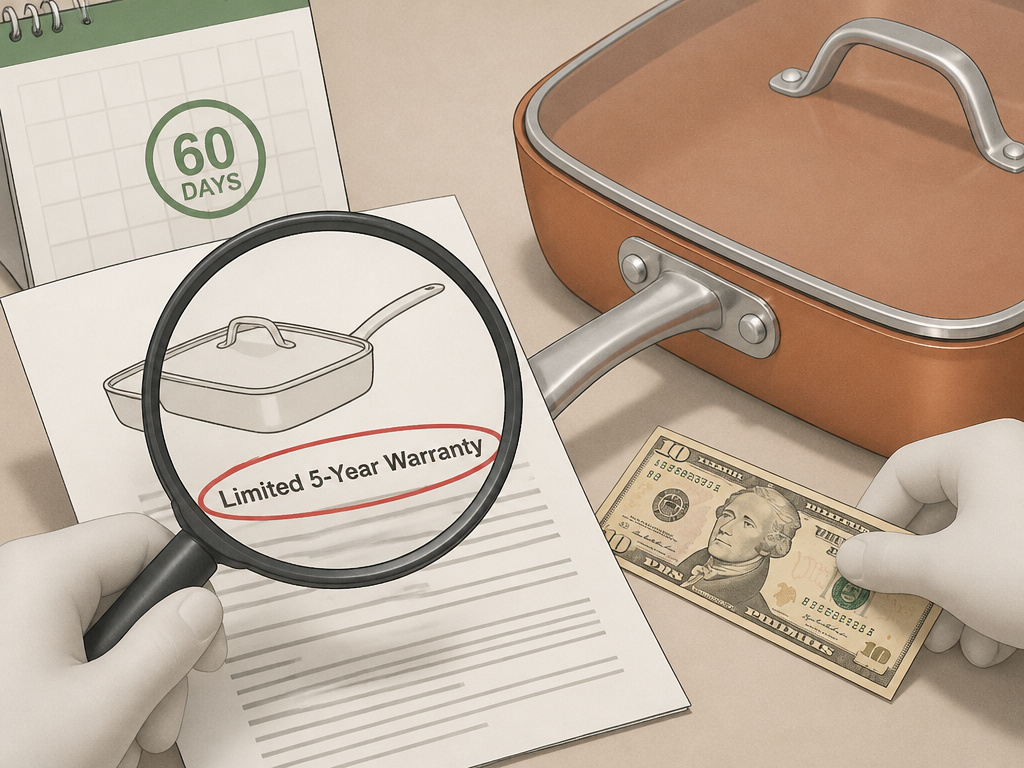
This is the most important section for your wallet. The warranty is not what it seems.
There are two conflicting warranty terms in the official manuals. One document states a “Limited Lifetime Warranty” on the ceramic coating. Another, more recent manual, specifies a “Limited 5-Year Warranty” on the non-stick coating. The 5-year version is the current, enforceable term you should expect.
All other parts, the aluminum body, steel handles, glass lids, are covered for only 60 days from purchase. This is a critical detail. If the handle loosens after four months, you’re on your own.
| Warranty Component | Advertised Term | Actual Covered Term (Per Manuals) | What’s Not Covered |
|---|---|---|---|
| Ceramic Non-Stick Coating | “Lifetime” | 5 years from purchase | Peeling/chipping from commercial use, metal utensils, overheating, or improper cleaning. |
| All Other Parts & Components | Often not mentioned | 60 days from purchase | Normal wear and tear, damage from accident or misuse. |
| Commercial/Institutional Use | N/A | Void immediately | Using the pan in a restaurant, food truck, or rental property. |
Filing a warranty claim is not a free replacement. You must pack the pan securely, include proof of purchase and a description of the defect, and mail it to the address in the manual. Crucially, you must also include a check or money order for $9.00 to $14.99 per pan to cover processing and handling. This fee effectively turns a “warranty” into a discounted repair or replacement program.
If your primary reason for buying was the safety net of a lifetime guarantee, you should reconsider. The warranty is a limited, conditional, and transactional process.
Real-World Performance: Where It Shines and Where It Sticks
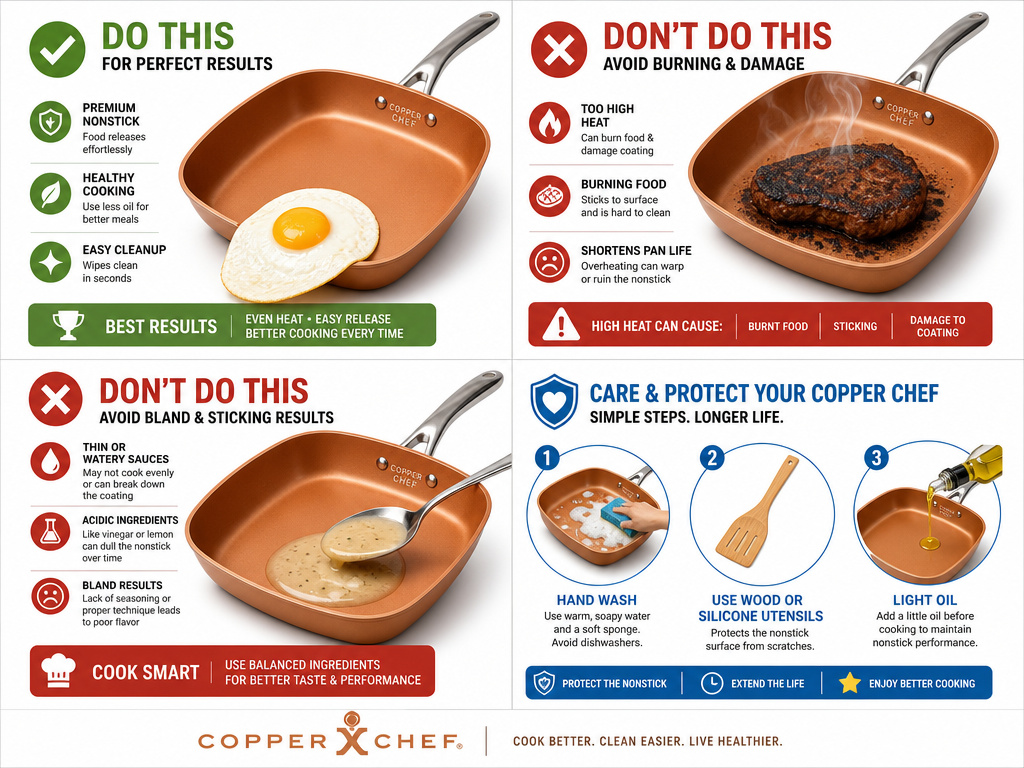
How does it actually cook? Let’s break it down by task.
For eggs, pancakes, and grilled cheese: Excellent when new. The low-fat non-stick performance is genuine. You can cook eggs with little to no oil and they will slide right out. This is the pan’s happy place.
For searing meats or high-heat frying: Problematic. While the coating is rated to 850°F, sustained high heat is the enemy of any non-stick coating, ceramic included. It accelerates the breakdown of the coating’s polymers. You’ll also get more smoke and a higher chance of food carbonizing and sticking. For a proper sear, you should use a copper frying pan made of bare metal or a dedicated stainless steel skillet.
For deglazing and making pan sauces: Not recommended. The ceramic coating prevents the fond (those tasty browned bits) from forming on the pan’s surface. You cannot deglaze what isn’t there. This makes it a poor choice for building flavor in sauces. A chef’s pan in stainless steel or carbon steel is designed for this workflow.
Daily driver durability: This is the biggest variable. Performance directly ties to care. 1. Hand-washing is mandatory for longevity. Despite being labeled dishwasher safe, the detergent and high-heat spray degrade the coating over time. Hand-wash with a soft sponge. 2. Use only wood, silicone, or nylon utensils. A single scrape from metal tongs can fracture the ceramic layer. 3. Season it periodically. The manual advises re-seasoning after dishwasher cycles or when performance fades. This involves rubbing a thin layer of oil on the warm, clean surface and heating it gently. It temporarily revitalizes the coating but doesn’t repair scratches.
If you find your food consistently sticking, the coating is likely compromised. No amount of seasoning will fix a physical scratch.
Copper Chef vs. Other Non-Stick Options
Is it the best non-stick path? That depends on your priorities. Here’s how it stacks up.
| Pan Type | Best For | Durability | Maintenance | Heat Tolerance |
|---|---|---|---|---|
| Copper Chef (Ceramic) | Light, low-fat cooking; induction users. | 1–3 years with care. | Hand-wash, re-season. | Medium (up to 850°F but not recommended). |
| Traditional PTFE Non-Stick | Ultimate slickness; delicate fish. | 2–5 years. | Hand-wash, avoid metal. | Low-Medium (do not exceed 500°F). |
| Well-Seasoned Carbon Steel | Searing, frying, oven use; develops character. | Decades. | Hand-wash, dry immediately, occasional re-seasoning. | Very High (oven and broiler safe). |
| Anodized Aluminum Non-Stick | General purpose, even heating. | 3–7 years. | Often dishwasher safe, avoid metal. | Medium-High. |
The Copper Chef sits at the budget-friendly, “safer chemical” end of the spectrum. It’s a step above disposable grocery store non-stick pans but a clear step below professional-grade anodized options from brands like Calphalon or All-Clad. If you want a true lifetime tool, a carbon steel pan is a vastly better investment, though it requires a different cooking technique.
For those seeking a quality middle ground, researching the best copper frying pans or best copper sauté pans will reveal options with thicker gauge metal and more robust coatings.
Who Should (and Shouldn’t) Buy a Copper Chef Pan
Buy it if:
- You need an inexpensive, versatile pan that works on an induction cooktop.
- You primarily cook low-fat, delicate foods like eggs and fish.
- You want a PFOA/PTFE-free non-stick option and are willing to replace it every few years.
- You’re comfortable with hand-washing and gentle utensil use.
Avoid it if:
- You expect a “buy it for life” pan based on “lifetime warranty” marketing.
- Your cooking style involves high-heat searing, metal utensils, or deglazing.
- You rely on the dishwasher for all cleanup.
- You want a pan that can develop a patina and improve with age.
For general copper cookware safety, these pans pose no risk as the cooking surface is ceramic-coated, not raw copper. The concerns about copper toxicity apply only to unlined copper pots.
Before You Go
The Copper Chef pan is a tool with a specific, limited job. It’s good for light, everyday non-stick tasks and is a competent solution for induction cooktops. Its major flaw is the disconnect between its marketed indestructibility and its actual, care-dependent ceramic coating.
Treat it as a medium-term kitchen helper, not a heirloom. Hand-wash it, use gentle tools, and understand its warranty before you rely on it. For many home cooks, that’s enough. For those who cook with higher heat or want a pan that ages with them, the investment is better placed in carbon steel, cast iron, or a high-end non-stick pan from a brand that specializes in durability.
If you’re building a full kitchen set, looking at copper pan sets can provide a more cohesive look, but ensure you’re comparing the actual construction and warranty terms, not just the color.
Frequently Asked Questions
Is the Copper Chef pan oven safe?
Yes, the pan itself is oven safe. The stainless steel handle is designed for oven use. However, you must check the temperature rating for any glass lid that comes with it, most are only safe up to 350°F. Always use oven mitts, as the entire unit gets very hot.
Can I use metal utensils on a Copper Chef pan?
The manufacturer strongly advises against it. While some demonstrations show metal scraping, this will microscopically scratch and eventually wear through the ceramic coating. Once scratched, the non-stick property is gone in that spot and the pan will begin to stick. Use wood, silicone, or nylon.
Why did my Copper Chef pan warp?
Aluminum expands when heated. If you take a very hot pan and run cold water over it or immerse it in a sink, the rapid, uneven contraction can cause permanent warping. This is called thermal shock. Always let the pan cool down to warm before washing. A warped pan will not sit flat on an electric or induction cooktop.
How do I restore the non-stick surface?
You can temporarily improve it by re-seasoning. Warm the clean, dry pan on low heat for 30-60 seconds. Remove it from the heat, add a tablespoon of vegetable oil, and rub it over the entire interior with a paper towel. Let it cool, then wipe out the excess oil. This is a maintenance step, not a repair for deep scratches.
Is the Copper Chef pan better than Teflon?
“Better” depends on your criteria. Copper Chef’s ceramic coating is PFOA and PTFE-free, which addresses health and environmental concerns some have with traditional Teflon. However, high-quality PTFE-based coatings (like those from T-fal or Scanpan) are often more durable and slicker for a longer period. For sheer non-stick performance, Teflon still wins. For a perceived safer material, ceramic wins.
What is the difference between Copper Chef and Gotham Steel?
They are very similar products from different companies (Tristar Products makes Copper Chef). Both use a ceramic-based non-stick coating over an aluminum core with an induction plate. The differences are largely in marketing, accessory bundles, and minor design tweaks. Performance and durability concerns apply equally to both brands.
