
No Steamer Basket? What To Do – 3 Proven & Effective Methods
This post contains affiliate links. As an Amazon Associate, we earn from qualifying purchases.
You don’t need a steamer basket. The three proven substitutes are a heat-proof plate propped on aluminum foil balls, a microwave with a tablespoon of water, or cooking directly in a half-inch of water in a covered pot. Each method has a strict vegetable type it works for and a specific failure it avoids, the wrong pairing gives you waterlogged or shriveled results.
That plate-on-foil trick isn’t just a kitchen hack. It’s the method Epicurious’s food director reached for in a head-to-head test, and it outperformed common internet advice. The difference between crisp broccoli and a soggy mess comes down to steam capture and water contact, not just having the right gadget.
What follows: the exact steps for each method, the vegetables each one ruins, the microwave timing that prevents shriveling, and the one common “steamer hack” you should never bother trying.
Key Takeaways
- The plate-on-foil method creates a genuine steaming environment; use three golf-ball-sized foil balls under a heat-proof plate in a lidded pot.
- Microwave steaming is fastest (2.5 minutes for broccoli) but requires exactly one tablespoon of water; skip the water and vegetables dry out.
- The direct-in-pot method (cooking in 1/2 inch of water) works only for firm vegetables like broccoli and carrots; it makes potatoes taste watery.
- Never use a fine-mesh sieve as a steamer substitute; it fails to capture steam, takes the longest, and waterlogs the food.
- Always match the method to the vegetable’s density. Soft, starchy items like potatoes need indirect steam, not direct water contact.
The Plate-on-Foil Method (A Pro’s Pick)
This is the closest you’ll get to a standard steamer basket without owning one. Rhoda Boone, Epicurious’s food director, validated it in a controlled test. The setup is simple, but the geometry is everything.
You need a medium pot with a tight-fitting lid, a heat-proof plate (ceramic or glass), and aluminum foil. Roll three pieces of foil into balls roughly the size of golf balls. Place them in the bottom of the pot and pour in about half an inch of water. The water must not touch the plate when it rests on the balls. Set the plate on top, cover the pot, and bring the water to a boil. Add your vegetables to the plate, re-cover, and steam until tender.
The aluminum-foil-and-plate combo basically becomes a DIY steamer basket. This technique is super simple and the resulting vegetables are crisp (broccoli) and creamy (potatoes), accordingly. . Epicurious test findings
The foil balls create an air gap. This allows steam from the boiling water to fully surround the food on the plate, cooking it evenly with moist heat instead of boiling it from below. It replicates the core function of a steamer.
Why it works: The sealed lid creates a pressurized environment where steam condenses on the cooler food, transferring heat efficiently. The plate keeps the food completely out of the water, which is the definition of true steaming.
Where this goes sideways: Using a plate that’s too large for the pot. If the plate’s edge rests against the pot wall, steam escapes out the sides instead of circulating. You’ll hear hissing, and the cooking time doubles.
This method works for almost any vegetable: broccoli, cauliflower, carrots, green beans, and even diced potatoes. It’s your default when you want results indistinguishable from a dedicated steamer pot.
When the Microwave Is Your Best Bet
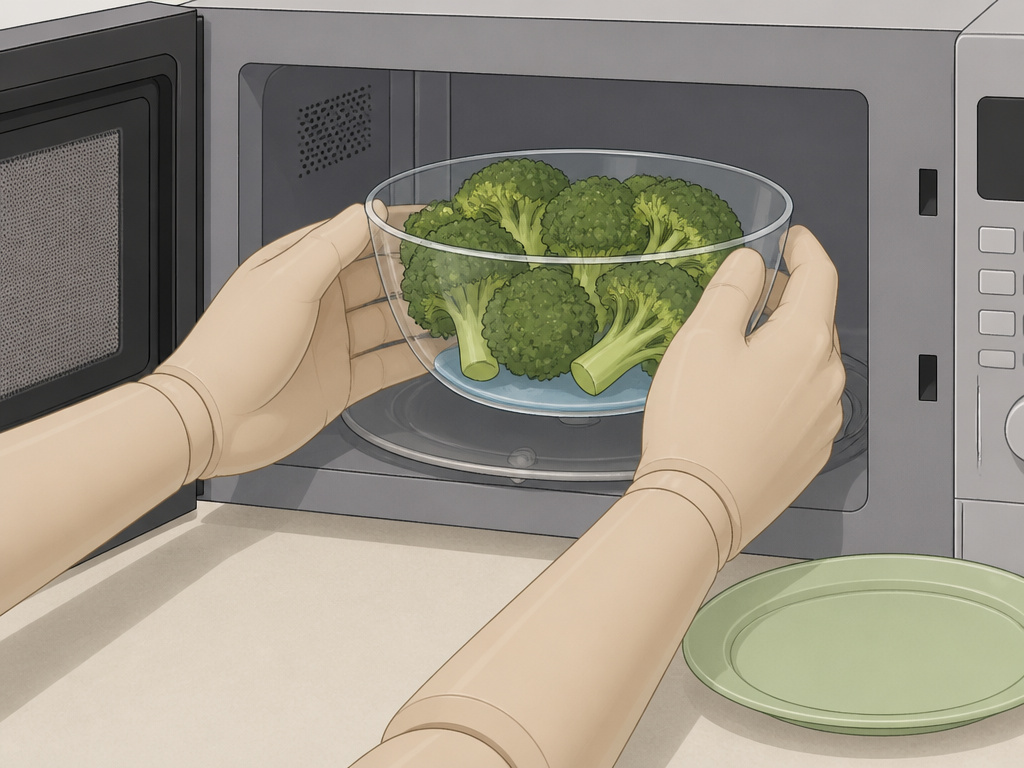
Speed is the microwave’s only advantage. It bypasses the time needed to bring a pot of water to a boil. For a single serving of vegetables when presentation isn’t critical, think adding to a curry, soup, or casserole, it’s the logical choice.
The Epicurious test nailed the specifics. Place vegetables in a microwave-safe bowl. Add exactly one tablespoon of water. Cover the bowl tightly with a microwave-safe plate or plastic wrap. Microwave on high, checking frequently.
The timing is not a guess. For broccoli florets, start with 2.5 minutes. For cubed potatoes, start with 5 minutes. Your microwave’s wattage changes this, so check early. The vegetables cooked with water tasted “crispy and ‘steamed.'” The batch cooked without any water tasted dry and tough.
| Vegetable | Starting Time | Appearance Note |
|---|---|---|
| Broccoli | 2.5 minutes | Slightly shriveled |
| Potatoes | 5 minutes | Slightly shriveled, can taste watery |
| Carrots | 3–4 minutes | Slightly shriveled |
The steam generated from that single tablespoon is intense and fast, which is why it works. It’s also why the vegetables often look a bit puckered. The texture is right, but the visual appeal is lower.
This method fails completely for delicate, leafy greens. They collapse into a wet, slimy mass. Stick to dense florets and chunks.
The Direct-in-Pot “Steam” (And Its Major Limitation)
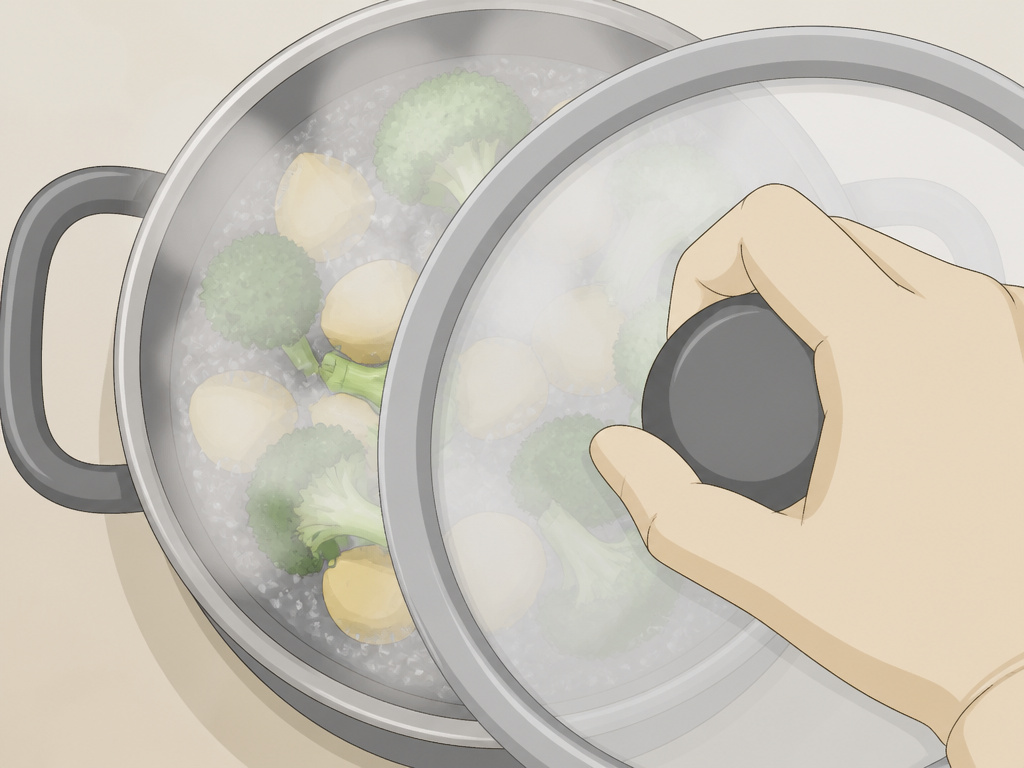
Many people call this steaming. Technically, it’s a hybrid between boiling and steaming. You add a small amount of water (about half an inch) to a pot, add the vegetables directly to the water, cover, and bring to a boil. The water boils around the food while steam also cooks it from above.
It works, but with a strict boundary. The Epicurious test found it “worked well for the broccoli” but “the potatoes ended up tasting watery.”
Why the split result? Firm vegetables like broccoli, cauliflower, and carrots have dense cell structures. They resist absorbing the surrounding water long enough for the steam to do its work. Starchy vegetables like potatoes act like sponges. They soak up the cooking liquid, becoming waterlogged and bland. The method also isn’t faster than the plate-on-foil approach, as you still wait for the water to boil.
Use this method only when you’re cooking firm vegetables and need to dirty just one pot. It’s a passable shortcut, but know the trade-off.
Common mistake: Assuming all vegetables work here. Potatoes, zucchini, and any delicate green will disappoint. You’re better off using the foil method or opting for a pressure cooker steaming function for those.
The One “Hack” You Should Skip Entirely
The internet loves the fine-mesh sieve method. The idea is to place a sieve holding vegetables over a pot of boiling water and cover it. The Epicurious test declared, “This method doesn’t work.”
Unless you have a very deep sieve with a pronounced lip and a pot it can seal against, covering the pot tightly is nearly impossible. Steam, which rises, escapes out the gaps instead of being forced through the food. Because very little steam was captured, this method took the longest. The result was water-logged vegetables, as condensation dripped from the ineffective lid back down onto the food.
It’s a failed experiment. Don’t waste your time.
How to Choose Your Method: A Decision Table
Your choice depends on what you’re cooking, how much time you have, and how the results should look. This table cuts through the guesswork.
| Method | Best For | Avoid For | Key Rule |
|---|---|---|---|
| Plate-on-Foil | Any vegetable, especially potatoes and leafy greens. | Nothing—it’s the most versatile. | Use three foil balls; ensure plate doesn’t touch water. |
| Microwave | Fast, single servings of firm veggies for dishes. | Leafy greens, presentation-focused meals. | Use exactly 1 tbsp water; cover tightly. |
| Direct-in-Pot | Firm veggies only (broccoli, carrots, cauliflower). | Potatoes, zucchini, leafy greens, anything starchy. | Use only 1/2 inch of water. |
If you find yourself using these methods often, it’s a signal. You might be ready for a tool that simplifies the process. Looking at steamer basket reviews or a recommended vegetable steamer basket is a logical next step.
What a Real Steamer Gets You (And When to Consider One)
Improvised methods solve the immediate problem. A dedicated appliance solves it every time, with less active effort. A kitchen steamer like the Tefal VC102316 or Russell Hobbs RHSTM3 provides set-and-forget convenience.
These units have integrated timers, audible alerts, and large water reservoirs. The Russell Hobbs manual states its 1.2L tank provides about 60 minutes of steaming. They also have safety features the DIY methods lack. The Russell Hobbs model has a thermostat that cuts power if the appliance boils dry, the timer keeps going, but the heating element shuts off.
They enable cooking more than just vegetables. You can steam fish, chicken, dumplings, and even reheat leftovers without drying them out. The consistent, enclosed steam environment is hard to perfectly replicate with pots and plates.
Worth knowing before you start: If you run a steamer dry, unplug it and let it cool for a couple of minutes before refilling. The cooking process doesn’t stop instantly when the water runs out, so you must account for that carry-over heat when resetting the timer.
If your improvisation leads to a new weekly habit, that’s the threshold. When steaming becomes part of your routine for healthy sides, cooking dishes to steam like salmon, or meal prepping, browsing recommended steamer pots makes economic sense.
Frequently Asked Questions
Can I use a metal colander instead of a steamer basket?
Metal colander can work if it fits snugly into a pot with a lid. The problem is most colanders are wide and shallow, leaving a large gap for steam to escape around the edges. If you have a deep, narrow colander that sits well inside a pot, it’s a better bet than a fine-mesh sieve. Still, the plate-on-foil method is more reliable.
Why did my microwave vegetables come out rubbery?
Rubbery texture means they were overcooked. Microwave power varies wildly. The 2.5-minute guideline for broccoli is a starting point for a standard 1000-watt oven. If yours is more powerful, check at 2 minutes. If less powerful, add 30-second increments. Always let them sit, covered, for a minute after microwaving, the residual steam finishes the cook.
Is it safe to put aluminum foil in a pot with boiling water?
Yes, it is chemically safe. Aluminum foil is stable at boiling water temperatures (100°C/212°F). The concern is physical stability, ensure your foil balls are tight and solid so they don’t collapse under the weight of the plate and food. Don’t use foil in a microwave.
Can I steam frozen vegetables without a basket?
Absolutely. For the plate-on-foil or direct-in-pot methods, add the frozen vegetables directly, no need to thaw. They will release water as they cook, so you might need slightly less starting water. In the microwave, place them in a bowl with one tablespoon of water, cover, and microwave. Time will be slightly longer than for fresh.
What’s the easiest way to steam eggs without a basket?
The easiest way is to use a pot with about an inch of water and a tight lid. Bring the water to a boil, then gently lower the eggs in with a spoon. Cover, reduce heat to a gentle simmer, and cook for 6-7 minutes for soft-boiled, 9-12 minutes for hard-boiled. The water should not fully cover the eggs; the steam from the boiling water will cook the tops.
Before You Go
You don’t need a specialized tool to steam food well. The plate-on-foil method is a nearly perfect substitute, the microwave is the fastest fix for one portion, and the direct-in-pot approach works in a pinch for the right vegetables. Remember the one rule that matters most: keep starchy foods like potatoes out of direct contact with water. That single mistake is the difference between creamy and waterlogged.
If you find yourself using these tricks more than once a week, it’s worth glancing at a simple steamer basket or a dedicated steamer. The convenience of a set-it-and-forget-it timer and a large capacity for steamer-friendly foods changes the equation. Until then, your pot, a plate, and three balls of foil have you covered.
