
What Is a Double Dutch Oven? Defining the Two-Pot Cookware
This post contains affiliate links. As an Amazon Associate, we earn from qualifying purchases.
A double Dutch oven is not a single pot with two chambers. It is a two-piece cookware set consisting of a deep, lidded pot and a second, shallower vessel that functions as both a skillet and the pot’s lid. This design, exemplified by brands like Lodge, transforms the lid into a standalone 10-inch frying pan or baking dish.
That definition corrects a common kitchen mix-up. The confusion usually starts when someone hears “double” and pictures an oven-within-an-oven. The real value is in the dual functionality, not double the capacity.
What follows: a breakdown of the actual design, the historical reason for the shallow lid, the specific tasks it excels at, and a direct comparison to the standard Dutch oven you already know. By the end, you’ll know exactly what this tool is, and whether it’s a redundant gadget or a space-saving workhorse for your kitchen.
Key Takeaways
- A double Dutch oven is a two-piece set: a deep pot and a shallow lid that works as a skillet.
- The design is historical, evolving from campfire cooking where the lid needed to be a useful cooking surface.
- Its primary advantage is versatility without extra storage space, you get a Dutch oven and a skillet in one footprint.
- It is not ideal for baking tall, free-form sourdough loaves because the shallow lid limits oven spring.
- For stovetop-to-oven braises, stews, and frying, it performs identically to a traditional Dutch oven.
The Core Design: Pot + Skillet/Lid
Forget any image of a partitioned pot. The anatomy of a double Dutch oven is straightforward but specific.
The base is a deep, round pot with loop handles. It typically holds 4 to 6 quarts. The critical piece is the lid. Instead of a domed cover with a steam knob, it’s a shallow, flat-bottomed pan with a small handle. This lid fits snugly onto the pot to create a sealed environment for braising or baking. Flip it over, and you have a 10-inch skillet for searing, frying, or baking cornbread.
The part nobody mentions: This shallow lid is why the set struggles with lofty bread. A standard Dutch oven’s tall, domed lid gives dough room to rise vertically into a rounded loaf. The double’s skillet-lid creates a low ceiling, which can flatten the top of your boule.
This design isn’t a modern gimmick. It comes from frontier and camp cooking, where every piece of gear had to serve multiple purposes. The lid wasn’t just a cover; it was a second burner for cooking bacon or frying eggs while the stew simmered below. Modern versions like the Lodge Double Dutch Oven keep that utilitarian spirit alive in cast iron. Enameled brands like Le Creuset and Staub offer their own takes, often with a domed, self-basting lid and a separate skillet, which is technically a different, three-piece set.
What’s the Difference Between a Standard and a Double Dutch Oven?
This is the decision point. Both tools share the same fundamental materials used, cast iron or enameled cast iron, and the same working principle of even, radiant heat. Their jobs diverge based on the shape sitting on top.
| Feature | Standard Dutch Oven | Double Dutch Oven |
|---|---|---|
| Lid Design | Domed, often with self-basting spikes; high interior clearance. | Shallow, flat skillet; low interior clearance. |
| Best For | Baking tall, round sourdough; braising large roasts; deep frying. | Braising, stews, frying; using the lid as a 10″ skillet for searing or baking. |
| Bread Baking | Excellent. High dome allows full oven spring. | Good for shorter breads or focaccia. Limits vertical rise. |
| Versatility | One superb pot. | Two pots in one: a Dutch oven and a skillet. |
| Storage Footprint | One large pot. | One pot that nests with its lid/skillet. |
The standard model is a specialist. Its high, enclosed dome is a miniature steam-injected baking chamber, perfect for the crackling crust and open crumb of a no-knead loaf. The double model is a generalist. You trade some of that specialized baking performance for a second, highly capable pan.
If your goal is primarily artisan bread, get a standard 5-quart Dutch oven. If you want a single kit that can brown chicken thighs, braise them in wine, and then serve them with cornbread baked in the same lid, the double makes a compelling case. It eliminates the need for a separate skillet, which is why it’s a favorite for campers and small-kitchen cooks.
What Do You Actually Cook in a Double Dutch Oven?
The function of a Dutch oven is to maintain a steady, moist heat. The double version does that, then adds the skillet function. Your cooking splits into two modes: pot mode and lid mode.
In pot mode, with the skillet acting as a lid, it excels at any moist-heat method: * Braising & Stewing: The heavy cast iron maintains a gentle simmer. Brown meat in the pot first, add liquid, cover with the skillet-lid, and transfer to the oven. * Boiling & Frying: Its high sides and heat retention make it a top choice for deep frying doughnuts or boiling pasta for a crowd. The wide surface of the skillet-lid is also a safe place to drain food.
Where this goes sideways: Using the shallow lid to bake a standard sourdough recipe. The dough hits the low ceiling and spreads sideways, giving you a flatter, denser loaf. For bread, treat it like a combo cooker: preheat both pieces, shape the dough into the shallow lid, and cover with the deep pot.
In lid mode, the skillet becomes your primary pan: * Searing & Sautéing: Use it to start a braise, brown your beef or chicken directly in the skillet before transferring it to the deep pot. * Baking: It’s a perfect 10-inch pan for cornbread, skillet cookies, or a frittata. * Serving: The skillet transitions straight from oven to table as a serving dish.
This workflow turns a single pot into a full meal system. You’re not just following Dutch oven recipes; you’re using one piece of cookware to execute multiple steps without washing another pan.
The Bread-Baking Compromise (And How to Beat It)
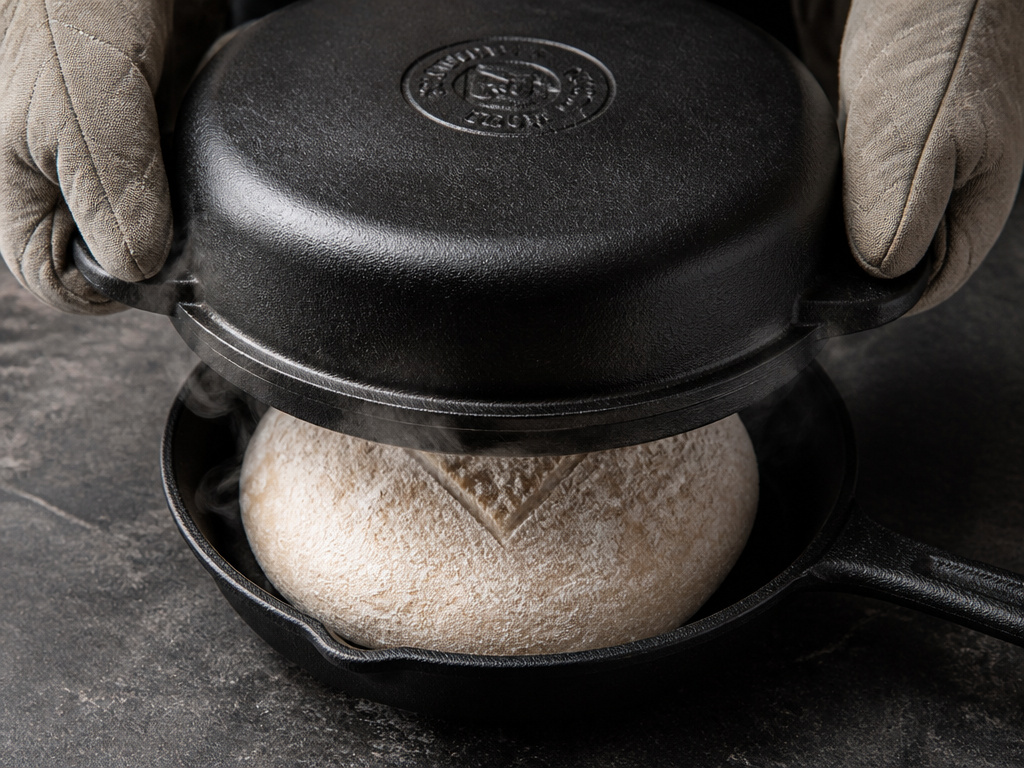
The most cited use for a Dutch oven is baking no-knead bread. For a double Dutch oven, this is its most famous compromise.
The problem is geometry. A free-form sourdough boule needs to rise upward during the first 20 minutes of baking, trapped in a steamy environment. A standard pot’s domed lid provides 4-5 inches of headroom. The double’s skillet-lid might offer only 2 inches. The dough expands until it hits the hot metal, then it can only grow outward, resulting in a wider, flatter loaf.
You have two paths forward.
First, adjust your expectations. The double Dutch oven bakes excellent, crusty bread, it just won’t be the tall, Instagram-worthy boule. It’s fantastic for shorter loaves, focaccia, or even baking two smaller rolls at once.
Second, flip the script. Don’t bake with the skillet as the lid; use it as the base. This is the “combo cooker” method: 1. Place both the deep pot and the shallow skillet in your oven during preheat (450°F). 2. Carefully remove them. Shape your proved dough directly into the hot skillet. 3. Score the dough, then immediately cover it with the inverted deep pot. 4. Bake covered for 25 minutes, then remove the top pot and bake uncovered for another 15-20 minutes.
This uses the deep pot as the dome, giving the dough the vertical space it needs. It works. It just requires handling two extremely hot pieces of cast iron instead of one.
Double Dutch Oven vs. Combo Cooker vs. “French Oven”
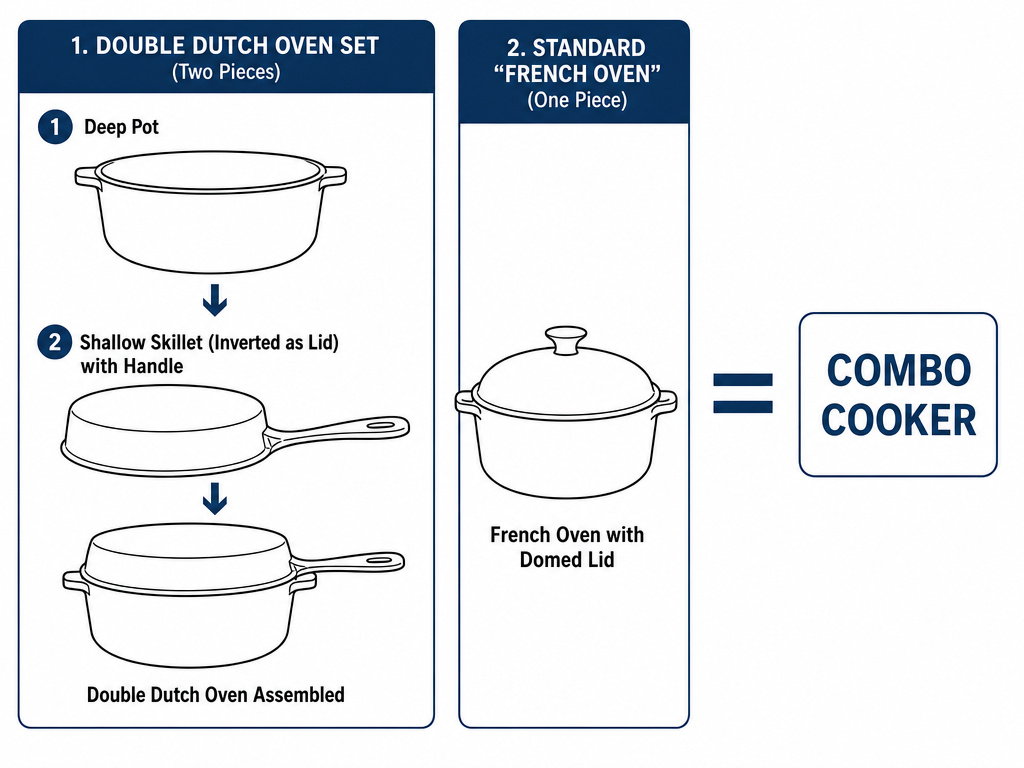
The naming here is a minefield. Let’s clear it.
A Double Dutch Oven specifically refers to the two-piece set with the skillet-lid, like the Lodge model. A Combo Cooker is essentially the same thing, a deep pot and a shallow pan that doubles as a lid. The terms are often used interchangeably.
A “French Oven” is a marketing term used by brands like Le Creuset and Staub for their enameled cast iron Dutch ovens. It usually denotes a standard, domed-lid pot, not a double set. However, these brands sometimes sell “Dutch oven and skillet sets,” which include a standard Dutch oven plus a separate skillet, a three-piece kit. This is different from the true two-piece double design.
The simplest way to identify a true double is to look at the lid. If it’s a shallow pan with a handle, it’s a double. If it’s a domed lid with a knob, it’s a standard pot, regardless of what the box calls it.
Is a Double Dutch Oven Right for Your Kitchen?
This isn’t a question of better or worse. It’s about matching the tool to your cooking patterns and kitchen real estate.
Choose a double Dutch oven if: * You have limited cabinet or stove space and value multi-function gear. * You frequently cook dishes that start with searing and end with braising. * You enjoy camp-style or one-pot cooking and will use the skillet lid regularly. * You bake bread, but you’re content with shorter, crusty loaves or are willing to use the combo-cooker method.
Stick with a standard Dutch oven if: * Your primary goal is baking tall, artisanal sourdough bread. * You already own a good 10 or 12-inch skillet and don’t need a duplicate. * You prefer dedicated tools that excel at one job.
For most home cooks building a foundational kit, a standard 5 to 7-quart Dutch oven is the more versatile single piece. But for the cook who lives in a small apartment, loves historical cookware, or genuinely needs that built-in skillet, the double is a clever, space-efficient solution that’s far more than a marketing myth.
Frequently Asked Questions
Can you use a double Dutch oven on a glass stovetop?
Yes, but with caution. Cast iron is heavy and can scratch or, in rare cases, crack a glass surface if dragged. Always lift it to move it. Enameled cast iron models have a smoother bottom and are slightly gentler. Check your stove manufacturer’s guidelines.
Is the skillet lid oven safe?
Absolutely. The entire set is designed for use on the stove and in the oven. The skillet lid, like the pot, is made of cast iron, which is oven safe to very high temperatures. The small handle will get hot, so always use a dry oven mitt.
What size double Dutch oven is best?
5-quart size is the most versatile for families of 2-4. It’s large enough for a pot of stew or a small roast but not so massive it’s unwieldy. The accompanying skillet lid is usually 10 inches in diameter, a perfect size for most tasks.
Can it be a substitute for a regular Dutch oven?
For braising, stewing, and frying, it is a direct substitute. For baking tall bread, it is a compromise. For everything else, it’s actually a upgrade because it includes a skillet. It’s less of a Dutch oven substitute and more of a Dutch oven-plus.
How do you clean and season a cast iron double Dutch oven?
Treat it like any cast iron. For seasoned models (like Lodge), wash with hot water and a stiff brush, dry thoroughly, and apply a thin coat of oil. For enameled models, avoid metal scrubbers and abrasive cleaners. The skillet lid requires the same care as the pot.
Before You Go
A double Dutch oven solves a specific problem: how to get a braiser and a skillet without claiming two large spots in your cabinet. Its design is a lesson in pragmatic, multi-purpose cooking, not a trick.
If you bake weekly sourdough, get a standard pot. If you want a single, heavy-duty kit that can handle a weeknight chili and Saturday morning pancakes, the double deserves a look. Just know what you’re buying, a brilliant two-tool set that redefines “lid” as the most useful part of the pot.
