
Discover What to Line a Bamboo Steamer With to Prevent Sticking
This post contains affiliate links. As an Amazon Associate, we earn from qualifying purchases.
Line a bamboo steamer with a porous material that allows steam to circulate. The four proven options are perforated parchment paper, large napa cabbage or lettuce leaves, a reusable cloth liner (like muslin), or a food-grade silicone mat with holes. Never use wax paper, aluminum foil, or non-porous plastic, they block steam, cause sogginess, and promote mold inside the bamboo weave within days.
That shortlist covers the basics, but the real difference between a good steam and a ruined one comes down to physics. Steam needs to move. A liner that blocks it turns your steamer into a sealed box where condensation pools, food steams unevenly, and trapped moisture invites mold into the bamboo’s cellulose fibers.
What follows is a breakdown of why porosity isn’t just a suggestion, it’s the rule. We’ll match each liner to specific foods, walk through a foolproof lining method, and highlight the one mistake that shortens a steamer’s life by half.
Key Takeaways
- Parchment paper must be perforated. Solid parchment blocks steam and creates a soggy mess; punch small holes every inch before use.
- Napa cabbage is the disposable pro choice. Its wide, flexible leaves conform to the basket, add a subtle flavor, and compost completely.
- Reusable cloth liners need a strict drying ritual. Wash, then air-dry flat for two full days before storage to prevent mildew in the fabric and the bamboo.
- Never soak or dishwasher-clean a bamboo steamer. Immersion swells the wood, causing permanent micro-cracks where bacteria and mold spores take root.
- Steaming directly in a heatproof bowl eliminates the need for a liner altogether, a perfect solution for saucy dishes or marinated meats.
The Science of Steam Circulation (Why Porous Wins)
A bamboo steamer works because steam rises from the boiling water below, passes through the open weave of the basket’s base, and circulates around the food before exiting through gaps in the lid. This constant flow of hot, moist air cooks food evenly and prevents condensation from dripping back down.
A liner’s only job is to keep food from sticking to the bamboo lattice. Its secondary, critical job is to get out of the way of the steam. Any material that blocks upward vapor flow creates a dead zone of stagnant, cooler air directly under the food.
That dead zone is where problems start. The temperature differential causes excessive condensation on the underside of the liner. Food steams in its own runoff, becoming soggy on the bottom. Meanwhile, the blocked steam has nowhere to go but sideways, leading to uneven cooking, the edges of the basket get cooked while the center lags.
The worst outcome is for the bamboo itself. Trapped moisture against the warm, organic material of the basket is an invitation for microbial growth. According to material specifications for food-grade bamboo, prolonged exposure to standing moisture without airflow is the primary cause of mold and structural degradation.
The short version: If the liner doesn’t breathe, the food won’t cook right, and the steamer won’t last.
The 4 Best Bamboo Steamer Liners (And Why Each Works)
Your choice depends on what you’re steaming, how often you steam, and whether you prefer disposable or reusable options. This table breaks down the core trade-offs.
| Liner Type | Best For | Key Advantage | Risk If You Skip This |
|---|---|---|---|
| Perforated Parchment | Dumplings, buns, buns | Neutral flavor, cheap, disposable | Solid parchment blocks steam; food gets soggy |
| Napa Cabbage Leaves | Sticky buns, savory dumplings | Adds subtle flavor, 100% compostable, conforms to shape | Wilts quickly; not suitable for sweet items |
| Reusable Cloth (Muslin) | Frequent users, all foods | Most sustainable, excellent steam flow | Must be bone-dry before storage or it molds |
| Food-Grade Silicone Mat | Modern kitchens, easy cleanup | Non-stick, dishwasher safe, durable | Must have holes; solid mats fail like parchment |
1. Perforated Parchment Paper
This is the most accessible and consistent liner. You must buy pre-perforated sheets or punch your own holes. A solid sheet of baking parchment is a barrier, steam condenses against it and drips back.
- How to prepare: If your parchment isn’t pre-perforated, use a skewer or hole punch to make small holes every inch or so across the entire sheet.
- The why-layer: The holes create dedicated channels for steam jets to pass through. This maintains the convective current while still providing a physical barrier between sticky dough and the bamboo.
- Named product: You can find pre-cut round perforated parchment steamer liners online. They’re convenient, but a DIY sheet works just as well.
2. Napa Cabbage or Large Lettuce Leaves
This is the traditional, zero-waste method. A large, soft leaf from a napa cabbage or head of lettuce lays flat against the bamboo weave.
- How to prepare: Select whole, unblemished leaves. Rinse and pat them dry. You can layer two leaves if one seems too thin.
- The why-layer: Plant leaves are naturally porous at a cellular level. They allow vapor transmission while their waxy cuticle provides a non-stick surface. As they steam, they release a faint, savory sweetness that can enhance dumplings or buns.
- Best match: Use this for savory items like pork buns or vegetable dumplings. The flavor can clash with sweet red bean buns.
3. Reusable Cloth Liners (Muslin or Cheesecloth)
A thin, natural-fabric cloth is the choice for anyone who steams regularly. It offers unparalleled steam circulation and washes clean.
- How to prepare: Cut a circle of undyed muslin or a double layer of cheesecloth slightly larger than your basket. Wash it before first use.
- The critical step: After washing, you must let the liner air-dry completely, flat, for at least two days, before folding it away. Storing it damp guarantees mildew.
- The why-layer: The loose weave of muslin or cheesecloth presents minimal resistance to steam flow. It also wicks away minimal condensation from the food’s surface, promoting a slightly drier, more textured finish on bun bottoms.
4. Food-Grade Silicone Mats
Modern silicone steamer liners are perforated mats designed to fit specific basket sizes. They are the easiest to clean.
- How to prepare: Ensure the mat is labeled food-grade silicone and is perforated. Simply place it in the clean, dry basket.
- The why-layer: Silicone is inherently non-stick and hydrophobic, so condensation beads up and rolls off rather than soaking in. The manufactured holes are uniform, providing consistent steam distribution. Their thermal stability means they won’t degrade like parchment or cloth over time.
- Named product: Look for a PINEPOEM reusable silicone steamer liner or equivalent. Avoid any solid silicone baking mat, it lacks the necessary holes.
What NOT to Use: The Quick-Ruin Liners
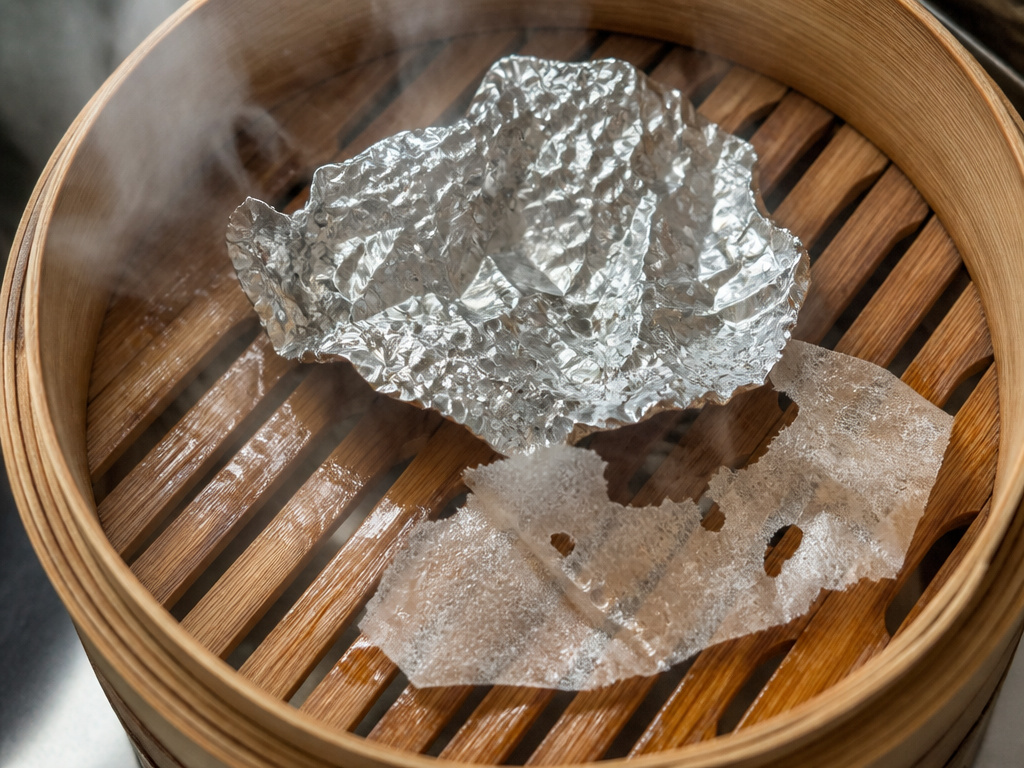 Some materials seem logical but will damage your food or your steamer. Here’s the short list of banned liners.
Common mistake: Using wax paper or aluminum foil. Wax paper coatings melt at 120°C, fusing to the bamboo. Aluminum foil blocks all steam, reflecting heat and creating a hot, dry pocket that scorches dough on contact while leaving the center raw.
- Wax Paper: The wax coating melts in the steam, creating a gummy, inedible residue that bonds to the bamboo. It is nearly impossible to scrub off.
- Aluminum Foil: It’s a complete steam barrier. It also reacts with acidic foods (like some fillings), which can impart a metallic taste.
- Non-Porous Plastic (e.g., plastic wrap): Will melt and potentially release chemicals. Even “heat-safe” varieties block steam.
- Paper Towels or Newspaper: These can tear when wet, leave fibers on your food, and may contain inks or chemicals not intended for food contact.
Using any of these even once can force a deep, intensive cleaning of your bamboo steamer to salvage it.
Step-by-Step Lining Guide (For Any Material)
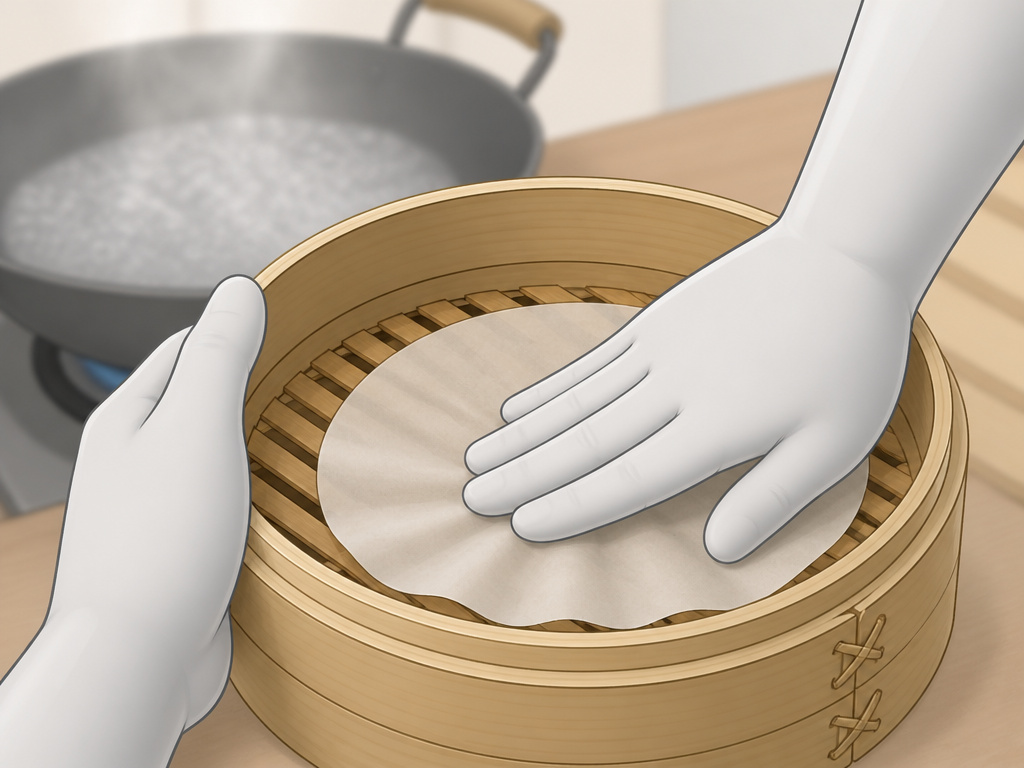 The process is simple, but each step has a purpose. Rushing leads to stuck food or a tilted lid.
- Select your liner. Match it to your food (see table above). Have it ready, cut to a rough circle slightly larger than your basket.
- Prepare your steaming vessel. Place your empty bamboo steamer over a wok or pot. Add water until it sits about a half-inch below the bottom rim of the steamer basket. This prevents the bamboo from boiling.
- Place the liner. Lay your chosen liner inside the basket. Gently press it down so it conforms to the curved bottom. If using parchment or cloth, it’s okay if the edges curl up the sides a little.
- Add your food. Arrange items leaving space between them. Steam needs room to circulate around each piece.
- Stack and cover. If using multiple tiers, stack the next basket. Always place the lid on the steamer basket to trap the steam. The domed shape of a bamboo lid helps condensation roll down the sides instead of dripping onto your food.
Edge Cases & Pro Tricks
Sometimes, the best liner is no liner at all. And sometimes, the steamer itself can be more than a stack of baskets.
Steaming in a Bowl or Plate
When you’re steaming marinated meats, fish with sauce, or custards, skip the basket liner entirely. Place the food in a shallow, heatproof bowl or rimmed plate, and set that directly inside the steamer basket.
- Why it works: The bowl contains the juices. Since the food isn’t touching the bamboo, sticking is impossible. Just ensure the bowl is small enough that steam can still rise up around its sides.
The Dual-Use Lid
An interesting note from industry material guides: the domed lid of a quality steamer can function as a shallow steaming tray for delicate items like herbs.
- The method: Line the inverted lid with perforated parchment. Add a centimeter of water and your herbs. Rest this “lid-tray” on top of a regular steaming basket. The indirect, very gentle heat from the steam below preserves volatile oils better than direct boiling.
Caring for a New Steamer
A brand-new bamboo steamer basket needs a one-time prep. Soak only the bottom rim, the part that will contact your wok, in water for 30 minutes before its first use.
- The consequence: This prevents the dry bamboo from scorching on direct contact with the hot metal pan. Never soak the entire steamer.
How to Know When Your Steamer (or Liner) Needs Replacing
Bamboo is a natural material. It doesn’t last forever, and a damaged steamer is a hygiene risk. Watch for these signs.
| Sign | What It Means | Action |
|---|---|---|
| Visible cracks (>0.1mm wide) | Cellulose fibers have split; bacteria can embed in fissures. | Replace the tier. Cracks cannot be sanitized. |
| Persistent musty or sour odor | Mold or mildew has colonized the bamboo matrix, even after cleaning. | Compost the steamer (if no silicone gaskets). |
| Warped base ring | The base no longer sits flat, causing rocking and uneven steaming. | Replace. Warping indicates structural failure from excess heat or moisture. |
| Mold spots on a cloth liner | Mildew has taken hold in the fabric fibers. | Discard the liner. Bleach may not remove all spores. |
A high-quality bamboo steamer set from a reputable brand, made from properly aged Moso bamboo, will resist these issues far longer than a cheap, kiln-dried composite model.
Frequently Asked Questions
Can I use my bamboo steamer in an electric steamer or rice cooker?
It’s not recommended. Most electric steamers cycle at higher temperatures (105–110°C) with pressure spikes that exceed bamboo’s thermal tolerance. This causes warping and cracking in fewer than ten uses. Bamboo is designed for the gentler, atmospheric steam of a stovetop wok or pot.
Do I need to line every tier of a stacked steamer?
Yes, if food is placed directly on the bamboo in that tier. Each basket’s floor needs its own liner. If you’re steaming items in bowls, only the bottom tier (where the bowl sits) needs consideration to protect the bamboo from spills.
What’s the best way to clean the steamer after using a sticky liner?
Wash immediately with a soft sponge, mild dish soap, and warm water. Rinse thoroughly. Never let sugary or starchy residues dry on the bamboo. Then, let it air-dry completely in a well-ventilated area, this takes at least two days. Never put it in a dishwasher or soak it in the sink.
Are bamboo steamers better than metal ones?
They serve different purposes. A bamboo steamer provides gentle, even heat that’s ideal for delicate doughs like buns and dumplings, and its lid prevents condensation drip. A metal steamer basket is better for firmer vegetables and is often dishwasher-safe. For specific tasks like cooking dumplings, bamboo is the traditional and often superior tool.
Can I make a liner out of banana or lotus leaves?
Absolutely. Large, pliable leaves like banana or lotus are traditional porous liners used across many cuisines. They impart a unique, aromatic flavor. Treat them like cabbage leaves: rinse, pat dry, and use whole. They are a fantastic choice for special occasions or authentic recipe preparation.
The Bottom Line
Your liner choice directly controls the texture of your food and the lifespan of your steamer. Perforated parchment is the reliable all-rounder, napa cabbage is the flavorful traditionalist, and a reusable cloth is the sustainable workhorse. Remember the single rule: the liner must let steam pass through.
For everyday home cooking, a pack of parchment paper and a head of cabbage will handle 95% of your steaming jobs. If you steam weekly, invest in a good set of cloth liners and commit to their drying ritual. And the next time you make saucy ribs or a custard, just reach for a bowl, the simplest liner is sometimes no liner at all.
