
What to Make on a Griddle | 25+ Recipes Beyond Burgers
This post contains affiliate links. As an Amazon Associate, we earn from qualifying purchases.
You can make virtually anything on a griddle that you’d cook in a skillet or on a grill, but its real power is cooking multiple components of a meal simultaneously. The large, flat surface turns it into a one-stop station for breakfast platters, fajita nights, smash burgers, stir-fries, and even desserts like French toast or pineapple rings.
That surface area is the whole game. A griddle isn’t a single-pan tool; it’s a kitchen command center. You manage different zones of heat—a hotter side for searing meat, a medium zone for vegetables, a lower corner for keeping things warm. This changes how you plan a meal, moving from sequential cooking in pots and pans to parallel cooking on one slab of steel.
What follows is a categorized list of 25+ things to make on a griddle, from morning staples to late-night snacks, paired with the specific heat settings and techniques that make each one work. By the end, you’ll see your griddle not as a burger press, but as the most versatile flat-top in your kitchen.
Key Takeaways
- A griddle’s primary advantage is simultaneous cooking—cook your bacon, eggs, and pancakes in separate zones at the same time.
- Temperature control is zoning. You don’t have one setting; you manage a hot sear zone (375–400°F), a medium cook zone (325–350°F), and a warm zone (200–250°F).
- The first thing you should cook is bacon or onions. Their rendered fat provides a natural, non-stick base for everything that follows and helps build the seasoning layer.
- Smash burgers outperform traditional patties on a griddle because the direct, even contact creates a superior crust while the fat renders efficiently into the grease channel.
- Clean and re-season immediately after cooking acidic foods like tomatoes or citrus. The acid can strip the seasoning if left sitting, leading to rust spots within 24 hours.
Why a Griddle Beats Skillets for Family Meals
Do you cook for more than one person? That’s the threshold where a griddle leaves skillets behind. In a skillet, you cook in batches. On a griddle, you cook in parallel. Six pancakes, eight strips of bacon, and a scramble of eggs can happen at the same time, on the same surface, finishing together.
The mechanics are simple. A 1-inch thick steel or cast iron plate, like the one on the WebstaurantStore 351GCPG36M electric griddle, stores massive thermal mass. When you drop cold food on it, the temperature barely dips. This means consistent heat for every item, no cold spots. The fully welded grease trough channels fat away, so you’re not frying your food in its own grease unless you want to.
Where this goes sideways: Crowding the entire surface with one type of food. You lose your temperature zones. Always leave a quarter of the griddle empty as a staging or warming area. It keeps the workflow moving.
This parallel cooking capability reframes meal prep. A fajita night isn’t a juggling act with three pans. You sear steak strips on the hot zone, soften peppers and onions on the medium zone, and warm tortillas on the low corner. Everything hits the table hot.
What’s the Best Thing to Cook First on a Griddle?
Season bacon or sliced onions. This isn’t just about the food; it’s about building your griddle’s non-stick personality.
A new griddle surface, even if pre-seasoned, is sterile. Cooking something fatty first deposits a polymerized oil layer—the foundation of seasoning. Bacon is perfect because it self-renders. Onions work too; their sugars caramelize and bond to the metal. The fat from this first cook gets worked into the microscopic pores of the steel.
I learned this the hard way with a Waring Commercial WGR240X. I was impatient and went straight for pancakes. The first one stuck, tore, and left a gummy residue. I had to cool the whole unit, scrub it back, and start over with the proper 1 to 1.5-hour seasoning process outlined in the manual. That lost morning taught me to always begin with fat.
The First-Cook Rule of Thumb
Cook something fatty and simple for your first three meals. Bacon, sausage patties, or grilled cheese. Avoid anything sugary (pancake batter) or acidic (tomatoes) until that base layer is established. The sugar burns onto bare metal, and the acid can etch it.
Griddle Breakfast Classics (The No-Wait Spread)
This is where a griddle earns its counter space. You can produce a full diner-style breakfast for a crowd without a single waiting plate.
| Food | Target Griddle Temp | Key Technique | Why It Works on a Griddle |
|---|---|---|---|
| Pancakes | 325–350°F | Pour batter, flip when bubbles pop and edges look dry. | Consistent heat means even browning; cook 6-8 at once. |
| Bacon | 375–400°F | Start cold, render fat, flip once crisp. | Fat renders into the channel, so bacon fries in its own fat without stewing. |
| Eggs (Fried) | 300–325°F | Crack directly onto the surface, no ring needed. | The flat surface lets you fry multiple eggs side-by-side with perfect runny yolks. |
| Hash Browns | 350–375°F | Press shredded potatoes into a thin, even layer. | Maximum surface contact creates an all-over crispy crust you can’t get in a skillet. |
| French Toast | 325°F | Soak bread thoroughly, cook until golden brown. | Cooks evenly without the custard pooling in a pan’s center. |
The process: Start the bacon on the hotter left side. As it renders, move it to a warmer zone. Use the bacon fat to cook your hash browns in the center. On the right side, at a lower temp, pour your pancake batter and fry your eggs. Everything finishes within a 5-minute window.
For perfect pancakes, the ideal griddle heat is just below the point where a drop of water sizzles violently. 350°F is the sweet spot. Any hotter and the outside burns before the inside cooks; any cooler and they turn pale and doughy.
Lunch & Dinner Winners (Beyond the Burger)
 Move past the basic patty. A griddle is a flat-top grill, a plancha, and a giant sauté pan all in one.
Smash Burgers: This is the griddle’s signature dish. Form loose balls of 80/20 beef. Place them on a 400°F surface and immediately press down hard with a sturdy spatula. The direct contact creates a caramelized crust (the Maillard reaction) that locks in juices. The thin patty cooks in 90 seconds.
Fajitas & Stir-Fries: The high, even heat is perfect for the sear-and-toss method. Cook your protein (chicken, steak, shrimp) on the hottest zone until seared, then push it to the side. Add your vegetables to the center. The residual fat and high heat create a professional “wok hei” effect without a round-bottom wok.
Grilled Sandwiches: Forget the panini press. Butter the outside of your bread and cook it directly on a 350°F surface. Use a griddle spatula or a bacon press to weigh it down for even contact. The entire surface toasts uniformly, melting the cheese perfectly inside.
Quesadillas: Place a tortilla on medium heat, add cheese and fillings, top with a second tortilla. Flip once the bottom is golden. The wide surface lets you cook two large quesadillas at once, something impossible in a standard skillet.
Common mistake: Adding wet marinades directly to the hot surface. The liquid pools, steams the food, and prevents a sear. Always pat your fajita meat or stir-fry protein completely dry before it hits the griddle. The sizzle should be immediate, not a splatter.
Vegetables & Sides That Shine
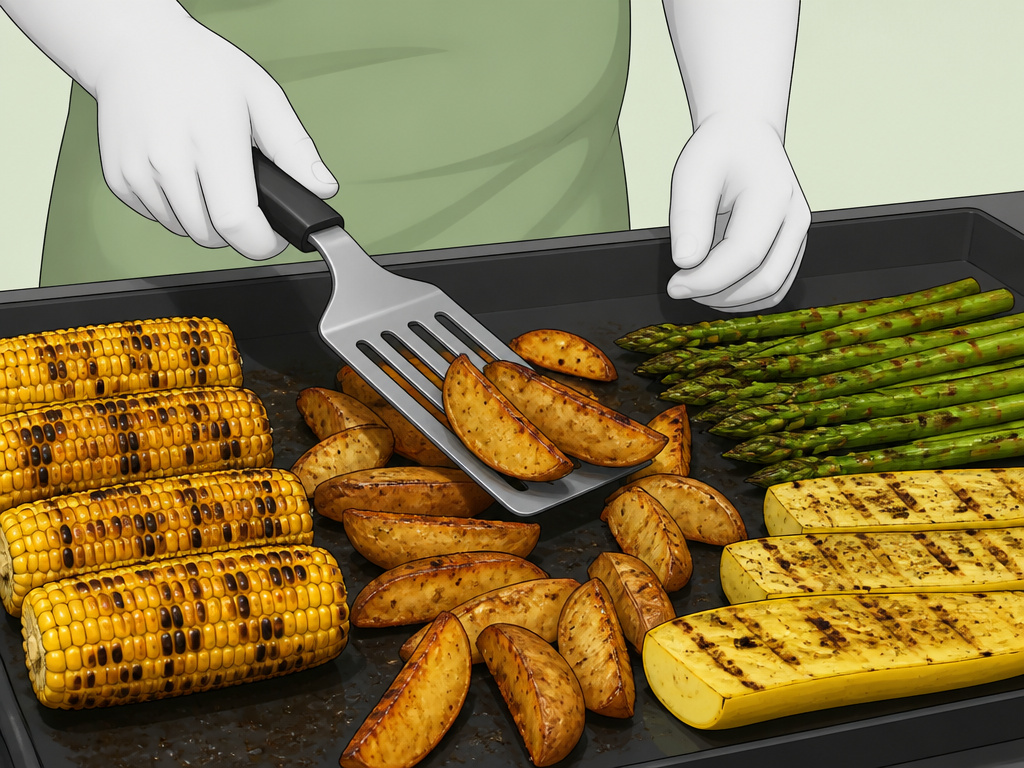 Vegetables benefit from direct contact and high heat, which caramelizes their natural sugars.
- Asparagus & Green Beans: Toss in oil, salt, and pepper. Cook on a 375°F zone for 4-5 minutes, turning occasionally. You get blistered spots and a tender-crisp interior.
- Zucchini & Summer Squash: Slice lengthwise into planks. Grill on a medium-high zone for 3-4 minutes per side. The flat surface gives you beautiful grill marks without the pieces falling through grates.
- Corn on the Cob: Roll shucked ears in oil and place directly on a 400°F surface. Turn every 2-3 minutes for about 10 minutes total. You get a charred, smoky flavor without boiling away the sweetness.
- Home Fries & Potato Wedges: Parboil potatoes first, then rough them up in a bowl. Cook in a thin layer of oil on a 375°F zone until crispy on all sides. The griddle’s space lets you cook enough for four people in one batch.
The why-layer here is surface area and evaporation. In a crowded skillet, vegetables steam in their own released moisture. On a griddle, the moisture instantly evaporates due to the large hot surface, promoting browning instead of boiling.
Surprising Griddle Desserts & Snacks
Your griddle isn’t off-duty after dinner. It’s excellent for quick, caramelized sweets.
- Grilled Fruit: Halve peaches, nectarines, or pineapple rings. Brush with a little honey or maple syrup. Cook on a medium-low (300°F) zone for 2-3 minutes per side until caramelized. Serve with ice cream.
- S’mores: Place graham crackers on a cool corner. Toast marshmallows on a low heat zone (250°F), turning frequently. The controlled heat prevents instant burning.
- Cinnamon-Sugar Tortillas: Brush flour tortillas with melted butter, sprinkle with cinnamon sugar. Cook on a 325°F surface for about 60 seconds per side until crisp. Cut into wedges.
These work because the griddle provides gentle, diffuse heat perfect for melting sugar without scorching it. You have more control than over an open flame.
The Tools You Actually Need
You can’t manage a griddle with flimsy kitchen tools. You need implements designed for scraping, flipping, and containing the workspace.
The absolute essentials are a heavy-duty stainless steel griddle spatula (often called a turner) and a good griddle scraper. The spatula needs a thin, stiff front edge to get under food without tearing it. The scraper is for cleanup—a sharp, angled blade to remove carbonized debris after the griddle cools slightly.
A squeeze bottle for water is a pro trick. A few drops of water on a hot spot instantly flash to steam, helping to release stuck-on bits during cooking. For managing ingredients, a set of small stainless steel bowls for mise en place is more useful than any single-purpose gadget.
You can find these sold individually or in complete griddle tool sets. Avoid sets with plastic components; they will melt near the high heat. Look for all-metal construction or heat-resistant silicone handles.
How to Keep Your Griddle in Fighting Shape
What you do after cooking determines your griddle’s lifespan and performance for the next meal.
Cleaning: Never pour cold water on a hot griddle—it can warp the steel plate. Let it cool to around 200°F (warm to the touch). Then, use your griddle scraper to remove large debris. Pour a little water or a vinegar-water solution (as specified in the DCS manual) onto the surface. It will sizzle and loosen residue. Scrape again, then wipe clean with a damp cloth. Finally, apply a very thin coat of oil to protect the surface.
Seasoning: This isn’t a one-time task. Seasoning your griddle is ongoing maintenance. Every few uses, or after cooking something acidic, heat the clean, oiled griddle to 400°F for 20 minutes, then let it cool. This bakes the oil into a hard, non-stick polymer layer. A well-seasoned griddle should look dark and glossy, not dry or patchy.
Easy to miss: The grease channel and drip tray. If you don’t empty and clean the drip tray after every use, old grease will rancidify. You’ll smell it the next time you heat the griddle, and that flavor can transfer to your food.
The Bottom Line: Your griddle is a kitchen workhorse that rewards parallel cooking and proper upkeep. Start with fatty foods to build its seasoning, use zoning to cook entire meals at once, and clean it while it’s still warm. Whether you own a massive commercial unit or a countertop model, this approach turns it from a single-use appliance into your most reliable cooking partner.
Frequently Asked Questions
What are the best foods for a beginner to try first on a griddle?
Start with high-fat items like bacon or sausage. The rendered fat creates a natural non-stick surface for your next items, such as eggs or hash browns. This process also helps build the griddle’s seasoning layer, making future cooking easier and improving flavor.
Can I really cook an entire dinner on a griddle at once?
Absolutely. The key is utilizing heat zones. Sear proteins on a high-heat section, sauté vegetables on a medium zone, and keep cooked items warm on a low corner. This method allows you to prepare all components of dishes like steak and peppers or teriyaki bowls simultaneously.
How do I prevent everything from tasting the same when cooked together?
Strategic ordering and cleaning zones prevent flavor transfer. Cook milder items like pancakes first or in a dedicated clean zone. For savory meals, cook aromatic ingredients like onions last or use a scraper to create a clean area for items you don’t want to absorb other flavors.
Is a griddle only suitable for savory breakfast and lunch foods?
Not at all. A griddle is excellent for desserts and sweet breakfasts. You can cook French toast, caramelize fruit like pineapple or peach halves, or even bake simple griddle cakes and cookies using consistent, even heat that’s hard to achieve in a standard oven.
