
What’s the Difference Between a Skillet and a Frying Pan?
This post contains affiliate links. As an Amazon Associate, we earn from qualifying purchases.
The difference between a skillet and a frying pan is a naming convention, not a functional one. They are the same tool: a flat-bottomed pan with sloped sides and a long handle, designed for high-heat cooking like searing, frying, and sautéing. Any distinction comes down to regional dialect, brand marketing, or a specific material association, like “skillet” for cast iron.
That answer settles the semantic debate. The real question isn’t about the name. It’s about what the pan is built to do, and for how long.
Manufacturer manuals cut through the noise. Sunbeam’s guide for its FP8950 Frypan and SK6450 Skillet, for example, lists identical construction and a 25-year guarantee on the 18/10 stainless steel vessel for both. The manual also specifies the one task these pans are not built for: deep frying, due to shallow sides that cause heat loss and oil overflow. That’s a concrete, sourced fact about capability, not a vague label.
What follows breaks down why the names persist, how material choice creates real differences that get mistaken for pan types, and a straightforward method for picking the right pan based on your stove, your recipes, and the food you actually cook.
Key Takeaways
- Skillet and frying pan refer to the same pan shape. The confusion stems from regional language (Southern U.S. Prefers “skillet”) and material associations (“skillet” often implies cast iron).
- The material, not the name, dictates performance. A cast iron skillet, a carbon steel frying pan, and a stainless steel fry pan will cook differently due to heat retention, weight, and reactivity.
- Straight-sided sauté pans are a different tool. They have vertical walls and often a lid, designed for cooking with more liquid or volume without spilling.
- Check the manufacturer’s specs for real limits. Some “skillets” or “fry pans” have warranties that reveal their intended use and durability, like Sunbeam’s 25-year guarantee on stainless steel.
- Your cooktop decides your best material. Induction tops need magnetic stainless steel or cast iron; gas burners work with anything but excel with responsive carbon steel.
The Short Answer: Functionally, No. Culturally, Sometimes.
Open a drawer in a professional kitchen and ask for a skillet. You’ll get the same pan as if you’d asked for a frying pan. Both have a flat bottom, sloped sides, and a single long handle. This design is for high-heat, dry-cooking techniques where you need to flip food easily and let steam escape quickly.
A sauté pan has straight sides, giving you more flat surface in direct contact with the heat. A skillet or fry pan has sloping sides. The diameters may be the same, but how much they can brown and cook effectively differs. This insight from a Splendid Table cookware guide frames the real divide: it’s between sloped sides (skillet/fry pan) and straight sides (sauté pan), not between the two slope-sided names.
Where did the two names come from? It’s mostly regional dialect. In the Southern United States, “skillet” is the dominant term. In the UK and elsewhere, “frying pan” is standard. Some brands and older cooks also use “skillet” to specifically mean a cast iron pan, while “frying pan” might imply a modern nonstick or stainless version. This is a cultural shorthand, not a technical specification.
The One Difference That Actually Matters
Forget the label on the box. The material the pan is made from changes everything about how it cooks, cleans, and lasts. When people argue about skillets versus frying pans, they’re usually accidentally arguing about cast iron versus nonstick.
| Material | Best For | Heat Response | The Catch |
|---|---|---|---|
| Cast Iron | Searing, baking, deep frying, slow simmering. | Slow to heat, excellent retention. | Very heavy. Requires seasoning a frying pan to build a nonstick layer. |
| Carbon Steel | Searing, stir-frying, tasks needing quick temperature changes. | Heats and cools almost as fast as thin aluminum. | Prone to rust if not dried thoroughly. Also needs seasoning. |
| Tri-Ply Stainless | Developing fond for pan sauces, browning, oven-to-stovetop cooking. | Even heating, responsive on multi-ply designs. | Food sticks without adequate preheating and fat. |
| Hard-Anodized Nonstick | Low-fat cooking, eggs, fish, delicate foods that tear easily. | Fast, even heating on aluminum core. | Coating degrades over 3-5 years. Never use metal utensils. |
A carbon steel frying pan gives you the searing power of cast iron at half the weight. A tri-ply stainless pan, like the All-Clad D3, is your go-to for building a sauce from the browned bits left after searing meat. The material is the engine; the sloped-sided shape is just the chassis.
Where this goes sideways: Assuming a “skillet” is always oven-safe. Many nonstick frying pans have plastic or rubberized handles that melt above 350°F (175°C). Cast iron and stainless steel handles can typically handle much higher temperatures. Check the product specs before you broil.
How to Choose Your Pan (Ignore the Name)
Stop looking for the “right” term. Start matching a pan’s physical properties to your kitchen and your cooking habits. This three-step filter works every time.
First, match the pan to your cooktop.
- Induction: You need a magnetic base. That means cast iron, carbon steel, or magnetic stainless steel. Most aluminum or copper-core pans won’t work unless they have a magnetic stainless layer.
- Electric Coil or Ceramic Glass: Almost any material works. Warping is a risk with very thin, cheap pans on high heat.
- Gas: You have the most flexibility. Cast iron, carbon steel, and stainless all perform beautifully. Gas allows for precise, immediate heat adjustment that thin, responsive pan materials like carbon steel excel with.
Second, match the pan to your primary use.
Answer these two questions: 1. What do you cook most often? 2. What is your biggest cooking frustration?
- “I cook eggs, pancakes, and fish.” Get a good nonstick frying pan. It’s the right tool for delicate, low-fat cooking. Accept that it’s a consumable item with a 5-year lifespan.
- “I want a crust on my steak and to make a pan sauce.” Get a tri-ply stainless steel fry pan. Its ability to create fond (the flavorful browned bits) is unmatched. The learning curve is preheating the pan properly and using enough fat.
- “I want one pan that can sear, bake cornbread, and go camping.” Get a cast iron skillet. It’s the ultimate durable, versatile workhorse. The trade-off is its significant weight and maintenance routine.
Third, get the size right.
A pan that’s too small crowds food and steams it instead of browning it. One that’s too large is unwieldy and wastes energy. For a primary pan, a 10-inch or 12-inch diameter is the standard workhorse.
- 8-inch: Solo meals, single grilled cheese, small omelets.
- 10-inch: The versatile default for 2-4 people. Fits two chicken breasts or four burger patties comfortably.
- 12-inch: Family cooking, large stir-fries, searing multiple steaks. Requires a powerful burner to heat evenly.
Our guide on frying pan sizes has a full breakdown, but for most households, starting with a 10-inch and a 12-inch covers every scenario.
Skillet vs. Sauté Pan: This is the Real Comparison

The meaningful comparison isn’t between two synonyms. It’s between the sloped-side pan (skillet/fry pan) and its straight-side cousin, the sauté pan. This is a design difference that changes function.
The Sloped-Side Pan (Skillet/Frying Pan)
- Design: Gently flared walls.
- Best for: Techniques where you need to flip, toss, or slide food out easily. The slope lets steam escape, promoting browning and reducing sogginess.
- Think: Fried eggs, seared scallops, pancakes, smash burgers.
The Straight-Side Sauté Pan
- Design: Vertical walls, often with a lid and a helper handle.
- Best for: Cooking with more volume or liquid. The walls contain splatter and allow you to stir a large volume of greens or simmer a braise without reducing the liquid too quickly.
- Think: Braising chicken thighs, wilting two pounds of spinach, shallow frying, cooking risotto.
Easy to miss: The vertical walls of a sauté pan give you more usable flat cooking surface at the bottom compared to a sloped skillet of the same top diameter. This is why they’re often recommended for tasks like browning meatballs before simmering them in sauce.
A chef’s pan is a hybrid—it has slightly sloped but still fairly high walls, trying to bridge both worlds. For a dedicated home cook, having one good 12-inch slope-sided pan and one 3-quart straight-sided sauté pan covers 95% of stovetop cooking.
What the Manuals Reveal: Warranties and Warnings
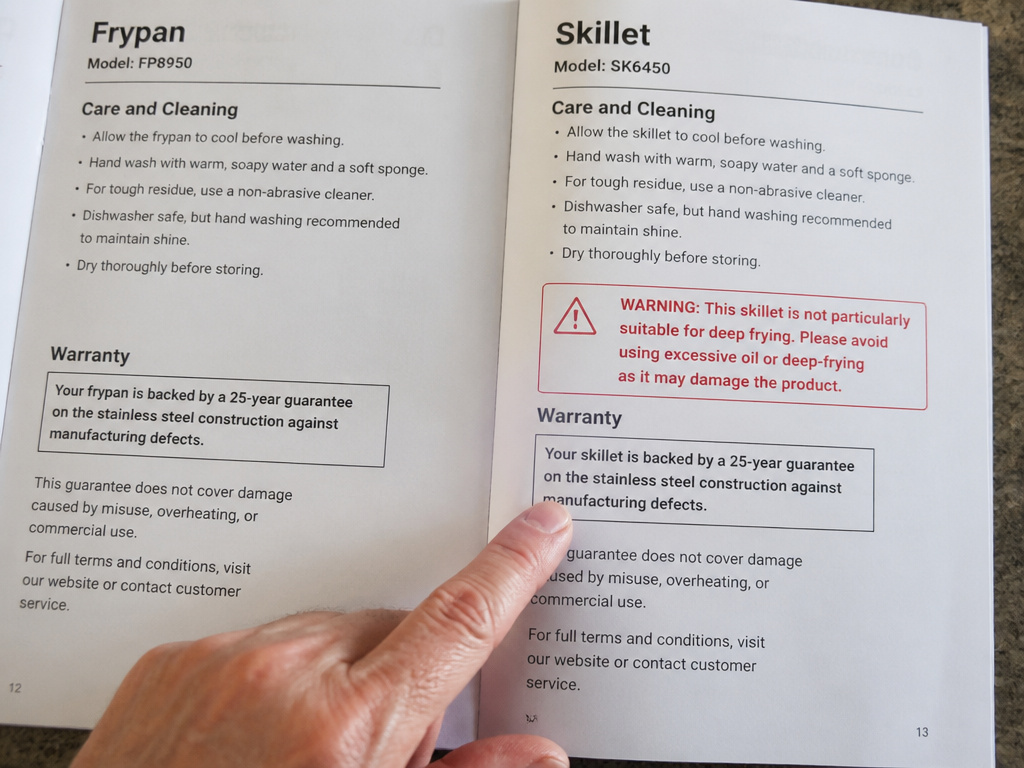
Manufacturer documentation doesn’t care about regional slang. It lists specifications, intended uses, and hard limits. The Sunbeam manual for its FP8950 and SK6450 models is a perfect case study.
Both the “Frypan” and the “Skillet” carry the same 25-year guarantee on the 18/10 stainless steel cooking vessel. This tells you the core construction is identical and built to a durability standard. The manual also provides specific, numbered temperature settings for different foods (130°C for eggs, 175°C for bacon), treating both pans as precision heating tools.
Most tellingly, it includes a universal warning: deep frying is “not particularly suitable” for these pans due to their “shallow sides and a greater surface area, which results in heat loss and the possible overflow of oil.”
That’s a functional limit based on physics, not a naming debate. It applies to any slope-sided pan, whether you call it a skillet, a fry pan, or an electric skillet. This is the kind of concrete detail that helps you avoid a messy, dangerous mistake.
Frequently Asked Questions
Are skillets and frying pans oven-safe?
It depends entirely on the materials. The pan body and handle must withstand oven temperatures. Cast iron and all-metal stainless steel pans (like the All-Clad D3) are typically oven-safe up to 500°F or more. Many nonstick frying pans have plastic or silicone handles that are only safe to about 350°F. Always check the manufacturer’s instructions.
Is a cast iron skillet better than a nonstick frying pan?
“Better” is the wrong word. They are different tools for different jobs. A cast iron skillet is better for developing a hard sear, baking, and durability. A nonstick frying pan is better for cooking delicate eggs, fish, or grilled cheese without sticking and for easy cleanup. Most well-equipped kitchens have both.
What size frying pan should I buy first?
10-inch pan is the best starting point for most cooks. It’s large enough to cook dinner for two to four people (like four chicken thighs or a packet of sausages) but not so large that it’s awkward on a standard burner or difficult to store. It’s the most versatile single pan size you can own.
Can I use a wok instead of a skillet?
For high-heat stir-frying with small pieces of food, a wok is superior. For Western cooking techniques like pan-frying, searing a single large piece of meat, or making a pan sauce, a flat-bottomed skillet or frying pan provides better contact and heat distribution. They are complementary, not interchangeable.
What’s the difference between a Dutch oven and a skillet?
This is a major functional difference, like the difference between a Dutch oven and a pot. A Dutch oven is a heavy, lidded pot with high, straight sides designed for slow, moist cooking like braising, stewing, and baking bread. A skillet is a shallow, slope-sided pan for fast, high-heat cooking. One is for simmering for hours, the other for searing in minutes.
The Bottom Line
The debate between a skillet and a frying pan is a linguistic relic. In your kitchen, they are the same essential tool. The label on the box matters far less than the material inside it and the shape of its sides.
Stop trying to find the “correct” name. Instead, learn the three real variables: material (for heat and maintenance), size (for your household and burner), and side slope (for flipping vs. Containing). A 10-inch tri-ply stainless steel fry pan and a 12-inch cast iron skillet will serve you infinitely better than worrying about which term is right.
Choose the pan that matches your stove, suits the food you cook most, and feels solid in your hand. The name is just marketing. The sear, the slide, and the decades of service—that’s what you’re actually buying.
