
Can You Ruin a Cast Iron Skillet? | The 3 Real Risks
This post contains affiliate links. As an Amazon Associate, we earn from qualifying purchases.
You can ruin a cast iron skillet, but only through three specific failures: cracking it via thermal shock, warping it from rapid heat, or allowing deep pitting corrosion to eat through the metal. Everything else, rust, gummy seasoning, soap, is fixable with a scrub and a trip to a 450°F oven.
The difference between permanent damage and a temporary setback comes down to the pan’s physical structure. Cast iron is pure iron, which makes it tough but brittle. It holds heat like nothing else, but that same property makes it vulnerable to sudden temperature changes.
What follows is a breakdown of the three real points of failure, the science behind why they happen, and the exact steps to rescue a pan from everything short of a crack. We’ll also settle the long-running soap debate with a direct quote from a food scientist.
Key Takeaways
- A crack or a severe warp is the only true “ruin.” Thermal shock from a hot pan hitting cold water is the most common cause.
- Flash rust and stripped seasoning are routine maintenance, not ruin. A vinegar soak for no more than 30 minutes followed by re-seasoning at 450–500°F fixes it.
- Modern dish soap does not damage a properly polymerized seasoning layer. The “no soap” rule is a myth based on old lye-based soaps, per Virginia Tech research.
- Sticky, gummy pans result from using too much oil during seasoning. The fix is another hour in a hot oven to finish polymerizing the excess.
- The pan’s performance depends on heat retention, not a mirror-smooth surface. A little texture is fine and will fill in over time.
The 3 Failures That Can Actually Ruin Cast Iron
A ruined skillet is one you can’t cook with. That definition narrows the field to structural failures.
Cast iron is described as “quite brittle.” Running a hot pan under cold water can cause a “drastic temperature change” leading to warping or cracking.
Wirecutter Guide
1. Thermal Shock and Cracking
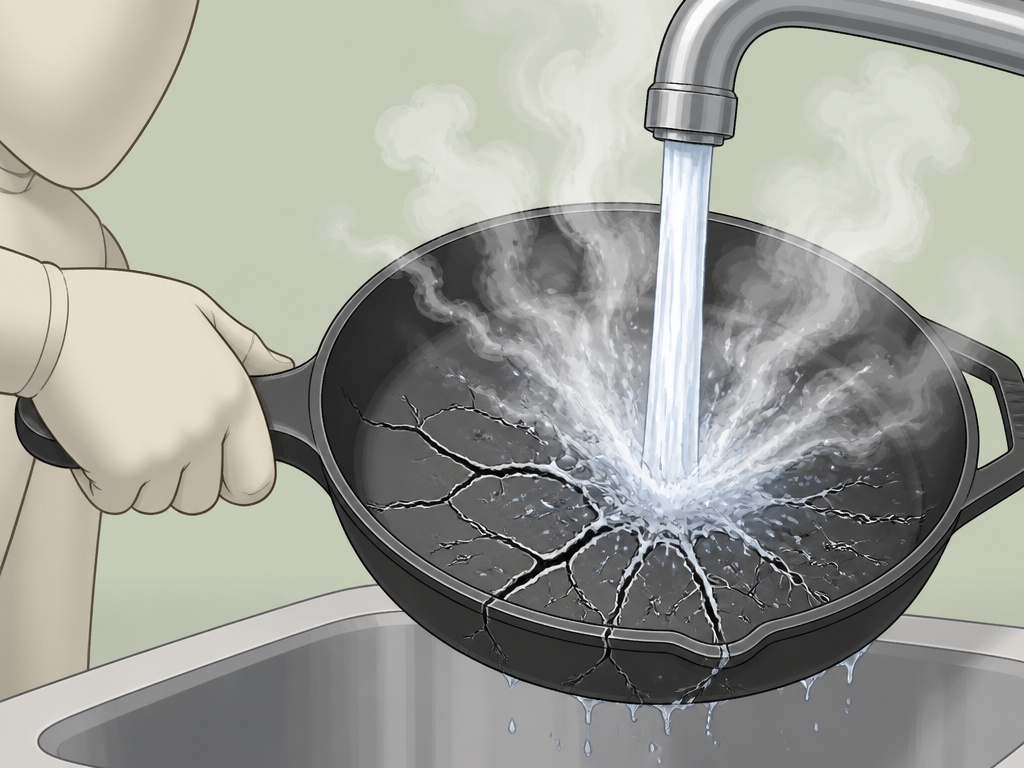
This is the quickest path to the recycling bin. Cast iron heats and cools slowly. When one part of the pan expands or contracts much faster than another, like when a searing-hot bottom hits a sink full of cold water, internal stress exceeds the metal’s strength.
You’ll hear a sharp ping or crack. A hairline fracture may appear across the cooking surface or up the side. Once cracked, the pan cannot hold its shape under heat and is unsafe to use. This isn’t a cleaning error; it’s a physics problem.
2. Warping from Rapid, Uneven Heat
Less dramatic than a crack but just as fatal. Cranking a burner to high under a cold, empty skillet, especially on a gas stove with a small flame cone, heats the center much faster than the edges. The metal in the center expands, but the cooler rim resists. That stress can permanently dish the center downward or cause a subtle rock.
A warped pan won’t sit flat on a glass cooktop and heats unevenly on any burner. You can’t fix a warp.
3. Deep Pitting Corrosion
This is the slow ruin. If rust is left to feast on the same spot for months, it can etch pits into the iron. Surface rust scrubs off. Pits are craters that trap food and moisture, undermining the seasoning’s ability to bond. A pan pitted like the moon is a chore to maintain and may be more trouble than it’s worth.
The good news? Reaching this point requires profound neglect. Catching rust early stops it cold.
| Failure Mode | Cause | Is It Fixable? |
|---|---|---|
| Crack | Thermal shock (hot pan + cold water) | No. The pan is structurally compromised. |
| Warp | Rapid, uneven high heat | No. The metal is permanently deformed. |
| Deep Pitting | Long-term, untreated rust corrosion | Technically yes, but extremely labor-intensive. Often not worth it. |
| Sticky Seasoning | Excess oil during seasoning | Yes. Bake at 450°F for 1 hour. |
| Surface Rust | Moisture exposure | Yes. Scrub with vinegar solution or abrasive. |
The “Ruin” Myths That Are Actually Just Maintenance
Most panic-inducing skillet problems are simple fixes. The internet is full of dire warnings that treat these routines like death sentences.
The Soap Myth (Debunked by Science)
The most persistent rule is to never use soap. This advice is a relic.
“One of the ever present myths is that you should never use soap to clean cast iron. According to O’Keefe, this notion comes from a time when soap contained lye and could easily damage a pan’s seasoning. However this doesn’t apply to the use of modern soap on a properly seasoned pan.”
Virginia Tech food scientist Sean O’Keefe
Modern dish soaps like Palmolive Ultra Pure + Clear are surfactants designed to lift grease, not lye-based caustics. A polymerized oil layer is a plastic-like coating bonded to the iron. Soap and water won’t dissolve it. You can use a drop to cut grease after cooking sausage. The real enemy isn’t soap; it’s leaving the pan wet.
The Dishwasher Catastrophe
Yes, the dishwasher will strip seasoning and cause flash rust. It’s a terrible idea for routine cleaning. But one accidental cycle isn’t a death sentence.
Restoration experts note a single wash likely won’t cause irreversible damage. The pan will come out dull, rusty, and vulnerable. You then move to rust removal and re-seasoning. The damage is from the extended soak and harsh detergent, not a single event. Treat it as a very deep clean, not a funeral.
“I’ve Ruined the Seasoning!”
Seasoning is a coating you build, damage, and rebuild. It’s not a one-time finish. Common issues like stickiness, flaking, or blotchiness are corrections, not ruins.
Where this goes sideways: Using a quarter-cup of oil to season. The excess can’t polymerize fully, leaving a sticky, gummy residue that attracts dust and food.
The fix is simple: scrub the pan, apply a half-teaspoon of oil for a 12-inch skillet, wipe until it looks dry, and bake it upside down at 450°F for an hour. The heat finishes the job.
Black flakes? That’s old carbonized oil lifting off. It’s harmless. Scrub it smooth and keep cooking. An uneven, splotchy appearance is normal for a working pan. Performance doesn’t require a perfect mirror.
How to Fix the Most Common “Ruin” Scenarios
Here’s your repair manual for every scary-looking but fixable problem. Gather a metal scrubber, white vinegar, and a neutral oil like canola.
For Rust (The Most Common “Oh No”)
Rust is iron oxide. It forms when bare iron meets water and oxygen. It does not mean you’ve failed.
- Scrub First: For light rust, use a Lodge Rust Eraser or a stainless steel scrubber with a bit of soapy water. Dry immediately.
- Soak for Stubborn Rust: For heavier rust, use a 50/50 vinegar and water solution. Submerge the pan or fill it. > Crucial: Do not exceed a 30-minute soak. Vinegar is acidic and will etch the iron itself if left too long. Check every 10 minutes.
- Scrub Again & Dry: Remove the pan, scrub off the loosened rust, and rinse. Flash rust, a thin orange haze, may appear instantly. Don’t panic; it’s surface-level. Scrub it off with a paste of Bar Keepers Friend.
- Re-season Immediately: Dry the pan thoroughly on the stove over low heat, then apply the thinnest possible layer of oil and bake at 450°F for one hour. This addresses the causes of rust by re-establishing the protective barrier.
For Gummy, Sticky Seasoning
This is a sign of over-oiling. The polymerization reaction couldn’t consume all the oil you applied.
- Wash the pan with warm soapy water to remove surface grime.
- Dry it completely.
- Place it upside down in a cold oven, set to 450–500°F, and bake for one hour. The existing excess oil will finish curing.
- Let it cool in the oven. The surface should be matte, not glossy.
For Stripped or Thin Seasoning
Maybe you scrubbed too hard, or dishwasher damage took it off. The process is the same as initial seasoning.
- Ensure the pan is clean, dry, and rust-free.
- Apply a tiny amount of high-smoke-point oil (grapeseed, vegetable, canola).
- Wipe it all out with a fresh paper towel. You should barely see any oil; you’re polishing, not coating.
- Bake upside down on the top rack at 450°F for one hour. Place foil on the bottom rack to catch drips.
- Let it cool in the oven. Repeat 1-2 times for a more robust base layer.
What Not to Do: The Short List
Avoid these actions to keep your skillet out of the true danger zone.
- Don’t thermal shock it. Never run a hot pan under cold water. Let it cool first.
- Don’t heat it empty on high. Start low, give it 5 minutes to warm evenly, then increase heat.
- Don’t soak it. Soaking a skillet invites rust. Clean it while it’s warm.
- Don’t use it for long-simmered acidic sauces. Tomatoes or wine can degrade young seasoning over hours. Use enameled cast iron instead.
- Don’t store it with moisture. Dry it on the stove after washing, every single time.
The Right Tools Make Maintenance Simple
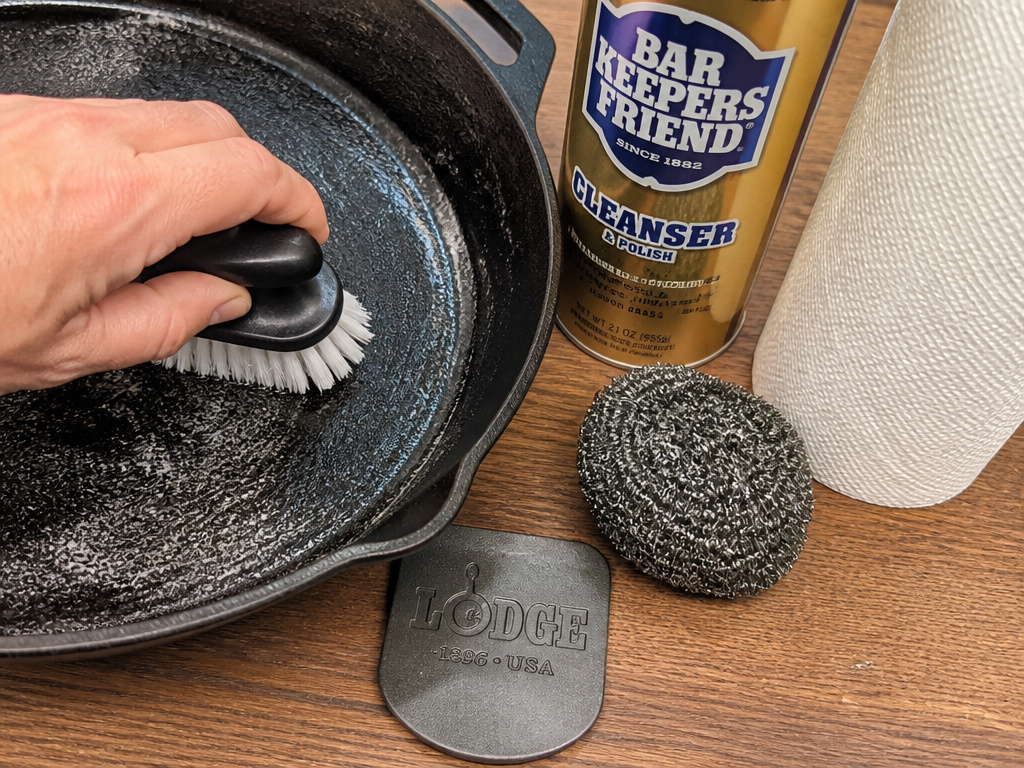
You don’t need a specialty shop. A few basics handle 99% of situations.
- Stiff Nylon Brush or Dobie Pad: For everyday cleaning a burnt pan without being too abrasive.
- Stainless Steel Scrubber: For tackling rust or stubborn carbon buildup.
- Lodge Rust Eraser: A dedicated tool for spot rust removal.
- Bar Keepers Friend: A mild oxalic acid cleanser that makes short work of rust stains without a long soak.
- Paper Towels: The best tool for applying that microscopically thin oil layer.
Having these on hand turns a crisis into a 15-minute task. They’re more important than any secret technique.
Frequently Asked Questions
Can you ruin cast iron by using soap?
No. Modern dish soap will not damage a properly polymerized seasoning layer. The myth stems from 19th-century lye soaps. A Virginia Tech food science article confirms today’s mild soaps are safe for occasional use to cut grease.
What happens if you put cast iron in the dishwasher?
It strips the seasoning and causes immediate flash rust. It’s terrible for the pan, but one cycle is rarely a permanent ruin. It necessitates a full rust removal and re-seasoning process, which is a hassle but almost always successful.
How do you know if your cast iron is ruined?
It’s only truly ruined if it’s cracked or severely warped so it doesn’t sit flat. Sticky spots, rust, flaking, and uneven color are all fixable conditions. If the metal itself is intact, you can restore it.
Can you fix a rusty cast iron skillet?
Absolutely. Surface rust is the most common fixable issue. Scrub it with an abrasive pad or a short vinegar soak, dry it completely, and re-season it. The process is a standard part of skillet maintenance.
Does overheating ruin cast iron?
Extreme, localized overheating can warp it. It can also burn off seasoning, which you then reapply. While you can burn a skillet by leaving it empty on high heat, warping is the real risk, not the seasoning loss.
The Bottom Line
Cast iron is resilient. You can’t ruin it through everyday use, occasional soap, or even a bout of rust. The only true failures are physical: cracks from thermal shock and warps from abusive heat. Everything else is a temporary condition corrected with a scrub, some heat, and a dab of oil.
Stop worrying about perfection. A working skillet is a darker, splotchier, and more textured. Its value is in its heat retention, not its Instagram finish. Focus on avoiding thermal shock, drying it thoroughly, and cooking with it often. That’s the whole game. The rest is just noise.
