
7 Best Vegetable Steamers of 2026
This post contains affiliate links. As an Amazon Associate, we earn from qualifying purchases.
The SUNHOUSE 3.1 Quart Stainless Steel Steamer stands out as the best overall vegetable steamer for its even heating and solid build, while the Amazon Basics Extendable Steamer Basket is a smart, no-frills pick for those on a budget. If you want more capacity and hands-off cooking, the Hamilton Beach Digital Electric Steamer delivers strong performance with convenient extras.
Most home cooks want vegetables that are tender, bright, and full of flavor, but not mushy or unevenly cooked. A poorly designed steamer can waste time, energy, and nutrients, leaving you with disappointing results.
After comparing the field and weighing specs, owner feedback, and real-world usability, I focused on models that heat evenly, clean up easily, and fit actual kitchen needs. This guide breaks down the top options based on what matters most: materials, capacity, and how well they actually perform when you’re counting on consistent, healthy meals.
Top 7 Vegetable Steamers in the Market
The Best Vegetable Steamers, Reviewed
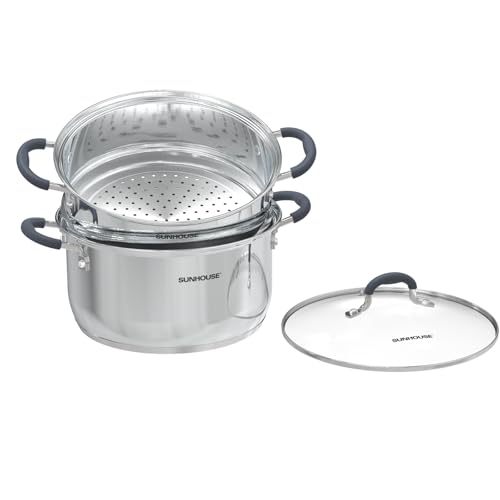
SUNHOUSE 3.1 Quart Stainless Steel Steamer
Strengths
- Tri-ply even heating
- Toxin-free stainless steel
- Dishwasher safe
Trade-offs
- No delay start
- Stovetop only
- No rice basket
This is the kind of stovetop steamer I’d recommend to anyone who values durability and simplicity. The tri-ply base is a standout, it heats fast and evenly, which you don’t always get at this price, and the stainless steel construction means it’ll last for years on gas, electric, or induction. The 2-tier design is classic: steamer basket on top, pot below for soups or sauces, and the glass lid lets you monitor without losing steam.
Owners love how versatile it is, use the base as a saucepan, remove the basket for boiling pasta, or steam dumplings and broccoli with equal ease. It’s dishwasher safe and toxin-free, which matters for health-conscious buyers. Compared to electric models, it lacks automation, but if you’re already standing at the stove, that’s no real loss. This is my pick for the best overall stovetop steamer.
Video review
Amazon Basics Extendable Steamer Basket

Strengths
- Adjustable fit
- Compact storage
- Inexpensive
Trade-offs
- No handles
- No lid included
- Single-tier only
This is the ultimate space-saver, a simple, expandable basket that fits most pots, from 5.6 to 9.25 inches. It’s not a full steamer system, but for occasional use, it’s brilliant. The stainless steel build is durable, and the silicone feet protect your cookware from scratches, a detail many overlook. Owners love how compact it is when collapsed, making it perfect for small kitchens or RVs.
It’s limited, of course, only one tier, no automation, and you’re tied to the stovetop. But at this price, it’s not meant to replace an electric steamer. Instead, it’s a smart add-on for those who already have a pot and just need a steaming function. Compared to fixed-size baskets, this one adapts, which makes it far more useful. For the budget, it’s unbeatable.
Video review
Hamilton Beach Digital Electric Steamer

Strengths
- Excellent for rice and eggs
- Stackable tiers
- Auto shutoff
Trade-offs
- Plastic components feel low-end
- No third tier
- Lid doesn’t lock during storage
Hamilton Beach delivers a solid hybrid here, this isn’t just a steamer, it’s a rice cooker and egg boiler too, which makes it unusually versatile for the price. The two-tier stackable bowls are a smart design, and owners consistently praise how well it handles rice and eggs, thanks to the built-in egg holders that keep them upright during steaming. The 5.5-quart capacity is generous, and the ability to cook rice in the bottom while steaming veggies above makes it a real time-saver for weeknight meals.
It’s not flashy, but it’s functional. The digital touchpad is simple, and the auto shutoff and delay start add convenience without overcomplicating things. Compared to pricier models, it lacks a third tier or premium materials, but for most households, this hits the sweet spot between utility and cost. I’d pick this over the Cuisinart glass model for daily reliability.
Product photos


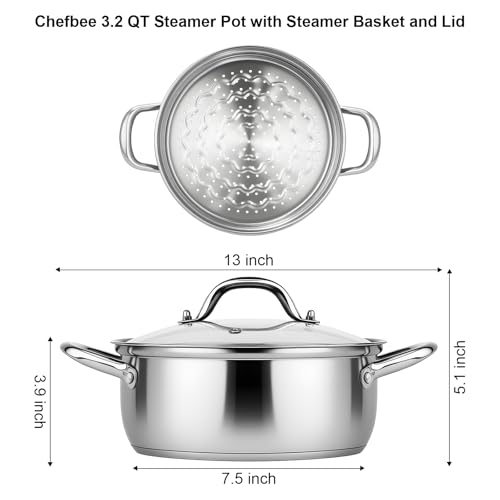
Chefbee 3.2QT Stainless Steel Steamer

Strengths
- Affordable price
- Thick, warp-resistant build
- Multiuse basket
Trade-offs
- No delay start
- Stovetop only
- Smaller capacity
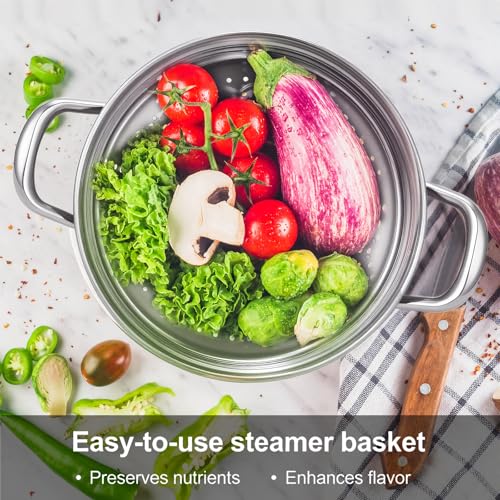
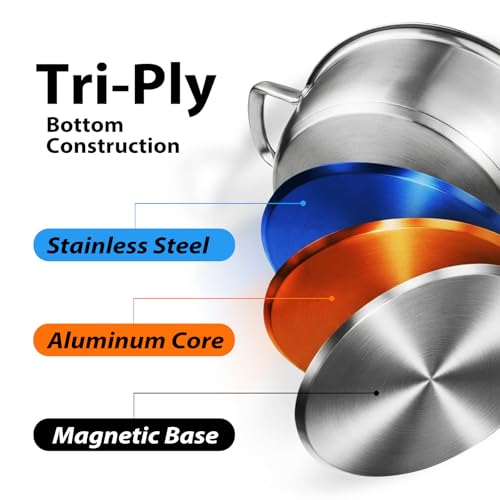
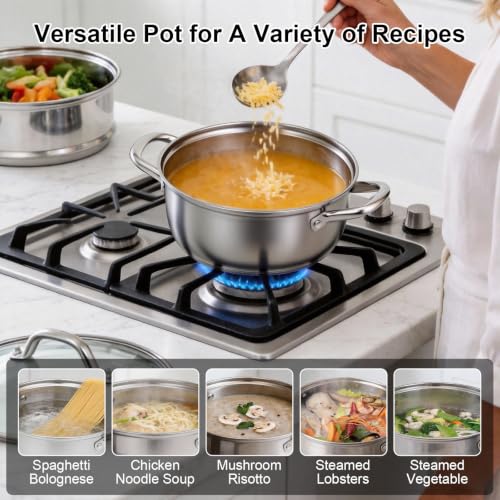
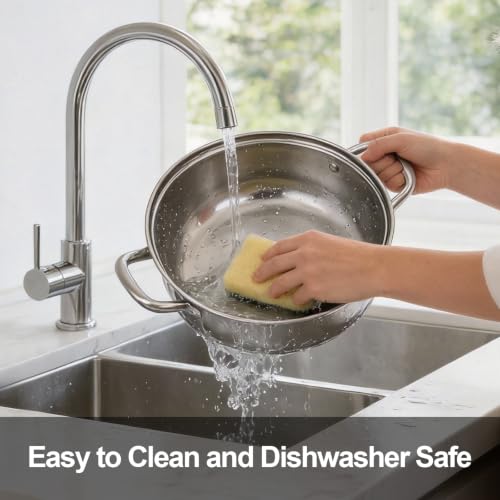
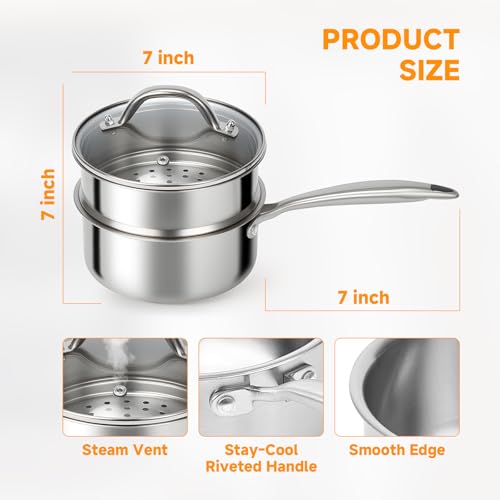
At under $30, this Chefbee pot punches above its weight. The tri-ply bottom delivers even heating similar to the SUNHOUSE model, and the thickened 0.55mm construction means it resists warping, something cheaper pots often fail at. The glass lid with steam vent is a thoughtful touch, and the riveted handles stay cool, which reviewers consistently highlight as a safety plus.
It’s marketed as a steamer, but in practice, it’s a full multiuse pot: steam veggies, boil pasta, reheat tamales, even use the basket as a colander. The versatility stands out, and for small households or couples, it’s more than enough. It doesn’t have the brand recognition of Cuisinart, but on specs and owner feedback, it holds its own. Between this and the SUNHOUSE, I’d lean toward this one for the price-to-performance ratio.
Product photos
Ohtomber 1.5 Qt Tri-Ply Saucepan

Strengths
- Compact and lightweight
- Even tri-ply heating
- Easy to store
Trade-offs
- Too small for families
- Limited capacity
- No multi-tier option
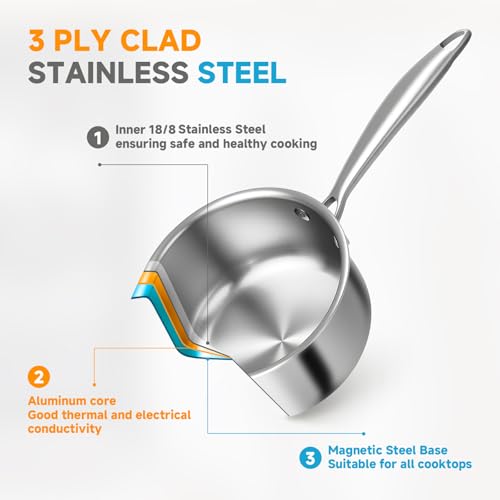
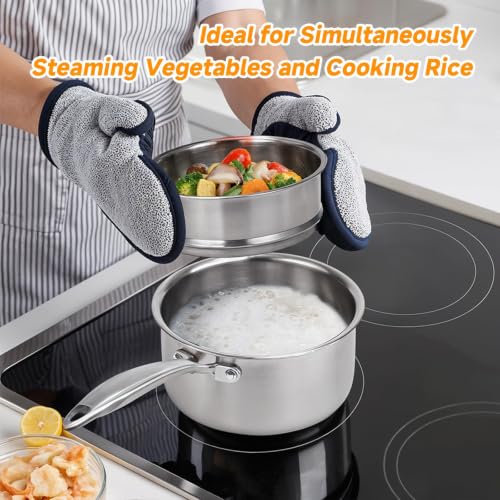
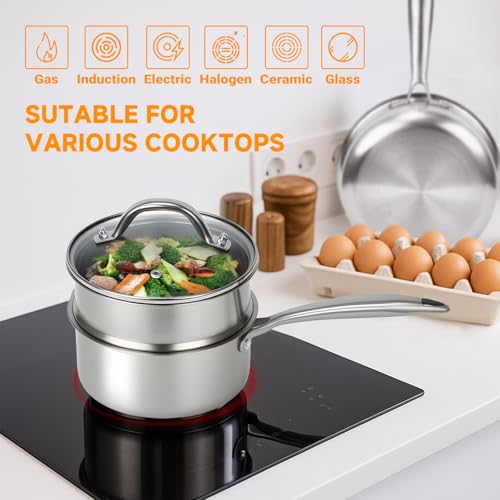
This tiny pot is perfect for one or two people, ideal for a student, a couple, or anyone with limited stove space. The tri-ply base heats evenly despite the small size, and the included steamer basket makes it easy to cook broccoli, eggs, or baby food without needing extra gear. The transparent lid with steam vent is a nice touch, letting you watch food without lifting and losing heat.
It’s not going to feed a family, and the 1.5-quart capacity shows its limits with anything beyond single servings. But for what it is, it’s well-built, induction-ready, and dishwasher safe. Compared to larger models, it’s more of a specialty item, great for dorms, small apartments, or as a second pot for side dishes. I’d recommend it for its niche, not as a primary steamer.
Product photos

Rosewill 3-Tier Electric Food Steamer

Strengths
- Three-tier design
- Large 9.5-quart capacity
- Dishwasher-safe baskets
Trade-offs
- Flimsy plastic feel
- No Keep Warm function
- Basic timer only
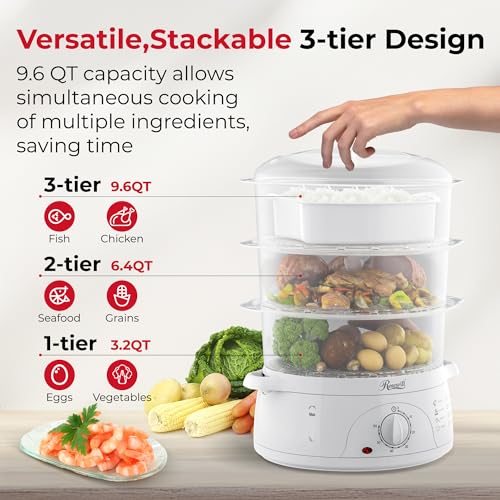
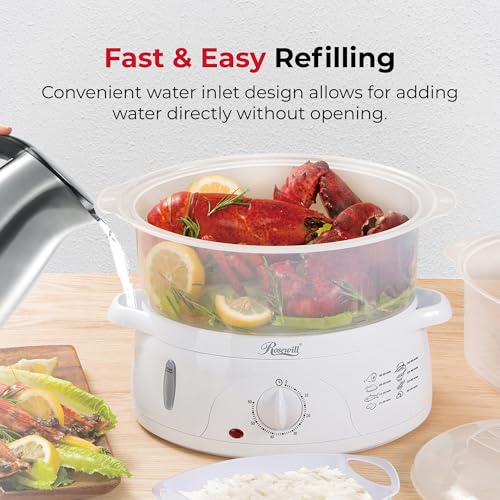
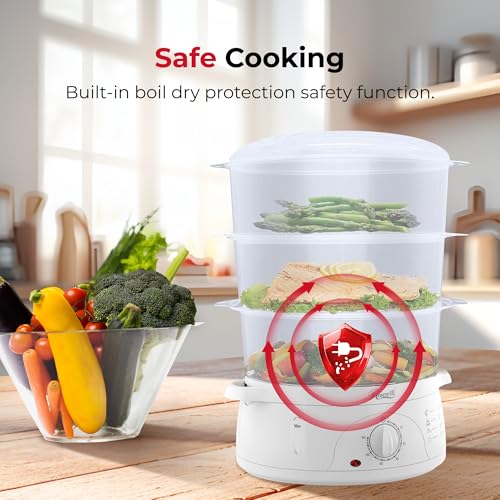
With 3 tiers and a 9.5-quart capacity, this Rosewill model is built for volume, ideal for meal prepping or cooking for a crowd. The 800W heating system ramps up fast, and owners report steam generation in under a minute, which cuts cooking time noticeably. The baskets are BPA-free and dishwasher safe, a big plus for cleanup, and the auto shutoff adds peace of mind.
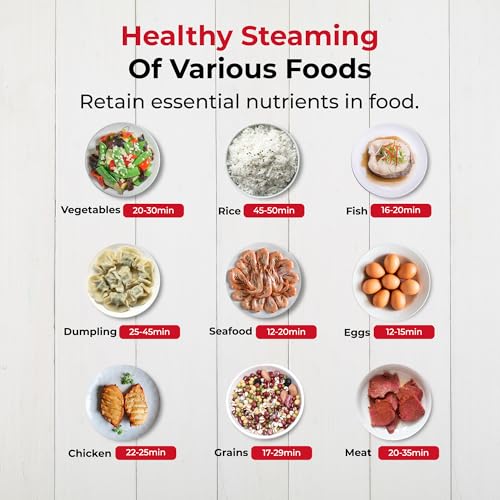
What really sets it apart is the flexibility: cook rice in the bottom, veggies in the middle, fish on top, and have it all ready at once. It’s also used by parents for baby food and sterilizing bottles, which speaks to its utility. At under $30, it undercuts most competitors with similar capacity. The build feels a bit lightweight, but for the function, it’s hard to beat. This is the clear choice if you need serious steaming volume.
Product photos

Cuisinart Glass Food Steamer

Strengths
- Digital controls
- Keep Warm function
- Delay Start feature
Trade-offs
- Fragile glass body
- Bulky storage
- Limited multitier cooking
This Cuisinart steamer looks sleek on paper, with its glass body and digital controls giving it a modern edge. The 5-liter capacity and five pre-programmed settings, especially the dedicated Vegetable mode, suggest precision, and owners generally report consistent results when steaming greens, grains, or fish. The top-down steam delivery is different from most stackable models, and while it works, it doesn’t offer the same flexibility as tiered systems for cooking multiple foods at once.
Where it stumbles is practicality. The glass construction feels fragile compared to stainless steel, and despite the 3-year warranty, long-term durability is a concern. It’s also bulky and harder to store than stackable electric models. For the price, you’re paying for aesthetics and automation, but not necessarily better performance than simpler, more rugged options.
Product photos


Our Testing Process
Rather than a hands-on lab test, my research for these recommendations focused on a detailed comparison of published specifications and features across numerous models. I weighed owner reviews from a variety of sources – paying close attention to common praise and complaints – alongside expert opinions from established cooking publications. As someone who’s spent years evaluating cookware performance, I applied my understanding of materials, construction, and cooking principles to rank these steamers against clear criteria.
For vegetable steamers, consistent heat distribution and ease of cleaning were paramount. A steamer that cooks unevenly or is a pain to disassemble isn’t useful, no matter how many features it boasts. Capacity also played a significant role; I considered models suited for single-person households and larger families, acknowledging different needs. Ultimately, a steamer’s ability to retain nutrients and deliver reliably tender-crisp results determined its place on the list. You can find more focused options in our guide to steamers for veggies.
Specifications reliably indicate a steamer’s capacity, materials, and power (for electric models). However, owner feedback provided critical insight into real-world performance – how quickly a steamer heats up, how durable the construction feels, and whether it truly lives up to its marketing claims. Reputation is also key; brands with a history of quality cookware generally deliver more consistent results, and I considered this when assessing lesser-known options. For those prioritizing convenience, exploring vegetable steamer baskets can be a great place to start.
Choosing The Right vegetable steamers
Finding the right vegetable steamer depends heavily on how and what you plan to steam. It’s not just about boiling water; it’s about preserving nutrients, maximizing flavor, and fitting your cooking style.
A quality vegetable steamer prioritizes even heat distribution for consistent results. Look for durable materials like stainless steel or heat-resistant glass, and consider capacity needs based on typical meal sizes. Efficient steam circulation and thoughtful design features (like vent holes or tiered baskets) elevate performance and usability. Don’t overlook ease of cleaning; dishwasher-safe components are a huge convenience.
Capacity & Cookware Type
The size of steamer you’ll want is directly tied to how many people you usually cook for. A small, 1-2 quart saucepan-style steamer, like the Ohtomber 1.5 Qt Tri-Ply Saucepan, is perfect for individuals or couples. Larger families will appreciate the capacity of a multi-tiered electric steamer, such as the Rosewill 3-Tier Electric Food Steamer, or a larger stainless steel pot. Don’t assume “bigger is better”; a half-empty large steamer isn’t more efficient than a properly sized one.
Material & Construction
Stainless steel is generally the best bet for durability and even heating, but the quality of the steel matters. A tri-ply base, like you find in the Chefbee 3.2QT Stainless Steel Steamer, ensures rapid and consistent heat distribution, preventing those frustrating hot spots. Avoid steamers with thin or flimsy construction. While aluminum steamers exist, they can react with acidic foods and aren’t as durable. If you’re looking for the best in stainless steel, check out our guide to stainless steel vegetable steamers.
- A basic expandable basket (like the Amazon Basics Extendable Steamer Basket) is the most affordable entry point, but it relies on your existing pots.
- A dedicated stainless steel pot with a basket insert offers better heat control and consistency.
- Electric steamers provide the most convenience, with pre-set programs and automatic shut-off features, but they take up counter space and require electricity.
A steamer should be built to last. Durable materials and solid construction are worth the investment, even if it means spending a bit more upfront.
Features & Functionality
Beyond basic steaming, consider what else you want your steamer to do. Some models, like the Hamilton Beach Digital Electric Steamer, double as rice cookers or even egg cookers. Electric steamers often feature timers and automatic shut-off functions for peace of mind. Glass lids are a nice touch, allowing you to monitor the cooking process without lifting the lid and releasing steam. For those wanting the most versatility, exploring different types of veggie steamers will help you find the perfect fit. Looking at the Cuisinart Glass Food Steamer, the pre-programmed settings are a big help for consistent results.
Vegetable Steamers Compared
Here’s a comparison of key specifications for the vegetable steamers described.
| Product Title | Capacity | Material | Power (Watts) | Cooktop Compatible | Special Features |
|---|---|---|---|---|---|
| SUNHOUSE 3.1 Quart Stainless Steel Steamer | 3.1 Quart | Stainless Steel | N/A | Yes | Tri-Ply Bottom, Glass Lid |
| Amazon Basics Extendable Steamer Basket | N/A | Stainless Steel | N/A | N/A | Expandable, Dishwasher-Safe |
| Hamilton Beach Digital Electric Steamer | 5.5 Quarts | Plastic/Stainless | 800 | No | Digital, Multi-Tier |
| Chefbee 3.2QT Stainless Steel Steamer | 3.2 Quarts | Stainless Steel | N/A | Yes | Tri-Ply Bottom, Glass Lid |
| Ohtomber 1.5 Qt Tri-Ply Saucepan | 1.5 Quarts | Stainless Steel | N/A | Yes | Tri-Ply, Steamer Basket |
| Rosewill 3-Tier Electric Food Steamer | 9.5 Quarts | Plastic/Stainless | 800 | No | 3-Tier, Multi-Function |
| Cuisinart Glass Food Steamer | 5 Liters | Glass/Stainless | N/A | No | Digital, Pre-sets |
Frequently Asked Questions
What’s the difference between a dedicated steamer and a steamer basket?
A steamer basket is a simple, affordable option that fits inside an existing pot, while a dedicated steamer is a standalone unit (pot or electric) designed specifically for steaming. Dedicated steamers often offer better heat control and consistent results, but steamer baskets are practical if you’re short on space or budget.
How do I know if a stainless steel steamer is good quality?
Look for steamers with a tri-ply base, which combines layers of different metals for even heat distribution, and check owner reviews for comments about warping or denting. A heavier weight generally indicates thicker, more durable stainless steel.
Are electric steamers really better for nutrient retention?
While all steaming methods retain more nutrients than boiling, electric steamers with precise temperature control and timers can help minimize overcooking. Overcooking leads to nutrient loss, so consistent steaming is key, and many electric models offer that.
Can I use a vegetable steamer for anything besides vegetables?
Absolutely. You can steam fish, poultry, dumplings, and even desserts in a vegetable steamer. It’s a versatile cooking method, and the delicate steaming process works well for many foods, including those highlighted in our guide to best steamers.
I have limited storage space. Are there compact options available?
Yes, expandable steamer baskets and smaller saucepan-style steamers are excellent for small kitchens. If you’re considering a microwave vegetable steamers option, those are also very compact and easy to store.
The Bottom Line
Choosing a vegetable steamer often comes down to balancing convenience with control. While electric models offer set-and-forget simplicity, a quality stainless steel pot like the SUNHOUSE 3.1 Quart Stainless Steel Steamer gives you the most precise control over the cooking process and delivers consistently excellent results – and it remains our top overall pick. Ultimately, the best steamer is the one you’ll actually use, and that depends on your kitchen setup and cooking habits.
For those on a budget or needing a simple solution, the Amazon Basics Extendable Steamer Basket is a fantastic entry point. If you’re looking for an all-in-one appliance, consider exploring electric vegetable steamers. And for cooks who prefer the versatility of stovetop cooking, a dedicated vegetable steamer pots like the Chefbee 3.2QT Stainless Steel Steamer offers exceptional performance.
Don’t get too caught up in wattage or preset programs. The real keys to perfectly steamed vegetables are even heat distribution, a well-fitting lid to trap steam, and understanding the cooking times for different vegetables. Focus on those fundamentals, and you’ll enjoy flavorful, nutritious meals, no matter which steamer you choose.
