
Burn a Cast Iron Skillet? How Overheating Damages Your Pan
This post contains affiliate links. As an Amazon Associate, we earn from qualifying purchases.
Yes, you can burn a cast iron skillet, but not in the way you burn food. Burning a skillet means damaging its polymerized seasoning layer through extreme overheating or using oil with a smoke point too low for your heat source. The result is a sticky, flaky, or blotchy surface that no longer releases food.
That split in manufacturer advice is the whole game. IKEA’s manual says 300°F for seasoning; Lodge says 500°F. One is safe for any oil; the other demands a high-smoke-point fat. Ignoring that gap is how a pan goes from non-stick to burnt in one oven cycle.
What follows is the breakdown of those two temperature specs, the physical signs that you’ve crossed the line, and the exact scrub-and-bake method to restore the surface. This is about when to reach for the steel wool, not gentle cleaning.
Key Takeaways
- Burning means damaging the seasoning, not the iron. The skillet itself won’t combust, but the polymerized oil coating can scorch, flake, and become sticky if overheated past its smoke point.
- Manufacturer specs conflict directly. IKEA advises a max seasoning temperature of 300°F (150°C), while Lodge recommends 450–500°F. Using a low-smoke-point oil at Lodge’s temperature guarantees a burnt, sticky finish.
- Thermal shock is a separate, physical danger. Pouring cold water into a scorching hot pan can warp or crack the iron, which is a permanent structural failure, not a surface burn.
- Fix a burnt skillet by stripping and re-seasoning. You must remove the damaged coating with an abrasive like steel wool or salt, then rebuild the seasoning layer from scratch through the correct baking process.
- Prevention hinges on matching oil to heat. For stovetop searing or high-heat oven seasoning, always use an oil with a high smoke point like vegetable, canola, or grapeseed oil.
What “Burning” a Cast Iron Skillet Actually Means
A skillet is cast iron, it doesn’t ignite. When we talk about burning it, we’re talking about ruining its polymerized coating. That’s the hard, slick layer of baked-on oil that makes a seasoned pan non-stick.
This coating burns when the heat exceeds the oil’s smoke point. The oil doesn’t just cook onto the metal; it breaks down chemically. It carbonizes into a brittle, sticky mess instead of forming a durable bond. You’ll see it as black flakes in your food or feel it as a gummy surface that attracts crumbs.
The Technical Snippet: Seasoning is oil baked onto iron through polymerization, a chemical process where fat molecules cross-link into a hard, slick coating bonded to the metal. This layer, not the iron itself, is what can be damaged by excessive heat. Its durability depends on the oil’s smoke point and the applied temperature.
Thermal shock is a different kind of damage. IKEA’s manual warns that pouring cold water into a hot pan can deform the bottom. That’s not burning, that’s the iron cracking or warping from sudden, extreme temperature change. It’s a permanent structural failure. A burnt seasoning layer is a surface problem you can fix. A warped bottom means the pan no longer sits flat on a burner, and that’s often the end of its useful life.
So the real question isn’t “can it burn?” but “what did you damage?” The answer dictates the fix.
The 300°F vs 500°F Seasoning Split
This is where most guides talk themselves in circles. They’re not wrong; they’re just repeating one manufacturer’s advice without acknowledging the other.
IKEA’s cast iron manual is explicit: “heat in the oven or on the cooker to max. 150°C (300°F) for minimum one hour.” Lodge’s official seasoning guide is equally clear: “preheat your oven to 450–500°F.” That’s a 150–200°F difference. It’s not a typo.
| Manufacturer | Recommended Seasoning Temp | Implication for Oil Choice |
|---|---|---|
| IKEA | 300°F (150°C) max | Most cooking oils are safe; smoke point is less critical. |
| Lodge | 450–500°F | Requires a high-smoke-point oil (vegetable, canola, grapeseed). |
Why the gap? It likely comes down to the oil they assume you’re using and a conservative safety margin. IKEA’s lower temperature ensures that even olive oil or butter won’t smoke and burn during the process. Lodge’s method, using a high-smoke-point oil, creates a tougher, more durable polymer layer at that higher temperature, if you use the right oil.
Where this goes sideways: Using extra virgin olive oil (smoke point around 375°F) in a 500°F oven to follow Lodge’s steps. The oil will smoke violently, acridly, and burn onto the pan as a sticky, black tar. That’s a burnt skillet. You followed the temperature but failed the oil prerequisite.
The takeaway is that seasoning is a system of temperature, time, and oil type. You can’t change one variable without adjusting the others.
Signs Your Cast Iron Skillet Is Burnt (And Not Just Dirty)
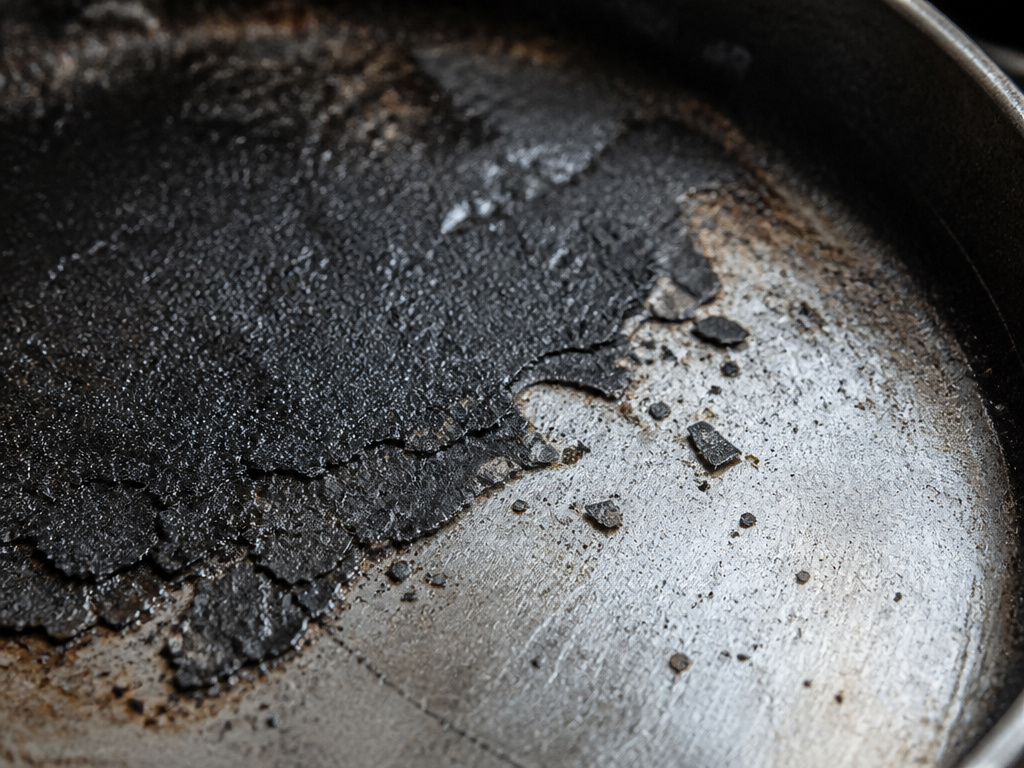
A dirty pan has food residue. A burnt pan has damaged seasoning. You need to know the difference before you start scrubbing.
Flaky, Black Bits in Your Food. This is the most common sign. Those are chunks of the carbonized oil coating that have flaked off. If you see them consistently, the seasoning layer is compromised and brittle.
A Sticky or Gummy Surface. After washing and drying, the pan should feel dry to the touch. If it feels tacky, like it’s collecting dust, that’s burnt-on oil. Lodge’s troubleshooting guide directly links stickiness to using “too much” oil during seasoning, which then bakes into a gummy, non-polymerized layer.
Blotchy, Discolored Patches. A healthy seasoning darkens evenly over time. Burnt seasoning looks patchy, jet black spots next to reddish or brownish iron. This happens when heat is wildly uneven (like a direct flame hotspot) or when you’ve scorched off the coating in one area.
Persistent Acrid Smell. A well-seasoned pan might have a faint, neutral scent. A pan that’s been burnt, especially with a low-grade oil, can retain a sharp, acrid odor even after washing. This is the smell of broken-down, carbonized fats.
Common mistake: Confusing burnt-on food with a burnt seasoning layer. Stuck-on food scrubs off with salt and effort, revealing intact seasoning underneath. Damaged seasoning, when scrubbed, continues to come off in black streaks, revealing bare, grey metal.
If you’re seeing bare metal after gentle cleaning, you’re not looking at burnt food. You’re looking at a seasoning layer that failed and needs to be stripped and rebuilt.
Step-by-Step: How to Fix a Burnt Skillet
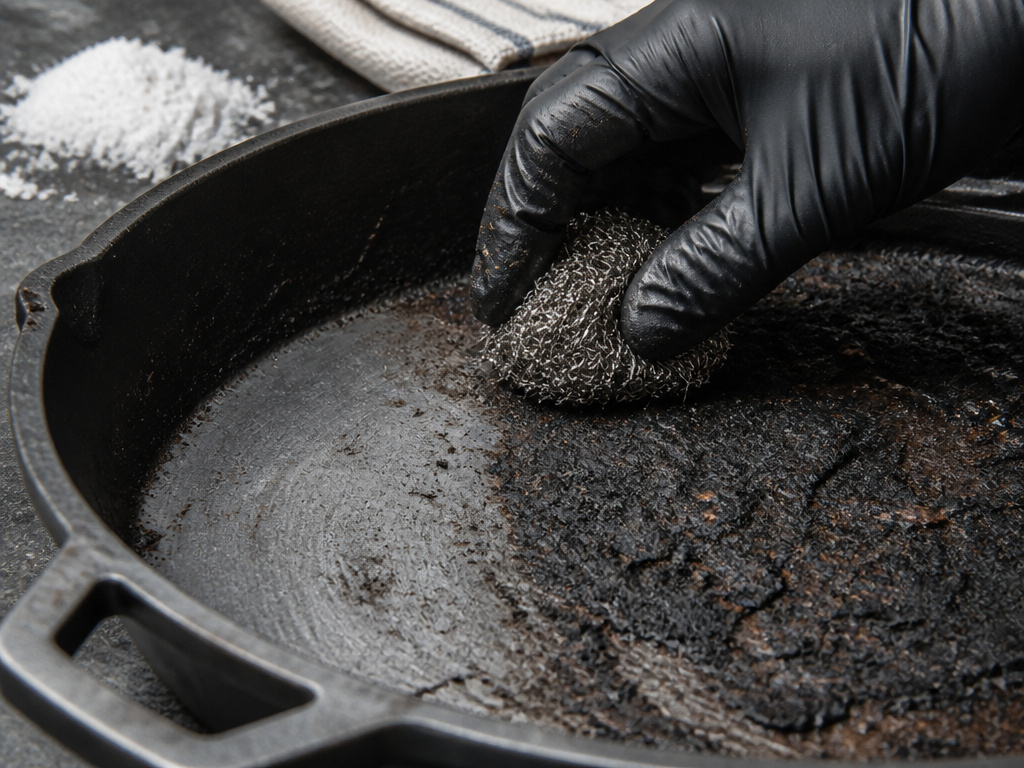
Fixing it means removing the damaged coating and starting over. This isn’t a gentle wipe-down. You’ll need an abrasive.
Before you start: The process involves scrubbing with steel wool and heating the pan in an oven. Wear gloves to protect your hands from abrasives and heat. Ensure your kitchen is well-ventilated, especially when baking off old oils, as they may smoke.
1. Scrub with Steel Wool or Salt. This is the stripping phase. For severe stickiness and flaking, use coarse steel wool and hot water. Scrub in a circular motion until the surface feels uniformly rough and no more black, gummy residue comes off. For milder cases, a paste of coarse salt and a little water works as a gentler abrasive. The goal is a consistent, dull grey surface.
2. Wash and Dry Thoroughly. Use a drop of dish soap now, the old rule about never using soap applies to the thin, protective layer of seasoning, which you’ve just removed. You need to get all the oil and carbon dust off. Rinse, then dry the pan immediately and completely with a towel. Follow by heating it on a stove burner for 2-3 minutes to evaporate any lingering moisture.
3. Apply a Thin, Thin Layer of Oil. This is the most skipped step. Pour a teaspoon of a high-smoke-point oil (vegetable, canola, grapeseed) onto the pan. Use a paper towel to rub it into every surface, inside and out. Then, take a clean paper towel and buff it off aggressively. The pan should look almost dry, with just a faint sheen. Any visible oil pools will bake on sticky.
4. Bake Upside-Down in a Hot Oven. Preheat your oven to 450–500°F (follow Lodge’s high-temp method, as you’re now using the right oil). Place a sheet of aluminum foil on the bottom rack to catch drips. Set the pan upside-down on the middle rack. Bake for one hour, then turn the oven off and let the pan cool completely inside. This slow cooling helps the new coating bond.
You’ll likely need to repeat steps 3 and 4 two or three times to build a durable base layer. The first coat will look bronze and spotty. That’s normal. The second and third coats will darken it.
What Not to Do: How to Actually Ruin Your Pan
You can recover from a burnt seasoning layer. Other forms of damage are permanent.
Don’t Subject It to Thermal Shock. This is the warping warning from the IKEA manual. Never take a ripping-hot pan and run it under cold water or add a large amount of cold liquid. The differential expansion can crack the iron or cause a permanent warp. Let it cool on the stovetop first.
Don’t Cook Strong Acids in a Newly Seasoned Pan. IKEA states the material is “reactive and not suitable” for strong acidic foods like tomatoes or lemon juice. Acid breaks down young seasoning. In a pan that’s just been re-seasoned, a long tomato sauce simmer can strip your fresh work right off, leaving you with a metallic taste and a patchy surface.
Don’t Use the Dishwasher or Let It Soak. This doesn’t burn it, but it’s the fastest route to rusting skillet issues. Prolonged immersion in water and harsh detergent strips seasoning and exposes bare iron to oxidation. Wash by hand, dry immediately.
Don’t Use Non-Stick Cooking Spray. These often contain lecithin and other additives that polymerize into a gummy, sticky coating at high heat. They’re a guaranteed recipe for a sticky skillet that attracts dirt and food particles.
Stick to high-smoke-point liquid oils for both cooking and seasoning. That single choice prevents most surface burn problems.
Frequently Asked Questions
Can you burn a cast iron skillet on a gas grill?
Yes, easily. Grills generate intense, direct heat that can easily exceed 600°F. If your pan’s seasoning was built with a low-smoke-point oil or is too thin, that heat can carbonize the coating. Always preheat the pan gradually on a grill and use it over coals, not direct flames, for more controlled heat.
Is it safe to cook with a burnt cast iron skillet?
It’s not unsafe in a toxic sense, but it performs terribly. Flaking seasoning will end up in your food, and a sticky surface will make everything stick and burn. It also means the protective layer is gone, leaving the iron underneath vulnerable to rust. You should stop and re-season it.
Why did my brand new Lodge skillet burn on first use?
New Lodge skillets come pre-seasoned. If you applied additional oil and put it in a very hot oven, you might have used too much oil or an oil with too low a smoke point. The pre-seasoning is sufficient; for the first few uses, just cook with it using a little fat. There’s no need to do an oven seasoning round immediately unless the factory coat is damaged.
What’s the best oil to prevent burning?
For high-heat seasoning and searing, use a refined oil with a high smoke point: vegetable, canola, grapeseed, or avocado oil. Avoid unrefined oils like extra virgin olive oil, flaxseed oil (despite its popularity, it can become brittle), and butter for seasoning purposes.
Can a warped cast iron skillet be fixed?
No. Unlike a sticky surface or rusting skillet, a warp is a physical deformation of the iron. It cannot be hammered back flat at home without risk of cracking. A warped pan will not heat evenly and may spin on a glass stovetop. Its cooking performance is permanently compromised.
The Bottom Line
A cast iron skillet can’t catch fire, but you can absolutely burn off its vital seasoning layer. The conflict between IKEA’s 300°F and Lodge’s 500°F guidelines reveals the core rule: match your oil’s smoke point to your heat source. Screw that up, and you get a sticky, flaky mess.
The fix is straightforward but physical, strip the bad coating with steel wool and rebuild it with thin layers of the right oil. What you can’t fix is thermal shock, which can warp the pan itself. So pay attention to heat management for the pan’s surface and structure as well as your food. A little attention to those specs keeps a cast iron skillet from becoming a burnt cast iron project.
