
Can You Scrape a Blackstone Griddle? The Right Method & Tools
This post contains affiliate links. As an Amazon Associate, we earn from qualifying purchases.
Yes, you can scrape a Blackstone griddle, but the tool and timing are everything. Use a flat-edged stainless steel putty knife or a dedicated carbon steel scraper on a hot, oiled surface. Never use a wire brush, abrasive pad, or metal scrubber, they strip the seasoning and can void the 90-day warranty against rust. The goal is to remove food debris without gouging the underlying steel.
That warranty clause changes the entire conversation. It’s not about whether scraping is allowed; it’s about what scraping does to the factory-applied finish that protects the metal. A Blackstone’s surface isn’t raw steel, it’s a thin layer of polymerized oil that shields against corrosion.
What follows is the method that keeps the warranty intact: the right tool, the exact temperature window, and the one-step fix if you go too deep. We’ll also cover what the manual actually says about repairs and why most “quick clean” advice leads to a sticky, rust-prone surface within a season.
Key Takeaways
- Scrape only with a flat-edged metal tool like a stainless steel putty knife. Angled blades or wire brushes dig into the seasoning.
- The griddle must be hot (around 200–250°F) and lightly oiled during scraping. Cold scraping fractures the polymerized layer.
- The Blackstone Model 1665 warranty covers finishes against rust for 90 days. Damage from improper tools voids it.
- A deep scratch needs immediate re-seasoning. Apply a thin coat of high-smoke-point oil and heat until it smokes and bonds.
- For stubborn, burnt-on carbon, a plastic scraper won’t work. You need controlled metal-on-metal contact with the correct edge.
The Safe Way to Scrape (and What to Avoid)
Scraping isn’t just pushing debris around. It’s a controlled removal of carbonized food while preserving the non-stick layer you’ve built. The difference between maintenance and damage is about three millimeters of blade angle.
The part nobody mentions: A cold griddle surface is brittle. Polymerized oil contracts and hardens as it cools. Scraping at room temperature doesn’t clean it, it microfractures the seasoning, creating weak points where rust starts. Always scrape hot.
Your tool choice is non-negotiable. For daily cleaning after cooking, a dedicated carbon steel scraper like the Blackstone brand scraper or a 4-inch stainless steel putty knife is the default. The flat, blunt edge shears off debris without digging.
Here’s the sequence that works every time:
- Re-heat the griddle. After cooking, turn the burners to low or medium-low for 5-10 minutes. You want the surface around 200–250°F, water should sizzle and evaporate quickly, not boil violently.
- Add a teaspoon of oil. Use a high-smoke-point oil like canola, grapeseed, or avocado. Spread it with a paper towel held in tongs. This oil lubricates the scrape and instantly re-coats any microscopic spots you expose.
- Scrape with the blade flat. Hold your stainless steel putty knife at a shallow 10–15 degree angle. Use firm, overlapping strokes, pushing debris toward the grease trough. The carbon should come up as a dry powder, not sticky chunks.
- Wipe and inspect. With the griddle still hot, use a clean paper towel to wipe the entire surface. It should feel smooth, not gritty. Any remaining grit means another pass with the scraper is needed.
Skip the grill brush. The stiff wire bristles are the fastest way to void your warranty. They don’t just clean; they scour, leaving hundreds of tiny scratches that break the sealed surface. Once that seal is broken, moisture gets in, and surface rust can appear in a matter of days, especially in humid climates.
Why Scraping Beats Scrubbing for a Blackstone
A Blackstone griddle is carbon steel, not non-stick coated ceramic. Its cooking surface is a layer of polymerized oil, oil that has been heated past its smoke point and bonded to the metal at a molecular level. This is the “seasoning.”
Scrubbing with abrasive pads or sponges attacks this layer. Scraping, done correctly, works with it. The physics are simple: the bonded seasoning is harder than burnt food carbon but softer than the underlying steel. A flat metal blade lifts the carbon without cutting into the seasoning.
| Method | How It Works | Risk to Seasoning | Best For |
|---|---|---|---|
| Metal Scraping | Shears carbon off at the interface | Low (if blade is flat) | Daily cleaning, burnt-on debris |
| Plastic Scraping | Pushes soft debris | None | Loose, fresh food bits |
| Abrasive Scrubbing | Sandpads or steel wool grind surface | High – strips layers | Not recommended – last resort on rust only |
| Chemical Cleaning | Solvents dissolve grease | Very High – can strip entirely | Not recommended – warranty void |
The goal of any cleaning a griddle process is to preserve that seasoned layer. Each cooking session adds to it. Each aggressive scrub strips it back. A well-maintained surface should darken to a glossy black over time, not stay splotchy or turn sticky.
Tools That Work vs. Tools That Void the Warranty
The Blackstone Model 1665 manual specifies a 90-day warranty on “finishes (against rust).” The key word is finishes. The warranty protects you from defects in the factory-applied coating or premature rust under normal use. Using a tool that damages that finish gives Blackstone grounds to deny a claim.
Where this goes sideways: Using a wire grill brush or metal scrubby. The manual’s warranty excludes damage from “accident, negligence, alteration, abuse, or misuse.” Deep scratches from aggressive tools count as misuse. Surface rust that follows is then your problem to fix.
Use These Tools:
- Stainless Steel Putty Knife: A 4-inch blade is ideal. The stainless steel won’t rust, and the flat edge is perfect for scraping tools. The Hyde Tools 4-inch model is a common pick.
- Dedicated Carbon Steel Griddle Scraper: These are often sold by Blackstone. They have a comfortable handle and a blade shaped to match the griddle’s curve.
- Plastic Scraper (for light duty): Good for sweeping off loose bits before the main scrape. Never force it on stuck-on food.
Avoid These Tools:
- Wire Grill Brushes: Bristles dig in and can break off, leaving metal fragments behind.
- Metal Scouring Pads or Steel Wool: These are pure abrasives. They will create a sticky griddle surface by creating microscopic grooves that hold oil and food.
- Putty Knives with Angled/Sharpened Blades: These are for spreading compound, not scraping. The edge is too sharp and will cut.
- Razor Blades or Paint Scrapers: Far too aggressive. One slip and you’ve scored the steel.
For a heavy clean, your toolkit should include your metal scraper, a bottle of water for steam, and your chosen oil. Leave the powerful cleaning products for the side shelves and exterior, not the cooking surface.
Step-by-Step: The Hot Scrape and Re-Oil Method
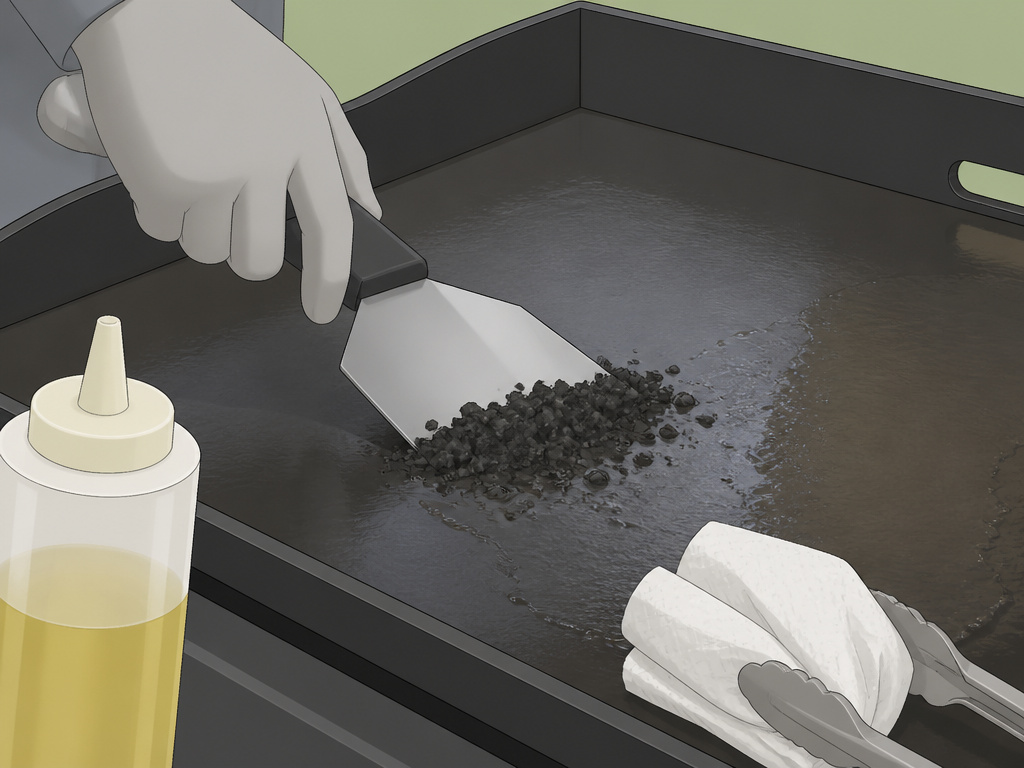 This is the core maintenance routine. It takes five minutes after cooking and prevents 95% of major cleaning headaches.
Before you start: Ensure the griddle is on a stable, level surface and you’re wearing heat-resistant gloves. Have your scraper, paper towels, tongs, and oil bottle ready.
- Kill the heat, but leave the burners on low. After your last pancake or burger, turn the knobs to low. Let the residual heat and low flame bring the temperature down to the sweet spot (200–250°F). This takes 5-7 minutes.
- Pour on a little water (optional for stuck bits). If you have stubborn, cooked-on cheese or sauce, sprinkle a tablespoon of water onto the hot spot. It will flash to steam and lift the debris. Immediately scrape it.
- Apply your lubricating oil. Drizzle about a teaspoon of oil across the surface. Use your paper towel and tongs to spread it into a thin, even film. This is critical, it prevents the scraper from dragging on dry steel.
- Scrape in sections. Work from the back left corner to the front right, using overlapping strokes. Push all the black carbon and debris into the grease management system. Apply firm, consistent pressure.
- Do the final wipe. With a fresh wad of paper towels, wipe the entire surface clean. The paper towel should come away with a light brown residue, not black gunk. If it’s black, the surface was too cool and you’re scraping off seasoning. Re-heat and try again.
This process achieves what scrubbing cannot: it cleans while simultaneously adding the next micro-layer to your griddle seasoning. The thin coat of oil you apply before scraping smokes off slightly, polymerizing onto the hot metal as you work.
Fixing a Scratched Griddle Surface
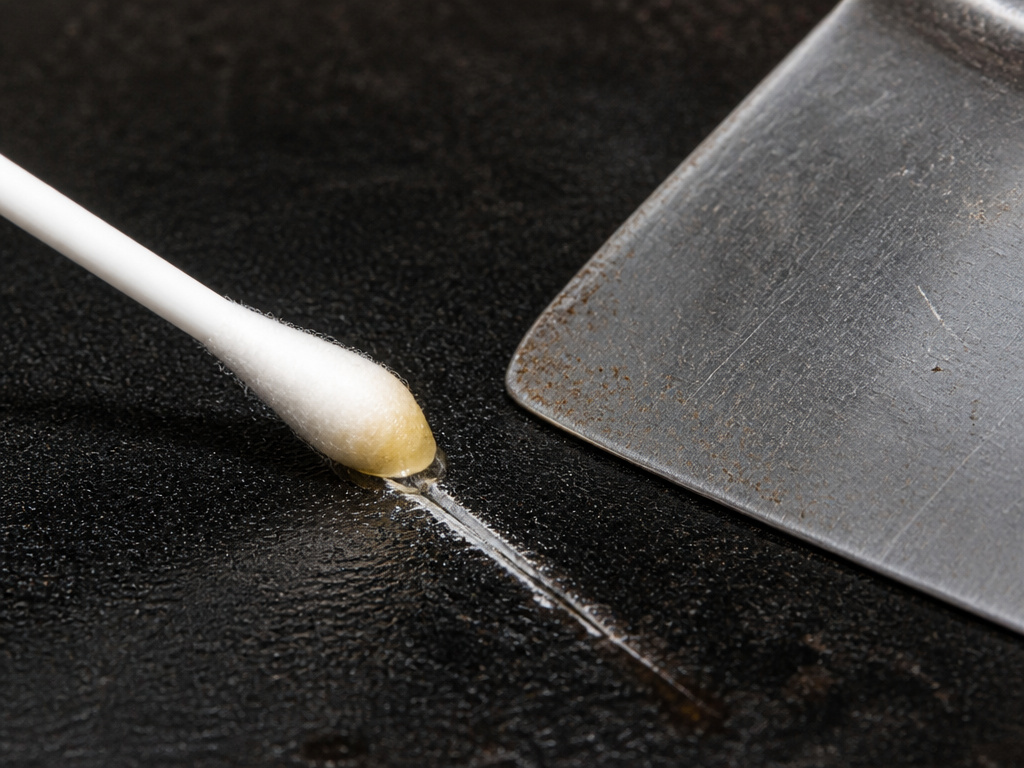 You went too hard with a corner of the scraper, or a guest used a fork. Now there’s a visible silver scratch in your black seasoning. This isn’t a catastrophe; it’s a repair job.
Worth knowing before you start: A scratch is only a rust problem if you ignore it. The exposed steel will oxidize quickly, especially if the griddle is stored outdoors. The fix must happen before the next cook, or certainly before the next rain.
The principle is the same as seasoning a cast iron griddle: you must build a new polymerized layer over the bare metal.
| Scratch Severity | Visual Clue | Action Required | Timeline |
|---|---|---|---|
| Light (Hairline) | Silvery line, can feel with fingernail | Spot-season: oil and heat scratch area | 10 minutes |
| Moderate (Visible Groove) | Clearly defined trench, no rust | Full re-season of affected zone | 20-30 minutes |
| Deep (Gouge) | Visible metal depression, possibly rusty | Clean rust, then multi-layer seasoning | 1 hour+ |
Here’s the spot-repair process:
- Clean the area. Heat the griddle to about 200°F. Use your scraper to lightly clean any loose carbon from the scratch itself. Wipe with a dry paper towel.
- Apply oil directly to the scratch. Use a dedicated oil rag or a Q-tip for precision. Get a drop of high-smoke-point oil into the groove. Wipe away any excess, you want the thinnest possible film.
- Heat until it smokes. Turn the burner under the scratch to medium-high. Watch for the oil to start smoking lightly. Once it smokes, let it continue for 1-2 minutes, then turn off the heat.
- Let it cool completely. As it cools, the oil will polymerize and bond. The scratch will darken. It may take 2-3 cycles to match the surrounding black finish.
If the scratch has already turned orange with rust, you must first remove rust using a mild abrasive like a Scotch-Brite pad (only on the rusty spot) and a bit of vinegar before you begin the re-seasoning steps. This is the one time an abrasive is acceptable.
Frequently Asked Questions
Can scraping ruin my Blackstone?
Yes, if done wrong. Using a sharp or angled tool, scraping cold, or applying too much force can gouge the steel and strip the seasoning. This creates a rough surface that food sticks to and can lead to rust, which may not be covered under warranty.
What is the absolute best scraper to use?
4-inch stainless steel putty knife** with a flat, non-sharpened edge. It’s durable, inexpensive, and the perfect stiffness for the job. Dedicated carbon steel griddle scrapers are also excellent, as they are designed specifically for this surface.
My griddle has thick, flaky black buildup. Do I scrape it off?
That’s likely built-up carbon, not seasoning. Yes, you need to remove it. Heat the griddle to around 250°F, add a little oil, and use your putty knife to gently work the flakes loose. You may need to do this over several heating cycles. The goal is to get back down to a smooth, hard layer, that’s your true seasoning.
How is cleaning a Blackstone different from cleaning a cast iron griddle?
The principles are identical, preserve the polymerized oil seasoning. The main difference is scale. A Blackstone’s large, flat surface makes the cleaning and maintaining a cast iron griddle process more about broad, sweeping strokes with a larger tool. The metal is also typically thinner, so overheating during cleaning can warp it more easily than thick cast iron.
Before You Go
Scraping is not just permitted; it’s necessary. But the line between upkeep and damage is defined by your tool and your temperature. Keep a flat-edged metal scraper next to your griddle, make the hot scrape and re-oil routine a habit, and that 90-day warranty will be a footnote you never need.
When you see that glossy, black surface, you’re not looking at a dirty grill. You’re looking at a maintained tool. The carbon you scrape off is the waste; the layer that remains is the investment. Protect it with the right technique, and the only thing that will stick to your Blackstone is your next great meal.
