
Cast Iron Skillet Mistakes: What You Should Never Cook
This post contains affiliate links. As an Amazon Associate, we earn from qualifying purchases.
You can cook acidic foods in a cast iron skillet for up to 30 minutes before a metallic taste becomes noticeable, but you should avoid simmering tomato sauce or wine-based dishes for longer than that. The real damage happens to the pan’s seasoning, a polymerized oil layer that acid slowly erodes. This guide covers the four main categories to avoid and the specific timelines for when things go wrong.
That 30-minute mark isn’t a guess. It’s the result of a controlled taste test. The distinction between a seasoned pan and an unseasoned one changes the entire equation, turning a minor concern into a guaranteed problem.
What follows: the science behind the metallic taste, the two foods that fail on contact, the one rule every chef breaks, and how to fix your pan if you cross the line.
Key Takeaways
- Acidic foods like tomatoes and wine are safe for under 30 minutes in a well-seasoned skillet; after that, metallic taste and seasoning damage accelerate.
- Brand-new or poorly seasoned skillets leach iron into food immediately, making acidic cooking a bad idea from the start.
- Delicate, lean fish like tilapia and flounder will stick and tear; save your cast iron for meaty, skin-on fish like salmon or swordfish.
- Never store cooked food in the pan; residual acids and moisture break down the seasoning overnight and promote rust.
- Enameled cast iron, like a Le Creuset Dutch oven, is completely non-reactive and exempt from all these rules.
The 30-Minute Acidic Food Deadline
Tomato sauce, a glug of wine, a lemon pan sauce, these are the classic warnings. The reason is chemical. Cast iron is a reactive metal, and acids like citric or ascorbic acid can bind to iron atoms on the pan’s surface, pulling them into your food.
A Virginia Tech food scientist states that a properly seasoned pan can be used with acidic foods, but is not the best choice if the food will be simmered for a long time, like tomato sauce.
The seasoning is your shield. That layer of polymerized oil acts as a barrier. But it’s a finite shield, and acid is a slow solvent.
The Test That Set the Timer
America’s Test Kitchen ran the definitive experiment. They simmered tomato sauce in seasoned cast iron, unseasoned cast iron, and stainless steel. At 15 minutes, tasters detected no metallic flavor in any sample. At the 30-minute mark, the sauce from the seasoned skillet had a slight metallic note. The sauce from the unseasoned skillet was markedly metallic.
Lab tests confirmed it: the unseasoned pan leached significantly more iron. The takeaway is binary. If your skillet’s seasoning is thick and glossy, you have a half-hour window. If the pan is new, stripped, or patchy, you have zero minutes.
How to Cook Acidic Foods Safely (When You Must)
Sometimes a cast iron skillet is the only pan that’s the right size or is already hot. If you need to cook something acidic, follow this damage-control protocol.
| Strategy | Action | Why It Works |
|---|---|---|
| Shorten Simmer Time | Keep active cook time under 30 minutes. | Minimizes acid’s contact time with the seasoning layer. |
| Dilute the Acid | Add more broth, water, or non-acidic ingredients. | Raises the overall pH of the dish, reducing reactivity. |
| Add Acid Late | Stir in tomatoes, vinegar, or wine in the last 10-15 minutes. | The acid has less time to interact with the hot metal. |
| Use High Heat | Opt for quick, high-heat applications like searing. | Less time for a simmering, reactive bath. |
| Transfer Immediately | Plate the food and rinse the skillet as soon as it’s off the heat. | Stops the chemical reaction dead. |
This approach is about managing risk, not eliminating it. Every minute an acidic dish sits in a hot pan costs a little of your seasoned skillet’s non-stick coating. For a long-simmered Sunday gravy, switch to an enameled Dutch oven or a stainless steel pot.
Delicate Foods That Stick on Contact
Cast iron’s great strength is its incredible heat retention. That’s a weakness for foods that cook quickly and rely on a release-friendly surface. Without a bulletproof polymerized coating, these items will fuse to the microscopic pores of the iron.
Where this goes sideways: Cooking scrambled eggs in a new Lodge skillet. The proteins bond instantly to the imperfect surface, leaving a cemented, frustrating mess that requires a scrub and a re-oil.
The Sticky Offenders List
- Eggs (Sunny-Side Up, Scrambled, Omelets): The proteins are notoriously adhesive. They need a perfectly slick surface, which only comes after months of regular cast iron cooking with fats.
- Pancakes & Crepes: Batters seep into tiny imperfections. The first pancake often sticks, tearing and leaving behind a residue that burns for the next one.
- Lean Fish Fillets (Tilapia, Flounder, Sole): These thin, delicate fillets have no fat or skin to protect them. They weld to the pan and tear when you try to flip them, making a simple cleaning job a nightmare.
- Grilled Cheese (if using lean bread and low-fat cheese): Without ample butter or oil, the bread’s starch can glue itself to the surface.
The fix is either time or a different pan. Build your skillet’s seasoning by cooking fatty foods like bacon, sausages, or seared chicken thighs for the first dozen uses. For eggs tomorrow morning, use a non-stick skillet. For a skin-on salmon fillet tonight, your cast iron is perfect, the skin crisps and provides a natural barrier.
Foods That Leave a Lasting “Memory”
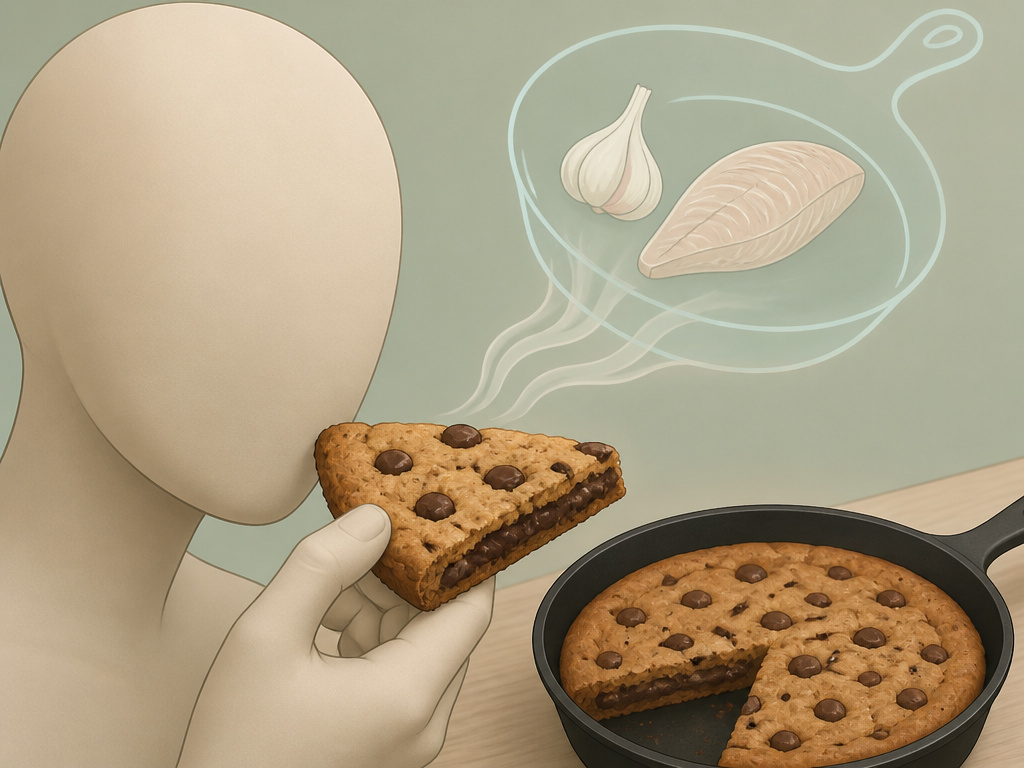
Cast iron is porous. Even with seasoning, it can absorb and slowly release potent flavors and odors. This isn’t about damage; it’s about flavor contamination for your next meal.
Garlic, onions, spicy peppers, and strong cheeses bake their essence into the pan’s surface. If you cook a garlic-heavy shrimp dish on Tuesday, your cast iron skillet might whisper a garlic note into Thursday’s skillet cornbread. For savory cooking, this is often a bonus. For desserts, it’s a disaster.
The Flavor Transfer Rule
If you plan to bake desserts in your skillet, like a peach cobbler, pineapple upside-down cake, or a giant cookie, dedicate the pan to sweet duty. Give it a thorough cleaning with mild soap and water, then dry it completely and give it a fresh, light oil coat. This creates a neutral base. Once you’ve baked a dessert in it, try to keep it for sweets.
This is why some enthusiasts own two skillets: one for savory searing and one for baking. It’s not strictly necessary, but it’s the only way to guarantee your chocolate chip cookie doesn’t have a faint, confusing aroma of last night’s blackened fish.
The One Unforgivable Mistake: Storing Food

This is the quickest way to cause active harm. Never cover a cast iron skillet with leftovers and put it in the refrigerator.
Acids in the food continue to react with the iron, even when cold. More critically, moisture from the food sits against the seasoned pan, breaking down the oil layer and inviting rust. By morning, you’ll find the seasoning softened and discolored where the food touched, often with the beginnings of orange rust spots.
The rule is simple: plate, serve, or transfer leftovers to a glass or plastic container. Then, clean your skillet. Soaking a skillet is also forbidden for the same reason, prolonged water exposure is the enemy of iron.
What If You Damage the Seasoning?
You’ll know. Food starts sticking dramatically, the surface looks dull or patchy, or you see raw, grey metal. Don’t panic. You can’t ruin cast iron through seasoning damage short of cracking it.
The repair is a straightforward seasoning process. Scrub the pan clean, dry it thoroughly, apply a thin layer of a high-smoke-point oil like grapeseed or canola, and bake it upside down in a 450°F oven for an hour. Let it cool in the oven. Repeat two or three times. It’s a weekend project that restores the pan to like-new condition. This is the core of long-term skillet care.
Enameled Cast Iron: The Exception to Every Rule
All the warnings above apply to traditional, bare cast iron. Enameled cast iron, the kind with a colored, glass-like coating made by brands like Le Creuset and Staub, plays by a different set of rules.
The enamel is a fused glass surface that is completely non-porous and non-reactive. You can simmer tomato sauce for four hours, deglaze with vinegar, store leftovers in the pot, and clean it with dish soap without a second thought. It doesn’t require seasoning and won’t leach iron into your food.
The trade-off is that it’s not naturally non-stick for tasks like frying eggs, and it can chip if struck against a hard surface. For soups, braises, and acidic recipes, it’s the superior tool. Knowing which type of cast iron you have is the first step in using it correctly.
Frequently Asked Questions
Can you cook bacon in a cast iron skillet?
Absolutely. Bacon is one of the best foods to cook in a new skillet. The abundant fat helps build and reinforce the seasoning layer, and the high heat renders it crisp. The salt and smoke also contribute to the pan’s flavor profile in a good way.
What is the best oil for seasoning cast iron?
High-smoke-point, neutral oils are best. Grapeseed oil, canola oil, and refined coconut oil are top choices. Flaxseed oil was once popular but is now known to be prone to flaking. The key is a thin, even layer, wipe on oil, then wipe it off as if you made a mistake. A thick layer will become sticky.
Is it safe to eat food that tastes metallic from cast iron?
Yes, from a health perspective. The iron leaching into your food is not harmful; in fact, it can be a minor dietary source of the mineral. The issue is solely one of taste and food quality. A metallic flavor is unpleasant and means your pan’s seasoning is compromised.
Can you use metal utensils on cast iron?
You can, but with caution. A well-bonded seasoning layer is quite durable. However, aggressive scraping with metal spatulas or spoons can scratch and gouge the seasoning, especially if it’s thin. Silicone or wooden utensils are gentler and recommended for daily use to preserve your cast iron maintenance routine.
How do you clean a cast iron skillet after cooking sticky food?
Use hot water and a stiff brush or chainmail scrubber. For stubborn bits, add a pinch of coarse salt as a gentle abrasive. If necessary, a small drop of modern dish soap is acceptable, the old myth about soap damaging seasoning applied to lye-based soaps, not today’s mild detergents. Dry immediately and completely over low heat, then apply a micro-thin coat of oil.
Before You Go
Your cast iron skillet is a tool, not a museum piece. The goal isn’t to avoid using it for fear of damage, but to understand its limits so you can use it confidently for decades.
Acidic foods get a 30-minute timer. Delicate foods need a flawless surface. Strong flavors linger. And no food gets to sleep in the pan. Break these rules occasionally, and you’ll just spend an afternoon re-seasoning. Follow them most of the time, and that skillet will only get better with age. For everything else, that’s what your enameled cast iron Dutch oven is for.
