
Does Stainless Steel Cookware Stick? The Truth & 3 Easy Fixes
This post contains affiliate links. As an Amazon Associate, we earn from qualifying purchases.
Stainless steel cookware sticks when you don’t manage heat and oil correctly. The metal itself is non-porous, but food bonds to a cold or unevenly heated surface. The fix is a three-step sequence: preheat the dry pan to the right temperature, add high-smoke-point oil, then add your food. Skip the preheat, and eggs will weld themselves to the pan every time.
That sequence is the entire game. Professional kitchens use stainless steel for its searing capability because they nail this process. Home cooks who get sticky, torn fish or burnt-on egg residue are usually missing just one of those three variables.
What follows: the real metallurgy behind sticking (it’s not pores), the exact preheat test, the oil types that fail, and the manufacturer warranty clauses that prove scratches are your problem, not theirs.
Key Takeaways
- Sticking happens when food proteins bond directly to cold or uneven metal, not because stainless steel has “pores.” Proper preheating creates a thermal barrier.
- The water bead test is the only reliable preheat indicator. When water droplets skitter and dance on the pan’s surface, you’re at the right temperature to add oil.
- Butter and extra virgin olive oil burn and become sticky at medium heat. Use a high-smoke-point oil like avocado, grapeseed, or refined canola for the initial sear.
- Manufacturer warranties, like Henckels’ lifetime policy, explicitly exclude scratches to the interior or exterior from coverage. Scratches are considered normal wear.
- Ceramic non-stick coatings like CERAFORCE® have a hard temperature ceiling of 400°F/204°C. Exceed that, and the non-stick properties degrade permanently.
The Real Reason Food Sticks (It’s Not Pores)
Forget the myth about microscopic pores. High-quality stainless steel is a non-porous alloy of iron, chromium, and nickel. The chromium forms a passive oxide layer that makes it “stainless,” but that layer doesn’t stop food from adhering.
Sticking is a simple adhesion problem. When you place cold food on a cold or lukewarm pan, the proteins and starches form a direct molecular bond with the metal surface. The pan doesn’t have to be hot enough to sear, it just has to be too cool to instantly vaporize the moisture at the point of contact. That moisture layer is your temporary non-stick barrier. No vapor, no barrier. The food welds on.
The water bead test is the mechanical signal that the pan’s surface is hot enough to instantly vaporize water. At that temperature, the Leidenfrost effect creates a protective steam layer between the food and the metal, preventing the direct bond that causes sticking.
The pan’s construction matters for even heating, which prevents cold spots where food can grab on. A tri-ply pan with an aluminum or copper core distributes heat far more evenly than a single-ply disc-bottom model. An uneven pan is a sticky pan, regardless of your technique.
The 3-Step Fix for Sticking Food
This is a mandatory sequence. Change the order, and you start over.
1. Preheat the Dry Pan
Place your empty, dry pan on a burner set to medium or medium-low. Give it three to five minutes. Do not add oil yet. You’re waiting for the entire cooking surface, not just the center, to reach a consistent temperature. The cue is the water bead test. Flick a few drops of water onto the surface. If they sizzle and evaporate instantly, the pan isn’t hot enough. If they form cohesive beads that skate around like mercury, you’re ready.
2. Add the Right Oil
Now add your high-smoke-point oil. Swirl it to coat the surface. It should thin out and shimmer almost immediately, not pool and sit thick. This tells you the pan is at the correct temperature for the oil to polymerize slightly on contact, creating that temporary non-stick layer. Adding oil to a cold pan lets it soak into every microscopic imperfection, and when heated, it burns onto the metal instead of protecting it.
3. Add Your Food
Don’t crowd the pan. Adding too much food drops the surface temperature drastically, defeating the preheat. Place your item and leave it alone. If it’s properly seared, it will release from the surface on its own. Prying at it early tears the sear and leaves bits behind to burn.
Where this goes sideways: Using butter or extra virgin olive oil for the initial sear. Their smoke points are too low. They burn and carbonize on a properly preheated stainless steel pan, creating a sticky, blackened residue that guarantees your food will stick. Add them for flavor at the end.
| Common Mistake | What Actually Happens | The Fix |
|---|---|---|
| Adding oil to a cold pan | Oil soaks in, then burns and bonds to metal as it heats. | Always preheat the dry pan first. |
| Using low-smoke-point fats | Butter (302°F) or EVOO (375°F) burns, creating a sticky carbon layer. | Start with avocado (520°F) or grapeseed (420°F) oil. |
| Moving food too soon | The sear hasn’t formed; proteins tear and bond to the pan. | Wait for the natural release. Listen for the sizzle change. |
| Overcrowding the pan | The surface temperature plummets, steam doesn’t form, food steams and sticks. | Cook in batches. Give each piece space. |
What Your Cookware’s Manual Actually Says
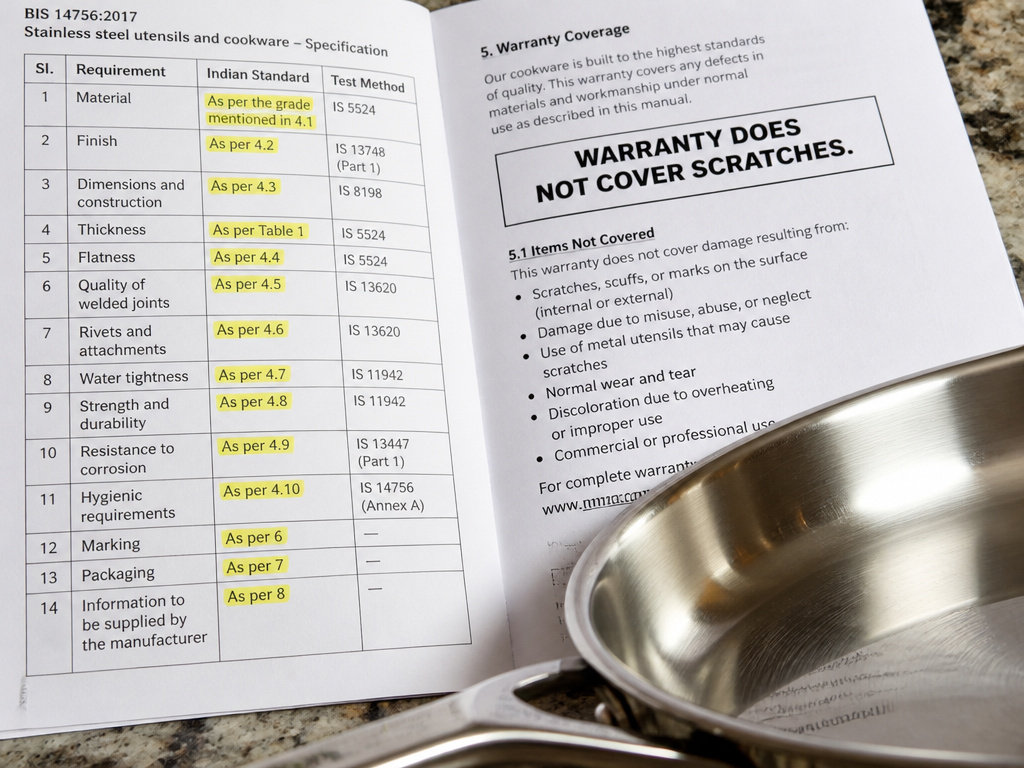
The product guides and standards reveal the fine print most cooking blogs skip. This is the non-commodity ground truth.
The official BIS stainless steel cookware standard (IS 14756:2017 product manual) outlines the tests for durability, including a thermal shock test. This is a verification that the metal can handle the rapid temperature change from a 500°F oven to a cold counter, the kind of move that warps cheap pans.
Henckels’ safety manual is brutally clear about warranties and limitations. Their lifetime warranty covers manufacturer’s defects. It does not cover “scratches to the inside or outside of the stainless steel.” Those are “not considered production defects.” In their view, and in the industry’s, surface marring from daily use is your responsibility, not a flaw in the material.
For their ceramic-coated lines, the manual states a hard limit: “Do not exceed temperatures over 400°F/204°C.” The CERAFORCE® Ceramic Nonstick Coating properties will “diminish” with extreme high heat. This is the threshold where the coating’s chemistry breaks down.
The part nobody mentions: Henckels explicitly advises against non-stick cooking sprays. The manual states the thin layer of oil from these sprays “can burn at a very low temperature, which creates a residue that can diminish the nonstick properties.” That gummy residue is also a primary cause of sticking on bare stainless steel.
Stainless Steel vs. Non-Stick: The Sticking Trade-Off
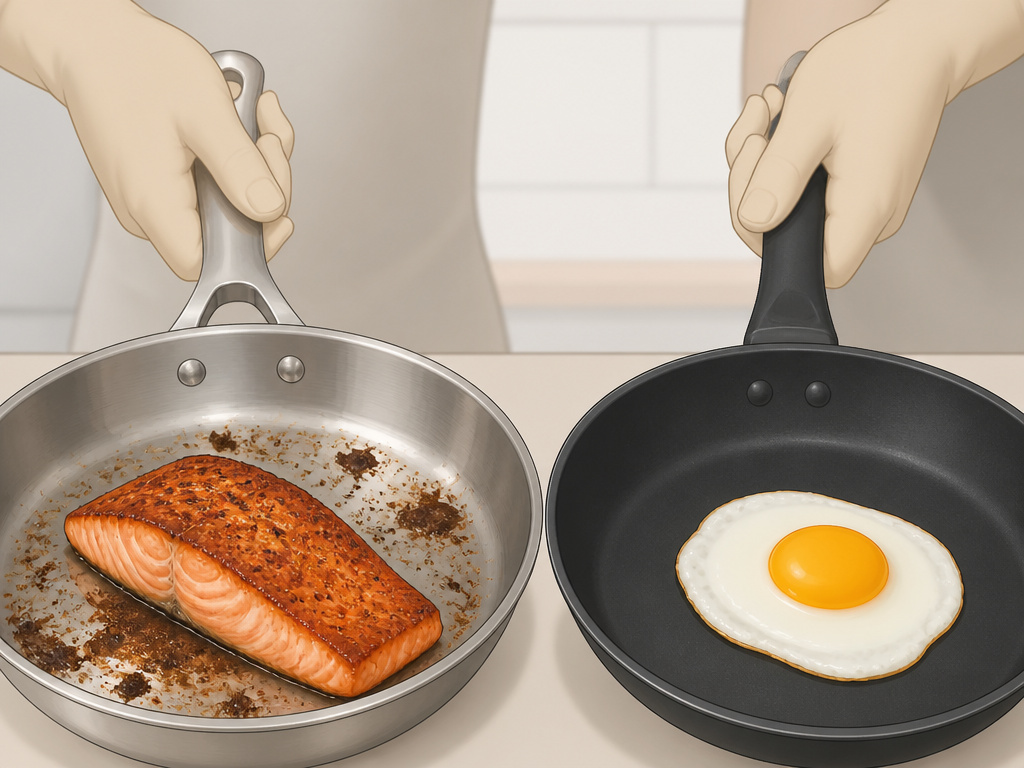
The stainless steel vs non-stick debate often misses the point. A non-stick pan is designed for easy release with minimal fat. A stainless steel pan is designed for fond development and high-heat searing. Sticking is a feature, not a bug, when you want to deglaze a pan for a sauce.
A Teflon-coated pan fails when the coating chips or wears. A stainless steel pan doesn’t wear out in the same way, but its performance is entirely dependent on your technique. You can’t “ruin” the non-stick properties of bare stainless steel through use, only through neglect, like burning on layers of carbonized oil.
If you want the sear of stainless with some stick resistance, a non-stick stainless steel hybrid like Circulon’s SteelShield line exists. It has a stainless steel exterior with a non-stick ceramic interior. You trade some fond-building capability for easier cleanup. It’s a compromise, not a perfect solution.
The short version: Pick stainless steel for technique-driven cooking and fond. Pick non-stick for low-fat cooking and eggs. Trying to make one behave like the other is where frustration lives.
Tools and Maintenance That Prevent Problems
Your tools dictate your results. Using metal utensils on stainless steel is generally safe, but aggressive scraping with cheap, thin utensils can cause fine scratches. These scratches don’t affect cooking performance, but they can trap carbonized oil over time, creating sticky patches.
For daily use, silicone, nylon, or wooden utensils for stainless steel are gentler. They preserve the pan’s polished interior finish, which is easier to keep clean and non-reactive.
When cleaning, never plunge a scorching hot pan into cold water. Henckels warns this “extreme difference in temperature… May cause permanent deformation.” Let the pan cool first. For burnt-on food, soak it overnight with warm water and dish soap. Abrasive scrubbers or steel wool will scratch; a soft brush or non-abrasive sponge won’t.
If you want to restore the shine and remove stubborn water spots, a dedicated stainless steel cleaner works. Baking soda pastes also cut through grease without scratching. Avoid cleaners with bleach or citrus additives, as they can dull the finish over many washes.
Frequently Asked Questions
Does seasoning stainless steel cookware work?
You can create a polymerized oil layer through a seasoning process, similar to cast iron. It involves coating the pan with a thin layer of high-smoke-point oil and heating it past its smoke point. This can slightly improve release for low-fat cooking, but it’s not a permanent, foolproof non-stick surface like Teflon. It requires maintenance and can be stripped by acidic foods or dish soap. For most, mastering the preheat-and-oil method is more reliable than seasoning for non-stick benefits.
What is the best oil to prevent sticking?
Avocado oil and refined safflower oil have the highest smoke points (over 500°F), making them ideal for the initial sear in a very hot pan. Grapeseed and peanut oil are excellent middle-ground options. Never start with butter or extra virgin olive oil, they burn.
Why does my new stainless steel pan stick more?
New pans often have manufacturing residues or protective oils. Wash it thoroughly with warm, soapy water before first use. The metal surface is also perfectly smooth and needs a few uses to develop a slight patina from proper oil polymerization, which can aid release.
Can acidic foods damage stainless steel?
No. High-quality 18/10 stainless steel (18% chromium, 10% nickel) is highly resistant to acids from tomatoes, wine, or vinegar. You can safely simmer a tomato sauce for hours without damaging the pan or leaching metals into the food. The one exception is for individuals with a nickel allergy, who should avoid nickel-containing cookware altogether.
Is a tri-ply pan worth it for preventing sticking?
Absolutely. Tri-ply construction (stainless-aluminum-stainless) ensures even heat distribution across the entire cooking surface. This eliminates cold spots where food would instantly stick. An unevenly heated single-ply pan will have sticky zones no matter how well you preheat. Investing in a top-rated pan with a bonded base is the single biggest equipment upgrade to reduce food sticking.
The Bottom Line
Stainless steel sticks when it’s used incorrectly. The metal is inert, durable, and capable of a perfect sear, but it demands that you follow its rules. Preheat the dry pan until water beads. Add a high-smoke-point oil. Then cook.
Scratches, cloudy finishes, and burnt-on grease are maintenance issues, not defects. The warranties say so. Ceramic coatings have a strict temperature ceiling. The standards documents prove the metal can take the heat if you avoid thermal shock.
Your best next step is practicing the water bead test with your current one. Once that click happens, you stop fighting the cookware and start cooking with it.
