
Is Ceramic Cookware Better Than Stainless Steel? We Test It
This post contains affiliate links. As an Amazon Associate, we earn from qualifying purchases.
Ceramic cookware is not better than stainless steel for durability or high-heat cooking. Ceramic offers easier, low-oil cooking for 1-3 years, while stainless steel provides a lifetime of service, handles extreme heat, and has no coating to degrade. The “better” choice depends on whether you prioritize short-term convenience or long-term performance and safety.
That durability gap is the whole argument. It’s not about which one looks nicer on your stove. It’s about which material will still be in your kitchen in five years, and what happens to your food while it’s there.
This guide breaks down the science, the trade-offs, and the real-world cooking consequences. You’ll get specific numbers on metal leaching, a clear timeline for ceramic coating failure, and a direct comparison of how each material handles eggs, searing, and cleanup.
Key Takeaways
- Stainless steel outlasts ceramic by decades; ceramic coatings typically degrade within 1-3 years.
- New stainless steel pots leach the most nickel and chromium, especially into acidic foods over long cooking times.
- Ceramic pans decompose if overheated, and the proprietary coating formulas make the breakdown products unknown.
- Professional kitchens overwhelmingly use stainless steel for its heat tolerance and indestructibility.
- For a versatile, buy-it-for-life core set, choose stainless steel. For a single, easy-clean egg pan, a ceramic option works.
The Short-Term Winner vs. The Long-Term Champ
Ask what “better” means. Is it easier tomorrow, or more reliable in five years? Ceramic and stainless steel give opposite answers.
Ceramic-coated pans win the first week. The slick, often colorful surface releases eggs without a fight. You use less oil. Washing is a quick wipe. This is the appeal, immediate, low-fuss success.
Stainless steel asks for technique. You must preheat the pan, learn the water droplet test, and use enough fat. Food will stick if you rush. The reward is a crust on a steak that a ceramic pan cannot physically achieve. The Clemson University cookware safety factsheet notes that stainless steel’s hard, non-porous surface is resistant to wear and corrosion, a hint at its inherent toughness.
The lifespan numbers don’t lie. A high-quality ceramic coating lasts 1 to 3 years with careful use. A stainless steel pan, barring physical abuse, lasts for decades. This isn’t a minor difference. It’s the core financial and environmental calculation.
Where this goes sideways: Assuming ceramic’s easy start means an easy life. The coating is a consumable layer on an aluminum body. Every high-heat sear, dishwasher cycle, and metal utensil scrape brings its end date closer.
Why Chefs Reach for Stainless Steel
Walk into a professional kitchen. You’ll see stacks of stainless steel pots, not colorful ceramic ones. The reason is brutal practicality. A restaurant line cook doesn’t have time to baby a pan. They need a tool that can go from a screaming-hot stovetop into a broiler, withstand metal tongs and scrapers, and be scoured clean at the end of service.
Ceramic can’t survive that. Its maximum safe temperature is lower, often around 450°F. The non-stick surface is easily scratched. This finicky nature is why, as noted in industry commentary, many professional chefs prefer stainless steel for its higher cost-to-value ratio and resilience.
If your cooking style involves searing, deglazing, or using the oven frequently, your needs align with the pros. The learning curve is the price of admission for a tool that won’t quit.
The Science of Safety: Leaching vs. Decomposition
Safety isn’t a slogan. It’s a set of chemical and physical behaviors under heat and stress. Both materials have documented safety profiles with specific, non-negotiable boundaries.
Stainless Steel: The Known Leachate
Stainless steel is an alloy of iron, chromium, and often nickel. The concern is metal migration, particularly nickel, which can cause allergic reactions. This isn’t theoretical. A peer-reviewed metals leaching study and the accompanying Oregon State University research publication provide hard numbers.
Their key findings change how you should use a new stainless steel pot: – New pots leach the most. Metal release decreases after repeated uses, stabilizing around the sixth cooking cycle. – Acidity and time are multipliers. Cooking tomato sauce for 6 hours increased nickel concentrations up to 26-fold and chromium 7-fold. After 20 hours, nickel jumped 34-fold. – A single serving adds up. By the tenth cooking cycle, a 126-gram serving of sauce contained an average of 88 μg of nickel and 86 μg of chromium from the pot itself.
For most people, these levels are not a health hazard. But if you have a diagnosed nickel allergy, this is a direct, avoidable exposure source. For everyone else, it’s a reason to avoid prolonged cooking of acidic foods in new, lower-grade stainless steel.
Ceramic: The Unknown Breakdown
Ceramic-coated cookware is marketed as a “non-toxic” alternative to traditional non-stick. The ceramic layer itself, usually a silica-based sol-gel, is inert. The danger is in its destruction.
If a ceramic-coated pan is overheated, the coating can decompose. The American Ceramic Society investigation into this trend notes that these proprietary coatings can break down in mere months if abused, potentially releasing unknown chemicals. You can’t look up the safety data for a compound the manufacturer won’t name.
Furthermore, once the coating is scratched or chipped, you have two problems. First, you’re cooking on exposed aluminum, which can react with acidic foods. Second, those crevices trap food and bacteria, a sanitation issue no amount of handwashing can fully solve.
| Safety Concern | Stainless Steel | Ceramic-Coated |
|---|---|---|
| Primary Risk | Nickel/chromium leaching into acidic foods. | Coating decomposition from overheating; chipping. |
| Risk Trigger | New pans, long cooking times, low pH foods (tomato, wine). | Empty preheating, high-heat searing, metal utensils. |
| Who’s At Risk | Individuals with nickel allergies. | All users when pans are misused or damaged. |
| Evidence | Quantified in peer-reviewed studies (Oregon State). | Observed and reported by material science societies. |
The safety conclusion is about control. With stainless steel, the risk is known, measurable, and manageable, avoid prolonged acid baths in a new pan. With ceramic, the risk emerges from a failure of the product itself, and the consequences are a black box.
Heat Tolerance and Cooking Performance
Heat is the engine of cooking. How a pan manages it defines what you can cook.
Stainless Steel: The Heat Sink
A good stainless steel pan, especially one with a tri-ply construction of stainless-aluminum-stainless, is a heat battery. It takes a minute to warm up evenly across its surface. Once hot, it holds that temperature steadily, even when you add a cold steak. This thermal mass is essential for proper searing and the Maillard reaction, the chemical process that creates complex, savory flavors and a crisp crust.
You can take a stainless steel pan from a stovetop blast to a 500°F oven without a second thought. This versatility enables techniques like finishing a thick pork chop in the oven or making a frittata.
Ceramic: The Heat Shield
Ceramic coatings are excellent insulators. This is why they prevent sticking, but it also limits their heat capacity. They heat up quickly but can also develop hot spots. More critically, they have a hard upper limit.
Exceeding 450-500°F risks damaging the coating. This rules out proper searing, wok cooking, or any recipe that calls for high-heat preheating. You’re confined to low and medium heat cooking: eggs, pancakes, gentle sautéing, simmering sauces.
The part nobody mentions: That “non-stick” performance on a ceramic pan is partly due to its inability to get truly, evenly hot enough to polymerize proteins and sugars onto its surface. It’s not magic; it’s a temperature cap.
The Egg Test and The Sear Test
The classic comparison.
- Eggs: A ceramic pan wins effortlessly. No sticking, easy flip, simple cleanup. A stainless steel pan requires proper preheating, enough fat (butter or oil), and patience. It can be done perfectly, but it demands skill.
- Searing a Steak: Stainless steel is the only tool for the job. You need sustained, high heat to create a crust without overcooking the interior. A ceramic pan will either fail to brown properly or risk damaging its coating in the attempt.
Your favorite recipes tell you which material fits your life. If your weeknights are about quick eggs and grilled cheese, ceramic’s ease is tangible. If you roast chickens and pan-sear salmon, stainless steel’s power is non-negotiable.
Durability, Care, and Replacement
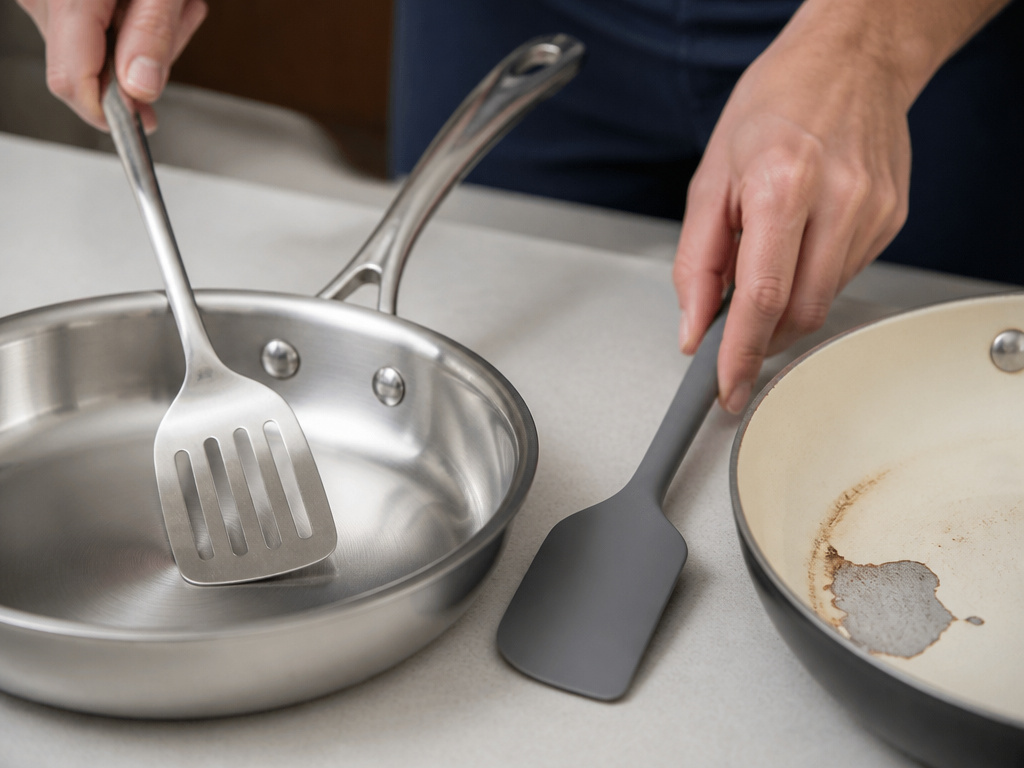
This is where the long-term cost of ownership becomes painfully clear.
The Stainless Steel Regimen
Care is straightforward because the material is hard. You can use metal utensils. You can scrub it with abrasive pads or powdered cleanser to remove fond or stains. Most are dishwasher safe, though hand-drying prevents water spots. Its appearance may change, it can develop a patina or heat tints, but its function remains intact. A high-quality set like recommended stainless steel cookware from reputable brands is a one-time purchase.
The Ceramic-Coated Ritual
Care is a list of prohibitions. Use only silicone, wood, or plastic utensils. Hand-wash gently; the dishwasher’s heat and detergents degrade the coating over time. Use pan protectors when stacking to prevent scratches. Never preheat it empty. Never use high heat.
Despite this care, the coating will wear. It slowly loses its slickness, becoming “sticky.” Then it may begin to discolor or chip. This isn’t a defect; it’s the expected lifecycle. The brand’s warranty often covers this for a year or two, acknowledging the limited lifespan.
| Aspect of Care | Stainless Steel | Ceramic-Coated |
|---|---|---|
| Utensils | Any type (metal, wood, silicone). | Soft only (silicone, wood, plastic). |
| Cleaning | Dishwasher safe; can be scoured. | Hand-wash recommended; gentle sponges only. |
| Stacking/Storage | Generally safe. | Requires protective dividers to prevent scratching. |
| Lifespan Signifier | Warping (rare), loose handle. | Loss of non-stick, chipping, discoloration. |
| End of Life | Decades; potentially never. | 1-3 years with ideal care. |
When a ceramic pan fails, you throw it away and buy a new one. When a stainless steel pan gets dirty, you clean it. This difference defines “better” for a sustainable kitchen.
Making Your Choice: A Decision Framework
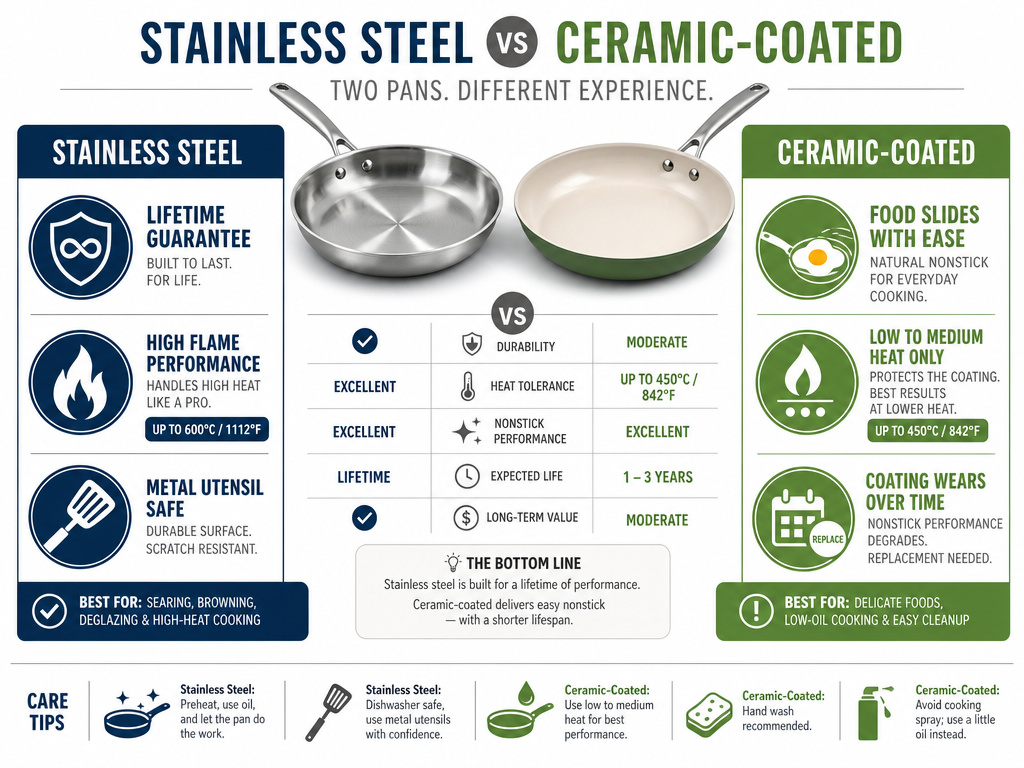
Stop looking for a single winner. Start matching the material to the task and timeline. Most well-equipped kitchens benefit from having both, but your primary investment should be in the workhorse.
Choose Stainless Steel If:
- You want cookware that lasts a lifetime.
- You regularly sear, brown, or deglaze.
- You use your oven and stovetop together.
- You dislike the idea of a coating that can wear off.
- You want the versatility to use any utensil.
- You are concerned about the long-term safety of stainless steel cookware and prefer a stable, well-understood material.
Choose Ceramic-Coated If:
- You want the easiest possible experience for eggs, fish, and pancakes.
- You cook primarily with low to medium heat.
- You are willing to replace a pan every few years.
- You want a PFAS-free non-stick option and understand its limits.
- You prioritize quick, low-oil cleanup above all else.
For your core set, a frying pan, saucepan, and stockpot, invest in stainless steel. It’s the foundation. Then, if you want, add a single ceramic-coated skillet for dedicated non-stick tasks. This hybrid approach gives you durability where you need it and convenience where you want it.
Brands like Tramontina and Cuisinart offer excellent tri-ply stainless steel at approachable prices. For ceramic, brands like Caraway and GreenPan are prevalent, but remember you are buying a product with a built-in expiration date.
Frequently Asked Questions
Is ceramic cookware safer than stainless steel?
Not necessarily. Ceramic is free of PTFE/PFOA, but its safety depends on keeping the coating intact. Overheating causes decomposition of unknown chemicals. Stainless steel is inert and stable at high heat, but can leach trace nickel and chromium, a concern primarily for those with allergies. “Safer” is context-dependent.
Which one is better for someone new to cooking?
Ceramic is more forgiving initially because food releases easily. However, learning on stainless steel teaches fundamental heat and fat control that makes you a better cook long-term. Starting with one stainless steel skillet is a valuable investment in skill.
Can you use ceramic cookware on high heat?
No. You should not. High heat, typically above 450°F, risks permanently damaging the ceramic coating, causing it to break down and lose its non-stick properties. Always use low to medium heat.
Does stainless steel leach toxins into food?
Stainless steel can leach small amounts of nickel and chromium, especially when new and when cooking acidic foods for extended periods. For the vast majority of people, these trace amounts are not considered a health risk. Those with a diagnosed nickel allergy should opt for nickel-free alloys like 18/0 stainless steel or cast iron.
How long does ceramic cookware really last?
With meticulous care (hand-washing, soft utensils, low heat, no stacking), a high-quality ceramic-coated pan may last 3 years. With typical home use, expect 1-2 years before the non-stick performance noticeably declines. This is a fraction of the decades you can expect from stainless steel.
Before You Go
For a durable, versatile kitchen foundation, stainless steel is the objectively better choice. It outperforms ceramic in heat tolerance, lifespan, and professional utility. The trade-off is a short learning curve to prevent food sticking to stainless steel.
Ceramic serves a specific, short-term niche: effortless low-heat cooking. Treat it as a consumable tool for particular jobs, not the centerpiece of your kitchen.
Your best setup is a stainless steel core for most tasks, informed by a clear understanding of metal leaching from new pots, complemented by a single ceramic pan for eggs. This combination gives you both capability and convenience, without compromising on longevity or safety.
