
What Is a Steamer Basket | Unlock Healthier, Tastier Meals
This post contains affiliate links. As an Amazon Associate, we earn from qualifying purchases.
A steamer basket is a perforated insert, made of stainless steel, silicone, or bamboo, that holds food above a small amount of simmering water in a pot or dedicated appliance. It cooks food with direct steam instead of boiling water, preserving nutrients, color, and texture without added fat. The water must never submerge the food, only generate steam that rises through the holes.
That definition covers the basics. The real question is whether you need a dedicated basket, a multi-tier appliance, or just a colander in a pinch. The answer shapes your cooking for years.
What follows: a breakdown of the three main types, the non-negotiable rules for water level and lid use, and the specific mistakes that turn crisp vegetables into soggy mush. By the end, you’ll know exactly which steamer basket fits your kitchen and how to use it without a second thought.
Key Takeaways
- Material dictates the rules. Bamboo baskets require the bottom rim submerged in water; metal and silicone baskets must sit just above it. Getting this wrong guarantees uneven cooking or a waterlogged meal.
- Lid protocol isn’t optional. For appliances like the Breville BFS800, using the wrong lid (the stainless steel one on the baskets) can trap too much steam and overpressure the system. Always match the lid to the accessory.
- Crowding is the enemy of steam. Leave space between pieces of food. Steam needs room to circulate; a packed basket steams unevenly, leaving some items raw and others overcooked.
- Not all steamers are created equal. A foldable metal basket for your stockpot is a versatile starter. A dedicated multi-tier electric steamer is for volume cooking. A bamboo steamer delivers authentic texture for dumplings but requires more care.
What Is a Steamer Basket, Really?
At its simplest, a steamer basket is a kitchen tool that uses steam heat. You put an inch or two of water in a pot, bring it to a simmer, and set the basket inside. The food goes in the basket, the lid goes on the pot, and the rising steam does the cooking.
But that description misses the mechanics. Steam at 212°F (100°C) carries more heat energy than boiling water at the same temperature. The vapor molecules transfer heat directly to the food’s surface, cooking it quickly and evenly without the violent agitation of a boil. This gentle transfer is why steamed broccoli stays bright green and firm, boiled broccoli leaches nutrients and turns dull and soft.
A steamer basket creates a zone of concentrated, moist heat by suspending food above, but not in, boiling water. The perforations allow saturated steam to envelop the food completely, ensuring efficient heat transfer without waterlogging.
The basket itself is just the architecture. Its job is to maximize exposure to that steam while providing structural support. A good one feels like an extension of your pot, not an afterthought.
The Core Job of a Steamer Basket
Its primary function is separation. It keeps food out of the cooking liquid. This is the single biggest difference between steaming and boiling or poaching.
When food is submerged, water-soluble vitamins (like vitamin C and many B vitamins) leach out into the liquid. Flavors dilute. Textures break down. A steamer basket prevents that. It also allows you to cook multiple items at once in a stacked system, with flavors subtly mingling through the steam but not mixing into a soggy mess.
Think of it as a platform. It turns any lidded pot into a basic steam oven. For understanding the broader basic principles of steam cooking, the mechanics are consistent across tools.
The Three Main Types of Steamer Baskets
You have three fundamental choices. Each material brings a different set of advantages, quirks, and rules.
Stainless Steel Baskets
These are the workhorses. A typical stainless steel basket is a dome of folded, interlocking metal strips that can expand to fit a wide skillet or contract for a narrow saucepan. They often have a central post and an adjustable handle.
Why you’d pick one: Durability and versatility. They’re nearly indestructible, dishwasher-safe, and work with any heat source. The open weave offers excellent steam circulation. For a general-purpose, no-fuss basket that will last decades, this is the default.
The catch: Food can stick to the metal, especially delicate items like fish fillets or dumplings. A quick spray of oil or a lettuce leaf lining solves it. The OXO Good Grips Stainless Steel Steamer Basket is a classic example of this reliable design.
Silicone Steamer Baskets
These are flexible, collapsible discs made of food-grade silicone. They sit flat on the bottom of a pot and have a central column of holes or a pleated design that pops up to hold food.
Why you’d pick one: Storage and non-stick performance. They fold flat into a drawer. Nothing sticks to silicone, so cleanup is trivial. They’re also dishwasher-safe and often come with built-in handles for easy lifting.
The catch: They are less stable with heavy loads and can warp if placed on a burner without water. Their steam circulation can be slightly less even than a metal basket’s open weave. The Chef’n StemGem Silicone Steamer is a popular, colorful option.
Bamboo Steamer Baskets
These are the traditional choice, especially in Asian cuisines. They are round, lidded baskets made of woven bamboo, designed to be stacked inside a wok or large pot.
Why you’d pick one: Authenticity and flavor. Bamboo absorbs excess moisture, which prevents condensation from dripping onto the food. This keeps dumpling wrappers perfectly taut and dry on top. The material also imparts a subtle, earthy aroma. For a deep dive into this method, see our guide on using a bamboo steamer.
The catch: They require specific care. You must hand-wash and air-dry them thoroughly to prevent mold. Most importantly, the bottom rim must be submerged in water while the floor of the basket stays dry. This is the opposite rule for metal and silicone. Get it wrong, and the basket chars or the food doesn’t cook.
| Basket Type | Best For | Key Rule | Lifespan & Care |
|---|---|---|---|
| Stainless Steel | Everyday vegetables, fish, potatoes; all cooktops. | Keep water level just below the basket. | Indefinite. Dishwasher safe. |
| Silicone | Delicate items (dumplings, fish); small kitchens. | Ensure the pot base is completely flat. | Long-lasting. Dishwasher safe. |
| Bamboo | Dumplings, buns, whole fish; authentic texture. | Submerge the bottom rim in water. | Several years with proper drying. Hand-wash only. |
How to Use a Steamer Basket Correctly
The procedure is simple, but precision matters. A quarter-inch of water makes the difference between perfect and parboiled.
Step 1: Choose your vessel. Any pot with a tight-fitting lid works. The basket should sit snugly without tipping. For a bamboo steamer, you need a wok or a pot wide enough to hold it with the lid on.
Step 2: Add water. This is the most critical step. * For metal or silicone: Add 1 to 2 inches of water. It should be just touching the bottom of the basket when it’s in place. You should see a slight boil, but water should not bubble up through the holes. * For bamboo: Add water until it submerges the bottom quarter-inch of the basket’s rim. The woven floor inside must remain dry.
Step 3: Prepare the food. Cut items into uniform sizes for even cooking. Pat proteins dry. If using a metal basket with sticky foods, line it with parchment, cabbage leaves, or a light coat of oil.
Step 4: Load the basket. Arrange food in a single, loose layer. Do not pack or pile. Steam needs pathways to circulate. If cooking multiple types, place slower-cooking items (like root vegetables) on the bottom tier or add them first.
Step 5: Cover and steam. Bring the water to a simmer over medium-high heat, then reduce to maintain a steady steam output. Set a timer based on your food. Do not lift the lid frequently, each peek drops the temperature and adds minutes.
Step 6: Check for doneness. Use a fork or knife to test the thickest piece. Food should be tender but not mushy. Remember, it will continue to cook for a minute after removal from the heat.
Where this goes sideways: Adding frozen food directly to the steamer. Frozen meat or vegetables release a flood of ice melt that can raise the water level into the basket, effectively boiling the bottom layer. Always thaw completely first.
Steamer Baskets vs. Dedicated Steamer Appliances
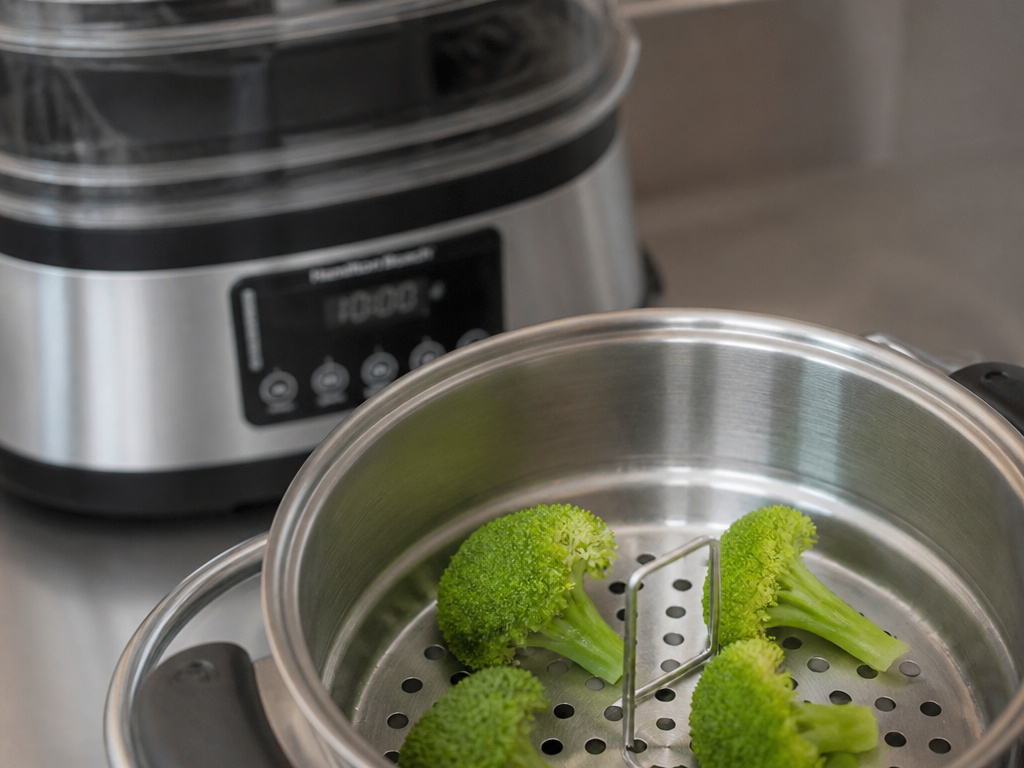
A basket is a tool for your existing pot. A dedicated steamer is a countertop appliance built for the job. They solve different problems.
A steamer basket is about flexibility. You likely already own a pot that works. It stores in a drawer, costs little, and can be used in multiple pots for different batch sizes. It’s perfect for the cook who steams occasionally.
A dedicated steamer appliance, like the Breville BFS800 or a Russell Hobbs multi-tier model, is about volume and convenience. These have integrated water tanks, timers, and multiple stacked compartments. The Breville BFS800, for example, has a 60 oz water tank and specific rules: use the glass lids on the baskets, never the main stainless steel lid.
The part nobody mentions: These appliances demand space. The Kenwood AT340 steamer basket manual warns to keep the appliance “away from walls and overhanging cupboards” because the escaping steam can damage cabinetry and paint over time. They’re not for cramped countertops.
The Russell Hobbs 23560-56 manual reveals another quirk of tiered systems: the baskets are numbered 1, 2, and 3, corresponding to bottom, middle, and top positions. This numbering ensures the manufacturer’s tested heat flow, mixing them up leads to uneven cooking.
| Aspect | Steamer Basket (Pot-top) | Dedicated Steamer Appliance |
|---|---|---|
| Footprint | Stores in a drawer. | Permanent countertop claim. |
| Capacity | Limited by pot size. | High, with multiple tiers. |
| Control | Manual heat and timing. | Set-and-forget digital timers. |
| Best Use Case | Occasional steaming, small batches. | Frequent use, cooking whole meals. |
Common Mistakes and How to Avoid Them
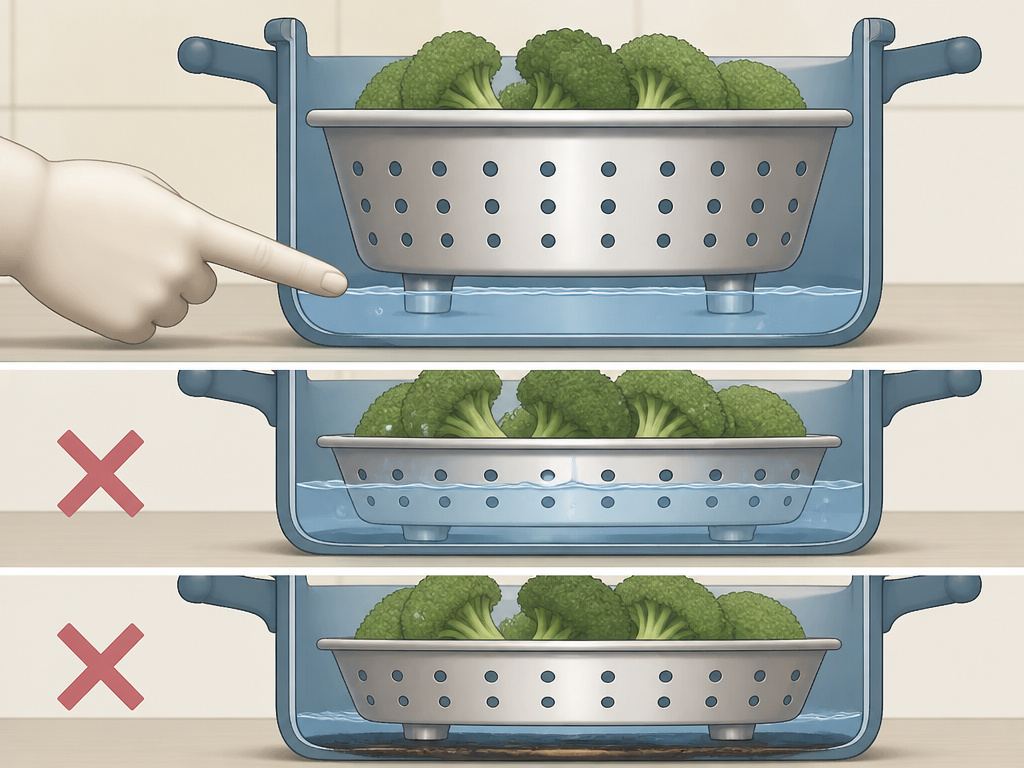
Everyone makes these errors once. Learn them here so your first batch of green beans isn’t your last.
Mistake 1: The water level is wrong.
- Consequence: Too much water boils up into the basket, waterlogging food. Too little water evaporates before cooking is done, burning the pot and basket.
- Fix: Use the finger test. Before heating, place the empty basket in the pot. Add water until it just kisses the bottom. That’s your mark.
Mistake 2: Overcrowding the basket.
- Consequence: Steam can’t penetrate the dense pile. The outside layers overcook while the center remains raw. This is the #1 reason people think steaming “doesn’t work.”
- Fix: Work in batches. A single layer with space between pieces is non-negotiable. For a large quantity, use a stacked multi-tiered steamer or cook sequentially.
Mistake 3: Using the wrong lid.
- Consequence: Trapped pressure or insufficient heat. The Breville BFS800 manual is explicit: using the main stainless lid on the baskets can overpressurize. Using no lid, or a loose one, lets all the heat escape.
- Fix: Always use a tight-fitting lid meant for your setup. For pot-top baskets, any pot lid is fine. For appliances, follow the manual to the letter. The right steamer lid is a seal, not just a cover.
Mistake 4: Not accounting for carryover cooking.
- Consequence: Perfectly tender broccoli turns to mush by the time it hits the table.
- Fix: Undercook slightly. Remove vegetables when they are just shy of your desired tenderness, they’ll soften further from residual heat. Shock them in ice water if you need to stop the process completely for a salad.
What Can You Cook in a Steamer Basket?
The short answer: almost anything that benefits from gentle, moist heat. It’s not just for broccoli.
Vegetables are the obvious win. Asparagus, green beans, carrots, and broccoli florets steam beautifully. So do artichokes and potatoes. For dedicated tools, check our roundup of the best vegetable steamer baskets.
Proteins shine. Fish fillets, shrimp, chicken breasts, and even dumplings cook evenly and stay incredibly moist. The steam is a forgiving medium.
Surprising staples. You can cook hard-cooked eggs in a steamer basket, they peel more easily than boiled eggs. You can even gently reheat leftovers like rice or tamales without drying them out.
The true power is in combination meals. Stack a bamboo steamer with fish in the bottom tier and greens in the top. Use a multi-tier appliance to cook salmon, jasmine rice, and asparagus simultaneously for a complete, clean dinner. For inspiration, browse our collection of steamer recipes.
Cleaning and Storing Your Steamer Basket
Neglect here shortens the tool’s life, especially for bamboo.
Stainless Steel & Silicone: These are almost always dishwasher-safe on the top rack. For stubborn starchy residues (from potatoes, for instance), a short soak in warm, soapy water does the trick. Dry thoroughly before storing to prevent water spots on steel.
Bamboo: This is a hand-wash-only material. Use warm water, a soft sponge, and mild soap. Never use abrasive scrubbers. The critical step is drying: air-dry it completely, upside down and disassembled, in a well-ventilated area. Storing it while damp is an invitation for mold. A properly cared-for bamboo steamer can last for years.
If you find yourself without a dedicated basket, all is not lost. Our guide on steamer alternatives covers how to use a heatproof colander, a plate on a trivet, or even a foil packet with holes poked in it.
Frequently Asked Questions
Can I use a steamer basket in an Instant Pot?
Yes. Most Instant Pot models come with a trivet that serves the same purpose. You can also use a collapsible metal steamer basket designed for pressure cookers. The principle is identical: add water to the pot, place the basket inside, and set to the Steam function or Manual/Pressure Cook for a short time.
Do I need to oil a steamer basket?
It depends on the food and the basket. For sticky items like dumplings, fish fillets, or buns, a light oil spray or a parchment liner prevents a mess. For most vegetables in a stainless steel basket, it’s unnecessary. Silicone baskets are naturally non-stick.
How much water do I put in a steamer?
For pot-top metal/silicone baskets: 1 to 2 inches, or enough to just touch the basket’s bottom. For bamboo: enough to submerge the bottom rim by about a quarter-inch. For electric steamers, fill to the MAX line indicated in the water tank. It’s always better to start with less, you can add more hot water through the spout if needed.
What’s the difference between steaming and boiling?
Steaming cooks food with vapor, keeping it above and separate from the water. Boiling submerges food in rolling water. Steaming is generally faster, retains more nutrients and color, and doesn’t dilute flavors. Boiling is better for pasta, grains, or when you want to create a broth from the cooking liquid.
Can I stack steamer baskets?
Yes, if your setup allows it. Bamboo steamers are designed to stack. Some metal basket sets come with multiple tiers. The key is to remember that steam rises, so the bottom tier cooks fastest. Place items with the longest cook time (like root vegetables) on the bottom, and quicker-cooking items (like leafy greens) on top.
The Bottom Line
A steamer basket isn’t a single tool. It’s a category defined by a simple, brilliant idea: cook with steam, not water. Whether you choose a foldable stainless steel basket for its brute utility, a silicone one for its convenience, or a bamboo set for its tradition, you’re buying into a healthier, cleaner, and often faster way to cook.
For most home cooks starting out, a basic stainless steel basket is the right first purchase. It asks for nothing special, works with what you already own, and delivers perfectly cooked vegetables every time. From there, you can explore dedicated appliances for family meals or bamboo for weekend dumpling projects.
The real value isn’t in the basket itself. It’s in the technique it unlocks, one that keeps more flavor, color, and nutrition on your plate. That’s a tool worth having.
