
Defining Carbon Steel Cookware: The 1% Carbon Workhorse
This post contains affiliate links. As an Amazon Associate, we earn from qualifying purchases.
Carbon steel cookware is an alloy of roughly 99% iron and 1% carbon, pressed from a sheet of metal into a pan shape. That thin composition makes it lighter and more responsive than cast iron, but it requires a seasoned layer of polymerized oil to become nonstick and prevent rust. It excels at high-heat searing, stir-frying, and any cooking where quick temperature control matters.
That 1% carbon figure isn’t a marketing point. It’s the entire reason the pan behaves the way it does. The low carbon content lets manufacturers roll the metal hot, freeze its grain structure, and produce a pan that won’t shatter when you move it from a ripping stove to a sink. The trade-off is a bare metal surface that reacts to acid and water unless you protect it.
What follows: the metal science that separates it from cast iron, the three maintenance rules that prevent warping and rust, and where it actually wins in a daily kitchen.
Key Takeaways
- Carbon steel is 99% iron, 1% carbon, less carbon means a more uniform, ductile grain structure than cast iron, allowing it to be pressed thin and light.
- It warps on induction burners if heated too quickly; the rapid, concentrated heat anneals the metal, changing its chemical properties permanently.
- The nonstick surface comes from seasoning, a layer of carbonized oil you build and maintain; it’s not a coating from the factory.
- Dry it completely after every wash. Any residual moisture sits against the reactive iron and initiates rust within hours.
- For high-heat searing and quick stovetop cooking, carbon steel beats cast iron. For slow, even oven braises, cast iron retains heat better.
The Anatomy of a Carbon Steel Pan
Forget casting. A carbon steel pan starts as a sheet of metal, typically 2mm to 3mm thick. Factories punch or spin this sheet into a skillet, wok, or griddle shape. The ideal thickness lands around 2.5mm, thick enough to resist hot spots and minor warping, thin enough to remain lightweight and heat in under two minutes.
This pressed construction is why your carbon steel pan feels so agile. A 12-inch skillet might weigh 3 pounds, where a comparable cast iron pan pushes 8 pounds. That difference changes how you cook. You can flip a hash, toss vegetables, or move a searing steak from stove to oven with one hand.
Carbon steel is composed of roughly 99 percent iron to 1 percent carbon, while cast iron normally contains 2 to 3 percent carbon to 97 to 98 percent iron. The extra carbon in cast iron makes it more brittle, because carbon wants to clump up into lumpy carbides or form flat sheets of graphite, and both disrupt the grain of the iron. By contrast, with less carbon in its makeup, the metal in carbon-steel pans has a more uniform grain structure. America’s Test Kitchen
The “blue steel” or “black steel” finish you see on new pans is a factory-applied rust inhibitor, not seasoning. It’s a thin layer of oxidation from a heat treatment. This coating wears off with use and acidic cooking, letting the pan’s own seasoned patina take over. Don’t worry when it disappears.
Carbon Steel vs. Cast Iron: The Core Difference
Both are iron-based. Both need seasoning. The difference comes down to carbon content and how that changes the metal’s physical structure. Cast iron’s higher carbon (2-3%) creates irregular, brittle grain boundaries. Carbon steel’s lower carbon (1%) allows for a uniform, ductile grain.
That structural difference dictates everything else.
| Property | Carbon Steel | Cast Iron |
|---|---|---|
| Carbon Content | ~1% | 2–3% |
| Weight | Light (3 lbs for 12″) | Heavy (8 lbs for 12″) |
| Heat Response | Heats and cools quickly | Heats slowly, retains heat extremely well |
| Best Use | Searing, sautéing, stir-frying, eggs | Searing, braising, baking, deep frying |
| Surface Texture | Smooth, pressed sheet | Rough, sand-cast surface |
Carbon steel wins on speed and maneuverability. It’s the pan you reach for when you need a steak seared in minutes or vegetables quickly sautéed. Its thin walls respond the second you adjust the burner. Cast iron is the tool for a slow, deep sear or a dish that goes from stovetop to a long oven braise. Its thermal mass holds temperature through the cooking process.
Choose carbon steel for stovetop agility. Choose cast iron for oven-bound thermal mass. Trying to use one for the other’s job leads to frustration, carbon steel can’t hold heat for a deep sear on a weak burner, and cast iron is too sluggish for a quick stir-fry.
The 3 Non-Negotiable Rules of Care
Carbon steel isn’t fragile, but it operates on a different set of rules than stainless steel or nonstick. Break these, and you’ll face warping, rust, or a sticky surface.
1. Avoid Thermal Shock (Especially on Induction)
Warping is the most common physical failure. It happens through a process called annealing, drastic, rapid temperature changes alter the metal’s chemical properties.
Where this goes sideways: Cranking an induction burner to high with an empty carbon steel pan. The concentrated electromagnetic heat can anneal a ring in the bottom within 60 seconds, creating a permanent bulge. The pan spins on a glass cooktop and heats unevenly forever.
Induction is the biggest risk, but any extreme shift can cause it. Never take a piping hot pan and run cold water over it. Let it cool on the stove for a few minutes first. Heat it gradually, and let it cool gradually. This one habit prevents 90% of warping complaints.
2. Dry It Bone-Dry, Every Time
Iron plus water plus oxygen equals rust. Carbon steel is 99% iron. The equation is inevitable if you leave moisture on the surface.
After washing, place the pan over medium heat for 60 seconds. Swirl it to evaporate every bead. When the metal is completely dry and just starting to feel warm, that’s your cue. A single drop left in a corner will leave an orange spot by morning.
3. Maintain the Seasoning
Seasoning is a layer of polymerized oil bonded to the iron. It’s your nonstick coating and your rust barrier. You build it by applying a thin layer of neutral oil (grapeseed, sunflower) to a clean, dry, hot pan and letting it smoke until it forms a hard finish.
I won’t recommend flaxseed oil for a new pan. It polymerizes hard but brittle, and it flakes off in sheets after a few months of thermal expansion. Grapeseed oil builds a more flexible, durable layer that survives the transition from searing a steak to deglazing with wine.
Every time you cook with fat, you’re adding to this layer. If you cook something acidic like tomatoes or lemon sauce, the acid can strip a bit of seasoning. Just give the pan a quick stovetop re-seasoning with a drop of oil after cleaning, and you’re set. The best oil for seasoning is one with a high smoke point that you already have in your kitchen.
The Soap Debate: To Use or Not To Use?
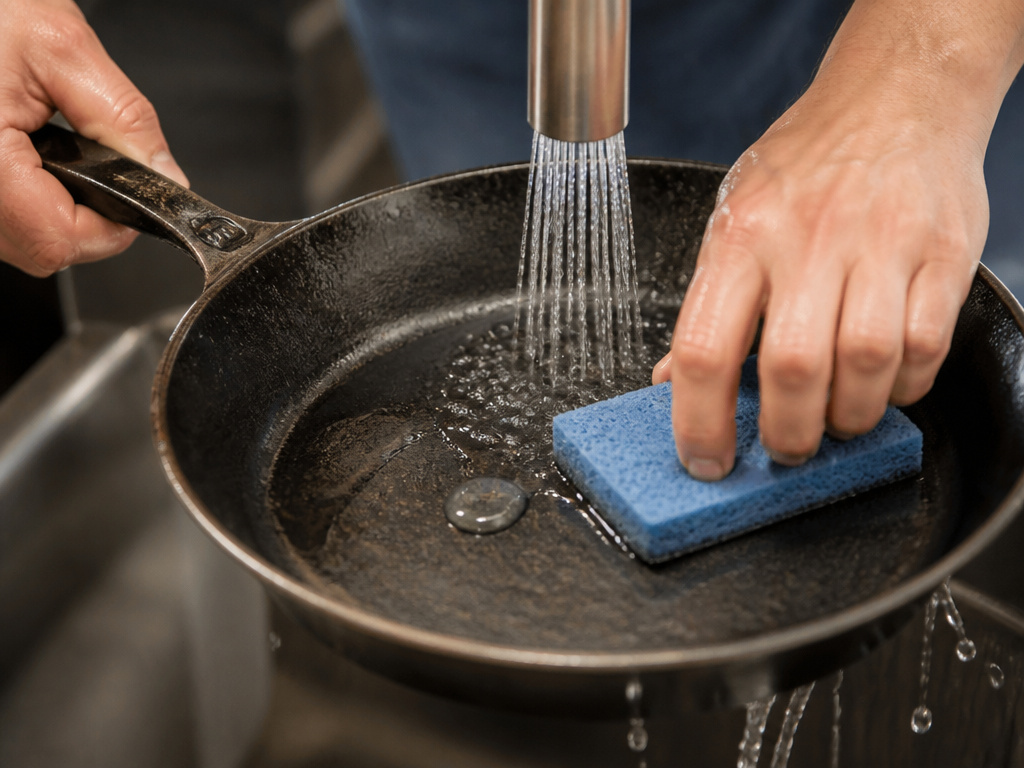
Here’s the stance: you can use a tiny amount of mild dish soap. The modern detergents that would strip seasoning are the heavy-duty degreasers you’d use on a greasy engine part, not the gentle liquid soap by your sink.
The “no soap” rule comes from a time when soap contained lye, which would saponify the seasoning layer. Today’s mild soaps won’t touch properly polymerized oil. If your pan is greasy after cooking, use a drop of soap, a soft sponge, and warm water. Rinse well. The alternative, boiling water and scrubbing, often requires more heat and water, which risks warping.
The real enemy isn’t soap. It’s abrasive scrubbers. Steel wool or harsh scouring pads scratch microscopic grooves into the metal. Those grooves trap water and food particles, creating perfect pockets for rust to start. Use a nylon brush, a sponge, or a chainmail scrubber made for seasoned iron.
What Can You Cook In It?
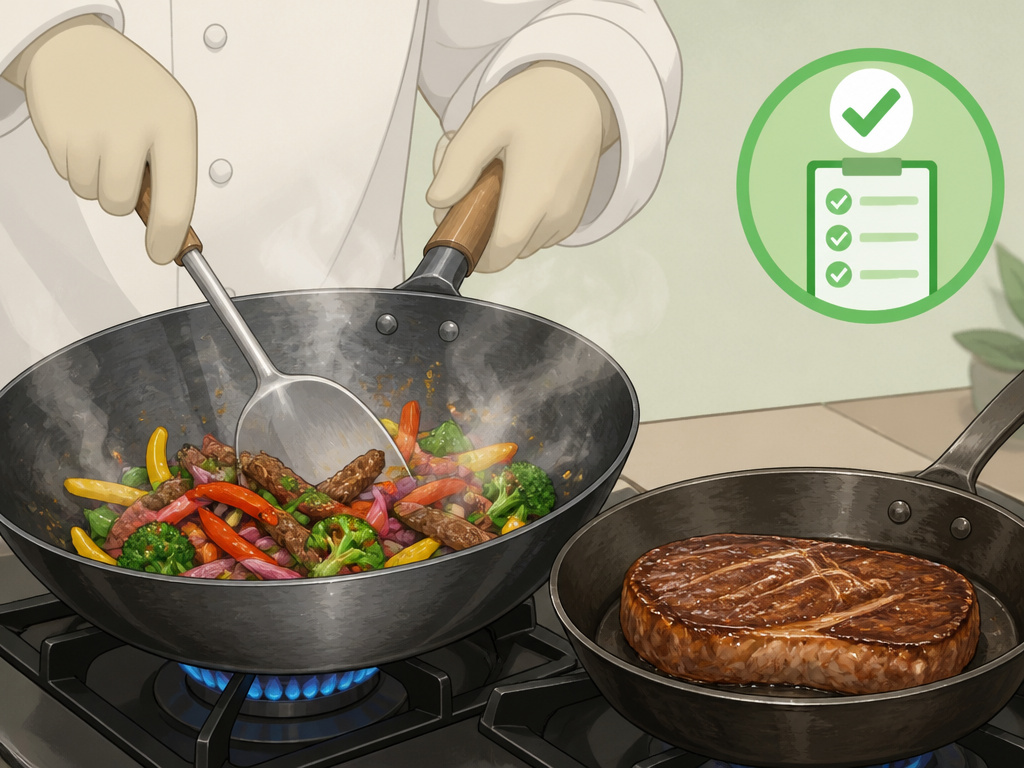
Carbon steel shines where high, fast heat meets quick maneuvering. Its reactivity to acid is the main limitation.
Do:
- Searing meats (steaks, chops, chicken)
- Stir-frying and sautéing
- Pan-frying (fish, potatoes, eggs)
- Making pancakes or crepes (once well-seasoned)
- Shallow frying
Avoid (or be quick):
- Long-simmered tomato sauces
- Wine-based pan sauces that reduce for more than a minute
- Cooking with large amounts of lemon juice or vinegar
You can cook acidic foods briefly. A quick deglaze with wine for a pan sauce is fine. Simmering a marinara for an hour will strip the seasoning and possibly give the food a metallic taste. For those tasks, switch to enameled cast iron or stainless steel.
This reactivity is also why carbon steel safety is straightforward, the small amount of iron leached into acidic food isn’t harmful for most people and can even be a dietary source of the mineral. The risk is to the pan’s surface, not your health.
Choosing Your First Carbon Steel Pan
If you want one answer: start with a 10-inch or 12-inch carbon steel skillet. That size handles everything from a single steak to a family-sized portion of vegetables. Look for a pan around 2.5mm thick with a rolled, comfortable handle.
Brands like Misen and Made In offer excellent, no-fuss preseasoned options that work out of the box. Matfer Bourgeat is the classic French restaurant choice, sold completely bare so you can build the seasoning from scratch. There is no “best” brand, only the one whose handle shape fits your grip. Check reviews of the best carbon steel pans for specifics on weight, handle design, and oven-safe limits.
Two features matter most: 1. Thickness: 2.5mm is the sweet spot. Thinner pans warp easier; thicker ones start to lose the weight advantage. 2. Handle Attachment: Riveted handles are strongest. Welded handles are smoother and easier to clean. Both are fine if done well.
If your kitchen uses induction, confirm the induction compatibility before buying. Most carbon steel works, but some thinner or warped pans might not make full contact. A flat, thick bottom is key.
Frequently Asked Questions
Is carbon steel cookware nonstick?
Not from the factory. It becomes nonstick through seasoning, a layer of polymerized oil you build and maintain through cooking. A well-seasoned carbon steel frying pan can rival Teflon for eggs and fish.
Can you put carbon steel in the oven?
Yes, absolutely. Most carbon steel pans are oven-safe to at least 500°F, handles included. This makes them perfect for recipes that start on the stovetop and finish in the oven, like frittatas or thick cuts of meat.
How do you fix rust on carbon steel?
Scrub the rust off with white vinegar and a non-abrasive pad. For light surface rust, a 50/50 vinegar-water solution and a few minutes of scrubbing will do. For heavier rust, soak the pan in the solution for up to an hour. Rinse, dry thoroughly, and completely re-season the affected area.
Is carbon steel better than nonstick?
For durability and high-heat cooking, yes. A carbon steel pan can last a lifetime and can handle searing temperatures that would destroy a nonstick coating. For low-heat, delicate tasks where absolute nonstick performance is critical (like certain egg dishes), a quality nonstick pan still has a place. Many cooks own both.
Can you use metal utensils on carbon steel?
Yes. In fact, metal spatulas are great for carbon steel. They help smooth the seasoning layer as you cook and are sturdy enough to scrape up fond. You won’t scratch the metal like you would a nonstick coating.
The Bottom Line
Carbon steel cookware is a 99% iron workhorse for the stovetop. It trades the heavy, steady heat of cast iron for a lightweight, quick-response tool that excels at searing and sautéing. Its care is simple but specific: avoid thermal shock, dry it completely, and keep its seasoned skin intact.
It asks for a little more attention than stainless steel but pays you back with better heat performance and a natural nonstick surface that improves with age. Start with a single skillet, learn its rhythm, and you’ll understand why it’s been a fixture in professional kitchens for over a century. For a wider selection, our guide to the best carbon steel cookware breaks down the top skillets, carbon steel woks, and carbon steel griddles on the market.
